

The reasons for prescribed burning in California are as diverse as the state’s ecosystems and people. While catastrophic wildfires have focused attention on prescribed fire for fuels reduction and wildfire prevention, there are many other ecological and cultural objectives for using prescribed fire. Common prescribed fire objectives include ecosystem restoration, invasive species control, range improvement, forest resilience, control of woody encroachment into woodlands and grasslands, and enhancement of cultural resources. Prescribed fire also offers an important training environment, and is used by many practitioners to build skills, qualifications, and comfort in fire management more generally.
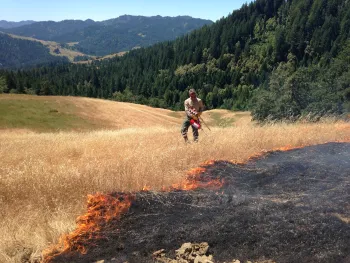
Ecosystem Restoration and Maintenance
In a place like California, where so many ecosystems evolved with fire, prescribed fire is a critical tool for ecosystem restoration. For example, many of California’s deciduous oak woodlands depend on frequent fire, and prescribed fire has been instrumental in their restoration and maintenance. In Oregon white oak (Quercus garryana) and California black oak (Quercus kelloggii) woodlands, frequent prescribed fire reduces competition from encroaching conifers, promotes understory biodiversity, reduces pests in acorns, and enhances habitat for a wide variety of fauna, including deer and elk.
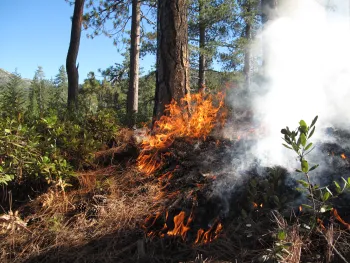
Forest Resilience
Many of California’s forestlands evolved with frequent fire that kept them open, healthy, and resilient to stressors like drought and disease. Fire exclusion has taken its toll on these forests, allowing them to grow dense with trees that compete for water, nutrients, and sunlight. This process of densification not only changes the structure and composition of forests, it also makes them more homogenous and more vulnerable to disturbance. With prescribed burning, fire can be reintroduced as a natural process, thinning overly dense trees, creating canopy gaps that foster spatial heterogeneity and biodiversity, and reducing resource competition within stands. In these ways, prescribed fire has been shown to increase resilience of forests to drought, wildfire, and other disturbances.
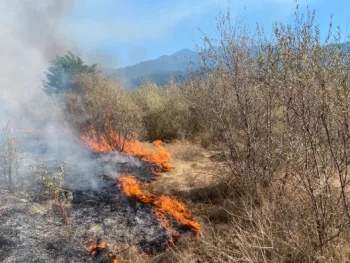
Cultural Objectives
Although there is a clear distinction between prescribed fire and cultural burning, there are situations wherein Indigenous practitioners may use prescribed fire to meet cultural objectives. Examples may include the use of prescribed fire in willow or hazel to improve basketry materials, or the use of prescribed fire in oak groves to improve acorn quality and better facilitate gathering opportunities. Prescribed burning with cultural objectives may occur during formal training events, like prescribed fire training exchanges; on projects where cultural practitioners are collaborating with outside and/or agency partners; and/or in other situations where cultural practitioners feel that it is a useful approach.
EXTERNAL IMAGE
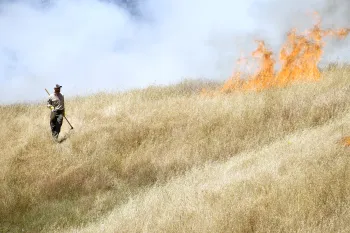
Invasive Species Control and Range Improvement
Prescribed fire can be used to control a variety of invasive species in California. This can include both native invasives and non-native invasives. Native invasives are native species that take over in the absence of natural disturbance. Examples include Douglas-fir and some native shrub species, which often encroach on grasslands and woodlands in the absence of frequent fire. Prescribed fire can be used to cause mortality of encroaching vegetation and to limit spread into un-encroached areas. Non-native invasives can also be managed with prescribed fire; good examples are medusahead (Taeniatherum caput-medusae) and yellow starthistle (Centaurea solstitialis), which commonly invade California grasslands, posing concerns for wildlife, livestock, and humans, and competing with other more desirable vegetation. These “late-phenology” species mature later than other plants, and they can be managed with carefully timed prescribed fire that targets them in late spring, just before they go to seed but after other plants have matured. Medusahead can be managed with single prescribed burns on a multi-year rotation, whereas yellow starthistle requires multiple consecutive burns for effective control.
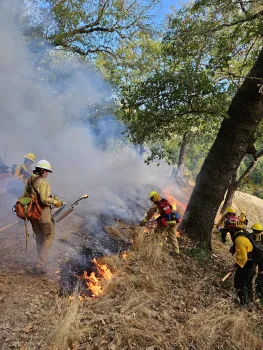
Training
There is no better way to gain comfort and skill with fire than in a live-fire setting. In this way, prescribed fire offers some of the best training opportunities for fire practitioners, from the novice burner to the advanced firefighter and everyone in between. Although prescribed burns typically have an ecological and/or cultural objective, training is also a common burn objective. Many agency fire professionals use prescribed burns to advance formal fire qualifications, and the same is true in the private sector, where training opportunities on burns can be critical steps for working toward competence, confidence, and certification. In California, prescribed fire training exchanges (TREX) are a venue where practitioners from varied backgrounds can learn and train together on prescribed burns. Prescribed burn association (PBA) burns have also become critical training grounds for aspiring and seasoned burners.