

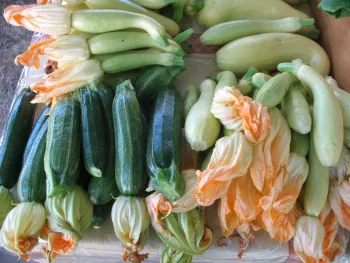
Summer squash are warm season vegetables in the cucurbit family. Many of them have been bred to be short, compact bush vines rather than large ramblers. Like all cucurbits, squash plants have male and female flowers. Encourage bees for best pollination.
Cultural tips for growing squash, UC IPM
Planting
- Direct seed 24 inches apart in May to July.
- Transplant 24 inches apart in May to July, possibly April depending on weather and local conditions.
- For best results, wait until daytime temperatures are regularly over 70°F and soil temperature is over 65°F.
- If growing your own seedlings, start the seeds 4 weeks before you want to plant.
Harvesting
- Harvest squash while young and tender before they get too large and become tough.
- June to October, depending on variety and when planted.
Pest management
- Follow good cultural practices to prevent powdery mildew.
- Treat squash bugs aggressively if found on plants.
Pests and disorders of squash, UC IPM
Pollination
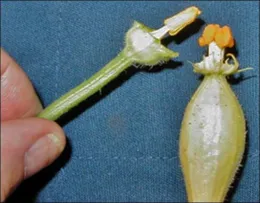
- Squash plants have male and female flowers on the same plant. Male flowers have a long thin stem. Female flowers have a small swelling behind them like a baby squash. Male flowers appear first.
- The female flowers require pollen from the male flowers for squash to form. Bees and other insects will usually pollinate the flowers.
- You can also hand pollinate the flowers: peel away the petals from both flowers, then touch the male anther to the female stigma to transfer pollen, as shown in the photo. It is important to use only freshly opened flowers. They open early in the morning and are receptive for only 1 day.
- If a baby squash starts to grow, then withers and dies, it probably wasn't well pollinated.
More links
- Video: Zucchini to Harvest in Vertical Cage [1:15]
Recommended varieties for Santa Clara County*
Zucchini: Aristocrat, Astia, Cocozelle, Gold Rush, Raven, Romanesco
Pattypan (scallop): Peter Pan, Starship, Sunburst, White Scallop
Crookneck: Sunny Supersett
* Many other varieties may also do well here in Santa Clara County. This list is based on UC Master Gardener trials, taste tests, and feedback from local growers.