Forest Treatment (Vegetation Management)

Central Sierra: Introduction to Virtual Fencing for Livestock and Land Management

Primary Image
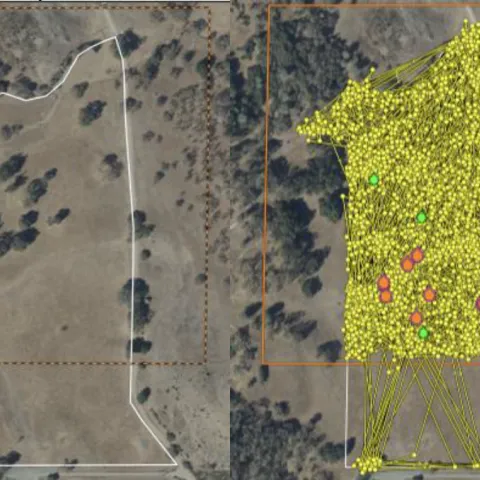
side-by-side image of virtual fence boundary and movement of heifers within it
Body

Virtual Fencing: A New Tool for Livestock and Land Management 

Virtual fencing (VF) is a precision agriculture tool gaining traction across California’s diverse rangelands. It uses GPS collars to contain livestock without physical fences. Producers set virtual boundaries across their pasture from a computer, which are transmitted to the collars. When an animal approaches the boundary, the collar emits audio cues and, if needed, mild electric pulses to keep the animal within the boundary.

Image
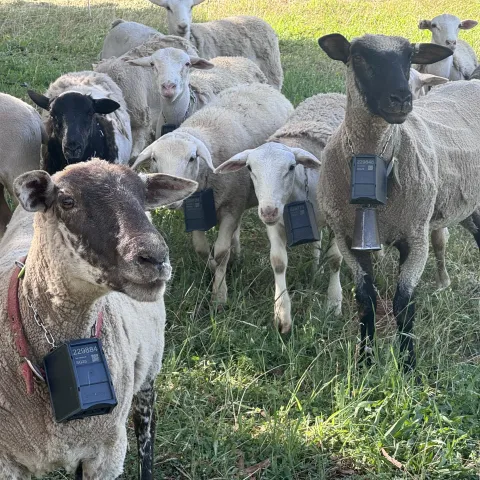
illustration of auditory zone and electric pulse zone in rangeland and close up of cattle with GPS collar

While not a replacement for a secure perimeter fence, VF can help position animals across a landscape with more intention and precision than traditional fencing. VF can be adjusted in minutes to meet the changing needs of livestock producers and range conservationists alike. 

Applications include:

• Targeted grazing to control invasive weeds
• Installing fuel breaks to reduce wildfire risk
• Automated rotational grazing
• Excluding livestock from sensitive areas
• Real-time livestock location tracking
 

With NRCS funding, the UC Cooperative Extension Central Sierra is researching VF applications on California rangelands. 

Contact Brian Allen (brallen@ucanr.edu) or visit our website to learn more!

UCCE Central Sierra

Central Sierra: Virtual Fencing Directs Cattle to Graze Medusahead Grass on California Rangeland

Primary Image
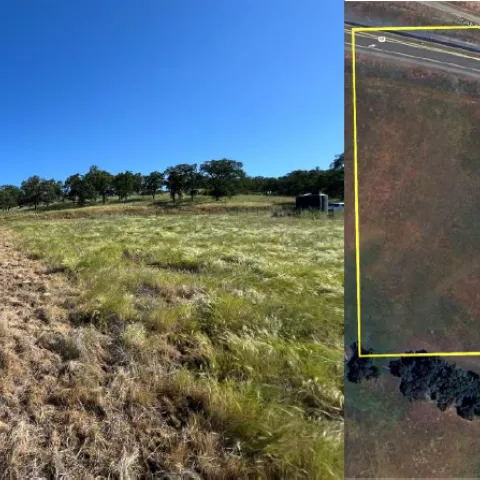
left image shows clear delineation between foraged and un; right image is outline of grazed area on arial map
Body

Infestations of Medusahead can be suppressed by targeted grazing 

Medusahead (Elymus caput-medusae) is a common invasive grass on California’s annual rangelands. It accumulates high levels of silica as it matures, making it unpalatable to livestock and slow to decompose. As a result, livestock tend to avoid it for more desirable forage, potentially allowing it to form a dense thatch layer that persists on the landscape. This can suppress more desirable forage species and allows medusahead to spread over time.1,2

Medusahead seeds remain viable for only a few years, so disrupting seed development can control infestations. While herbicides and mechanical removal are viable control methods, we explored whether high intensity, targeted grazing guided by virtual fencing (VF) could offer an effective and practical alternative.1,2 Fortunately, there is a brief window when the developing plant has produced immature seeds and has not yet accumulated high silica levels.3 During this time cattle may find medusahead palatable enough to consume, potentially interrupting its reproductive cycle.4

UC Cooperative Extension Central Sierra Advisors used Virtual Fencing for targeted grazing 

In May of 2024, we used Virtual Fencing (VF) to concentrate 25 steers and heifers on a 3-acre Medusahead infestation along a fenceline within a larger pasture in Amador County. Water and shade were provided within the enclosure. The livestock stayed in the VF area 100% of the time for nine days. On the tenth day, however, the livestock left the area, presumably for better forage. Despite this escape at the end, we were satisfied with the result. 

Only 5.6% of the pasture in the target area still had ungrazed Medusahead with viable seed heads that could grow next season, whereas immediately adjacent to the grazing area, ungrazed Medusahead had turned into a thatch that covered 87.3% of the pasture (Figure 1). All animals gained weight during the trial.

left image shows clear delineation between foraged and un; right image is outline of grazed area on arial map

Figure 1. Left: The viewer's left demonstrates the impact of high-intensity, short duration grazing on immature medusahead, contrasted with the ungrazed control area showing high levels of medusahead infestation, identifiable by its glossy yellow green color. The VF boundary is visualized by a line in the pasture that the animals are trained not to cross. Right: VF collar location data (blue dots) during the trial. The VF boundary is represented by a yellow line and the barbed wire fence is represented by a white line. 

Effects of high intensity targeted grazing using VF collar

The effects of this single high intensity targeted grazing treatment carried over into the following year. While the control plot remained nearly unchanged, the grazed plot displayed the following improvements one year later compared to the original condition:

  • Medusahead cover remained far lower in the grazed plot, from 22% originally to 6%.
  • Other grasses and broadleaf plants (forbs) doubled.
  • Thatch cover was nearly eliminated.
  • Bare ground remained low.
Image
bar graphs indicating % forage cover in test and control plots

Figure 2. Estimated percentage cover of vegetation types immediately before the grazing trial (blue) and one year after (gold). Left: Impacts of grazing on vegetation types. Right: Ungrazed control. 

Results of this Virtual Fencing grazing trial

These results suggest that virtual fencing has merit as a tool for targeted grazing of medusahead during its short vulnerable phase, offering ranchers and land managers a flexible and labor-saving option to improve rangeland health. Currently, we are conducting a similar trial on barbed goatgrass (Aegilops triuncialis), a similar problematic annual grass weed. We are excited to share those results with you in the future.


Want to learn more?
Reach out to Brian Allen at brallen@ucanr.edu
 

References
1.George, M. R. (1992). Ecology and management of medusahead. University of California Range Science Report, 23, 1-3.
2.Young, J. A. (1992). Ecology and management of medusahead (Taeniatherum caput-medusae ssp. asperum [Simk.] Melderis). The Great Basin Naturalist, 245-252.
3.Murphy, A. H., & Turner, D. (1959). A study of the germination of medusa-head seed.
4.DiTomaso, J. M., & Smith, B. S. (2012). Linking ecological principles to tools and strategies in an EBIPM program. Rangelands, 34(6), 30-34.

UCCE Central Sierra
Primary Image
Sheep grazing with virtual fence technology

Four Legged Fuel Reduction

September 3, 2025
By Daniel K Macon
My Four-Legged Fuel Reduction Strategy When I took this job as the UC Cooperative Extension Livestock and Natural Resources Advisor for the Central Sierra Multi-County Partnership, I purchased a home on six acres between the Calaveras County communities of Mountain Ranch and Railroad Flat. My home sits…
View Article
Primary Image
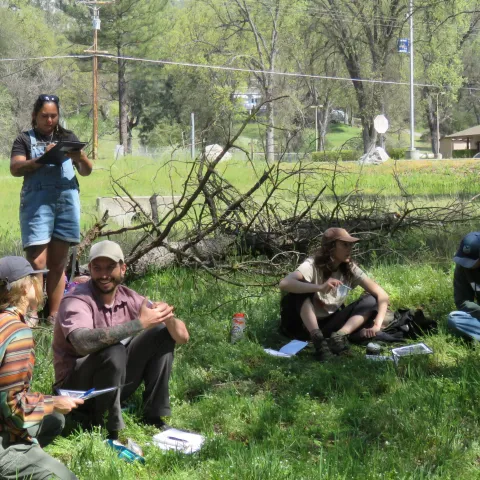
Group of people sitting and standing outside participate in a forestry class.
Forestry Research and Outreach: Page

California Tree School

From finding your way in the woods to planning a prescribed burn, UC ANR's California Tree School is a chance to explore foundational forestry concepts in a community space.
View Page
Primary Image
Gifford Fire
UCCE in the County of San Luis Obispo: Page

Fire Information

San Luis Obispo County Links San Luis Obispo County Fire Department- Fire Prevention Education, Wildland Hazard and Building Codes, Fire Safety Council, and more local, state, county, and federal informational links https://www.fire.ca.gov/
View Page
UCCE Humboldt - Del Norte Counties: Page

Fire

How to connect with Fire Director, Lenya Quinn-Davidson, and fire resources.
View Page
UCCE Humboldt - Del Norte Counties: Page

Prescribed Fire for Foresters

The Prescribed Fire Workshop in 2020 provided attendees with the skills to develop smoke management plans, increase understanding of liability and permit development, and highlight management examples along with upcoming opportunities and policy changes.
View Page