Calibration might sound intimidating, but it’s critical for safe and effective herbicide application. Proper calibration ensures that the correct amount of pesticide is applied to an area while achieving the desired level of pest control. To support land managers and pesticide applicators, the UC Statewide…
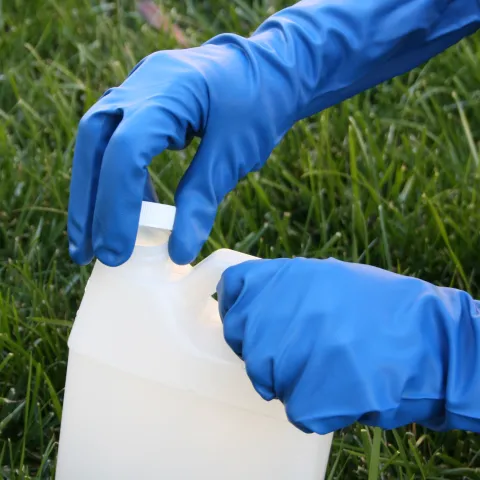
When using pesticides and other garden chemicals, you should always wear personal protective equipment (PPE) to keep yourself safe. Pesticides can enter the body via the eyes, skin, nose, or mouth. The skin is the most common way pesticides enter our bodies, usually by splashing, spillage, or spray drift…
Dogs use their keen sense of smell to help humans every day. Their powerful noses alert us to danger, aid in search and rescue operations, and even have the potential to diagnose diseases. But did you know that some dogs have been trained to sniff out harmful invasive pests? Enter the detector dogs! …
Join UC IPM for a free webinar on the invasive Mediterranean Oak Borer (MOB) and other important oak tree pests on April 10, 2025 from 6:00pm to 7:30pm. The Mediterranean Oak Borer (MOB) is an invasive ambrosia beetle that infests several species of white oaks in California: valley oak, blue oak,…
The 2025 California Date Palm Workshop will be held on April 23 in Palm Desert at the UC Riverside Palm Desert Center. Anyone who is interested in growing dates is welcome to attend.
"This workshop brings together researchers, growers and stakeholders to discuss recent research data on the ‘state of the…
Weeds, ants, rats and gophers, snails, and slugs these are just a few of the pests that may take up residence in your garden. A fast and easy way of dealing with unwanted creatures is to spray or bait them with a poison.
Identification and Management of common plant diseases in Sonoma County gardens recommended by University of California Master Gardeners of Sonoma County.