Con motivo del Mes de la Herencia Hispana En la pequea ciudad de Buga, situada en el Valle del Cauca, al suroeste de Colombia, Jairo Daz-Ramrez daba prioridad al baile de salsa sobre sus estudios.
This is a winter event you won't want to miss. The event: The 13th annual UC Davis Biodiversity Museum Day, a Super Science Day. It's an opportunity to see scientists in action.
The 13th annual UC Davis Biodiversity Museum Day, a free public event to observe science in action and learn about the UC Davis museums and collections, needs financial support. It will take place Saturday, Feb. 10 on the UC Davis campus.
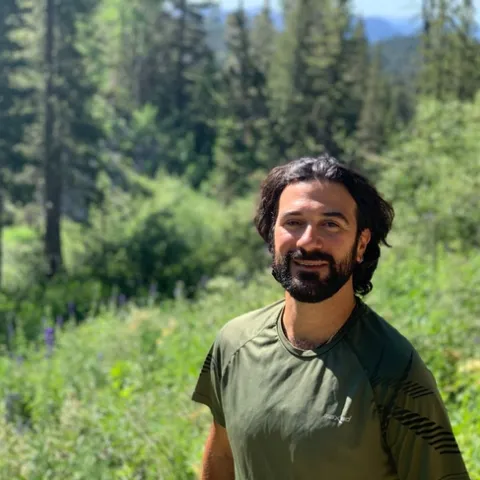
Pollinator ecologist Anthony Vaudo, a research entomologist with the U. S. Forest Service, Rocky Mountain Research Station, Moscow, Idaho, will speak on "Pollen Nutritional Ecology of Bee-Flower Interactions" at a seminar hosted by the UC Department of Entomology and Nematology at 4:10 p.m.
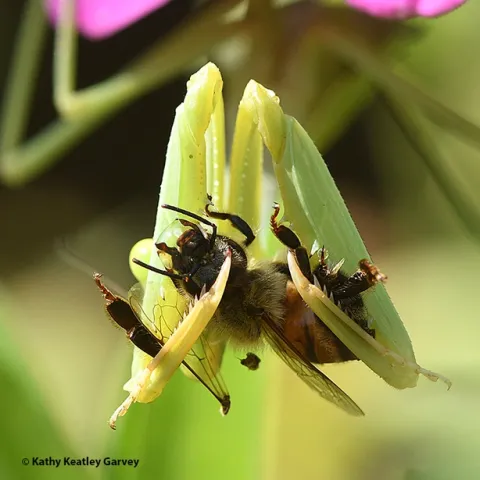
A praying mantis, an incredible ambush predator, can lie in wait for hours for its prey. Often it's so camouflaged that it totally blends in with its habitat. It can rotate its head 180 degrees--and nothing, it seems, can escape its view.
As the long, hot days of summer slide into cooler, shorter days of autumn, seasonal changes are occurring in my garden. Not as many plants are blooming, the leaves on deciduous trees and plants are becoming drier and starting to change color.
The most recent group of scientists and educators hired by University of California Agriculture and Natural Resources includes several firsts, including a UC Cooperative Extension specialist in water equity at UCLA and a UC Cooperative Extension Black, Indigenous and People of Color (BIPOC) communit...
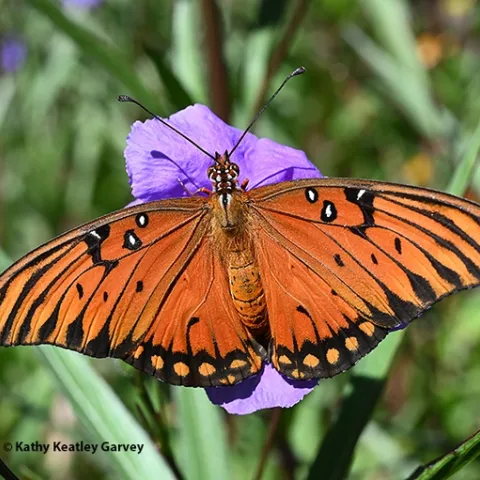
Ever seen a Gulf Fritillary laying an egg? The Gulf Frit, or "passion butterfly" (Agraulis vanillae), lays her tiny, yellow eggs, singly, on her host plant, the passionflower vine (Passiflora). The egg? It's about the size of a pin head.
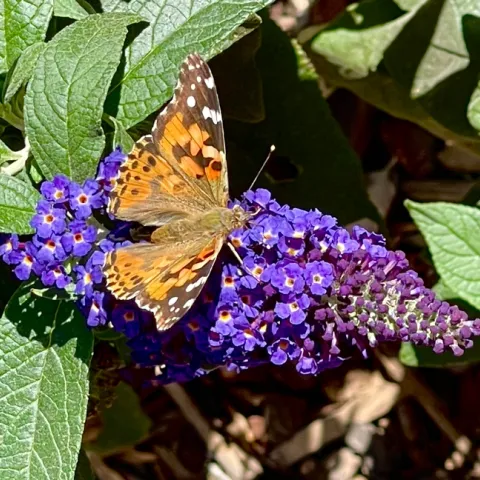
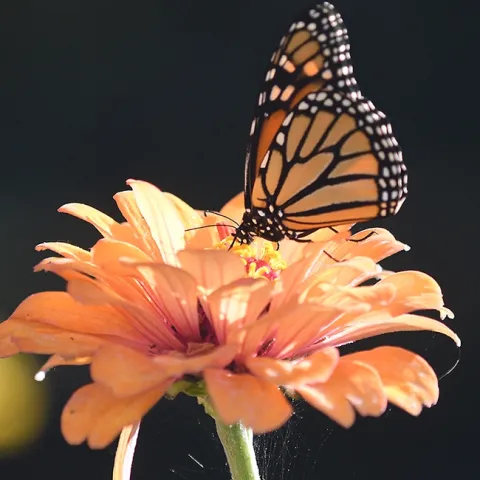
The monarch migration is well underway. The iconic butterflies fluttering into California from the Pacific Northwest engage in "nectar stops" to fuel their flight to their overwintering sites along coastal California. They are not the only ones seeking nectar.