
Pre-registration is open for student teams, from middle school through graduate school, to develop real-world ag solutions and gain global recognition
The Farm Robotics Challenge launched its 2027 season on Sept. 15, unveiling a new three-division competition structure, a Startup pathway for teams committed to launching a company, and more than $200,000 in prizes and startup support backed by a coalition of industry partners.
Watch the 2027 Launch Webinar replay to learn about the new divisions, awards, Startup pathway and key dates.
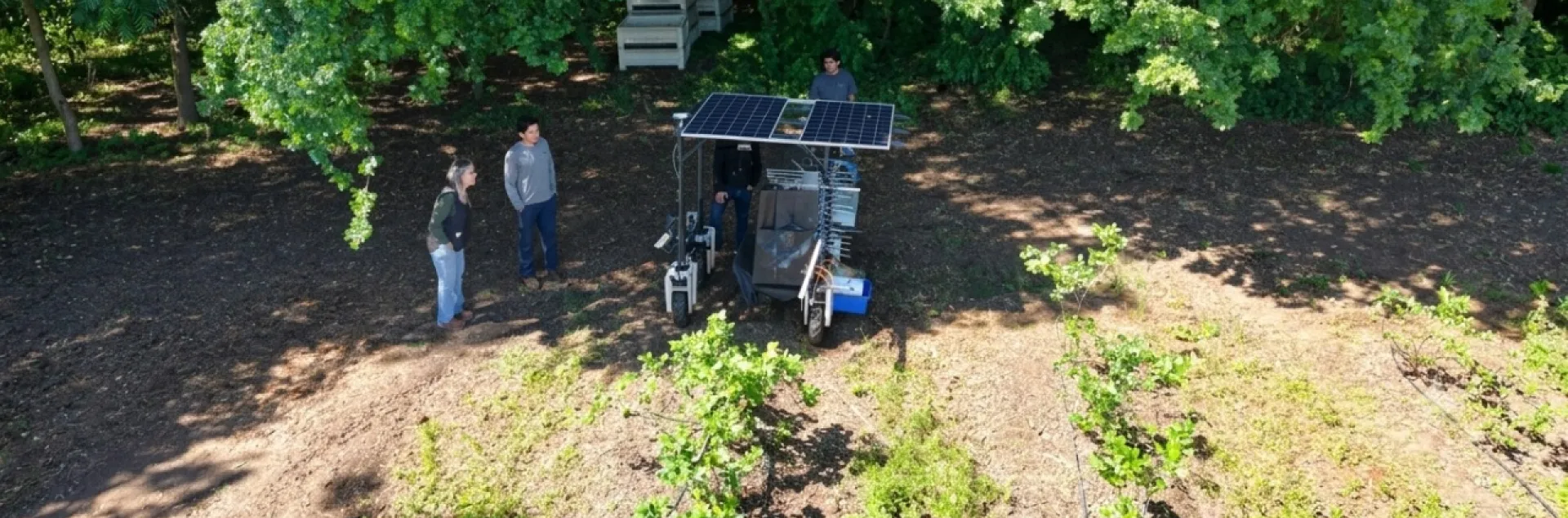
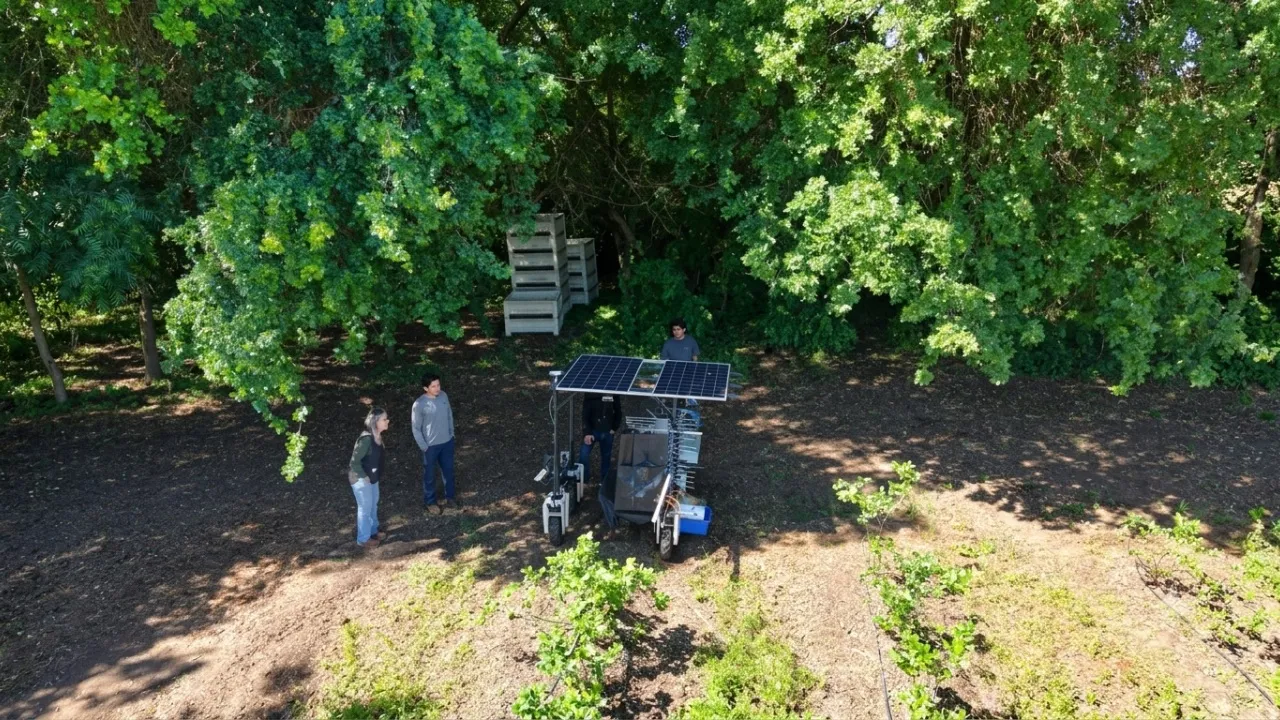
Organized by UC ANR Innovate (a part of University of California Agriculture and Natural Resources) and the AI Institute for Next Generation Food Systems (AIFS), the annual competition brings together student teams from across the United States and around the world. Teams work directly with growers to identify agricultural challenges, then design, prototype and field-test solutions incorporating robotics, artificial intelligence and related technologies.
The 2026 Challenge drew nearly 100 teams representing 13 countries. For 2027, the expanded structure will create opportunities for students from middle school through graduate school to participate.
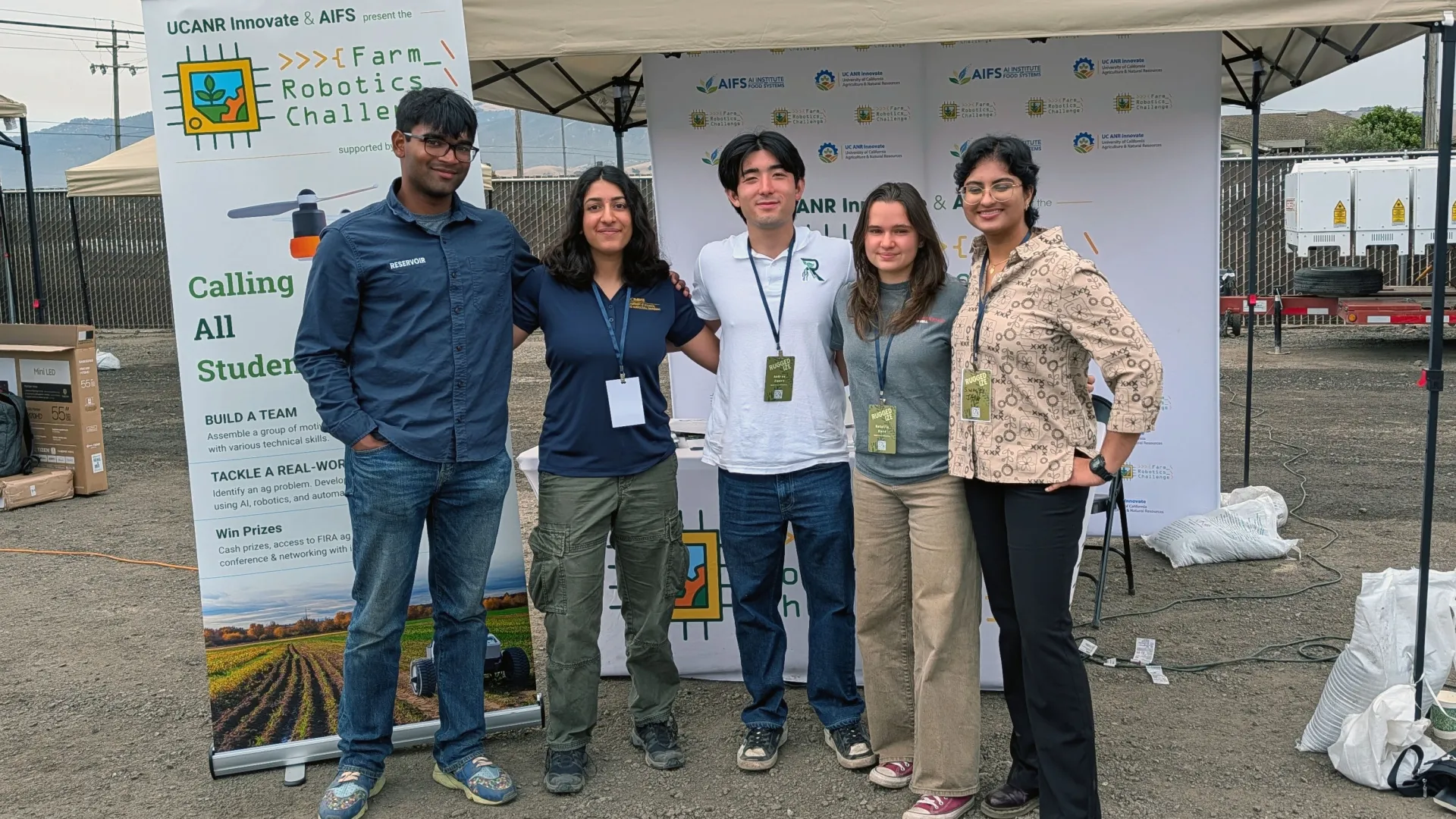
“The Farm Robotics Challenge gives students an opportunity to work directly with growers and apply their technical skills to problems that matter,” said Helle Petersen, director of UC ANR Innovate. “This year, we’re opening the Challenge to more students, creating clearer ways to recognize achievement and providing a new pathway for teams ready to take their ideas beyond the competition.”
New divisions and awards expand opportunities
The 2027 Challenge introduces three divisions based on teams’ educational level. Division I is open to undergraduate and graduate students at four-year colleges and universities, Division II serves students at two-year colleges and trade schools, and Division III is open to middle and high school teams. Each institution is welcome to field multiple teams.
With support from the California Jobs First Regional Investment Initiative, the Challenge welcomed middle and high school teams in California in 2026. Division III builds on that foundation by opening the secondary school competition to eligible teams nationwide in 2027.
As sponsor of the Championship awards, the California AgTech Alliance is providing over $50,000 for first-, second- and third-place teams across the three divisions, with the first-place Division I team earning a $25,000 prize. The new structure provides clearer recognition of teams’ overall performance while allowing them to compete alongside others at similar educational levels.
“The future of agriculture depends on people as much as technology,” said Sarah Masterson, director of the California AgTech Alliance. “By supporting teams from middle school through college and beyond, we’re helping more students see a future for themselves in ag tech and encouraging them to build the skills that growers and agricultural communities will need in the years ahead.”
Startup pathway takes projects from prototype to market
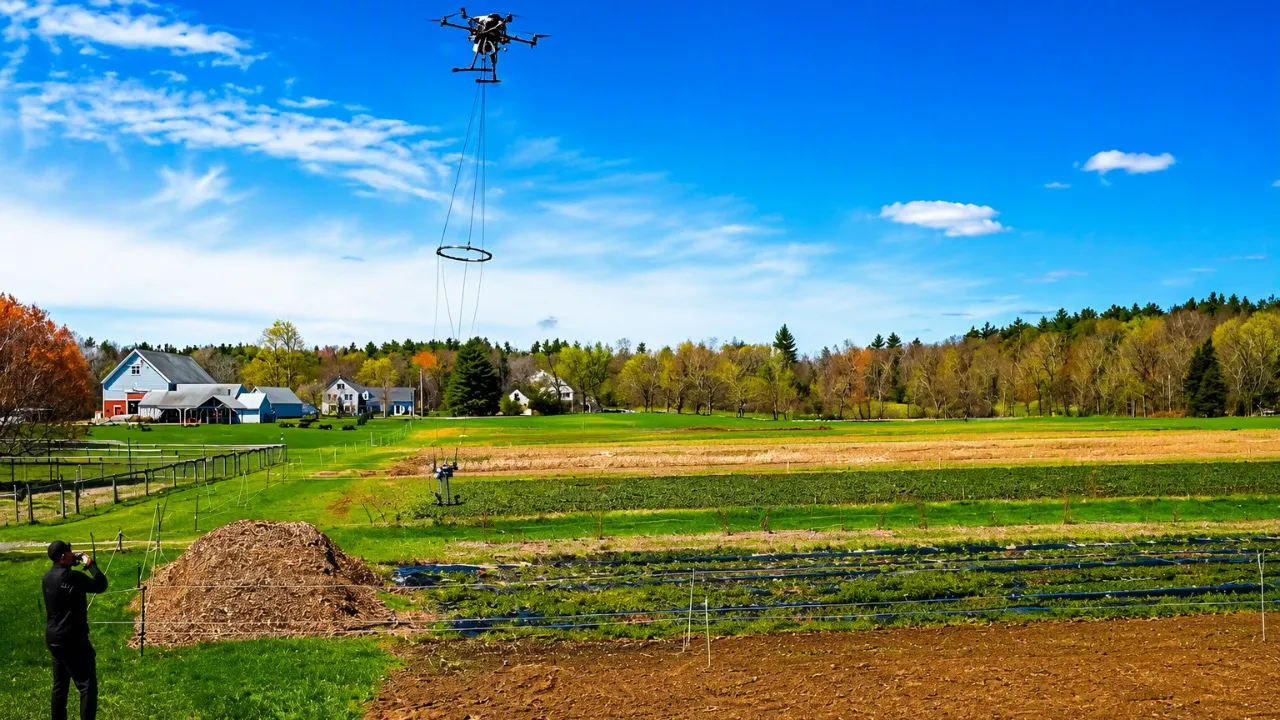
New for 2027, the Startup pathway gives Division I and Division II teams the opportunity to take their innovations beyond the competition. Designed for aspiring founders, the pathway will help teams evaluate their ideas, build the foundations of a company and prepare to raise capital.
Startup pathway sponsor Reservoir will help shape company-building programming with webinars held from January through April. Experts from business, academia and technology transfer will introduce teams to company formation, intellectual property, fundraising, cap tables and equity, and legal fundamentals.
“Students in this competition are already engineers – what they may not realize yet is that they can be founders,” said Nicola Kerslake, general partner of Reservoir VC. “The hardest part isn’t creating the prototype; it’s building a business. This pathway gives teams the practical roadmap to start a company, and it points the next generation of innovators toward the problems that deliver the biggest impact: food, water, climate and labor.”
Following final project submissions, selected teams will be invited to an in-person Pitch Day at Plug and Play Tech Center in Sunnyvale. Based on the finalists’ projects, pitches and readiness to form a company, Reservoir will select a Grand Prize recipient for a $100,000 SAFE investment, subject to due diligence, applicable terms and separate investment documentation.
Bonsai Robotics provides technology and team support
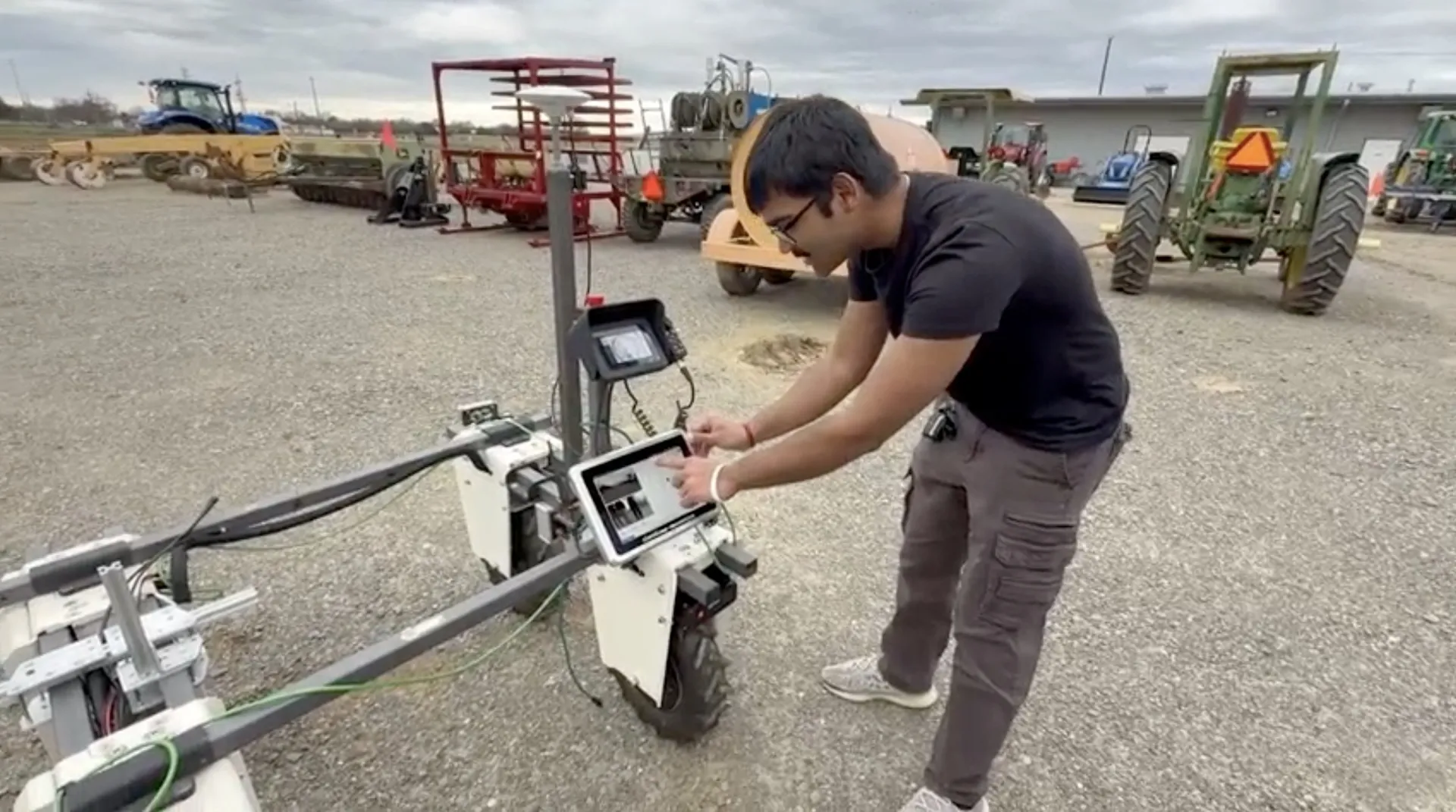
Returning technology partner Bonsai Robotics will sponsor Amiga Innovation Awards in all three divisions, including $10,000 for Division I, $5,000 for Division II and $2,500 for Division III. The awards recognize teams that demonstrate innovative uses of the company’s Amiga robotic platform.
“There’s no substitute for putting students in front of the hard problems in agriculture, and that’s exactly what the Farm Robotics Challenge does,” said Brendan Dowdle, chief business officer at Bonsai Robotics. “Working alongside growers gives them a real understanding of the market needs and builds skills that carry directly into the working world. We’re excited to support these teams with access to the Amiga platform, technical guidance and awards that recognize the most innovative work.”
Bonsai Robotics will work directly with participating teams throughout the season, offering technical office hours and helping teams access Amiga robots at educational pricing. If the Grand Prize winner of the Startup pathway develops its project using an Amiga, Bonsai will also donate an Amiga Flex robot valued at $25,000 to help the team continue its work.
Pre-registration opens for the 2027 Challenge
Academic advisors may pre-register teams now through the Farm Robotics Challenge website. Pre-registration allows teams to begin receiving program information and preparing their projects before submitting formal registration, team rosters and project proposals by Nov. 13.
Project work is self-paced and may begin at any time, with final project videos and written reports due May 2, 2027. The season will conclude with an awards ceremony held in conjunction with the Plug and Play Summit in Sunnyvale in late May.
Students interested in participating who are not yet part of a team may contact the Farm Robotics Challenge for help connecting with prospective teammates and advisors.
Complete competition details, pre-registration and updates are available at farmroboticschallenge.ai.
About the Farm Robotics Challenge
The Farm Robotics Challenge is a student engineering design competition focused exclusively on real-world, on-farm solutions in robotics, artificial intelligence and automation. Open to secondary students (grades 7–12) and students at two-year colleges and four-year universities, the program challenges teams to work directly with farmers, identify pressing agricultural problems, and design, build and field-test solutions.
Organized by UC ANR Innovate and the AI Institute for Next Generation Food Systems, the competition is supported by a coalition of industry, academic and ag sector partners committed to building the next generation of agricultural innovators.
For more information, including how to participate or sponsor, visit farmroboticschallenge.ai.
About UC ANR Innovate
UC ANR Innovate is the innovation arm of University of California Agriculture and Natural Resources. It connects people, ideas and resources to move agricultural innovation from research to adoption, bringing together startups, researchers, farmers and policymakers to tackle real world challenges in agriculture, food and biotechnology. Learn more at ucanr.edu/site/innovate.
About the AI Institute for Next Generation Food Systems
The AI Institute for Next Generation Food Systems (AIFS) is a USDA-National Institute of Food and Agriculture-funded research institute leveraging artificial intelligence to solve the world’s biggest challenges to crop and food production: ensuring a sustainable, nutritious, efficient and safe food supply while mitigating the impacts of changing conditions. For more information, visit https://aifs.ucdavis.edu.
About the California AgTech Alliance
California AgTech Alliance is a statewide network connecting California’s agricultural regions around shared priorities in innovation, workforce development and entrepreneurship. Anchored by UC Agriculture and Natural Resources and funded by a California Jobs First Regional Investment Initiative grant, the Alliance brings together universities, industry partners, workforce organizations, community-based groups, investors and regional leaders to help agricultural technology move from idea to field and from training to career opportunity. Learn more: https://calagtechalliance.org.
About Reservoir
Reservoir is agriculture’s technical community – a new rural institution that combines an agricultural innovation platform with an early-stage VC fund to accelerate rugged physical AI in outdoor industries, especially agriculture. Reservoir Farms are the world’s first on-farm robotics communities, starting in the Salinas Valley, Arizona, Wine Country, and expanding across the American West. Reservoir VC backs startups addressing critical challenges in agriculture that compound to other outdoor industries and across the rugged AI stack. By combining R&D space, hands-on grower input, and early-stage capital, Reservoir helps turn promising ideas into technology as resilience. Learn more at reservoir.co.
About Bonsai Robotics
Bonsai Robotics is reimagining the agricultural industry with its AI-first platform that makes autonomous farming affordable, easy to use and deployable across all farm equipment – whether retrofitted onto existing machines or built into next-generation solutions. Its 2025 acquisition of farm-ng combines leading vision-based autonomy software with modular, electric robotics to deliver machines adaptable for a wide range of crops, tasks and environments. Learn more at bonsairobotics.ai.
About Plug and Play Tech Center
Plug and Play is the leading innovation platform, connecting startups, corporations, venture capital firms, universities and government agencies. Headquartered in Silicon Valley, it is present in 60+ locations across five continents. It offers corporate innovation programs and helps corporate partners in every stage of their innovation journey, from education to execution. Plug and Play also organizes startup acceleration programs and has built an in-house VC to drive innovation across multiple industries where it has invested in hundreds of successful companies including Dropbox, Guardant Health, Honey, Lending Club, N26, PayPal and Rappi. For more information, visit pnp.com.