

When teaching about pruning landscape trees, long-time Fresno arborist John Pape starts well before the first cut is made. Ensuring healthy trees, he says, begins when gardeners decide what sort of tree to plant and where.
“We need to do research,” he said. “Trees live for a long time; we need to get it right.”
Pape is the president of the Clovis Botanical Garden board and presented the information in one of the organization’s free fall gardening classes.
He said knowing the tree’s origin and the conditions of its natural habitat will help inform which trees to select and where in your landscape to plant them.
“Putting an olive tree on a lawn is not a good idea,” Pape said. “Olives originated in a Mediterranean climate, where summers are dry. Lawn irrigation will keep the root zone warm and wet during the hot months, which supports fungus growth that can kill the tree.”
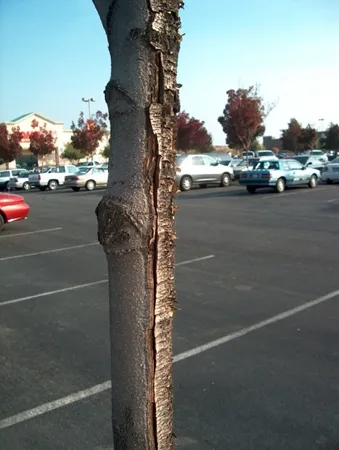
Pape showed a picture of a Raywood ash tree in a Fresno parking lot with severe sunscald damage on the south side of its trunk. The tree comes from Australia, which has a climate like Fresno’s. However, it typically grows by rivers with a bushy structure that shades the trunk.
“In a parking lot, the asphalt heat adds stress to the tree,” Pape said. “It’s pruned into a lollipop shape, which doesn’t shade the trunk.”
Taking into consideration a tree’s natural growth habit is also important when making pruning decisions.
“Cutting the tops of trees is crazy. Cutting off branches would be like cutting off a person’s arms for no reason. They’re supposed to be there,” Pape said. “Trees are genetically programed to a certain size and shape. Trying to diminish the size of a tree means somebody put the tree in the wrong place.”
Common mistakes include over pruning and over thinning. Both practices temporarily starve the roots, put branches and trunks at risk for sunscald, and increase the risk of tree failure that can harm people and property.
Pape suggests pruning gradually over time, never cutting off more than 25% of the foliage. To remove weight from the ends of branches, cut back to a secondary branch, called reduction cuts.
Pape published a book that details tree selection and pruning. Understanding Trees: A Guide to Tree Health and Selection in the Central Valley of California is available on Amazon and in the Clovis Botanical Garden visitor center, 945 Clovis Ave., Clovis. (Open Wednesday through Sunday, 9 a.m. to 4 p.m.)
The UC Master Gardener program also offers information on the fundamentals of landscape tree pruning, including a webpage with guidelines and four short videos on thinning cuts, releadering/reduction cuts, the jump cut and training young trees.
Following are upcoming classes this fall at the Clovis Botanical Garden. Details and registration here.
Oct. 10, 10 – 11:30 a.m. Unlock the secrets of soil, by UC Master Gardener Tim Sullivan
Oct. 17, 3 – 4 p.m. Hidden landscapes: Botanical diversity of Fresno County, by Jepson Herbarium director Staci Markos and Sierra National Forest botanist Joanna Clines.
Following are upcoming classes by the Fresno County UC Master Gardeners. Details and registration here.
Sept. 26, 10 – 11:30 a.m. From Grocery Scraps to Garden Magic by Master Gardener Cyndy
Oct. 3, 10 – 11:30 a.m. Succulent pumpkins by Master Gardener Cathy
Oct. 17, 10 – 11:30 a.m. Decorating a white pumpkin by Master Gardener Sharon
Nov. 14, 10 – 11:30 a.m. The art of botanical beverages by Master Gardener/Master Food Preserver Sue
Nov. 21, 1 - 2:30 p.m. How to make a lemon pomander by Master Gardener Robbie
Dec. 5, 9:30 a.m. – 12:30 p.m. Wreaths and swags by Master Gardener Robbie
Dec. 12, 10 – 11:30 a.m. Orchard care by Master Gardener John
________________________
Written by UC Master Gardener Jeannette Warnert