A Natural Solution for California's Herds: African Catfish Peptides

California's cattle producers and agricultural communities are all too familiar with the rising challenge of antibiotic resistance, making common bacterial infections harder to treat in livestock. But imagine a future where we could tackle these infections with a natural, powerful alternative. Our research points to just that: antimicrobial peptides (AMPs) found in African catfish.

We're really excited about these peptides because African catfish thrive in pathogen-rich freshwater, naturally producing these robust immune compounds in their skin mucus as a defense. This natural origin makes them highly appealing alternatives to synthetic drugs.

Predicted Safety and Potent Action

One of the most compelling aspects of these AMPs is their predicted safety for mammals. Our initial computer analyses suggest that various catfish AMPs are generally recognized as safe (GRAS). We predict they'll be absorbed in the human intestine without causing liver, brain, or heart toxicity. Furthermore, lab tests on a promising peptide, NACAP-II, confirmed it was non-hemolytic, meaning it didn't damage rabbit red blood cells—a strong indicator of its potential safety for mammalian cells.

Beyond safety, these peptides demonstrate effectiveness against problematic bacteria. One study revealed NACAP-II's strong activity against Extended-Spectrum Beta-Lactamase (ESBL)-producing Escherichia coli—a critical concern for both animal and human health due to its resistance to many common antibiotics. Another peptide, ACAP-IV, also showed antibacterial activity against E. coli and Staphylococcus aureus. We believe these AMPs work by directly disrupting bacterial cell membranes, a mechanism that makes it harder for bacteria to develop resistance compared to how they resist traditional antibiotics.


Primary Image
Back of 4 teens looking over water at the Jefferson Memorial at sunset
University of California 4-H Youth Development Program: Page

Events

California 4-H organizes and hosts events at the local, county, regional and state levels.
View Page
University of California 4-H Youth Development Program: Page

Programs

You have choices in how you want to participate in 4-H and the projects you will explore. Each county offers different 4-H programs - please check with your UCCE 4-H office about what is available.
View Page
University of California 4-H Youth Development Program: Page

Equine Science

4-H Equine Science projects are also referred to as Horse Projects. Our 4-H Horse Project leaders are dedicated to creating safe, positive experiences! Learn about horse biology, how to handle them, and what's needed for competitions.
View Page
Primary Image
Group of Primary youth sitting next to each other on a bleacher
University of California 4-H Youth Development Program: Page

Primary Projects

Kids aged 5 to 8 can join 4-H as Primary Members, also known as Cloverbuds. Primary Member projects and activities are based on research on positive youth development. Positive youth development means helping you grow by giving you chances to learn, make choices, and build skills.
View Page
University of California 4-H Youth Development Program: Page

Contact

University of California, Agriculture & Natural Resources 2801 Second Street Davis, CA 95618-7774 Phone: (530) 750-1334 ca4h@ucanr.eduThe 4-H program is available in every county in California! The county 4-H office is in the county University of California Cooperative Extension (UCCE) office.
View Page
University of California 4-H Youth Development Program: Page

National 4-H Conference

National 4-H Conference is the pinnacle experience in 4-H Civic Engagement, providing the opportunity for young people to connect, learn, engage, lead and impact their communities, nation and world.
View Page
Primary Image
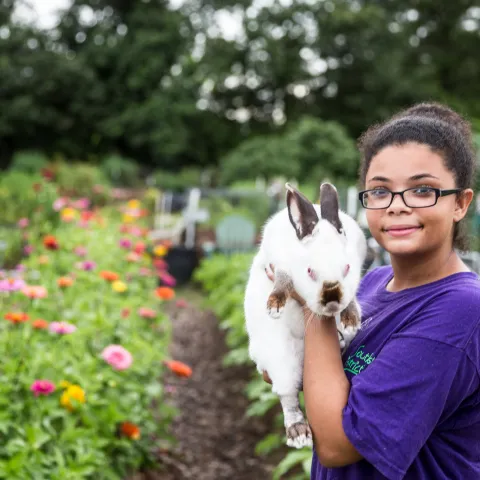
Girl holding rabbit in a field of flowers
University of California 4-H Youth Development Program: Page

Animal Science

4-H Animal Science not only includes raising an animal, but can also include learning new skills related to animals. The availability of Animal Science projects varies by club and county. Please check with your county 4-H office to see what kind of projects are available.
View Page
Primary Image
3 youth leading a meeting, with 4-H pledge and bunting on wall behind them
University of California 4-H Youth Development Program: Page

Leadership

You have many opportunities to develop and improve your leadership skills in 4-H. Even Primary Members have opportunities to learn and practice leadership skills in public speaking, project management, communication, team building, organization and negotiation. You can practice leadership skills in both…
View Page
Primary Image
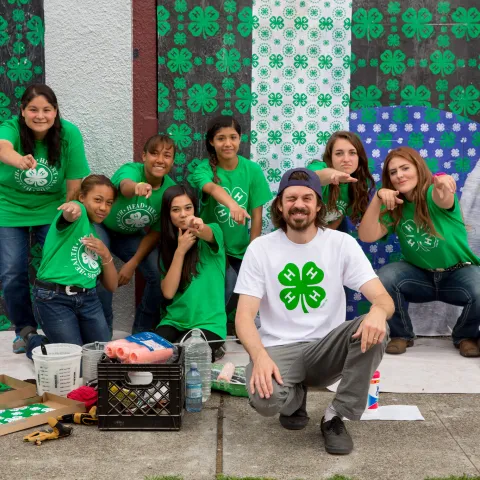
Adult posing with youth in front of wall they cleaned up
University of California 4-H Youth Development Program: Page

Civic Engagement

4-H civic engagement programs empower you to be a well-informed citizen who can actively engage in your community and the world. Civic Engagement projects help you learn about civic affairs, build decision-making skills and develop confidence to make a positive impact.
View Page
Primary Image
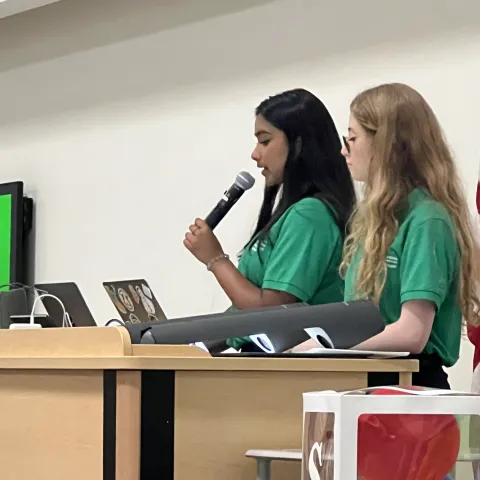
2 State Ambassadors speaking at SLC
University of California 4-H Youth Development Program: Page

Creative Expression & Communication

Creative expression includes all the different ways you can express yourself: visual arts, performing arts, literary arts, crafts, and digital arts. Communication is an important skill that all 4-H'ers practice thru public presentations to share what they've learned. 4-H alumni often share how participating…
View Page