A Natural Solution for California's Herds: African Catfish Peptides

California's cattle producers and agricultural communities are all too familiar with the rising challenge of antibiotic resistance, making common bacterial infections harder to treat in livestock. But imagine a future where we could tackle these infections with a natural, powerful alternative. Our research points to just that: antimicrobial peptides (AMPs) found in African catfish.

We're really excited about these peptides because African catfish thrive in pathogen-rich freshwater, naturally producing these robust immune compounds in their skin mucus as a defense. This natural origin makes them highly appealing alternatives to synthetic drugs.

Predicted Safety and Potent Action

One of the most compelling aspects of these AMPs is their predicted safety for mammals. Our initial computer analyses suggest that various catfish AMPs are generally recognized as safe (GRAS). We predict they'll be absorbed in the human intestine without causing liver, brain, or heart toxicity. Furthermore, lab tests on a promising peptide, NACAP-II, confirmed it was non-hemolytic, meaning it didn't damage rabbit red blood cells—a strong indicator of its potential safety for mammalian cells.

Beyond safety, these peptides demonstrate effectiveness against problematic bacteria. One study revealed NACAP-II's strong activity against Extended-Spectrum Beta-Lactamase (ESBL)-producing Escherichia coli—a critical concern for both animal and human health due to its resistance to many common antibiotics. Another peptide, ACAP-IV, also showed antibacterial activity against E. coli and Staphylococcus aureus. We believe these AMPs work by directly disrupting bacterial cell membranes, a mechanism that makes it harder for bacteria to develop resistance compared to how they resist traditional antibiotics.
Primary Image
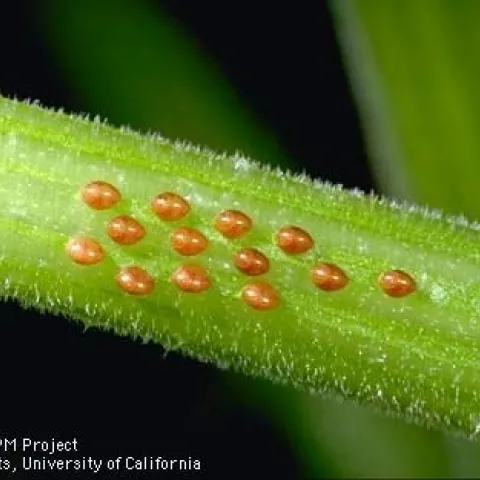
Close up of red orange oblong eggs in three neat lines laid along the stem of a bright green, hairy squash leaf.
Pests in the Urban Landscape: Article

Register for Upcoming Webinars This Fall

September 3, 2021
The next Urban & Community IPM webinar will be Thursday, September 16, 2021 at 1:00pm. This month's topic is Identifying Insect Pests in the Home and Garden, presented by Elaine Lander.
View Article
Santa Cruz County: Article

4-H September Newsletter

September 3, 2021
Dear 4-H Families, We have many exciting pre-fair events coming up this weekend and next weekend. We still need many shift filled in the 4-H clover deli. Invite a friend to share in the fun of the Clover Deli and experience 4-H program. We may gain a new member.
View Article
The Stanislaus Sprout: Article

Last Chance to Apply for the Master Gardener Program!

September 3, 2021
By Anne E Schellman
Are you on the fence about becoming a UCCE Stanislaus County Master Gardener? We encourage you to apply so you can learn more about the program. You'll receive an invitation to our orientation meetings (one held in the morning, the other in the evening) when you can decide if you want to interview.
View Article
Primary Image
barrows 3
UC Environmental Stewards Blog: Article

Providing Context

September 3, 2021
A "Natural History Note" From UC California Naturalist's lead scientist, Dr. Cameron Barrows, in celebration of California Biodiversity Day. Any intelligent fool can make things bigger, more complex, and more violent.
View Article
UCCE in Santa Barbara County: Article

Fall 2021 SB County Bounty!

September 2, 2021
This issue contains: Info on a popular gardening series for SB County residents who are new to vegetable gardening! Registration closes Tuesday, 9/7 at 7PM.
View Article
Primary Image
CattleCal logo

CattleCal Newsletter and Podcast

September 2, 2021
By John Harper
If you're interested in feeding cattle you're in for a treat! Colleagues of mine, in SoCal are producing an excellent newsletter and podcast called CattleCal.
View Article