A Natural Solution for California's Herds: African Catfish Peptides

California's cattle producers and agricultural communities are all too familiar with the rising challenge of antibiotic resistance, making common bacterial infections harder to treat in livestock. But imagine a future where we could tackle these infections with a natural, powerful alternative. Our research points to just that: antimicrobial peptides (AMPs) found in African catfish.

We're really excited about these peptides because African catfish thrive in pathogen-rich freshwater, naturally producing these robust immune compounds in their skin mucus as a defense. This natural origin makes them highly appealing alternatives to synthetic drugs.

Predicted Safety and Potent Action

One of the most compelling aspects of these AMPs is their predicted safety for mammals. Our initial computer analyses suggest that various catfish AMPs are generally recognized as safe (GRAS). We predict they'll be absorbed in the human intestine without causing liver, brain, or heart toxicity. Furthermore, lab tests on a promising peptide, NACAP-II, confirmed it was non-hemolytic, meaning it didn't damage rabbit red blood cells—a strong indicator of its potential safety for mammalian cells.

Beyond safety, these peptides demonstrate effectiveness against problematic bacteria. One study revealed NACAP-II's strong activity against Extended-Spectrum Beta-Lactamase (ESBL)-producing Escherichia coli—a critical concern for both animal and human health due to its resistance to many common antibiotics. Another peptide, ACAP-IV, also showed antibacterial activity against E. coli and Staphylococcus aureus. We believe these AMPs work by directly disrupting bacterial cell membranes, a mechanism that makes it harder for bacteria to develop resistance compared to how they resist traditional antibiotics.
Primary Image
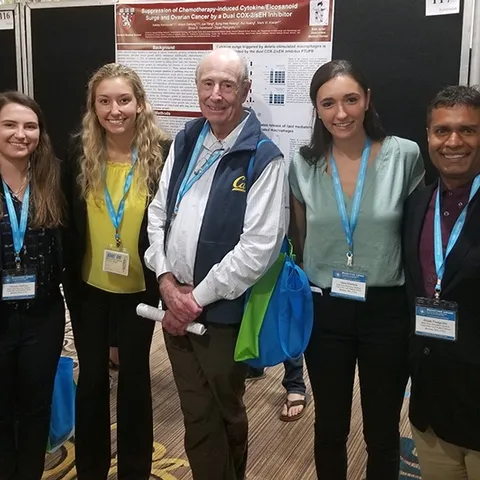
Glenda 2018
ANR Employee News: Article

ANR’s rapid response to COVID-19

March 30, 2020
By Pamela S Kan-Rice
Dear Colleagues, The world has changed profoundly in the past few weeks, compelling us to change the way we live and work to slow the new coronavirus pandemic. Your ability to adapt and to innovate on the fly is nothing short of amazing.
View Article
Primary Image
Face masks were my creative activity for the weekend
ANR Adventures: Article

We are all in this together

March 30, 2020
By Wendy Powers
How is everyone doing? Cabin fever is likely getting to many of us, even the introverts. I am fortunate to be able to get outside into a 5-acre yard and walk the 2-mile, roundtrip, stretch of road without any risk of passing another person.
View Article
Santa Cruz County: Article

Community Service Project at Home

March 30, 2020
Dear 4-H Community, I hope this email finds you all in good health. We have an amazing opportunity for our 4-H community to participate at home. We have a long time 4-H leader organized a Sew a Mask project for a local hospital.
View Article
Primary Image
Unorganized garden tools - organize now so they are easy to find later.
UC ANR South Coast REC Field Events, Workshops, and Extension: Article

Caring for your garden tools...

March 30, 2020
By Tamara J Majcherek
While there is a little down time, why not clean up your garden tools if you haven't already done so. Many gardeners are diligent about clearing out old, holey gloves, broken tools and doing a little general maintenance during the wet winter months.
View Article
Primary Image
Antimicrobials include several categories of products. To maintain virus-free surfaces use a disinfectant or a virucide. Sterilants are generally more toxic and reserved for critical environments like hospitals. Infographic courtesy Enviroxyclean.
Pests in the Urban Landscape: Article

Disinfectants are pesticides–so use safely!

March 30, 2020
What do pest control and public health campaigns against SARS Cov-2 have in common? Both activities use pesticides. In the eyes of the law, sanitizer and disinfectant products are considered pesticides.
View Article
Primary Image
IMG 56322
BLP's in OC: Article

Caring for your garden tools...

March 30, 2020
By Tamara J Majcherek
While there is a little down time, why not clean up your garden tools if you haven't already done so. Many gardeners are diligent about clearing out old, holey gloves, broken tools and doing a little general maintenance during the wet winter months.
View Article
Primary Image
photo by Lowell Cooper
Under the Solano Sun: Article

Nature Will Have Its Way

March 30, 2020
I have just returned from a trip that included Angkor Wat in Cambodia. One of the most interesting things about ancient ruins is the state they are discovered in. This particular site is about 900 years old in a very hot location.
View Article
IGIS: Article

IGIS Expands Online Office Hours and R Consultations

March 30, 2020
By Andy Lyons, Maggi Kelly, Robert Johnson, Sean D Hogan, Shane T Feirer
Got the Coronavirus blues? Stuck at home staring at that stubborn dataset that's been on the back-burner for a year or more? The IGIS Team is pleased to announce an exciting expansion to our Online Office Hours.
View Article
Primary Image
soil layers
Topics in Subtropics: Article

Soil Hoarding Carbon

March 29, 2020
By Ben A Faber
Joint research conducted by The Nature Conservancy and the Kunming Institute of Botany, Chinese Academy of Sciences calculated the carbon-storing power of global soils and showcased approaches like agroforestry designed to capitalise on untapped potential.
View Article