A Natural Solution for California's Herds: African Catfish Peptides

California's cattle producers and agricultural communities are all too familiar with the rising challenge of antibiotic resistance, making common bacterial infections harder to treat in livestock. But imagine a future where we could tackle these infections with a natural, powerful alternative. Our research points to just that: antimicrobial peptides (AMPs) found in African catfish.

We're really excited about these peptides because African catfish thrive in pathogen-rich freshwater, naturally producing these robust immune compounds in their skin mucus as a defense. This natural origin makes them highly appealing alternatives to synthetic drugs.

Predicted Safety and Potent Action

One of the most compelling aspects of these AMPs is their predicted safety for mammals. Our initial computer analyses suggest that various catfish AMPs are generally recognized as safe (GRAS). We predict they'll be absorbed in the human intestine without causing liver, brain, or heart toxicity. Furthermore, lab tests on a promising peptide, NACAP-II, confirmed it was non-hemolytic, meaning it didn't damage rabbit red blood cells—a strong indicator of its potential safety for mammalian cells.

Beyond safety, these peptides demonstrate effectiveness against problematic bacteria. One study revealed NACAP-II's strong activity against Extended-Spectrum Beta-Lactamase (ESBL)-producing Escherichia coli—a critical concern for both animal and human health due to its resistance to many common antibiotics. Another peptide, ACAP-IV, also showed antibacterial activity against E. coli and Staphylococcus aureus. We believe these AMPs work by directly disrupting bacterial cell membranes, a mechanism that makes it harder for bacteria to develop resistance compared to how they resist traditional antibiotics.
Primary Image
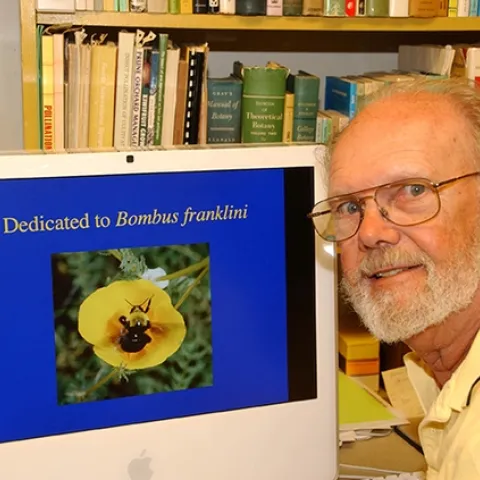
Robbin Thorp, distinguished emeritus professor of entomology at UC Davis, with his screensaver, an image he took of Franklin's bumble bee. He passed June 7. (Photo by Kathy Keatley Garvey)
Bug Squad: Article

Franklin's Bumble Bee May Be Protected: A Legacy of Robbin Thorp

August 13, 2019
By Kathy Keatley Garvey
The late Robbin Thorp, distinguished emeritus professor of entomology at the University of California, Davis, and a global authority on bees, worked tirelessly to try to include Franklin's bumble bee (Bombus franklini) as an endangered species under the U.S. Endangered Species Act (ESA).
View Article
Kern County: Article

Kern UCCE/DWR Weekly Crop Water Use Report 08-12-2019

August 13, 2019
Please see below link to access "How To Use Weekly Crop Water Use (ET) Reports to Assist Farm Water Management" How To Use Weekly Crop Water Use Report Please see below link to access "Weekly ET Report 08-12-2019" ET Report 08-12-2019 Please see disclaimer link below: University of California Divisi...
View Article
Livestock & Range: Article

Cows Needed for Antimicrobial Study on August 29

August 13, 2019
By Devii R Rao
Gaby Maier is the UCCE Specialist for Beef Cattle Herd Health and Production at UC Davis . She is conducting a study looking at antimicrobial resistance in bacteria in the feces of mother cows and unweaned calves.
View Article
Primary Image
photos by Launa Herrmann
Under the Solano Sun: Article

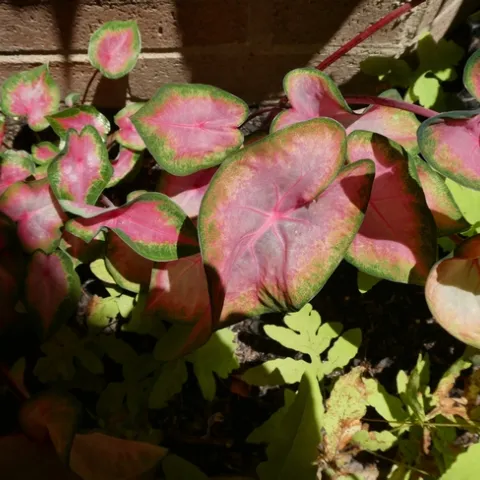
Caladium: easy-grow summer-bloom tuber

August 13, 2019
Looking to add summer color to a flower pot, window box, hanging basket or along a shaded walkway? Consider planting Palladium tubers in the spring.
View Article
Cooperative Extension Ventura County: Article

Volume 28, Issue 1

August 13, 2019
Interim Sabbatical Report Arid land plants that may have horticultural value in California Meeting: Trees of the Chiricahua Mountains Biology, Ecology and Drought Adaptations.
View Article