
Monthly tips are categorized by To-Dos, What to Plant, or Pests and Diseases. Scroll through the list to see items in each category. Also, refer to our list of tips useful for any month.
To-Dos: September
Broccoli - Multiple Harvests
Change to Cool Season Planting
Consider Dehydrating Some Of Your Harvest
Cool Season Vegetables
Deadheading
Drip Irrigation
Drought Tip - Irrigate Efficiently
Drought Tip - Laundry to Landscape Irrigation
Drought Tip - Lawns
Drought Tip - Trees Come First during Drought
Free the Trees
Fresh Fruits and Vegetables Without a Garden!
Garden Sanitation
Grass Cycling
Harvesting Oranges
How to Tell if Fruits and Vegetables Are Ready to Pick
Inspect Roots When Planting
Irrigation Maintenance
Keep Watering Until the Cool Weather Arrives
Late Tomatoes
Lawn Care
Mulch to Conserve Water
Oleander
Planting Trees or Shrubs
Preserving Fruits and Vegetables
Shovel Pruning
Soil Moisture Test
Summer Vegetables
Time for Seed Saving
Transplanting Vegetables
Watering Trees
Weed Spotlight - Bindweed
Wildfire Effects
Winter Squash Harvesting
Winter Vegetables
Worm Composting
Yellowing Leaves on Gardenias
Pests and Diseases: September
Birds
Bitter Pit (Brown Spots) on Apples
Boxwood Blight
Brown Marmorated Stink Bug
Bug Patrol
Citrus Leafminer
Giant Whiteflies
Identifying Beneficial Insects
Leafcutter Bees - a Beneficial Insect
Mosaic Virus
Pepper Weevil
Powdery Mildew
Rat Management
Root Knot Nematodes
Sooty Mold
Spiders in Your Garden
Today’s Grubs Are Tomorrow’s Beetles
Tomato blossom end rot
White Butterflies and Green Caterpillars
Whiteflies
What to Plant: September
Asian Vegetables
Attracting Bees
Camellias
Carrot Culture
Cover Crops
Don’t Plant an Invasive Plant
Growing Purple Carrots
Herbs
Native Wildflowers
Peas
Planting Bulbs
Planting Ornamentals
Seed Viability
Asian Vegetables
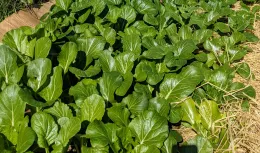
You can easily grow some vegetables used in different types of Asian cuisine and found in Asian markets. They are not necessarily native to Asia but have found their way into various cuisines. One way to decide which food to grow yourself is to choose varieties that aren’t readily available or are more expensive in your local markets. It’s also fun to impress your family, friends, and neighbors with something they may not have seen growing before. Possibilities include sesame seeds, bitter melon, opo, sigua (loofah) in summer and bok choy, napa cabbage, daikon radishes, gai choy in spring or winter.
More Information: Vegetable planting chart in English | Chinese
Months: February March April May June September October
Tags: Vegetables What to Plant
Attracting Bees
Bees are pollination workhorses, increasing garden production. Many plants will not produce fruit unless flowers are pollinated. Colorful annuals, such as Cosmos, edible African Blue Basil, and Salvias attract bees. You can also allow herbs and other plants to flower to create bee-friendly landscapes.
The University of California at Davis has a garden dedicated to bees. The Honey Bee Haven website has more resources, including a list of plants they grow.
Months: March April May June September October
Tags: Beneficial Insects Herbs Ornamental Plants What to Plant
Birds
Birds can cause extensive damage to tree fruit crops. Unlike squirrels, birds are more likely to peck at one piece of fruit until it’s gone. If they are doing too much damage, netting over a tree can keep them away from the fruit. If you use visual repellents (such as Mylar streamers or noisemakers) to frighten them, be sure to vary the method so that the birds don’t become immune to the effects. Read the UC Pest Note on Birds on Tree Fruits and Vines for more information.
Months: July August September
Tags: IPM Techniques Pests and Diseases
Bitter Pit (Brown Spots) on Apples
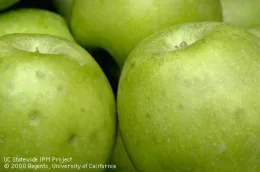
Bitter pit is a physiological disorder that affects many varieties of apples. The condition develops after fruit has been picked. It is caused by low levels of calcium in fruit tissues which leads to small brown, sunken lesions that become dark and corky. Highly susceptible cultivars include Red Delicious, Granny Smith, Golden Delicious, Jonathan and Gravenstein. The UC Bitter Pit Pest Note recommends cultural practices for control.
For even more information, the UC Postharvest Technology Center website has grower information, including using calcium sprays starting in June.
Months: August September
Tags: Abiotic Disorders Fruits & Nuts IPM Pests and Diseases
Boxwood Blight
Boxwood is an evergreen shrub typically grown as a short border hedge. It is often pruned in a straight, formal style. It has been falling out of favor as native, drought-resistant plantings are increasing in popularity. Another reason for reconsidering its use is the fairly recent arrival of a fungal disease called Boxwood Blight. It was first detected in the U.S. in Connecticut in 2011 and reported in Santa Clara County in 2017. It is spread by contact through pruning tools, gardeners’ clothing, and irrigation. This blight can show symptoms in as little as a week. Look for brown leaf spots with dark edges, white spores on the undersides of leaves, black lesions on stems, and severe dieback. Humidity and overhead watering contribute to the disease being able to take hold. Pruning infected branches, with sterilization of tools between each cut, may help. Fungicides cannot control the disease once it starts. More likely the plant will have to be removed, bagged, and thrown in the garbage.
Boxwood Blight, UC IPM
Months: August September
Tags: Disease IPM Trees & Shrubs Pests and Diseases
Broccoli - Multiple Harvests
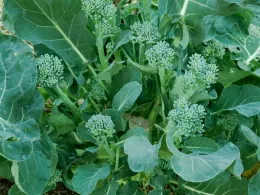
Did you know that most broccoli plants can give you multiple harvests? The first central head that they produce will be the largest and fullest. But after you harvest that one, the plant will start to produce lots of smaller heads, called side shoots. They sprout from buds in the leaf axils, where the leaves join the stem of the plant. You can keep harvesting these tender shoots, sometimes called broccolini or baby broccoli, for another 2 to 3 months.
More Information: Growing Broccoli
Months: March April May June September October November December
Tags: Best Practices Vegetables To-Dos
Brown Marmorated Stink Bug
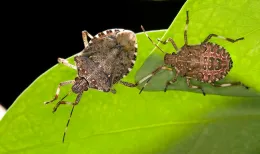
Native to Eastern Asia, this pest was introduced to the United States in the 1990s and has been established in Santa Clara County. Some features to distinguish these bugs from other stink bugs are white stripes on the antennae, a blunt head shape, and smooth shoulder margins.
They feed and reproduce on a variety of plants and are particularly damaging to fruit. You can cut cosmetic damage off fruit and still eat the rest of the fruit. To keep out stink bugs, cover vegetable plants with row covers. You can pick the bugs off plants and squish them or knock them off into soapy water. They are attracted to light and can get into homes where if vacuumed up, they can stink up your vacuum bag.
More Information: Brown Marmorated Stick Bug Pest Note
Months: March April May June July August September
Tags: Fruits & Nuts IPM Invertebrates Vertebrates Pests and Diseases
Bug Patrol
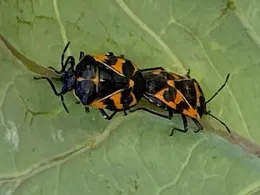
It’s never helpful to have critters competing with you for your food. Damage can be done by squirrels, raccoons, rats, birds, and caterpillars, yet it is the tiniest creatures that can be the hardest to detect. That’s why it’s helpful to do a regular inspection, as often as once or twice a day if possible. Knowing what it is will help you figure out what to do to maximize the productivity of your garden. Some pests are out during the day and others do their damage at night, so you may want to take a flashlight out at non-peak gardening hours. Holding a piece of white paper under a plant and shaking the plant can make insects fall off for identification. The most common place to find pests is on the undersides of leaves so make sure to closely inspect those parts. A magnifying glass of some sort is a useful tool. You can also take a picture with your cell phone and then zoom in for a closer view. It’s important to be able to recognize the eggs, the larval and nymph stages, and the adult form, and to be able to differentiate between beneficial insects and harmful pests.
Don’t indiscriminately squish everything that moves! Once you have done your detective work, you can go to the University of California IPM website for identification and management tips, or contact the Master Gardener Help Desk for guidance.
More Information: Beneficial Predators — These are the ones you want!
Months: July August September
Tags: Beneficial Insects IPM Invertebrates Vertebrates Pests and Diseases
Camellias
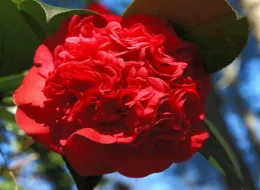
Camellias can be planted in fall through spring. Since they bloom in winter, choosing a plant now will ensure that you know the color, shape, and size of the flowers with which you will live for many years. Camellias are not native to our area so may need some extra attention in order to grow successfully. Our native clay soil does not drain well so it must be amended for camellias. Our alkaline soil needs to be acidified, and sulfur pellets are one way to achieve this. The plants need some shade and need to be kept moist. Mulch helps hold in moisture, and pine needles, redwood bark, and coffee grounds are all good organic materials that will break down over time and help improve the soil. Pick up flowers as soon as they fall to the ground to avoid the spreading of a disease called Camellia petal blight.
More information: Camellia Pests
Months: January February March April May September October November December
Tags: Ornamental Plants Trees & Shrubs What to Plant
Carrot Culture
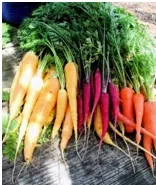
If you have a light fluffy soil, perhaps in a raised bed, you can grow those long beautiful carrots you see in the grocery store. However most of us have a heavy clay soil and it is best to grow the shorter varieties. Adding organic material such as compost rather than manure is good. The seeds are very tiny and mixing sand with them will help you not over-seed. Plant no more than ½ inch deep. Carrots are slow to germinate and could take as long as 3 weeks. Keep the soil moist until they’re up. Thin to 2 or 3 inches apart. Plant every few weeks for a continuous crop. If you have limited space, try growing in among your ornamentals, their feathery tops can look quite pretty. They can also be grown in a container. Some common problems are twisted roots from planting too close together, forked or deformed roots from clods and rocks in the soil, hairy root from too much nitrogen and splitting from too much water.
Months: February March April September
Tags: Techniques Vegetables What to Plant
Change to Cool Season Planting
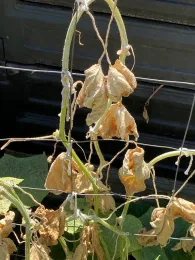
Many things go into deciding when to take out your warm season vegetables and when to put in your cool season crops. For example, are the current plants starting to be less productive? Is the amount of food you’re getting no longer worth the amount of water you are using? Are there a lot more yellow or brown leaves? Are there more signs of pests and diseases that are weakening plants, reducing photosynthesis, and spreading pathogens? Are botanical fruits like peppers producing fewer flowers, or are herbs producing more flowers and going to seed? Have you had your fill of certain vegetables or are your canning jars and freezer full? And do you need the space for your winter crops? In order to maximize both seasons, you can start cool season vegetables in containers, interplant them with soon-to-be-removed vegetables, or buy them later as transplants.
More information: Vegetable calendar
Months: September October
Tags: Techniques Vegetables To-Dos
Citrus Leafminer
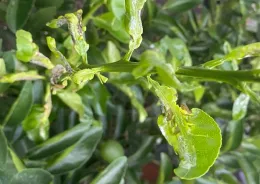
What causes young, healthy citrus leaves to become gnarled and disfigured and what can be done about it? This damage is due to the citrus leafminer moth that lays eggs on new citrus leaves. Its larvae burrow into the leaf and leave tunnels as they feed, visible as meandering serpentine mines. Our advice: don’t worry about it. Leafminers can slow the growth of young trees but even heavily damaged trees are unlikely to die. Leafminers only attack young leaves — the tough leaves of mature plants resist infestation and fruit is not affected. Damaged leaves still produce food for the tree, so don’t cut them off. If you do, it will stimulate the tree to produce more new leaves — which will attract more leafminers!
More information: Citrus Leafminer
Months: January February March April May September October November December
Tags: Fruits & Nuts Invertebrates Pests and Diseases
Consider Dehydrating Some Of Your Harvest
If you have more fruit than you know what to do with, dehydration can be an excellent way to preserve it. Apricots, apples, pears, figs, and tomatoes are all great candidates for drying. While making jams, jellies, cobblers, and pies is one way to use up an abundant harvest, they add fat and sugar to our diet, dried fruit can be a healthy alternative! Onions and garlic can also be dehydrated to last indefinitely.
Also see the publication on Dehydrating Basics by the UCCE Master Food Preservers of Amador/Calaveras Counties.
Months: August September
Tags: Fruits & Nuts Techniques Vegetables To-Dos
Cool Season Vegetables
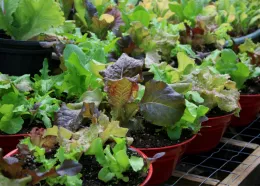
Cool season vegetables include many greens (spinach, arugula, cabbage, collards), root vegetables (carrots, beets, radishes, turnips), and cole crops (broccoli, cabbage, cauliflower, kohlrabi). Cilantro and peas also do well in the fall when it is a little cooler.
If starting from seed, August is the time to start seedlings for fall vegetables. Broccoli, cauliflower, beets, and fennel will take about 6 weeks to grow to transplant size. Greens such as lettuce, spinach, arugula, chard, and kale will be ready in 4 weeks. So for planting in mid-to-late September, aim to start them in early to mid-August. You can direct seed them on the ground if you have the space. The soil should still be warm enough for seeds to germinate but shade them from the hottest afternoon sun, and keep the seeds moist.
If buying transplants from a nursery, you can wait until September. In Santa Clara County, many of the cool season crops that are planted in September or October can be planted again in February and March. You can get in another crop before it’s time to put summer vegetables in the ground.
A big advantage of cool season vegetables is that they need less supplemental water due to lower temperatures, fewer daylight hours, and rain. There are also fewer pest problems in the winter. Cool season vegetables grow well in temperatures ranging from 55°F to 75°F, at locations with 6 to 8 hours daily of sun.
Check out our videos page for videos on cool season vegetables, including a 3-session course for more inspiration.
Months: August September October
Tags: Best Practices Techniques Vegetables To-Dos
Cover Crops
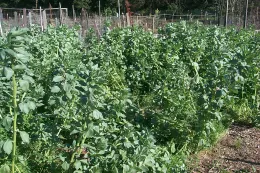
You may want to rest in the winter, but the soil life needs to remain active and protected and preferably weed-free. If you’re not planting vegetables or ornamentals in an area for a few months, try plants designed to feed the soil and the organisms that live in it. Cover crops are ideal for putting nutrients back into your soil and keeping weed growth to a minimum. Fava beans are the most popular cover crop in this area and can be seen in abundance in community gardens. Other common crops are clover, vetch, and bell beans. Different cover crops provide a variety of benefits. Cereals such as oats and barley to help build organic matter. Beans and other members of the legume family fix nitrogen from the air and make it available in the soil and to plants. The roots also break up heavy clay soil and improve its structure. While fava beans are edible, they provide the most nitrogen to the soil if they are cut up and dug in while they are still in the flowering stage.
More Information
Months: September October
Tags: Soil What to Plant
Deadheading
Deadheading means removing spent blossoms from your plants. Not all plants need deadheading, but if the flowers stay on the plant and become unattractive (think roses, dahlias, marigolds, coneflowers, geraniums and many more), then consider a little pruning. The technique varies by plant; some spent flowers can be snapped off by hand (dahlias), others are better done with hand pruners (roses), and some can be sheared off all together (lavender). You’ll not only make the plant look better, you’ll stimulate additional blooming for plants that have a long blooming season.
Months: May June July August September
Tags: Best Practices Garden Basics Ornamental Plants Techniques To-Dos
Don’t Plant an Invasive Plant
According to PlantRight, so-called invasive plants “escape into open landscapes and cause a variety of ecological problems. They displace native plants and wildlife, increase wildfire and flood danger, clog valuable waterways, degrade recreational opportunities, and destroy productive range and timberlands.”
PlantRight has identified the following as invasive in Northern California: Green fountain grass (Pennisetum setaceum), Periwinkle (Vinca major), Pampas grass (Cortaderia selloana), Highway iceplant (Carpobrotus edulis), Mexican feathergrass (Stipa / Nassella tenuissima), Yellow Flag Iris (Iris pseudacrorus), Water Hyacinth (Eichhornia crassipes).
Before purchasing, planting, or sharing a plant, please check the Cal-IPC site, or PlantRight to see if it is invasive, and if it is, find alternatives to the plant. With just a little research, you can avoid using plants that are unfriendly to the Bay Area.
Months: April May June July August September
Tags: Ornamental Plants What to Plant
Drip Irrigation
Low volume drip irrigation system
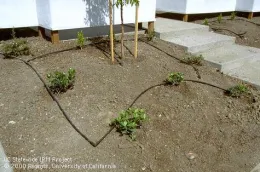
Consider various forms of irrigation conversion! Irrigation systems, especially drip and micro-sprinklers, have drastically improved over the last few years. For example, there are kits that convert pop-up sprinkler heads to low-flow systems. The conversion kits include a pressure regulator to control changes in pressure and a filter to improve water quality. Water usage is reduced through better water management, control of distribution and less loss from evaporation. Other advantages include:
- Water is placed more accurately and efficiently in the root zone, it is applied at a slow rate that reduces loss from runoff.
- Dry soil between plants allows you to work in the garden between irrigating
The key to success is watering long enough to supply adequate water to the root zone. Inappropriate watering commonly damages landscape plants. As with any irrigation system, they are efficient only when soil around the plants being irrigated is regularly monitored for proper moisture levels (Reference: UC Pest Note Poor Water Management, Poor Drainage).
Months: April May June July August September Any Month
Tags: Best Practices Irrigation Techniques Waterwise Tips To-Dos
Drought Tip - Irrigate Efficiently
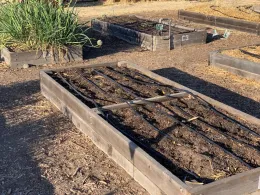
Water restrictions are being put into place all over the state due to the current drought. With over half of urban water used in landscapes, it is essential to make sure your irrigation system is efficient. Watch your plants for signs of underwatering, overwatering, or uneven watering. Consider reducing irrigation times. And make sure your water bill hasn’t unexpectedly jumped. Also, adjust systems on timers monthly as the weather changes or use an automatically-adjusting smart controller. A smart controller can make the needed adjustments after initial programming with plant, location, and other relevant information.
Our Santa Clara County clay soil absorbs water slowly, so only water for a few minutes at a time to avoid runoff. Then repeat until the water penetrates to the depth of the roots. Inspect drip and sprinkler systems regularly to make sure there are no leaks, emitters are not clogged and it is watering the plants and not the sidewalk, also make sure the water is going to the root zones of the plants. If you run a hose to a plant, set a kitchen or cell phone timer so you don’t forget that the water is running. Valley Water can help residents with Water Wise Outdoor Surveys and Landscape Rebate Programs.
Months: March April May June July August September Any Month
Tags: Best Practices Irrigation To-Dos
Drought Tip - Laundry to Landscape Irrigation
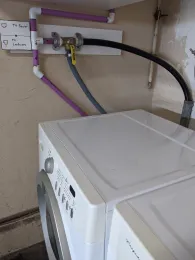
A laundry-to-landscape system is an easy way to save water in times of drought. It can be installed easily at a low cost to send rinse water from clothes washers directly to the landscape.
Suitable plants include fruit and ornamental trees, shrubs, and ornamental annuals. It’s not applicable where the water would come in direct contact with fruits or vegetables.
More information from Valley Water: About Graywater
Months: March April May June July August September Any Month
Tags: Irrigation Waterwise Tips To-Dos
Drought Tip - Lawns

This landscaping feature—imported long ago from rainy, foggy England—does not translate well to a semi-desert with frequent droughts. Lawns demand a huge investment of water, money, time, work, equipment, and fertilizers and other chemicals. According to Scientific American, U.S. lawns require the equivalent of 200 gallons of drinking water per person per day. Many people are joining the “lose the lawn” movement, and UC Davis offers several plans and examples to help you get started on a yard design more appropriate for our climate. Valley Water offers rebates and guidance for lawn replacement.
If your family uses your lawn and you want to maintain it this summer, follow the irrigation regulations of your local water company and aim for survival rather than a lush green carpet. A lawn that looks light green or brown will often be dormant (not dead) and will perk up with the winter rains; the roots can survive much longer than the blades above ground. Keep it mowed in the meantime so that weeds don’t go to seed and take over. Concrete and synthetic (plastic) turf do not benefit the environment other than not using much water.
More information: Drought Resources
Months: March April May June July August September Any Month
Tags: Lawns Waterwise Tips To-Dos
Drought Tip - Trees Come First during Drought
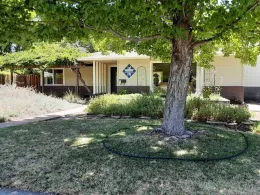
With no end to the drought in sight and water restrictions in place, Santa Clara County residents must make some tough landscaping choices right now — namely which plants in our yards should receive our limited supply of water? The answer is trees. Because trees take years to grow, they aren’t as easily replaced as other plants. Besides that, trees provide shade critical to cooling our homes while releasing oxygen and reducing energy use. Using a hose or soaker hose, slowly trickle water in a large circle under the canopy of the tree (but not right at the trunk). Deep watering for two hours once every few weeks will keep established trees alive.
More information: Tips to Keep Trees Alive
Months: July August September
Tags: Best Practices Fruits & Nuts Irrigation Trees & Shrubs Waterwise Tips To-Dos
Free the Trees
As your young trees grow bigger and stronger, remove supporting stakes or loosen the straps as early as possible. Some movement of the tree is important to make it healthier in the long run. If the tree is able to stand on its own, it will develop a thicker trunk with a taper at the bottom.
Months: September Any Month
Tags: Abiotic Disorders Best Practices Fruits & Nuts Techniques Trees & Shrubs To-Dos
Fresh Fruits and Vegetables Without a Garden!
If you like the freshest possible produce but don’t have the space or time to grow your own, find a certified Farmers Market selling directly to consumers. The County of Santa Clara website has a Farmers Market page with links to certified Farmers Markets.
Months: June July August September
Tags: Best Practices To-Dos
Garden Sanitation
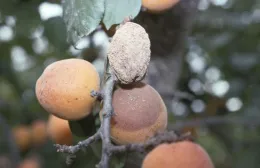
Keeping the garden clean can help keep it healthy. Remove spent blossoms, fruit, and other plant parts as your plants finish producing. Dead and decaying plant parts can attract pests and give them safe places to breed. Insect pests damage plants directly by eating material or sucking out juices and nutrients, and they also spread diseases between plants as they move around. Weeds compete with desirable plants for water and nutrients and even sunlight, so remove them promptly. Older leaves of some plants, like squash vines, may naturally turn yellow and die. Removing them early allows the plants’ energy to go into the actively growing parts. Pick up fallen fruit that can attract rodents and can also return disease pathogens to the soil and plant. It’s particularly important to remove dried-up fruit “mummies” so that the fungal spores don’t spread. Prune dying tree branches before they can fall and do damage. Some flowering plants will produce more flowers if you remove spent blooms, a process called deadheading. You can leave healthy fallen leaves in place to form a mulch and decompose naturally, or you can rake them up and add them to the compost pile with other disease-free plant material. Do not compost diseased material.
More information: What Does Plant Disease Sanitation Really Mean?
Months: July August September Any Month
Tags: Best Practices Disease Fruits & Nuts IPM Invertebrates Trees & Shrubs To-Dos
Giant Whiteflies
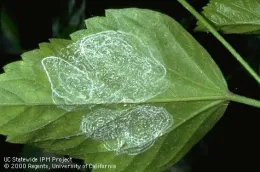
Giant whiteflies were only discovered in California in 1992, but the infestation is now widespread in the San Francisco Bay Area. Plants most affected are ornamentals, such as begonia, hibiscus, bird of paradise, mulberry, and others. Adults produce spirals of wax primarily on the underside of leaves and lay their eggs in waxy bands which grow heavier as the population increases. Wax filaments grow to lengths of up to 2 inches, but in shielded areas, they can reach ten inches long! Even though affected plants weaken, they rarely die. Manage giant whiteflies by removing infected leaves, washing the undersides of leaves with strong streams of water, and encouraging beneficial insects to control populations.
More Information: Giant Whiteflies in Your Garden
Months: June July August September
Tags: IPM Invertebrates Pests and Diseases
Grass Cycling
Leave the clippings on the lawn when mowing. This provides nitrogen for the lawn. Mow frequently so that no more than ⅓ of the length of the grass blade is cut in any one mowing. Grass decomposes rapidly and very little thatch is formed. Small amounts of thatch can actually be beneficial to a lawn, serving as a mulch. Many parks and golf courses have been doing this for years. Other uses for grass clippings include mulching for weed control and as a great addition to your compost pile. There are some cities that no longer will allow grass clippings in their dumps.
Months: June July August September
Tags: Techniques To-Dos
Growing Purple Carrots
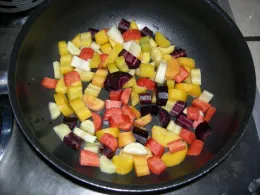
If you only buy carrots at the supermarket, you may think that they are all orange. It is believed that carrots were originally purple, with orange becoming popular through Dutch breeding. Several colors are now available at Farmers’ Markets and by growing your own. Springtime is a good time to start carrots from seed. Transplanting is not advised because you can easily damage the roots which are the relevant plant part. Loose soil is important so that the carrots will grow straight.
Scatter the seeds over the soil with as thin a covering as possible, keep moist until germination, and harvest when the tops expand to a good size. The Master Gardeners have done germination and growing experiments with different varieties and soil blends. Covering seeds with a thin layer of vermiculite yielded the fastest and highest rate of germination. Carrots are slow to germinate and could take as long as 3 weeks. Thin to 2 or 3 inches apart. For growing, a soil blend of ⅓ compost and ⅔ soil produced higher-weight carrots than blends with half of the soil replaced with either sand or perlite.
Some common problems are twisted roots from planting too close together, forked or deformed roots from clods and rocks in the soil, a hairy root from too much nitrogen and splitting from too much water.
More Information: Growing Carrots
Months: February March April September
Tags: Techniques Vegetables What to Plant
Harvesting Oranges
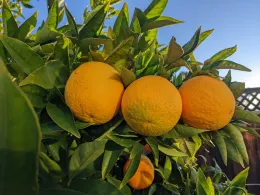
There’s a simple way to know whether your citrus fruit is ripe: taste it! Citrus varieties differ in when they first ripen and how long the fruit holds on the tree. Harvest dates depend on the variety and the climate. For example, the normal fruit season is winter for Navel orange, and summer for Valencia orange. Until you are familiar with your particular tree, sample a fruit periodically to see if it suits your taste. Allow fruit to ripen fully on the tree, as citrus does not continue to ripen once it’s picked.
More information: Harvesting and storing citrus
Months: January February July August September October November
Tags: Fruits & Nuts Techniques To-Dos
Herbs
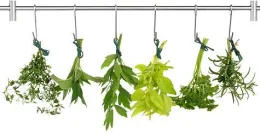
Many herbs can be grown both indoors and out, in pots or in the ground. Rosemary grows large and needs to be in the ground or a big pot. If you use basil to make pesto, you may want a row of it in the garden. Yet most herbs tend to be used in small quantities for seasoning and so they can be grown in small containers. They can be on the kitchen counter or a windowsill for ease of use in cooking. They can be on a patio if you are in an apartment or condo. And they are well suited to container gardening outdoors. Woody herbs can be grown from cuttings, lemongrass can be started from stalks from the store, and most others can be started from seed. After harvesting, many can be dried as well as used fresh.
More Information: Growing Herbs
Months: March April May September October
Tags: Best Practices Herbs What to Plant
How to Tell if Fruits and Vegetables Are Ready to Pick
The UC Davis Postharvest Technology website was designed for commercial growers, but the information on how to tell When Fruits and Vegetables are Mature is handy for home gardeners as well. There’s also information about how to Store Fruits and Vegetables for Better Taste.
Months: July August September
Tags: Best Practices Fruits & Nuts Techniques Vegetables To-Dos
Identifying Beneficial Insects
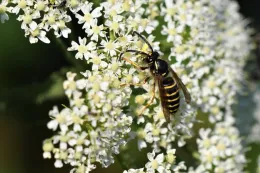
A whole army of insects is in your garden ready to help your plants thrive. Pollinators, like bees and butterflies, help plants produce fruit. Lady beetles and lacewings are predators that hunt, kill, and eat insects. And parasites, like certain wasps, develop within a pest’s body and then kill them. Such violence! The trick is knowing which insects are friends or foes. To identify the insects on your own, take pictures of them and any eggs or larvae (check the undersides of leaves). Then zoom in for a closer view and use this site to help you identify beneficial insects.
More information: Beneficial Insects
Months: March April May June July August September
Tags: Beneficial Insects Pests and Diseases
Inspect Roots When Planting
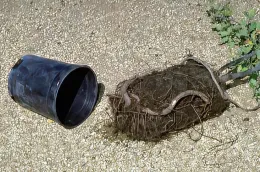
If you’re adding plants to your garden this spring, check the roots before putting them into the ground. Two things are particularly important. First, look for circling roots, which can eventually strangle the plant. Straighten them out as much as possible and consider pruning them if they’re too big to spread. Second, note where the roots start growing and plant at that depth, or slightly higher to allow for some settling. If planted too deeply, plant roots cannot get enough oxygen to grow and may suffocate and die. Planting too shallow can result in root damage from exposure and excessive drying.
More Information: Fix Those Roots Before You Plant
Months: February March April May September October November
Tags: Best Practices Garden Basics Techniques To-Dos
Irrigation Maintenance
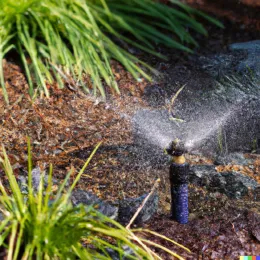
Check your watering system regularly to make sure it’s working properly. Sprinklers and emitters that are plugged up or misdirected can cause problems for the plants they’re supposed to water, and broken emitters and hoses waste water. Get ready for the growing season by starting a watering cycle for each zone of your controller and visually checking its operation. If you’d like help, Valley Water offers a free evaluation service for properties less than ½-acre in size. Use the link below to schedule a survey.
Months: March April September October
Tags: Best Practices Irrigation Techniques Waterwise Tips To-Dos
Keep Watering Until the Cool Weather Arrives
September is still a warm month in Santa Clara County. Continue watering established trees and shrubs until temperatures cool down. As a rule of thumb, trees should have a couple of deep waterings during the summer, if you haven’t done that, now is a good time. Use a soaker hose or drip hose around the drip line of the tree and slowly water for two to three hours. Mature fruit trees need a bit more, fill the surrounding basin every 3 to 4 weeks, young fruit trees need water every couple of weeks.
Months: September
Tags: Techniques To-Dos
Late Tomatoes
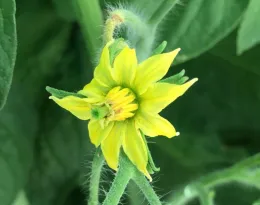
How many more edible tomatoes can you expect to get this year? Any tomatoes currently on the plant are likely to ripen nicely in the next month or so. Current blossoms may lead to good tomatoes, mealy tasteless tomatoes, or none at all. It depends on the weather. Many of us have taken the gamble and eaten tomatoes into December and beyond, more for the challenge and bragging rights than for exquisite flavor. But a cool fall can affect production and quality, and some gardeners start removing blossoms now. This allows the plant’s energy to go into the existing fruit. If we have another mild winter like last year, the plant could survive and produce another crop of tomatoes next summer. We each make our own decisions based on our guesses, hopes, energy level, and available garden space.
More information: Growing tomatoes in the home garden
Months: September
Tags: Techniques Vegetables To-Dos
Lawn Care
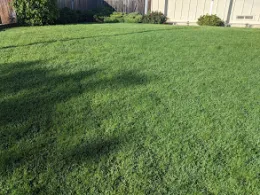
As the weather changes, many of our management techniques have to change. Lawns need more water as the temperature increases and the humidity lowers. But please don’t overwater; too much water is wasted by going below the root zone or running off. Adjust timers monthly throughout the year. In the warmer months, lawns may need water twice a week. It is not good to water daily. If watering is daily and brief, the roots will stay shallow and susceptible to drying and burning. Be sure to water as early in the morning as possible to avoid evaporation. This also helps reduce fungal diseases by giving the grass time to dry out during the day. Poor watering practices are the main reason for dead and dying areas in lawns and a common source of urban runoff.
Make sure you are mowing to a height appropriate for your type of grass. Mow frequently enough so that only one-third of the leaf is removed at any one time.
Fertilizing is important, even if you are grasscycling, which only provides about 20% of a lawn’s fertilizer needs. Grass is all leaf, so the primary nutrient needed is nitrogen. Keep on top of weed removal.
Thatch is the layer of living and dead grass material (blades, rhizomes, stolons) that can build up on the surface of the lawn. A thin layer protects the soil surface and shallow roots from drying out from the sun, but a thick layer prevents water from getting through. You can remove dead grass material on the soil surface with a special thatch rake to allow water to reach the roots more easily.
More Information: The UC Guide to Healthy Lawns
Months: May June July August September October
Tags: Best Practices Irrigation Lawns Techniques Waterwise Tips To-Dos
Leafcutter Bees - a Beneficial Insect
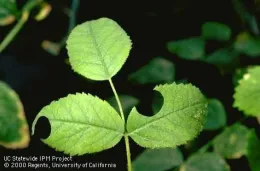
Do your rose bush leaves have smooth round holes in them? The likely culprit is the female leafcutter bee. The bee cuts smooth round or oval leaf fragments and uses them to line each underground brood cell that she fills with nectar and pollen. When the cell is ready, a single egg is sealed inside. The larva pupates (matures) in the chamber and emerges in the spring.
Rose leaves seem to be their favorite. The hole in the leaf is much larger than an ordinary caterpillar would make and is very smooth as if a miniature cookie cutter was used. The bee can chew off a leaf fragment in less then a minute with its sharp jaws.
Like all bees, leafcutter bees are important pollinators and should not be killed.
Months: September
Tags: Beneficial Insects Pests and Diseases
Mosaic Virus
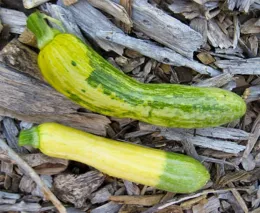
Mosaic virus on squash and cucumber plants is a disease spread by aphids and cucumber beetles. The leaves become rough and mottled, the plant becomes stunted and the fruit can be whitish. Pull the plant and put it in the trash. Do not compost. For more information see the UC Pest Note on Squash Mosaic Virus.
Months: September
Tags: Disease IPM Vegetables Pests and Diseases
Mulch to Conserve Water
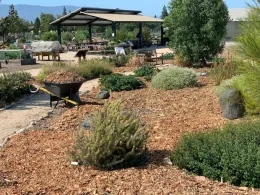
A 3 to 4 inch layer of mulch can reduce watering needs by as much as 50 percent. Mulch reduces water evaporation and keeps soil temperatures down during hot summer months. In addition, mulch reduces the number of weeds, makes it easier to control weeds that do grow, and protects the soil from compaction. A variety of mulches are available. Organic mulches such as arborist chips and bark nuggets break down and improve soil quality over time. You can find free wood chip mulch from local arborists by searching online, such as “free wood chips near me”. Place mulch away from the street curb to prevent heavy rains from washing it into storm drains. Also keep mulch away from the trunks of woody trees or shrubs to avoid decay problems.
More information: Mulching with Organic Materials
Months: April May June July August September Any Month
Tags: Best Practices Fruits & Nuts Ornamental Plants Trees & Shrubs Vegetables To-Dos
Native Wildflowers
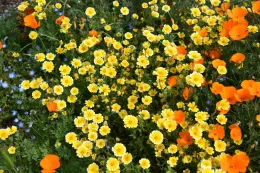
Native California wildflowers herald the beginning of spring — and the time to plant them is ahead of the winter rain. Besides their showy display, they’re a habitat for local pollinators and a great way to cover up bare spots. If that’s not enough, they also require little care. Just select a well-drained and sunny site, remove weeds, and lightly rake the surface of the soil. Hand disperse seeds and lightly cover with soil, no more than about ¼ inch. Gently tamp them down with the back of a rake and water. After that, let Mother Nature take its course — we hope with some rain!
More information: Native Flowers
Months: September October November
Tags: Ornamental Plants Waterwise Plants What to Plant
Oleander
These plants are obviously not terribly picky about conditions if they live and thrive in freeway medians. Oleander is drought tolerant once established. They rarely, if ever, need to be fertilized in our local soils or sprayed or pruned. But if you want to prune them to fit into a small yard space or to make them look like a tree rather than a bush, you can do so now. As with all pruning, first cut out any dead or dying branches. Then cut any that are deformed or growing in an undesirable direction. After that, you can prune for size and shape. Cut the plant back to a little smaller than the size you ultimately want, keeping in mind that it will re-grow. Take care not to prune off more than one-third of the plant at a time. Make cuts above nodes that face out in the direction in which you want new growth to go. All parts of the plant are poisonous so do not eat it, burn it, or work on it without gloves. The good news is that this latter quality makes it deer resistant.
More Information: Oleander article, Tulare/Kings County Master Gardeners
Months: September
Tags: Ornamental Plants Waterwise Plants To-Dos
Peas
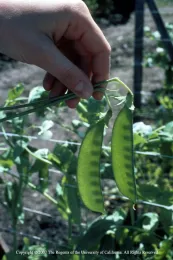
An old American tradition says that planting peas on St. Patrick’s Day will bring good luck at harvest time. But the best planting date actually depends on the climate where you live. Planting on St. Patrick’s Day in the northeast may lead to a second planting weeks later when frost gets the first batch. Yet in warmer climates like ours, we can plant weeks earlier and may even be eating peas from the garden on St. Patrick’s Day. (We can also plant them here in the fall.) You may want to soak the seeds overnight to help get them ready to germinate. They can be planted directly in the ground, about half an inch deep. Keep the seeds evenly moist until they start to sprout. Provide a trellis or some kind of support for the vertical vines if you are growing pole peas; bush peas can stand on their own.
More Information: Peas
Months: February March August September
Tags: Techniques Vegetables What to Plant
Pepper Weevil
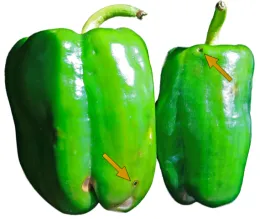
The pepper weevil is a small insect (about ¼ inch long) but is a worldwide problem for pepper growers. It has been an increasing problem in Santa Clara County. Female weevils chew holes on buds or at the base of young fruit and then lay their eggs inside. The larvae develop inside the fruit causing damage and leaving excrement.Then they chew their way out making the exit holes seen in the photo. Pepper weevils sometimes also cause premature fruit drop. They affect all kinds of peppers and chiles, but a recent local study showed the most problems with bell peppers. To reduce the population, clean up and discard any dropped fruit and peppers with holes near the stem.
More information: Pepper Weevil
Months: July August September
Tags: Invertebrates Vegetables Pests and Diseases
Planting Bulbs
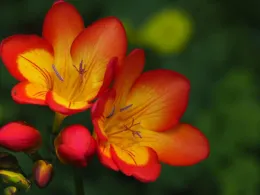
Bulbs that bloom in the spring are planted into the ground in the fall. These include those that are technically corms, rhizomes, tubers, or tuberous roots in addition to true bulbs. Examples are babiana, crocus, daffodils, freesia, hyacinths, iris, ixia, sparaxis, and tulips. They can go into the ground in groups, into pots, or be tucked in amongst other plants. They need to be in a place that doesn’t stay wet because they will rot with too much water. It is important that the soil has good drainage. They flower best in full or filtered shade.
Be sure to plant them with the pointy side up because new growth will come from that point. A rule of thumb is to plant them twice as deep as the diameter of the bulb, but follow instructions for the specific flowers. Water them in at planting time.
More Information: Bulb Planting Schedule , Tips for Growing Bulbs
Months: September October November
Tags: Container Gardening Ornamental Plants What to Plant
Planting Ornamentals
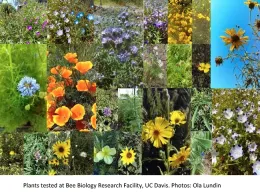
Spring is when thoughts turn to planting, yet fall is an excellent time to plant perennials. You can plant many trees, shrubs, and other long-lasting plants in the fall. This applies particularly well to California native plants. Putting them in now will give them a chance to start developing strong root systems with the winter rains before they are stressed by summer heat. Make sure to water new plantings regularly until they have established good root systems and can survive with less supplemental water.
When choosing plants, consider our general Mediterranean climate as well as the microclimate of your yard. Local California natives in particular need little to no amending of the soil because they have evolved in our clay soils. Sun times, water needs, wind exposure, and soil type can all impact the success of a plant. Make sure you know how large the plant will become, even if it looks fine now in a one-gallon or five-gallon container.
More Information:
Months: September October November
Tags: Ornamental Plants Trees & Shrubs What to Plant
Planting Trees or Shrubs
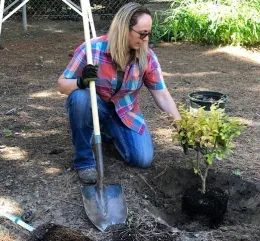
You may be tempted to amend the soil when planting trees or shrubs, but it’s no longer recommended. If the soil in the hole is amended, it creates soil moisture differences that discourage the roots from growing into the native soil beyond the hole. For best results, dig a hole about twice as wide as the container. Rough up the sides to help the roots penetrate. Don’t loosen the soil in the bottom of the hole or the plant may settle too low. The goal is to keep the crown of the plant slightly above the surrounding soil. Then simply backfill with the native soil from the hole.
More information: Planting for Success
Months: March April May September October November
Tags: Best Practices Techniques Trees & Shrubs To-Dos
Powdery Mildew
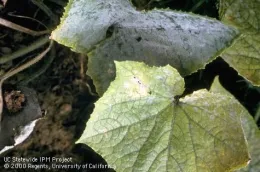
Have you ever seen a squash or melon without white powder on the leaves in the fall? This fungal disease is called powdery mildew. It affects several vegetable, fruit, and ornamental plants; yet it seems almost inevitable on members of the Cucurbitaceae family which includes cucumbers, gourds, melons, squashes, and pumpkins.
Powdery mildew likes warm days and cool nights. Unlike most other fungi, it does not need moisture to thrive. Early symptoms include yellow chlorotic spots on the leaves. The presence of the fungus becomes obvious as it starts to produce spores that look like white powder on leaves. Eventually, the leaves will turn brown and dry.
The best defense is to plant varieties that are resistant to powdery mildew. Also helpful is planting in full sun with good air circulation through the plants. Washing off the leaves, preferably in the morning, can buy some time. Powdery mildew generally affects the older leaves first, and you can remove these when they are too covered to be able to photosynthesize. Fungicides can help but you want to be careful about using them around something you are going to eat. At some point, the plant may decline so much that it needs to be removed.
More Information: Powdery Mildew on Vegetables
Months: August September October
Tags: Disease IPM Pests and Diseases
Preserving Fruits and Vegetables
Interested in how to preserve fruits and vegetables? UC Food Safety has lots of information including “Safe Handling of Fruits and Vegetables”, “Safe Methods of Canning Vegetables”, “Chart on Storing Fresh Fruits and Vegetables”, and more. Visit their web page UC Home Preservation and Storage Publications for more details.
Months: August September
Tags: Best Practices Fruits & Nuts To-Dos
Rat Management
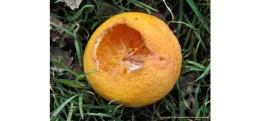
Have you found a hollowed-out orange or other sour fruit like Meyer lemons with no skins, tomatoes with bite marks, fruit with holes gnawed in them, or grape skins or cherry tomato skins scattered around? It is the work of a roof rat.
Rats show up when your citrus, tomato, or fruit first starts to ripen. Rats are agile climbers and usually live and nest in shrubs, trees, and dense ground cover like ivy. One management strategy is to prevent access to the tree by cutting branches away from fences or other trees, leaving a gap of at least 2 to 3 feet, good sanitation is required. Garbage and garden debris should be eliminated. Use tight-fitting lids on garbage cans. Thin out dense vegetation to make the habitat less desirable. Mow ivy once a year to the ground. Climbing ivies on fences or buildings should be removed.
Per the UC pest note (linked below), trapping is the safest and easiest method for controlling rats. Read the pest note for other management strategies as well.
More information: Rat Management
Months: January February March April July August September Any Month
Tags: Best Practices Disease Fruits & Nuts IPM Vegetables Pests and Diseases
Root Knot Nematodes
Root knot nematodes usually cause distinctive swellings, called galls, on the roots of affected plants. They can infest a wide variety of plants and easily spread via soil left on tools or shoes. Infested plants may not die but may be sickly or less productive. When you pull out your annual plants, inspect the roots, especially if they didn’t do well. Avoid spreading root knot nematodes by cleaning tools thoroughly. Consider letting an infested bed lie fallow for a season, or plant a cover crop next summer of French marigolds, which help suppress some nematodes.
More information: Nematodes Pest Note
Months: September October Any Month
Tags: Fruits & Nuts IPM Ornamental Plants Trees & Shrubs Vegetables Pests and Diseases
Seed Viability
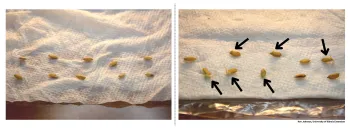
Seed packets have a “packed for” date on the back. Yet seeds can still be viable for years beyond that date if stored correctly. Ideal storage conditions are cool and dry. The older the seeds are, the lower the germination rate will be. So plant more of the older seeds than the number of plants you ultimately want. You can do a germination test by putting seeds on a damp paper towel and enclosing them in plastic to keep them uniformly moist. Do this right before planting time so you can transplant the ones that successfully germinate. Or you can take your chances and just plant them directly and see what comes up. If you are saving your own seeds, make sure to choose seeds from the healthiest plants.
Whenever it’s hard to find flower seedlings, if you have some old flower seed packets, you can scatter the seeds randomly in a section of your yard and enjoy whatever flowers.
More Information: Vegetable Seed Viability
Months: January February March April May August September October
Tags: Ornamental Plants Techniques Vegetables What to Plant
Shovel Pruning
Sometimes a plant just isn’t working out in your garden and it comes time to part ways. The most drastic form of pruning is “shovel pruning” where you finally just dig the plant out. Another term for this technique is “editing the garden.” Perhaps you saw a plant you liked in another part of the country or world. If that other location had a different climate or soil type, it may not translate well to sunny, dry California with our clay soils. Perhaps you want to garden organically but the plant has too many pests or diseases and you are having trouble controlling them with organic methods. Or maybe it simply doesn’t resemble what the tag promised. It’s okay to let go. Spring and Fall are good times for new plantings, so it is also a good time to reassess the appropriateness of what’s in your yard.
Months: March September
Tags: Best Practices Ornamental Plants Techniques Trees & Shrubs To-Dos
Soil Moisture Test
How can you tell if your soil is moist enough?
- For trees or other landscaping, try pushing a soil probe or rod into the ground. When it stops going in, that shows how deeply water has penetrated. Irrigate until the water reaches 12 inches deep for grass, 12 to 18 inches for shrub and perennials, and 12 to 24 inches for trees.
- For garden beds or pots, use a trowel or simply stick your finger down into the soil a few inches to feel if it is moist or dry. Irrigate to keep the root zone moist.
- For smaller pots, you can often tell by lifting them if they need water. Well-watered pots will be heavy. Watch out for pots that have become hydrophobic, where the water runs through them without getting absorbed. They will need to be watered very slowly or soaked in a larger container to get rehydrated. See our tips for dealing with hydrophobic soil.
Remember that plant roots need air as well as water, so you want your soil to be moist but not soggy.
Months: June July August September
Tags: Best Practices Soil Techniques To-Dos
Sooty Mold
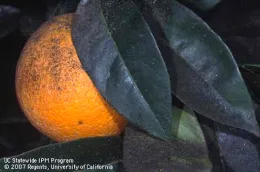
If your citrus leaves have a black coating, you may have a sooty mold problem. This black mold can also be seen on citrus fruit, avocado leaves, magnolia leaves, hibiscus, other host plants, and even on sidewalks beneath trees.
The sooty mold fungi grow on “honeydew”, a sticky substance excreted by plant-sucking insects such as aphids, scale, mealybug, and whitefly. They suck the sap out of plants and excrete excess sugars. It exists purely on the surface of a plant and is not a systemic issue. By itself, the fungi cannot kill the plant but it can coat the leaves to the extent that sunlight is prevented from reaching the leaf surface, thus reduce photosynthesis.
Ants protect the sucking insects from their predators so they can eat the honeydew. Keep ants out of trees and away from honeydew-producing insects by applying a sticky compound such as Tanglefoot on a tape wrapped around the trunk.
Pruning branches to allow better air circulation also helps. You can hose off the mold itself with a strong jet of water. And you can eat the fruit once you wash off the sooty mold.
For more information, see Sooty Mold Management Guide.
Months: August September October November December
Tags: Best Practices IPM Invertebrates Techniques Trees & Shrubs Pests and Diseases
Spiders in Your Garden

While we use spiders as spooky Halloween décor, common garden spiders are beneficial insects and only spooky to the insects and other pests that they prey on. Spiders such as orb weavers catch our attention with their large, dramatic webs, while dwarf spiders are so small, we may not even notice them. Others, such as jumping spiders and flower spiders, hunt their prey without spinning webs. Widow spiders are indeed venomous, but they are also very shy and hide in dark places. So even though they are common, bites from them are rare. Follow the link for a video about spiders and the myths surrounding them.
More information: Arachnophobia Video
Months: August September October November
Tags: Beneficial Insects Pests and Diseases
Summer Vegetables
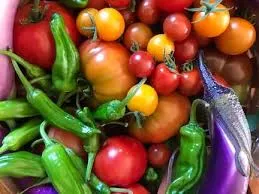
Just because your summer vegetables are in the ground, beds, or containers, it doesn’t mean you can ignore them until it is time to harvest. And harvesting normally happens over weeks or months. Make sure you know what the vegetables will look like when mature; don’t be waiting for a green zebra tomato to turn red. Many vegetables are more tender when picked on the younger side. And they can go to seed and slow down production if left too long. Watering regularly is important. You need to water enough to get abundant production and make it worth the investment. Mulching and removing weeds will help conserve water for the vegetable plants. As with all plants, watch out for pests and diseases.
More information: Vegetable gardening
Months: May June July August September
Tags: Techniques Vegetables To-Dos
Time for Seed Saving
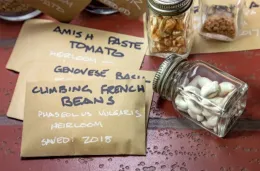
As we reach the end of the summer garden season, were there some vegetables you particularly loved this year? If yes, consider saving their seeds for next year’s garden. The easiest seeds to save are from self-pollinating plants like beans, peppers, lettuce, and tomatoes. Be aware that seeds from hybrid varieties may not breed true. Dry fruit plants like beans and peas can just be separated from their pods, dried, and stored. But tomatoes require a “wet” method where seeds are scooped into a container, fermented, washed, dried, and stored.
More information: How to Save Seeds
Months: August September October
Tags: Techniques Vegetables To-Dos
Today’s Grubs Are Tomorrow’s Beetles
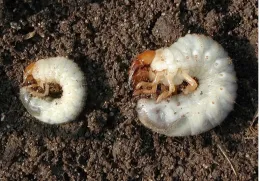
The white grubs commonly found in lawns and gardens hatch into masked chafers and green fruit beetles. Masked chafer grubs are about 1 inch long and are mostly found in lawns. They feed on roots, so a large population can cause dead patches. You may also see lawn damage from animals digging for these tasty treats. The green fruit beetle grub is much larger, about 2 inches long, and is found in compost or garden beds high in organic matter. The grubs don’t damage plants, but the iridescent beetles feed on fruits. Finding an occasional grub is no cause for worry. Just leave them out for birds to feast on.
More Information: What are White Grubs?
Months: April May June July August September October
Tags: Invertebrates Pests and Diseases
Tomato blossom end rot
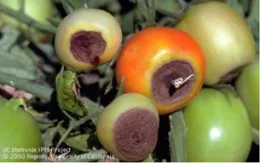
A brown depression on the bottom of tomatoes is usually blossom end rot (BER). This disorder is related to a calcium deficiency aggravated by irregular watering. Since most soils have adequate calcium, watering is usually the problem. Without regular watering, the calcium in the soil cannot reach the plant. Mulching can help. Water tomatoes regularly. Avoid flooding them so the roots sit in water. For more detailed information about BER please view Managing Blossom-End Rot in Tomatoes and Peppers
Months: July August September
Tags: Abiotic Disorders IPM Vegetables Waterwise Tips Pests and Diseases
Transplanting Vegetables
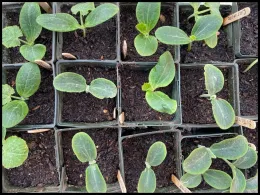
As vegetable seedlings start to outgrow their pots, you can transplant them into larger pots, raised beds, or the ground. Make sure the seedling is well-watered before moving it. To remove the plant, either turn the pot upside down — with your other hand positioned to catch it! — or pull the entire root ball out with a fork or other utensil. Be sure never to handle the seedling by the stem, with its vascular tissue that conducts water and food. If the roots are packed together or circling, gently pull them apart. Then gently move the plant to its new home, lightly packing the soil around it. Make sure the soil is at the same level on the stem as in its original pot, except for tomatoes and peppers which can be planted deep. Immediately water thoroughly. A little fertilizer can also be added when transplanting. Transplant shock can be minimized by not changing too many conditions at once, e.g., temperature, wind, or sun exposure.
More information: Vegetable Planting Handbook (Los Angeles Master Gardeners)
Months: February March April May June July August September October
Tags: Techniques To-Dos
Watering Trees
The amount of water trees need in the summer depends in large part on the age of the tree. Newly planted trees with shallow roots may need weekly water. Trees that are a few years old and fairly well established may need monthly watering. Mature trees with extensive root systems may not need any supplemental water. These are just VERY general guidelines. It is essential to know the water requirements of the plants. You can determine these by researching cultural needs or knowing their native habitats, the soil type and how well it retains water, and the micro-climate in which the tree is located, e.g., shaded, windy, dry. Always water slowly and deeply to penetrate down to the roots. Use a soaker or drip hose around the tree at the drip line and let it slowly drip for 2 to 3 hours. Don’t let lawn sprinklers hit tree trunks as this may cause crown rot and damage the tree.
Months: July August September
Tags: Irrigation Trees & Shrubs To-Dos
Weed Spotlight - Bindweed
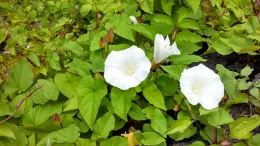
Have you seen a pretty, morning glory-like flower on a vine that winds through any plant within reach? Field bindweed is one of the most challenging weeds to control because its roots can reach depths of 20 feet or more and it readily re-grows from root fragments as short as 2 inches. The only chance of controlling this invasive weed is to stay right on top of it and remove it as soon as you see any of it peeking up out of the ground. Every time it starts growing above ground and photosynthesizing, it is storing energy in the roots. This allows it to put out new shoots. It produces many seeds which remain viable for years. Making things even worse, it’s drought tolerant. Controlling it isn’t easy, but the UC pest note below discusses options. Chemicals aren’t needed if you’re persistent in removing new growth to prevent seed production and limit the plant’s ability to store new energy in the roots.
For more information: UC IPM Bindweed Pest Note
Months: March April May June July August September
Tags: Best Practices Weeds To-Dos
White Butterflies and Green Caterpillars
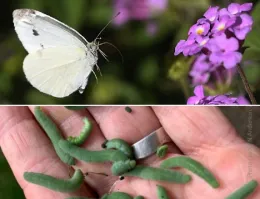
Have you seen these small yellowish-white butterflies fluttering around? Cabbage white butterflies feed on many flowers, but for laying their eggs. They favor the cabbage family, such as broccoli, cauliflower, and mustard. The velvety green caterpillars, also called imported cabbageworms, feed on the leaves after hatching. While mature plants tolerate a few holes munched in their leaves, young seedlings don’t have foliage to spare. Cultural controls include handpicking the caterpillars, brushing the eggs off the undersides of leaves, and using row covers to protect the seedlings. UC lists additional options in the link below.
More information: Managing Imported Cabbageworms
Months: March April May June July August September October November
Tags: Invertebrates Vegetables Pests and Diseases
Whiteflies
Whiteflies are tiny, sap-sucking insects that may become abundant in vegetable and ornamental plantings, especially during warm weather. They excrete sticky honeydew and cause yellowing or death of leaves. Outbreaks often occur when the natural biological control is disrupted. Management is difficult once populations are high.
Whiteflies use their piercing, needlelike mouthparts to suck sap from phloem, the food-conducting tissues in plant stems and leaves. Large populations can cause leaves to turn yellow, appear dry, or fall off plants. Like aphids, whiteflies excrete a sugary liquid called honeydew, so leaves may be sticky or covered with black sooty mold that grows on honeydew (See UC Pest Note on Sooty Mold). The honeydew attracts ants, which interfere with the activities of natural enemies that may control whiteflies and other pests.
Management of heavy whitefly infestations is difficult. The best strategy is to prevent problems from developing in your garden or landscape. In many situations, natural enemies will provide adequate control of whiteflies; outbreaks often occur when natural enemies are disrupted by insecticide applications, dusty conditions, or interference by ants. Avoid or remove plants that repeatedly host high populations of whiteflies.
In gardens, whitefly populations in the early stages of population development can be held down by a vigilant program of removing infested leaves or hosing down with water sprays. Reflective mulches can repel whiteflies from vegetable gardens, and yellow sticky traps can be used to monitor or, at high levels, reduce whitefly numbers. If you choose to use insecticides, insecticidal soaps or oils such as neem oil may reduce but not eliminate populations. Systemic insecticides may be more effective but can have negative impacts on beneficial insects and pollinators.
For more information see UC Pest Note on Whiteflies.
Months: June July August September
Tags: IPM Invertebrates Vertebrates Pests and Diseases
Wildfire Effects
We and our gardens have all been affected to varying degrees by the wildfires. If you have fruits and vegetables in your garden, you may be wondering if they are safe to eat. The simple answer is that there will likely be some chemicals in the plants, soil, and possibly the water, yet the benefits of eating the produce are thought to outweigh any potential risks. University of California Cooperative Extension Sonoma was involved in a study after the 2017 fires and a report on Produce Safety after Urban Wildfire is available for those interested in learning more. Chemicals present in smoke vary depending on what burns: toxins from building fires differ from those of trees and grasses. When working in a garden that has been exposed to smoke and fire, consider wearing a mask and gloves. Wash produce well before eating it. To help the garden recover, amend the soil with compost or fresh soil. Keep in mind the nutritional benefits of consuming fresh produce!
For the oenophiles out there, UC has published an article Where there is fire, is there smoke flavor in winegrapes? “Smoke taint” can produce undesirable flavors in the wine, ranging from “wet ashtray” to “sweaty socks.”
More Information: Produce Safety After a Fire
Months: September October
Tags: Best Practices To-Dos
Winter Squash Harvesting
Winter squash is ready to pick when the stem begins to shrivel. Press the rind with your fingernail, it should resist denting. Pick before the first hard frost and cure by letting it lie in the sun for at least 3 days, turning it each day. Store in a cool, dry place. It will keep for up to 5 months.
Months: September
Tags: Vegetables To-Dos
Winter Vegetables
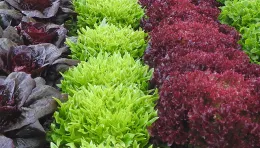
It’s good to plant winter vegetables so they have time to get established before cool winter weather arrives and the day length wanes. We recommend planting most cool season vegetables in early fall. But you might still have luck transplanting leafy greens such as lettuce, arugula, spinach, and kale, and fast growers like radishes and cilantro even later. Use the vegetable planting chart to check the months when planting might work. Avoid transplanting them during a heatwave or during the hottest part of the day. Provide some fertilizer, especially if you are putting them near where you grew your summer vegetables. You can also use this chart to calculate when to start seeds so they will be ready in time for planting. Remember that vegetables need at least 6 hours of sun for strong, healthy growth.
Months: August September October
Tags: Best Practices Vegetables To-Dos
Worm Composting
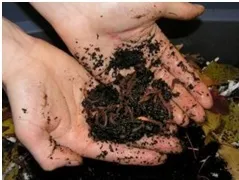
Worm composting, also called vermiculture or vermicomposting, is a convenient way to decompose kitchen waste and provide nutrient-rich soil amendments for your vegetable garden.
The Santa Clara County Home Composting Education Program offers:
Months: February June September
Tags: Soil To-Dos
Yellowing Leaves on Gardenias
Chlorosis is usually caused by a lack of iron in the soil. With a mild case, the veins remain green and as it becomes more severe will turn completely yellow. Treat the soil with iron chelate according the package directions.
Months: September
Tags: Abiotic Disorders Ornamental Plants Trees & Shrubs To-Dos