

General Drought Tips
Even in years with plentiful winter rainfall, summers in Santa Clara County will always be dry. Planning your landscaping and gardens for summer dry conditions will put you ahead of the game for future droughts and water restrictions. Here are some useful tips and links for homeowners and gardeners who want to manage their garden and landscape in a responsible, waterwise manner. For specific rules on water usage and irrigation limits, check your water service.
- Guidelines for Managing Drought in the Urban Landscape: Useful tips from UC for managing drought conditions
- Keeping Plantings Alive under Drought or Water Restrictions
- Video: Make Every Drop Count: Home Gardening and Landscaping in a Drought Year
Trees
- Tree Ring Irrigation Contraption: Saving trees in a drought
- Save trees first: Tips to keep them alive during drought
Landscape and Turf
- Landscape Water Management: Questions & answers about water conservation and drought in the landscape
- Waterwise Plants: Information about landscaping with with waterwise plants.
- Drought, Water Conservation, Landscape Water Use - Some Perspective: Thoughts about research and other data related to landscape water use in California.
Graywater
- Graywater: Appropriate usage of household graywater in the landscape.
- Also see the Water District link on laundry graywater.
Water District Information
- The Santa Clara County Water district offers programs to help their customers conserve water. Here are some useful links:
- Landscape Conversion Rebate Program: Rebates for converting high water use landscapes or pools. Note that properties must be inspected prior to conversion.
- Laundry to Landscape Rebate Program: Rebates for installing laundry graywater system
- Water Retailers: List of water retailers with links to specific municipal restrictions
- Report Water Waste: Report water waste in Santa Clara County
- Newsletter: Monthly email newsletter from the Water District
Waterwise Tips
From our monthly Tips & Events newsletter
To-Dos: Waterwise Plants, Waterwise Tips
Container Color Choice
Drip Irrigation
Drought Tip - Laundry to Landscape Irrigation
Drought Tip - Lawns
Drought Tip - No Fertilizer
Drought Tip - Trees Come First during Drought
Drought or Disease
Fall Irrigation
Garden Planning in a Drought
Irrigation Maintenance
Lawn Care
Oleander
Save Water and Make Your Plants Happier
Water Budgeting
Water the Roots, Not the Plants
Watering Hydrophobic Soil
Pests and Diseases: Waterwise Plants, Waterwise Tips
Ailing Ornamental Trees
Tomato blossom end rot
What to Plant: Waterwise Plants, Waterwise Tips
Aloe Plants
Arboretum All-Stars
California Natives
Echeveria
Going Native
Lawn Alternatives
Native Wildflowers
Plant Native Shrubs and Flowers
Ailing Ornamental Trees
moIf you have an ailing tree, here are some questions you can ask yourselalof to begin diagnosing the problem: is the entire canopy of the tree affected? If the answer is yes, you can reasonably guess that something is wrong below the soil. A lack of nutrients (refer to the UC Pest Note on Mineral Deficiencies) will likely cause leaves to either die (necrosis) or lose color (chlorosis). Too much or too little water will also cause foliage problems (See UC Pest Note on Poor Water Management, Poor Drainage).
If only parts of the tree are affected, it is likely your problem is above ground. Is there a pattern to the distress? You can rule out or suspect sunscald by determining which side of the tree faces the harshest sun (UC Pest Note on Sunburn).
What kind of tree is it? Is there new growth? If there is, that’s a great sign that a single event, rather than an ongoing problem, distressed your tree. The UC IPM website will direct you to species-specific pests and disorders to help diagnose your tree’s ailments.
Months: August Any Month
Tags: Abiotic Disorders Disease IPM Trees & Shrubs Waterwise Tips Pests and Diseases
Aloe Plants
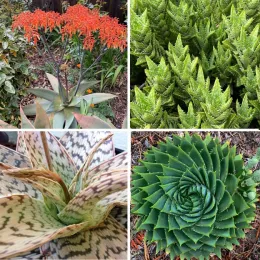
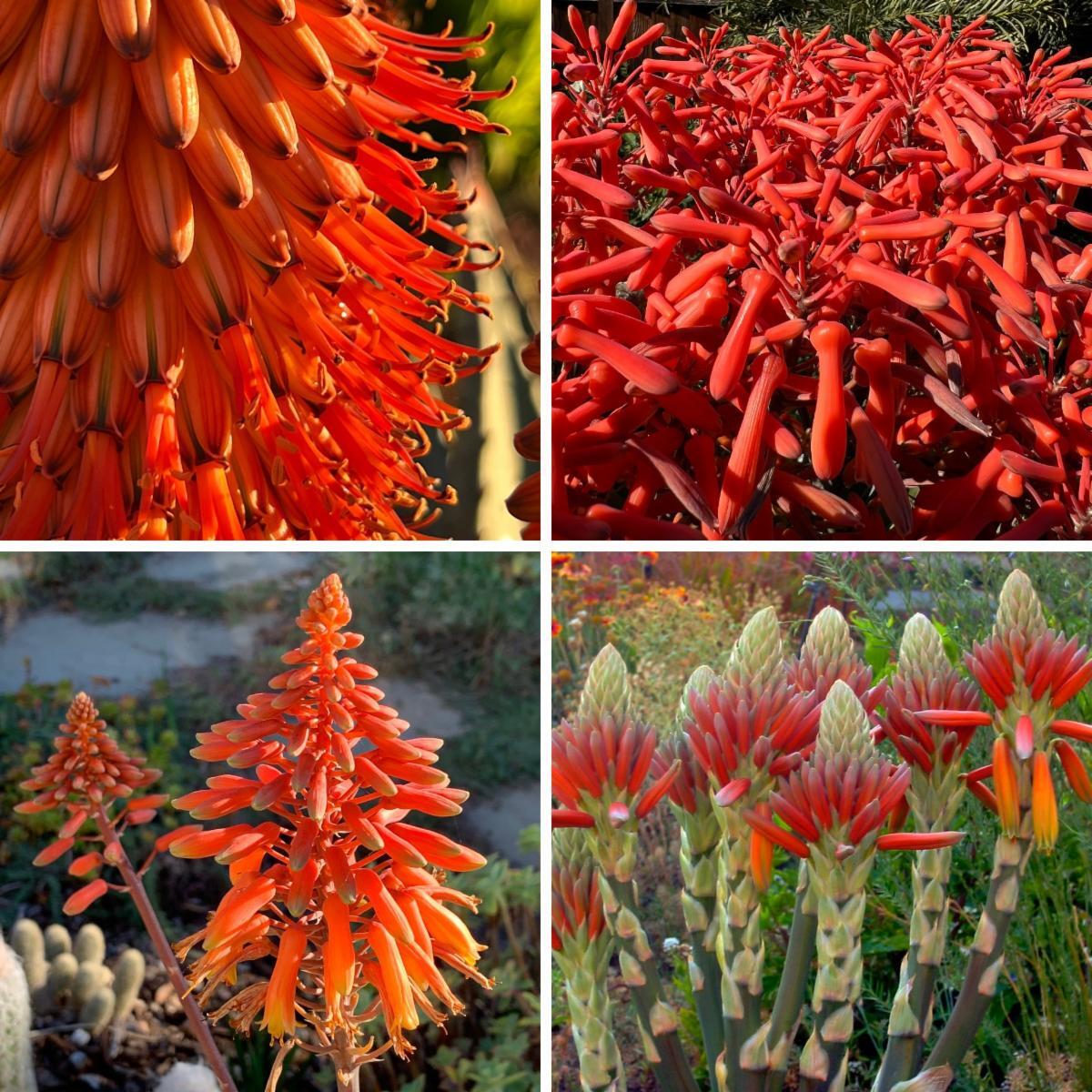
The genus Aloe contains hundreds of species, with Aloe vera being the most well-known for its medicinal uses. They are all succulents, and the majority have spines along the leaf edges. Their dramatic flower stalks are often visited by hummingbirds. Most species flower yearly; however, some types bloom more frequently, even year-round. The plants need little care, but because they come in all sizes, make sure you know how big a particular species will grow before you plant it
You can see their dramatic flower stalks here. Photo: Aloe flowers, clockwise from upper left: Aloe ferox, Aloe striata (coral aloe), Aloe polyphylla (spiral aloe), Aloe ‘Rooikappie’
Months: Any Month
Tags: House Plants Ornamental Plants Techniques Waterwise Plants Waterwise Tips What to Plant
Arboretum All-Stars
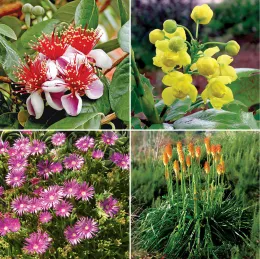
UC Davis, known for its horticulture expertise, has its own roster of 130 climate-ready plants to consider for your garden. Each Arboretum All-Star is selected to thrive in hotter and drier conditions and withstand extreme weather events all while supporting pollinators and local wildlife. In addition, it must be attractive for most of the year, thrive in California’s Mediterranean climate, and be thoroughly tested at the UC Davis Arboretum. To see them in person, take a day trip to the Arboretum — it’s open and free to the public. Or access their searchable database and find the perfect All-Stars for your specific garden conditions, along with planting plans and where to buy them.
More Information: UC Davis Arboretum All-Stars
Months: April October Any Month
Tags: Best Practices Ornamental Plants Waterwise Tips What to Plant
California Natives

Thinking of adding native California plants to your yard? New natives respond best to wet winter weather, which promotes the extensive root development needed for spring growth and the hot dry summer months ahead. Your next question may be what to plant. That depends on your planting site and the individual cultural requirements of the plant. To help, the California Native Plant Society has created a database where you can enter your address and find which plants do best in your neighborhood for the conditions in your yard, like sun or shade. The website even lists nurseries that carry California natives.
More Information:
Months: January February March December
Tags: Ornamental Plants Waterwise Plants What to Plant
Container Color Choice
If you are growing plants in containers, keep in mind that light colors do a better job at reflecting the sun. This helps keep the soil from drying out too quickly and reduces the chances of the roots burning. If you already have dark pots, consider painting them a lighter color, or be especially careful about watering.
Months: April May June July
Tags: Best Practices Container Gardening Waterwise Tips To-Dos
Drip Irrigation
Low volume drip irrigation system
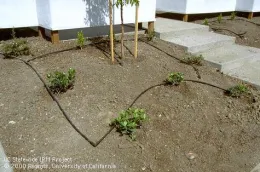
Consider various forms of irrigation conversion! Irrigation systems, especially drip and micro-sprinklers, have drastically improved over the last few years. For example, there are kits that convert pop-up sprinkler heads to low-flow systems. The conversion kits include a pressure regulator to control changes in pressure and a filter to improve water quality. Water usage is reduced through better water management, control of distribution and less loss from evaporation. Other advantages include:
- Water is placed more accurately and efficiently in the root zone, it is applied at a slow rate that reduces loss from runoff.
- Dry soil between plants allows you to work in the garden between irrigating
The key to success is watering long enough to supply adequate water to the root zone. Inappropriate watering commonly damages landscape plants. As with any irrigation system, they are efficient only when soil around the plants being irrigated is regularly monitored for proper moisture levels (Reference: UC Pest Note Poor Water Management, Poor Drainage).
Months: April May June July August September Any Month
Tags: Best Practices Irrigation Techniques Waterwise Tips To-Dos
Drought Tip - Laundry to Landscape Irrigation
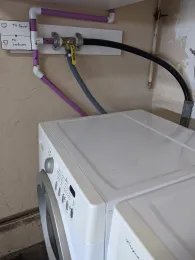
A laundry-to-landscape system is an easy way to save water in times of drought. It can be installed easily at a low cost to send rinse water from clothes washers directly to the landscape.
Suitable plants include fruit and ornamental trees, shrubs, and ornamental annuals. It’s not applicable where the water would come in direct contact with fruits or vegetables.
More information from Valley Water: About Graywater
Months: March April May June July August September Any Month
Tags: Irrigation Waterwise Tips To-Dos
Drought Tip - Lawns

This landscaping feature—imported long ago from rainy, foggy England—does not translate well to a semi-desert with frequent droughts. Lawns demand a huge investment of water, money, time, work, equipment, and fertilizers and other chemicals. According to Scientific American, U.S. lawns require the equivalent of 200 gallons of drinking water per person per day. Many people are joining the “lose the lawn” movement, and UC Davis offers several plans and examples to help you get started on a yard design more appropriate for our climate. Valley Water offers rebates and guidance for lawn replacement.
If your family uses your lawn and you want to maintain it this summer, follow the irrigation regulations of your local water company and aim for survival rather than a lush green carpet. A lawn that looks light green or brown will often be dormant (not dead) and will perk up with the winter rains; the roots can survive much longer than the blades above ground. Keep it mowed in the meantime so that weeds don’t go to seed and take over. Concrete and synthetic (plastic) turf do not benefit the environment other than not using much water.
More information: Drought Resources
Months: March April May June July August September Any Month
Tags: Lawns Waterwise Tips To-Dos
Drought Tip - No Fertilizer
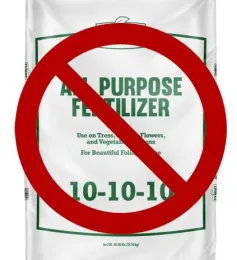
Fertilizing your lawn and landscape encourages lush new growth. That’s usually what we want, but not during a drought. That new growth requires extra water to support it. Plus, if a plant is already drought-stressed, fertilizer may cause it more stress by stimulating growth that can’t be supported with limited water. In other cases, plants may slow or shut down growth under drought stress to conserve resources and will not use fertilizer.
More information: Skip fertilizing
Months: May June July August
Tags: Lawns Ornamental Plants Trees & Shrubs Vegetables Waterwise Tips To-Dos
Drought Tip - Trees Come First during Drought

With no end to the drought in sight and water restrictions in place, Santa Clara County residents must make some tough landscaping choices right now — namely which plants in our yards should receive our limited supply of water? The answer is trees. Because trees take years to grow, they aren’t as easily replaced as other plants. Besides that, trees provide shade critical to cooling our homes while releasing oxygen and reducing energy use. Using a hose or soaker hose, slowly trickle water in a large circle under the canopy of the tree (but not right at the trunk). Deep watering for two hours once every few weeks will keep established trees alive.
More information: Tips to Keep Trees Alive
Months: July August September
Tags: Best Practices Fruits & Nuts Irrigation Trees & Shrubs Waterwise Tips To-Dos
Drought or Disease
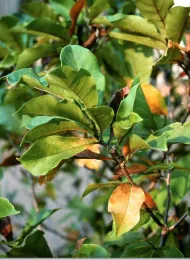
It can be hard to tell if a stressed plant is suffering from a disease or a lack of water due to drought. Water stress causes plants to lose their leaves, shrivel and droop, with split bark and brown branch tips soon to follow. These symptoms could be mistaken for diseases that attack the plant’s roots and vascular system. But it’s also true that water-stressed plants can be more susceptible to pathogens due to their weakened state. Check soil moisture for your ailing plant, and if it’s dry, try irrigating the plant. If it doesn’t respond, contact the our Help Desk for further assistance.
More Information: Drought or Disease
Months: Any Month
Tags: Disease Fruits & Nuts Techniques Trees & Shrubs Waterwise Tips To-Dos
Echeveria
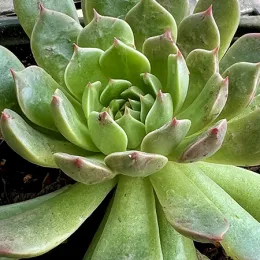
It’s easy to have color in your yard without using a lot of water. Instead of planting thirsty annuals, consider some of the many types of succulents. Echeveria does well in containers or in the ground. Plant them in well-drained soil and allow the soil to dry between waterings. They aren’t particular about sun or shade, although some can be a little sensitive to full afternoon summer sun.
Months: Any Month
Tags: Ornamental Plants Waterwise Plants Waterwise Tips What to Plant
Fall Irrigation
You can still expect some warm weather during October, so keep watering the garden until the fall and winter rains begin. As temperatures drop, less water is needed for plants.
Check your soil periodically by digging gently into the soil next to the root, about 6 inches down (deeper for bigger plants). If the soil does not hold a shape when squeezed it is too dry; if it continues to hold shape after the pressure is released it is too wet; if the soil has a shape then crumbles quickly, it has the right amount of water.
Hydrozone any new plantings by putting plants with similar water needs together. This helps ensure that less water is wasted and that all plants get the right amount of water.
If you have an automatic watering system, this is a good time to inspect the system for leaks and blockages, check the timer for batteries, and reprogram the system as necessary for cooler weather and rain.
If you don’t have an automatic watering system, think about installing one. Many systems are very affordable and easy to install by the home gardener. Take a look at some “smart meters”. They are more expensive, but incorporate weather conditions, your location, and your soil into the programming, making them very efficient.
Months: October
Tags: Best Practices Irrigation Techniques Waterwise Tips To-Dos
Garden Planning in a Drought
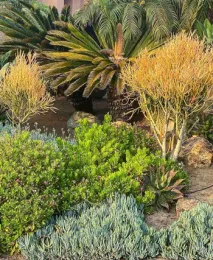
Even when we get good winter rains, our summers are dry. So, water-wise garden planning is always a smart choice. Grouping plants with similar water needs together into hydrozones is a key factor in designing a water-efficient landscape irrigation plan. Use the Water Use Classification of Landscape Species (WUCOLS) database for California to find and group plants with similar water needs. Prioritize the plants with more value, including food production or a long-term investment. If your existing plants are crowded, consider removing some so they don’t compete for water. This is a great time to get rid of any that you don’t really like. Why waste water on them? Don’t add new plants to your landscaping while we remain in a severe drought. Even drought-tolerant plants and California natives need extra water to get established.
More information: Drought Tips from Ready.gov
Months: March April May June
Tags: Ornamental Plants Waterwise Plants Waterwise Tips To-Dos
Going Native
Native shrubs, trees, and flowers are well-adapted to our climate and soil, and support native butterflies and bees and other wildlife. They are drought-tolerant once they are established, but need adequate water for the first year or two to establish a strong root system that will help nourish the plant for years to come. Planting them in the fall gives them time to settle in before being hit by the heat of the summer sun. Consult the California Native Plant Society for more information.
Months: October November
Tags: Ornamental Plants Waterwise Plants Waterwise Tips What to Plant
Irrigation Maintenance
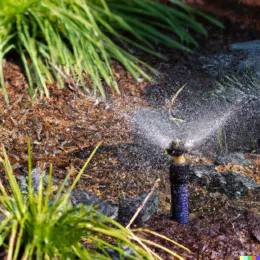
Check your watering system regularly to make sure it’s working properly. Sprinklers and emitters that are plugged up or misdirected can cause problems for the plants they’re supposed to water, and broken emitters and hoses waste water. Get ready for the growing season by starting a watering cycle for each zone of your controller and visually checking its operation. If you’d like help, Valley Water offers a free evaluation service for properties less than ½-acre in size. Use the link below to schedule a survey.
Months: March April September October
Tags: Best Practices Irrigation Techniques Waterwise Tips To-Dos
Lawn Alternatives
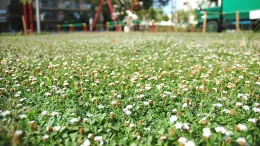
Do you have a traditional lawn? Would you like something that doesn’t need regular mowing? Something that uses less water? If you’re not ready to completely remove your lawn, walkable alternatives include California native options of red fescue and meadow sedge, as well as other alternatives like white clover, UC Verde buffalograss, Kurapia, Dymondia, and thyme.
For more information: Lawn & Lawn Alternatives
Months: March April May
Tags: Lawns Waterwise Tips What to Plant
Lawn Care
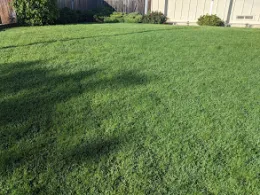
As the weather changes, many of our management techniques have to change. Lawns need more water as the temperature increases and the humidity lowers. But please don’t overwater; too much water is wasted by going below the root zone or running off. Adjust timers monthly throughout the year. In the warmer months, lawns may need water twice a week. It is not good to water daily. If watering is daily and brief, the roots will stay shallow and susceptible to drying and burning. Be sure to water as early in the morning as possible to avoid evaporation. This also helps reduce fungal diseases by giving the grass time to dry out during the day. Poor watering practices are the main reason for dead and dying areas in lawns and a common source of urban runoff.
Make sure you are mowing to a height appropriate for your type of grass. Mow frequently enough so that only one-third of the leaf is removed at any one time.
Fertilizing is important, even if you are grasscycling, which only provides about 20% of a lawn’s fertilizer needs. Grass is all leaf, so the primary nutrient needed is nitrogen. Keep on top of weed removal.
Thatch is the layer of living and dead grass material (blades, rhizomes, stolons) that can build up on the surface of the lawn. A thin layer protects the soil surface and shallow roots from drying out from the sun, but a thick layer prevents water from getting through. You can remove dead grass material on the soil surface with a special thatch rake to allow water to reach the roots more easily.
More Information: The UC Guide to Healthy Lawns
Months: May June July August September October
Tags: Best Practices Irrigation Lawns Techniques Waterwise Tips To-Dos
Native Wildflowers
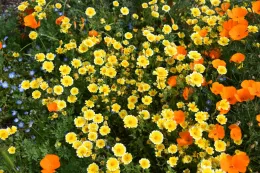
Native California wildflowers herald the beginning of spring — and the time to plant them is ahead of the winter rain. Besides their showy display, they’re a habitat for local pollinators and a great way to cover up bare spots. If that’s not enough, they also require little care. Just select a well-drained and sunny site, remove weeds, and lightly rake the surface of the soil. Hand disperse seeds and lightly cover with soil, no more than about ¼ inch. Gently tamp them down with the back of a rake and water. After that, let Mother Nature take its course — we hope with some rain!
More information: Native Flowers
Months: September October November
Tags: Ornamental Plants Waterwise Plants What to Plant
Oleander
These plants are obviously not terribly picky about conditions if they live and thrive in freeway medians. Oleander is drought tolerant once established. They rarely, if ever, need to be fertilized in our local soils or sprayed or pruned. But if you want to prune them to fit into a small yard space or to make them look like a tree rather than a bush, you can do so now. As with all pruning, first cut out any dead or dying branches. Then cut any that are deformed or growing in an undesirable direction. After that, you can prune for size and shape. Cut the plant back to a little smaller than the size you ultimately want, keeping in mind that it will re-grow. Take care not to prune off more than one-third of the plant at a time. Make cuts above nodes that face out in the direction in which you want new growth to go. All parts of the plant are poisonous so do not eat it, burn it, or work on it without gloves. The good news is that this latter quality makes it deer resistant.
More Information: Oleander article, Tulare/Kings County Master Gardeners
Months: September
Tags: Ornamental Plants Waterwise Plants To-Dos
Plant Native Shrubs and Flowers
Native shrubs like manzanitas, silk tassel bush, and currants come into bloom and provide nourishment for wildlife at the height of winter. These carefree, water-wise shrubs look good throughout the year.
Winter is still a good time to plant native plants. It is not too late to scatter wildflower seeds like California poppy, mountain garland, baby blue eyes, globe or bird’s eye gilia, clarkias, lupines and tidy tips. Make sure the seeds have good soil contact by walking or tamping on the seeded areas. Consider planting native bulbs like wild hyacinth, mariposa lily, harvest brodiaea or soap plant in areas that remain dry through the summer, perhaps at the feet of established shrubs.
If you’ve had California poppies before, they’ll start popping up all around as a result of winter rains. If you’re interested in brilliant orange spring color, you can still scatter seeds now. When choosing a spot to plant them, keep in mind that they re-seed themselves readily and they can smother nearby small plants.
Months: January
Tags: Ornamental Plants Trees & Shrubs Waterwise Plants What to Plant
Save Water and Make Your Plants Happier
After your vegetable garden is well established, it’s better to water thoroughly once a week rather than giving it a light watering every day. Doing that will encourage a deeper root system which will help the plants tolerate dry weather better. This is also true for fruit trees. For more information visit UC Pest Note on Watering Fruit and Nut Tress.
Months: July
Tags: Best Practices Vegetables Waterwise Tips To-Dos
Tomato blossom end rot
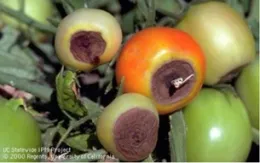
A brown depression on the bottom of tomatoes is usually blossom end rot (BER). This disorder is related to a calcium deficiency aggravated by irregular watering. Since most soils have adequate calcium, watering is usually the problem. Without regular watering, the calcium in the soil cannot reach the plant. Mulching can help. Water tomatoes regularly. Avoid flooding them so the roots sit in water. For more detailed information about BER please view Managing Blossom-End Rot in Tomatoes and Peppers
Months: July August September
Tags: Abiotic Disorders IPM Vegetables Waterwise Tips Pests and Diseases
Water Budgeting
We always need to use water wisely. Sometimes it is necessary to stop and think about your landscape and prioritize water use. Trees are a long-term investment, yet mature trees may have extensive root systems enabling them to find enough water on their own. Fruit trees may need watering approximately monthly during the summer in order to produce good fruit. Vegetables should always be given adequate water in order to fulfill their purpose in the garden; otherwise the little bit of water you used will have been wasted if the garden is not feeding you well. It’s helpful to understand that home-grown vegetables use much less water overall than ones purchased at the store. Established flowering shrubs, especially California natives, tend to need less water than annual flowers and maybe a more water-efficient way to have color and beauty in your garden. Lastly, keep the weeds under control so that they don’t rob water from the plants that you actually want.
Months: May June July August
Tags: Fruits & Nuts Irrigation Ornamental Plants Trees & Shrubs Vegetables Waterwise Plants Waterwise Tips To-Dos
Water the Roots, Not the Plants
It’s tempting to get the hose out and spray your dry, thirsty plants, but you don’t want to waste water. Keep their feet nice and cool, but resist the urge to squirt the leaves unless they need a cleaning (for dust or white fly for instance).
It’s a common belief that daytime water on the leaves will burn them. While it’s possible, according to scientists—for hairy leafed plants where water droplets are held above the leaf surface—but not very likely. It’s more the water will simply evaporate and not do your plants much good and could encourage fungal pathogens if wet overnight.
Months: June July August
Tags: Irrigation Waterwise Tips To-Dos
Watering Hydrophobic Soil
Just as a dry sponge repels water, overly dry soil can do the same thing. This dried out soil is called hydrophobic. Hydrophobic soil can waste a lot of water as water drains away from the plant’s root zone.
In pots: learn more about how to re-wet very dry soil on our Watering Hydrophobic Soil page. In the yard: setting sprinklers to run for 5 minutes, waiting for the water to soak in, and then running for a longer time can prevent water loss due to hydrophobic soil.
Months: May June July August
Tags: Irrigation Techniques Waterwise Tips To-Dos