
The Summer Canopy:
Mastering the Art of Deciduous Fruit Tree Pruning
by Delise Weir, UCMG
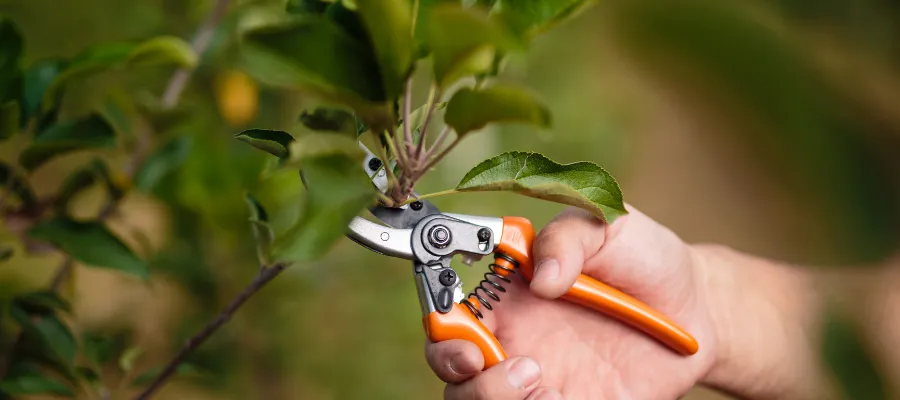
While winter is traditionally known as the season for major orchard maintenance, summer is when the real magic happens. Trimming your deciduous fruit trees in the warmer months is the secret to controlling tree size, maximizing sunlight, and ensuring a massive harvest next year.
While dormant winter pruning acts as an accelerator that boosts growth, summer trimming acts as a brake, slowing the tree down by removing leaves that produce energy through photosynthesis. This makes summer the perfect time to control how big and vigorous your trees get. As orchard experts emphasize: "If you want to keep a deciduous fruit tree small and you skip a summer pruning, you start to lose hold on the size and productivity of that tree."
Here is everything you need to know to confidently manage your pome fruits (apples and pears) and other deciduous trees right now.
1. The Annual Growth Cycle: Where Are We Now?
To prune effectively, we must first understand the rhythm of the orchard.
- Reviewing the Year: In spring, your trees exploded with energy, using stored winter carbohydrates to push out new leaves and set fruit.
- Where We Are Now: By mid-to-late summer, vegetative growth slows down. The tree winds down its structural growth and shifts its resources toward ripening the current crop.
- Next Year’s Bud Formation: Hidden inside the leaf axils, your tree is already forming the fruit buds for next summer. What you do today directly determines next year's yield.
- Fertility and H2O: This is a period of high resource demand. Keep watering consistent to prevent fruit drop—especially in dry summer climates—but pull back on nitrogen fertilizers. Adding nitrogen now will force a late flush of tender, weak growth that cannot survive winter frosts.
2. Anatomy of a Tree & Articulated Forms
Before making a single cut, you need to know the structure of your tree.
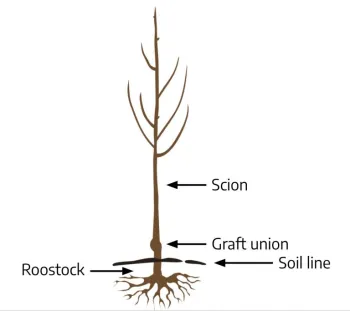
Scion vs. Rootstock: Your tree is made of two parts. The rootstock controls the tree's size and soil adaptability. The scion is the top variety grafted onto it that produces your specific fruit. As shown in the University of Minnesota Grafting Anatomy Diagram, you should always prune away any growth emerging from below the graft union near the soil line.
- Scaffolds & Laterals: The large main branches growing from the trunk are your primary scaffolds. The smaller horizontal stems growing off those main branches are laterals, which is where your fruit grows.
- Articulated Forms: Most home orchards use one of two shapes pictured in the Royal Oak Farm Form Guide:
- Open Center (Vase Shape): The central trunk is cut, encouraging main branches to grow outward for interior light.
- Modified Central Leader: A central trunk grows upward, but side branches are spaced out evenly to create a pyramidal shape.
- Identifying Wood Age: Current-year juvenile growth at the tips is smooth, bright, and highly flexible. Older wood features rougher bark and short, stubby clusters called fruiting spurs.
- Bud Types: Learn to spot the difference. Vegetative buds are flat, pointed, and narrow. Fruit buds are plump, round, and fuzzy.
3. Winter vs. Summer Pruning: The Great Debate
When and why you prune dictates how the tree behaves.
- Winter Pruning (The Accelerator): Done during dormancy, winter pruning is used for structural establishment and big cuts. It triggers a massive burst of spring growth that can cause the tree to look like a tangled "hairball" or create a "witch's broom" effect of excess shoots.
- Summer Pruning (The Brake): Summer pruning limits the growth response rather than eliciting it, allowing you to manage the foliage and wood load. It lets more sun reach the remaining leaves and creates fruit buds and spurs much faster.
- When to Cut: Prime time is as close to the summer solstice but it can be done from late June through August. Watch the tips of your new branches. When the leaves fully unfurl and the terminal buds form at the very tips, the tree has stopped stretching for the season. This is your green light to prune.
4. The Goals of Summer Pruning
Summer pruning is all about refinement and structural control. Your primary objectives are:
- Lateral Management: Head back the laterals to keep fruit weight close to the strength of the main branches. This thickens the stems and prevents branch breakage under heavy fruit loads.
- Height Reduction: Snip back overly tall branches—often utilizing a secure three-legged orchard ladder—to keep your canopy at a manageable, harvest-ready level.
- Light on Fruit: As orchard managers at Santa Cruz Permaculture note, "Sunlight equals fruit." Thinning the canopy allows sunlight infiltration to all portions of the tree, which improves fruit color, boosts sugar content, and helps it ripen.
- Managing Uprights: Quickly remove upright water sprouts and suckers before they steal energy and shade out the rest of the tree.
5. Gear Up: Choosing the Right Summer Tools
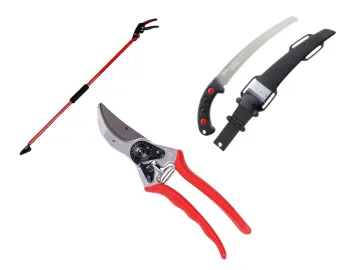
Before making your first cut, having the right gear makes the job safe, easy, and healthy for your trees. Unlike winter pruning where you might need heavy-duty saws for major restructuring, summer pruning is all about light refinement.
- Hand Pruners (Bypass Type): This is your absolute best friend for the day. Always look for bypass pruners, where the curved blade slices past a thick base like scissors. Avoid anvil pruners, which crush the delicate summer stems instead of making a clean slice. Opt for a pair that feels comfortable in your hand and has replaceable parts.
- Bypass Loppers: If you run into a branch that is thicker than a pencil (up to 1 or 1.5 inches), step up to loppers. The long handles give you the leverage you need to snap through tougher wood cleanly without straining your wrists.
- Pruning Saw: Rarely needed for summer pruning but if may be handy if you don’t have the hand or arm strength to manage a larger branch with loppers.
- Long Armed Pruner: These are especially good for water shoots. Look for a 6-7’ foot pole pruner designed as a one-piece unit to extend the pruner’s reach.
- A Sturdy Orchard Ladder: If your trees have gotten away from you, do not use a standard A-frame house ladder on uneven garden soil. Look for a three-legged orchard ladder. The single back leg allows you to safely anchor the ladder inside the tree canopy and on sloped ground without wobbling.
- Tool Sanitizer: Actively growing summer wood is vulnerable to bacteria and fungi. Keep a spray bottle of rubbing alcohol, a 10% bleach solution, or antibacterial disinfectant handy. Spray your blades clean between every single tree to prevent accidentally spreading diseases across your yard.
6. Types of Summer Cuts
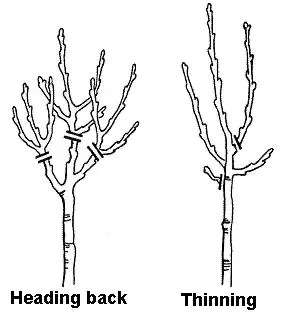
You will use two primary cuts to achieve your goals. Always use sharp, clean bypass pruners or loppers to slice cleanly without crushing the plant tissue.
- Thinning Cuts (The Eraser): As demonstrated in the Utah State University Extension Pruning Guide, this involves following a branch all the way down to its point of origin and removing it completely. Thinning cuts improve air circulation, reduce disease risks, and let light pierce the canopy without triggering a flush of new growth. Use this to clear out crowded, crossing, or vertical water sprouts.
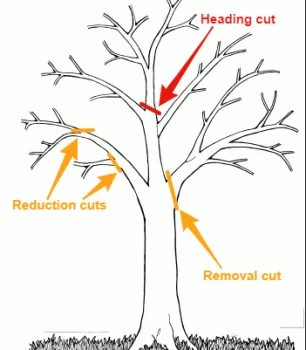
- Heading Cuts (The Diversion): This means cutting a branch at an outward-angled point along its length. For pomes (apples and pears), look at where the current season's branch originated, count out 3 to 4 nodes (buds), and make a clean heading cut close to the node without leaving a long, unhealable stub. This stops forward growth and prompts those remaining buds to develop into fruiting spurs for next year. Be conservative: keep at least 80% of the overall foliage to protect the tree from stress and sunburn.
📺 Helpful Video Demonstrations
- The Importance of Summer Pruning an Apple Tree – Part 1 UCSC, (26:48)
Orin Martin, https://youtu.be/9ioGcl7gHgc?si=xD0D9RTqaRLYyPXW
- The Importance of Summer Pruning an Apple Tree – Part 2 UCSC, (11:03)
Orin Martin, https://youtu.be/9hmX-iIHOCk?si=SuQMju4X0yD7gFTY - In-Depth Summer Pruning Tutorial: Sunset Magazine (22:03)
Watch certified horticulturist Tobey Nelson and Dave Wilson break down terminology, wood age identification, and hands-on cutting techniques - Watch "How and Why to Prune Your Fruit Trees in Summer" on YouTube
- Bare Root Tree Care & Crop Thinning: Tricia from Peaceful Valley Farm Supply shares her pro-tips on summer size control and thinning crops for higher quality fruit.
📖 Trusted Reading & Practical Guides
- UC Marin Master Gardeners Article: A highly accessible guide exploring how summer cuts manage hormones, prevent disease, and optimize tree size.
- Santa Cruz Permaculture Deep Dive: Learn about the relationship between summer canopy management, fruit sweetness, and building beneficial understory plant guilds.
- Utah State University Extension Guide: Visual diagrams illustrating correct fruit tree training forms, scaffolding, and the mechanics of thinning versus heading cuts.
- University of Minnesota Open Academics: Technical blueprints to help you visualize graft unions, rootstock dynamics, and how trees heal clean pruning wounds.