
Table of Contents
- Greetings from UC ANR
- Why, when, and how we thin conifer seedlings
- Thinning and control methods
- Updated reforestation manual available
- Conifer thinning is often part of reforesting for climate resilience
- Post-fire Resilience Online Course
- Helping landowners after a wildfire: A glimpse into the EFRT Pilot Programs
- The Feather River RCD Story Map
Greetings from UC ANR
This newsletter focuses on tree seedlings and how to plant and manage them. After a major disturbance such as wildfire, there is often a need to replant conifer seedlings. Deciding how many and where to plant what kind of trees is a key step in the reforestation process.
It is important that the planting design and plan be customized to the particular forest type being restored and the climate, topography and soil productivity of the site. We also have to consider what happens to those conifer seedlings after planting. They will need to be managed just as much as a more established forest.
For those landowners with an abundance of natural regeneration, those conifer seedlings need to be managed as well or the landscape will soon turn into the 'dog hair' thicket forests some of our workshop participants are now trying to manage.
To help promote healthy and vigorous conifer seedlings in both situations, thinning is often needed. Doing this while the seedlings are small can be easier on your back and less taxing on your wallet. UC ANR, UC Berkeley Forests, and other collaborators, have been working to develop best practices for early thinning of young seedlings (as young as three years old).
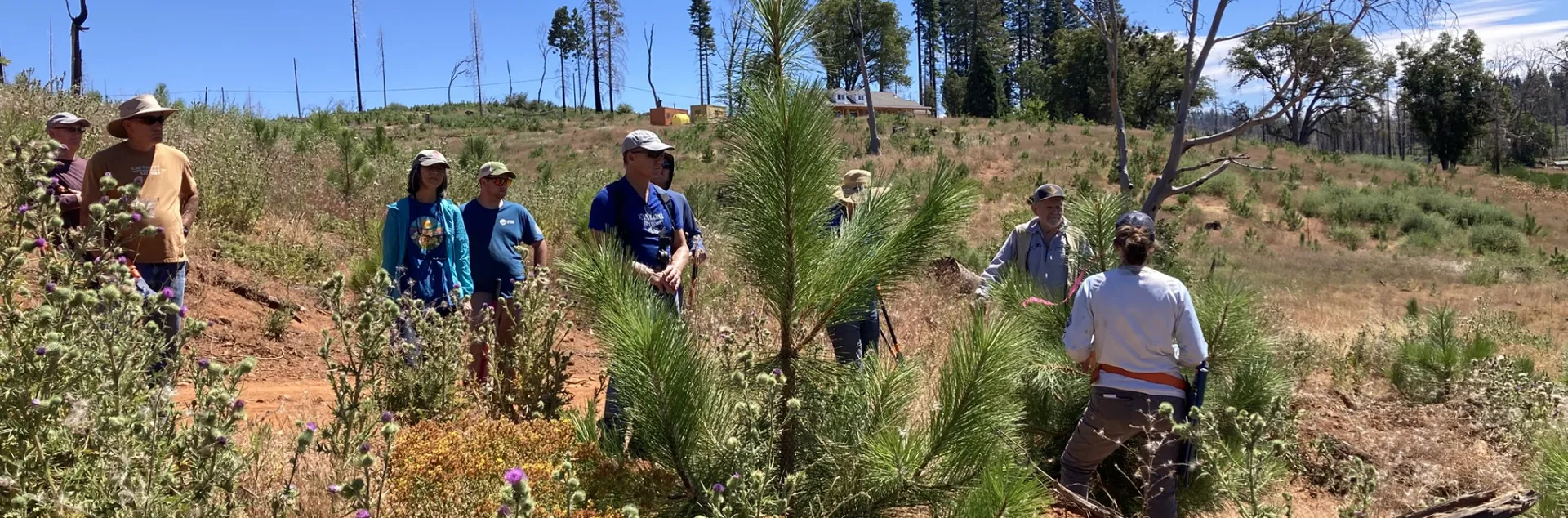
This newsletter will provide some insights and resources so you can make informed decisions when it comes to managing seedlings. We are also hosting field days on Saturday, July 25th in El Dorado County, in collaboration with the El Dorado RCD, and on Friday, August 28th in Plumas County in collaboration with Feather River RCD, to discuss and demonstrate best practices for conifer seedling thinning. Registration information can be found in the 'Upcoming Events' section of the newsletter. We hope to see you there!
Cheers,
Jannike Allen, Forest Stewardship Community Education Specialist
Kim Ingram, Forest Stewardship Education Coordinator
Why, when, and how we thin conifer seedlings
Why thin:
California’s forests are adapted to our Mediterranean climate, with warm dry summers and frequent fires and droughts. When too many trees grow in an area, each gets less moisture from rain and snow and is less able to survive long droughts and fires. Historically, frequent, low-severity fires reduced tree density and created a mosaic of uneven-aged groups of trees with tree clumps, gaps, and openings. Lack of fire on the landscape has created overly dense forests more vulnerable to these disturbances.
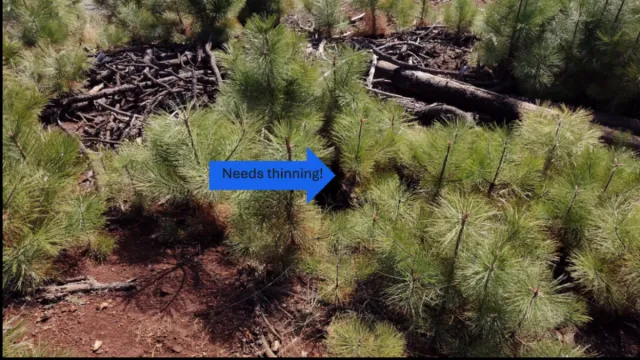
These are conditions we want to avoid with forests we are establishing today. Whether your forest has young trees that were planted or seeded in naturally, or a combination of both, it is best to not have more seedlings than the site can sustain over the long term, to ensure that those remaining grow vigorously.
How many trees is enough?
As a forest landowner, you will have to consider your site productivity and geographical features (soil, aspect, slope position, and elevation) to determine the appropriate density of seedling to plant to meet your forest health and fire resilience goals. We recommend that you consult a Registered Professional Forester to help you understand your site’s capacity for tree growth.
Typically, more seedlings are planted than the eventual target number to account for those that may not survive the planting phase. This is done with the understanding that they will need to be thinned out later if survival is good. In areas where naturally growing tree seedlings or tree resprouts are abundant and are desired species, planting may be unnecessary. Monitoring in the first few years after the fire can identify areas where natural seedlings are establishing well, allowing resources to be directed to plant areas with greater need.
When to thin:
Deciding when to thin involves a variety of tradeoffs. It is important to wait until it is obvious how many trees have survived the planting phase and which trees are displaying dominant characteristics. When you reduce tree density, understory vegetation may take advantage of the space created and may require further management. Alternately, delaying thinning can help allow trees to shade out understory vegetation. Short-term, surface fuels increase from thinning, but less so if thinning is done while trees are small.
Early thinning is best done after young trees have survived for several years, allowing the landowner to estimate the future number of trees per acre on site likely in the short therm. By age 3 to 5, planted seedlings have begun to establish themselves and express growth dominance. Naturally regenerated seedlings may also have grown in from seeds dropped by nearby mature trees. At this time, it should be apparent whether there are fewer trees establishing than desired (calling for additional planting), or whether there are too many (calling for early thinning). Early thinning can be done at this stage to remove excess trees while they are still small enough to be cut using loppers or other hand tools. This approach takes less effort and is less costly than waiting until trees are larger.
Pre-commercial thinning is often done when trees are 5 to 15 years old. By this age trees are usually larger than shrubs and can fill newly available growing space quickly. It is typically done with chainsaws or larger mechanized equipment such as chippers or masticators . There will be more woody debris to manage because larger trees are cut.
The UC Berkeley approach to early thinning:
Ariel Roughton, Manager of UC Berkeley's Blodgett Forest Research Station, developed an early thinning protocol to help crews decide which seedlings to remove to reduce competition in young stands in which two trees are planted in the same planting spot.
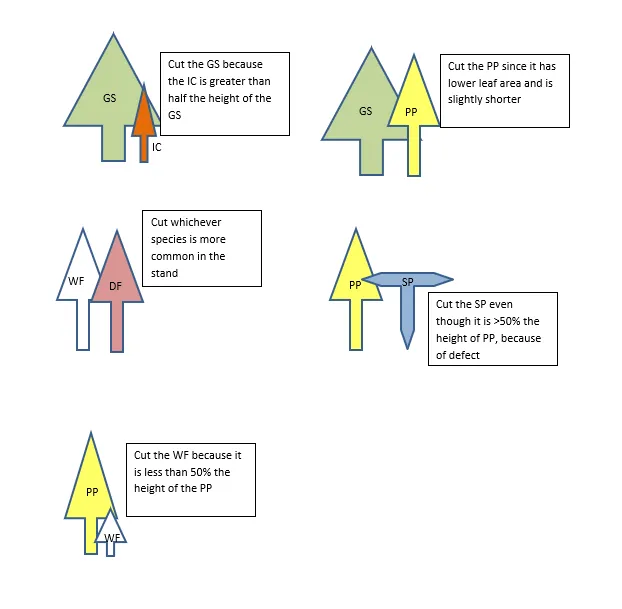
The goal of the thinning rules are to identify which young seedlings to cut, leaving those that meet Blodgett's objectives of maximizing tree species diversity and allocating future growing space to trees of high vigor at roughly equal spacing.
First, decide how many trees per acre to leave on your land and the percent of each species you want. If you have more fast-growing seedlings of a high survival species (for example ponderosa pine), you may want to remove some if they are dominating a slower growing but desirable species seedling (such as sugar pine).
Looking at comparable seedlings, remove those with the least amount of leaf area or those showing signs of poor vigor or form. If natural regeneration is dense, it may be more practical to use other thinning methods such as motor-driven brush cutters or prescribed fire. Cutting woody brush species within a 5' radius of your seedlings will reduce competition for resources. Remember that you want to encourage species diversity across your forest, so exceptions to the protocol can always be made.
For forests with an abundance of natural regeneration within mature stands, Ariel recommends a more aggressive thinning approach. Space the seedlings based on the location of the mature trees. Using the drip line of the mature tree (not the bole of the tree), thin natural regeneration to a spacing of 15 to 20 feet from the dripline of mature trees. The same seedling selection criteria for natural regeneration can be applied.
Thinning and control methods
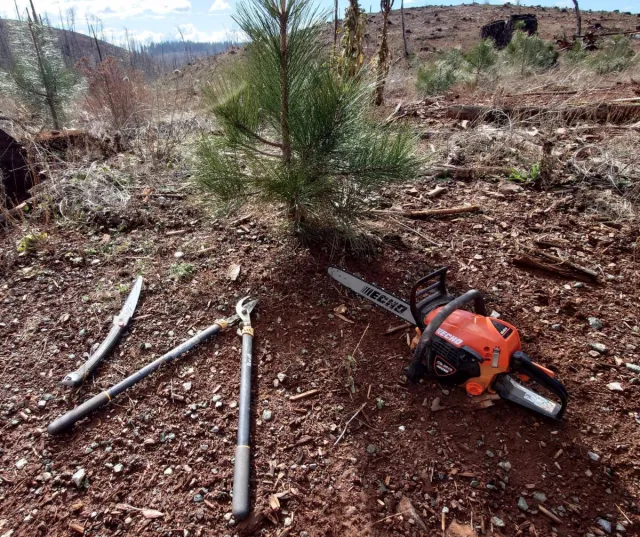
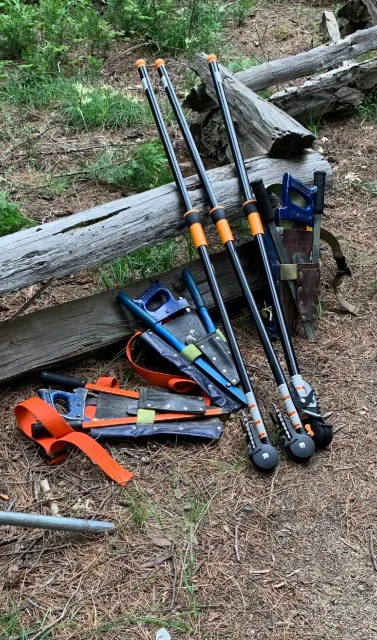
Hand tools can be effective for early thinning when seedlings are small. Which tool(s) to use is a matter of landowner preference. No matter which tool you use, become familiar with how to safely and correctly use and care for it. Refer to the manufacturer’s instructions or speak with your local natural resource professional or retail tool provider. Remember, safety first!
The Forest Stewardship "Small Hand Tools for Forest Vegetation Management" Factsheet (linked above), provides an overview of various hand tools, including their general uses and price range.
Check out the favorite hand tools used by other forest landowners on our UC ANR Green Blog, as well as other tools they recommend for overall forest management.
Mechanical treatments are typically used for commercial and precommercial thinning when trees are older and bigger. These increase the scale of thinning but are less selective. Masticators can row thin dense young stands. Feller-bunchers are useful for removing older, larger trees.
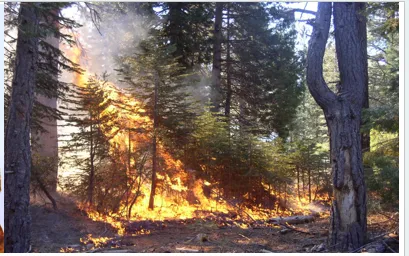
Prescribed fire may be useful to thin young stands (by age 15) if careful preparations have been made before, during and after reforestation, including:
- Removal of woody debris before planting seedlings
- Planting in configurations to promote fuel continuity and at lower densities to create beneficial growing conditions
- Continuing to reduce woody debris accumulations, thin seedlings and control competing vegetation after planting.
Prescribed fire is a less precise tool for thinning than mechanical methods because it is harder to choose which trees will be killed and how many. Determine ahead of time what levels of mortality you are comfortable with. Learn from, and join, a local Prescribed Burn Association (PBA) to build good fire capacity from the ground up. More information can be found at the CA Prescribed Burn Association website: https://calpba.org/
Updated reforestation manual available
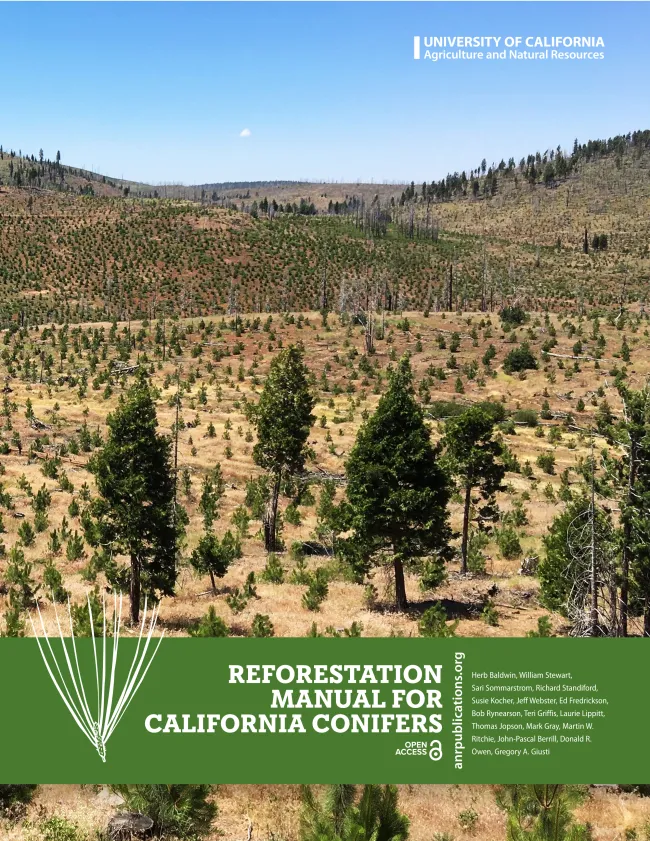
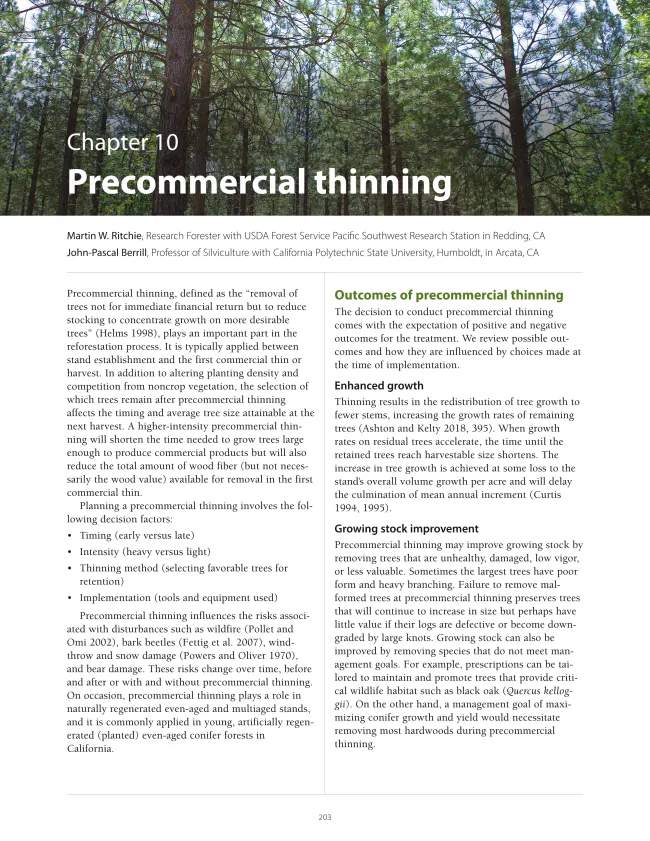
Whether your forest land has been impacted by severe wildfire, pest disturbance, or timber harvest, you may find yourself needing to replant. The 2026 Reforestation Manual for California Conifers brings expertise from UC ANR, UC Davis, UC Berkeley, U.S. Forest Service, CAL FIRE, and industry professionals as a free resource. Land managers can learn best practices for selecting seedlings, preparing landscapes for planting, and management for seedling success, including thinning.
Reforestation manual highlights include:
- Reforestation in a California context
- Economic considerations
- What to consider when planning
- Monitoring and follow-up treatments (36)
- Precommercial thinning (36, 203-229) including regional considerations
- Fuel reduction, including pruning (37)
- Example schedule of activities for post harvest (40), post wildfire (40), or forest restoration after brush-field conversion (41). These examples show that precommercial thinning often may happen 6-15 years after planting.
- Mapping & on-site field assessment, including unit planning (58) and site assessment (59) templates.
- Seed and seedling sourcing, and planting considerations
- Site preparation
- Vegetation management to help your replanted trees succeed (139) Mitigating damage from pests, diseases, weather events, and human inputs (232).
Conifer thinning is often part of reforesting for climate resilience
Reforestation and thinning for climate resilience varies across the state. The CA Climate Hub provides guidance for different forest types. In addition to climate factors, landowners should consider their capacity for thinning when deciding how dense to plant trees: planting densely now will likely mean more thinning is necessary later.
Post-fire Resilience Online Course
Forest management after wildfire is a challenging process, and for many California landowners, it’s an overwhelming one.
Over the past several years, University of California Agriculture and Natural Resources has led multiple post-fire education efforts to help forest managers decipher the best path forward. From developing online learning tools for landowners to hosting hands-on “reforestation camps” for practitioners, UC ANR forestry academics aim to build community knowledge and understanding for these recovering ecosystems. For family forest owners (typically described as small, non-industrial forest landowners), navigating this information landscape following a disaster can be daunting.
To address this, UC ANR has developed a free, online Post-Fire Resilience course providing landowners practical guidance after fire. The course launched on May 2nd and is free to the public.
The online curriculum is adapted from UC ANR’s Post-Fire Forest Resilience workshop series, a statewide educational program that served nearly 300 Californians (pdf) between 2022-2025.
During the self-paced online course, key concepts like forest health, identifying fire severity and post-fire safety considerations are taught through modules and videos. Landowners will gain confidence in finding post-fire assistance and articulating their goals to a natural resource professional.
Take the free Post-Fire Resilience course (note that enrollees will need to create a free Campus Extension account).
Find additional post-fire management resources on the UC ANR website.
Helping landowners after a wildfire: A glimpse into the EFRT Pilot Programs
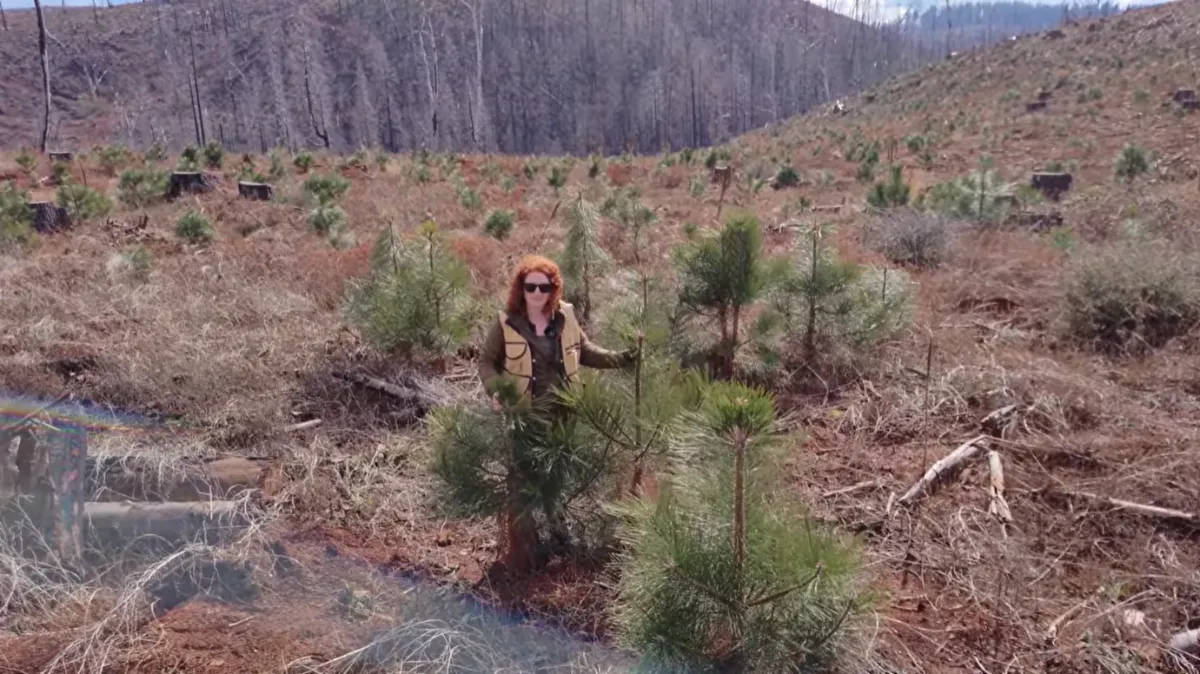
In response to California's 2021 Caldor, Dixie, and Tamarack fires, three pilot Emergency Forest Restoration Teams (EFRTs) were formed. The programs used disaster relief funding from the U.S. Forest Service and CAL FIRE to assist private forest landowners with restoring and reforesting their land. Funds were awarded to the El Dorado and Feather River Resource Conservation Districts, and Alpine County. These partners coordinated with landowners, and managed contracts, projects, and CEQA compliance.
The three pilot EFRTs were able to collectively remove dead trees on 2,500 acres and plant conifers on 1,400 acres within two years. The programs were unique in that they received non-competitive funding, and can be a model for rapid implementation in prioritized areas.
Daylin Wade, UCCE Staff Research Associate, spoke with landowner participants about their experiences with the program. Many treated sites had both seedlings planted as well as natural regeneration, some to the point that thinning will be necessary. One landowner noted "I'm encouraged. I like the fact that there are so many trees. That's good. I wish that I didn't have to take two thirds of them out because they're so close together."
The Feather River RCD Story Map
After the Dixie Fire burned 31,000 acres in Plumas County, the Feather River RCD was selected to pilot an Emergency Forest Reforestation Team (EFRT) to assist landowners in their reforestation efforts. The EFRT set a goal to re-establish conifer forests in areas that were logistically feasible, and where replanting tree seedlings would lead to the greatest likelihood of success.
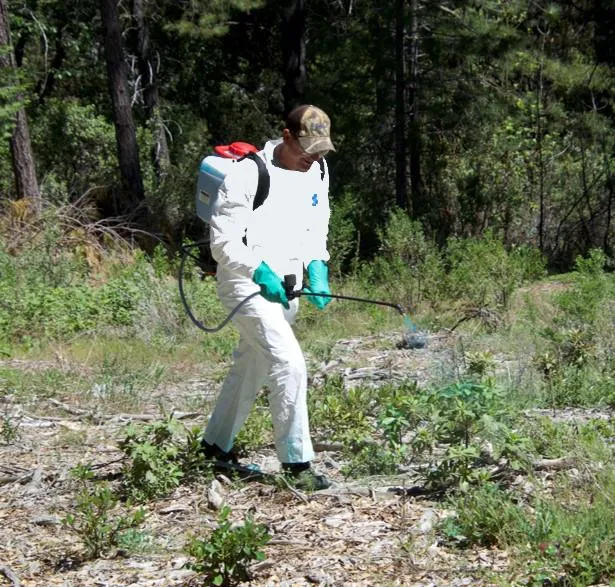
Working with local RPFs, landowners interested in utilizing the EFRT program began preparing sites for reforestation which included the removal of dead trees, thinning live trees, and mastication and chipping of burned material. Native ponderosa pine, Jeffrey pine, Douglas-fir, incense cedar, and rust-resistant sugar pine seedlings were planted in areas where site preparation had been completed. To help manage competing vegetation as the seedlings became established, 50% of the EFRT participants agreed to a one-time, post-planting herbicide application.
The Feather River RCD has also collected data on the first two years of seedling planting in order to develop a monitoring protocol that can be adapted by small forest landowners and resource managers.
To learn more about this reforestation effort, visit the Feather River RCD Story Map.
Find the printable version of this newsletter below. Note that the pdf is for print purposes ONLY.
