
UC experts recommend using free public compost to ‘cap’ soil, keep heavy metals out of waterways
Climate forecasters are sounding the alarm: we’re in for an El Niño year.
This anticipated weather cycle may bring heavy rain and flooding to California over late fall and winter. According to Daniel Swain, climate scientist with the University of California Agriculture and Natural Resources, it likely will become the strongest El Niño event in recorded history.
“While there’s not a one-to-one relationship between El Niño’s strength and California rainfall, the exceptional intensity and other characteristics of this year’s event will substantially increase the odds of a wetter-than-average winter in southern California,” Swain said. “That will likely mean an increased risk of heavy precipitation events that could lead to flooding, including in and near recently burned areas.”
In Altadena’s burn scar, this forecast is especially concerning. In January 2025, the Eaton Fire wiped out trees and other vegetation whose roots typically hold soil in place, leaving the topsoil more vulnerable to getting washed away during strong storms.
Further complicating matters, the soil in fire zones can be hazardous. While the Army Corps of Engineers scraped burned lots to remove fire debris, follow-up testing by UC scientists and other universities has confirmed heavy metals like lead still remain on some properties. Erosion risks carrying those chemicals into local waterways.
“Heavy rainfall literally cuts into the soil, and that’s what leads to topsoil loss,” said Natalie Levy, soil health and organic materials management advisor for UC ANR. “Every rainy season, especially when we have predicted heavy rainfall, you’re going to want to think about erosion on your property and what you’re doing to mitigate that.”
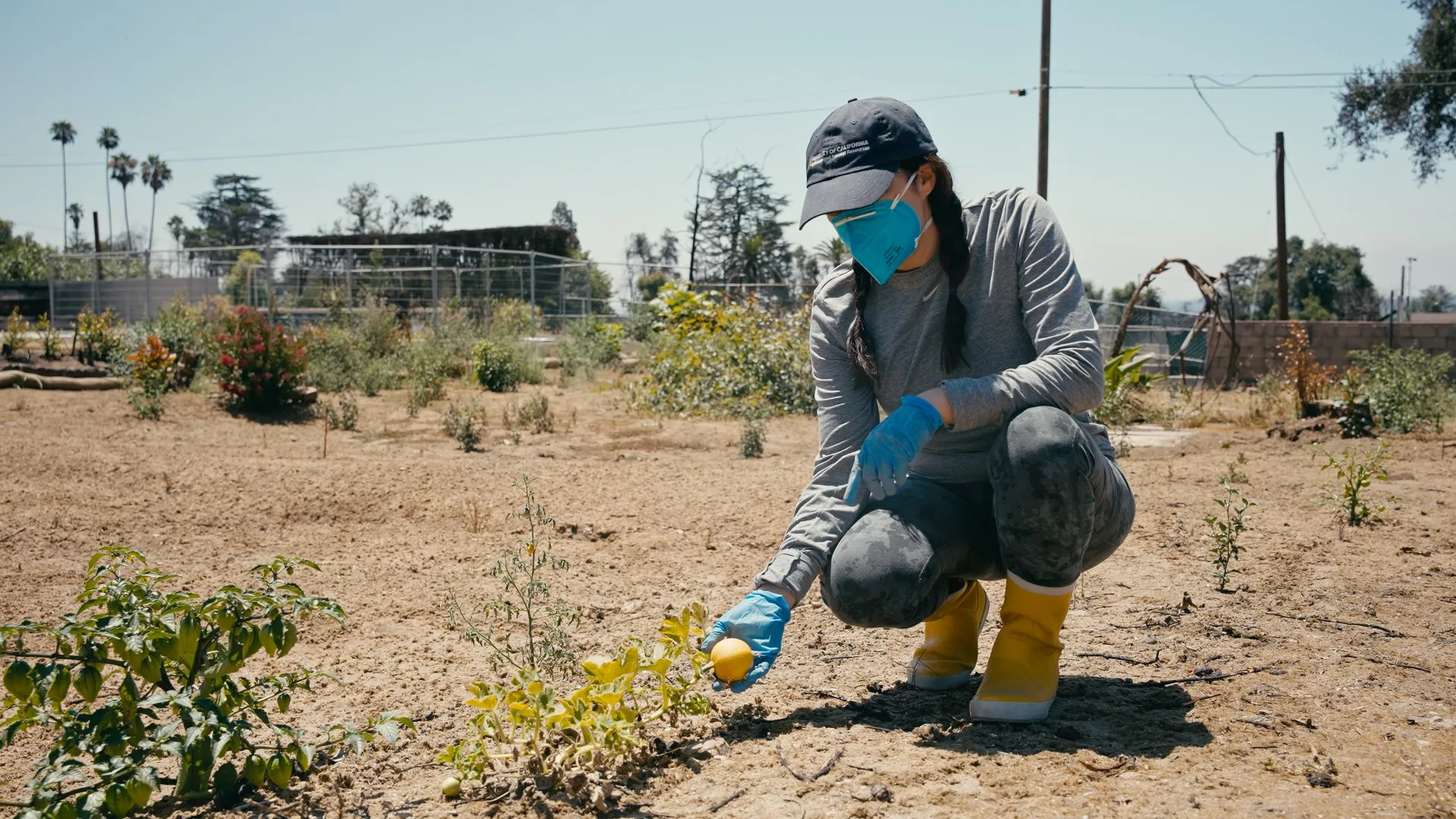
Levy has spent months preparing for this moment. Starting last fall, she and a team of academics and UC Master Gardeners, including local fire survivors, organized a campaign to defend Altadena’s topsoil from further degradation. Their solution is dirt-cheap.
“We decided to cover the soil with compost ‘erosion-control blankets’… which is just another way of saying organic mulch,” Levy said. “It helps reduce the potential for human exposure to post-fire contaminants, and that’s what we’re after.”
Through a pilot project and educational workshops, the team is raising awareness about the benefits of applying compost in burn zones. The idea is straightforward: covering contaminated soil reduces opportunities for it to become airborne or transported by rainfall. A two-inch layer of coarse-screened composted mulch provides a physical barrier between bare soil and the elements while helping stabilize the soil surface.
The team is also studying benefits organic matter may provide at the chemical level. Compost and other forms of soil organic matter contain compounds that can bind to heavy metals, potentially reducing their “bioavailability,” meaning their likelihood of being absorbed into living organisms.
“Organic matter provides more ‘parking spaces’ to hold some heavy metals rather than allowing them to wash away, leach down or blow away in high winds,” Levy said.
Ahead of the fall rainy season, Levy has developed guidance for residents to cap their soil to minimize erosion and reduce exposure to toxins in post-fire communities. For a detailed explanation, follow Levy’s step-by-step instructional video on soil capping.
“Last year, there was a critical need post-fire for compost erosion control,” Levy said. “This year, with the El Niño predictions, it is equally important to fortify those areas of your residence where you have exposed soils.”
Altadena residents and scientists team up to pilot soil capping
Levy has already put compost to the test during last year's rainy season. In fall 2025, she piloted a soil-capping project to provide compost to residents on Las Flores Drive in Altadena. Throughout the project, Levy closely collaborated with Lydia Whitlock, a resident who lost her home in the Eaton Fire.
As a UC Master Gardener, Whitlock has a reputation as a trusted source of scientific guidance in the neighborhood. She was used to fielding questions about California native plant propagation and fruit tree care. But after the fire, her neighbors’ concerns became more dire.
“People were anxious and scared… suddenly having to think about something they had taken for granted – that your earth is not going to kill you or make you sick,” Whitlock said.
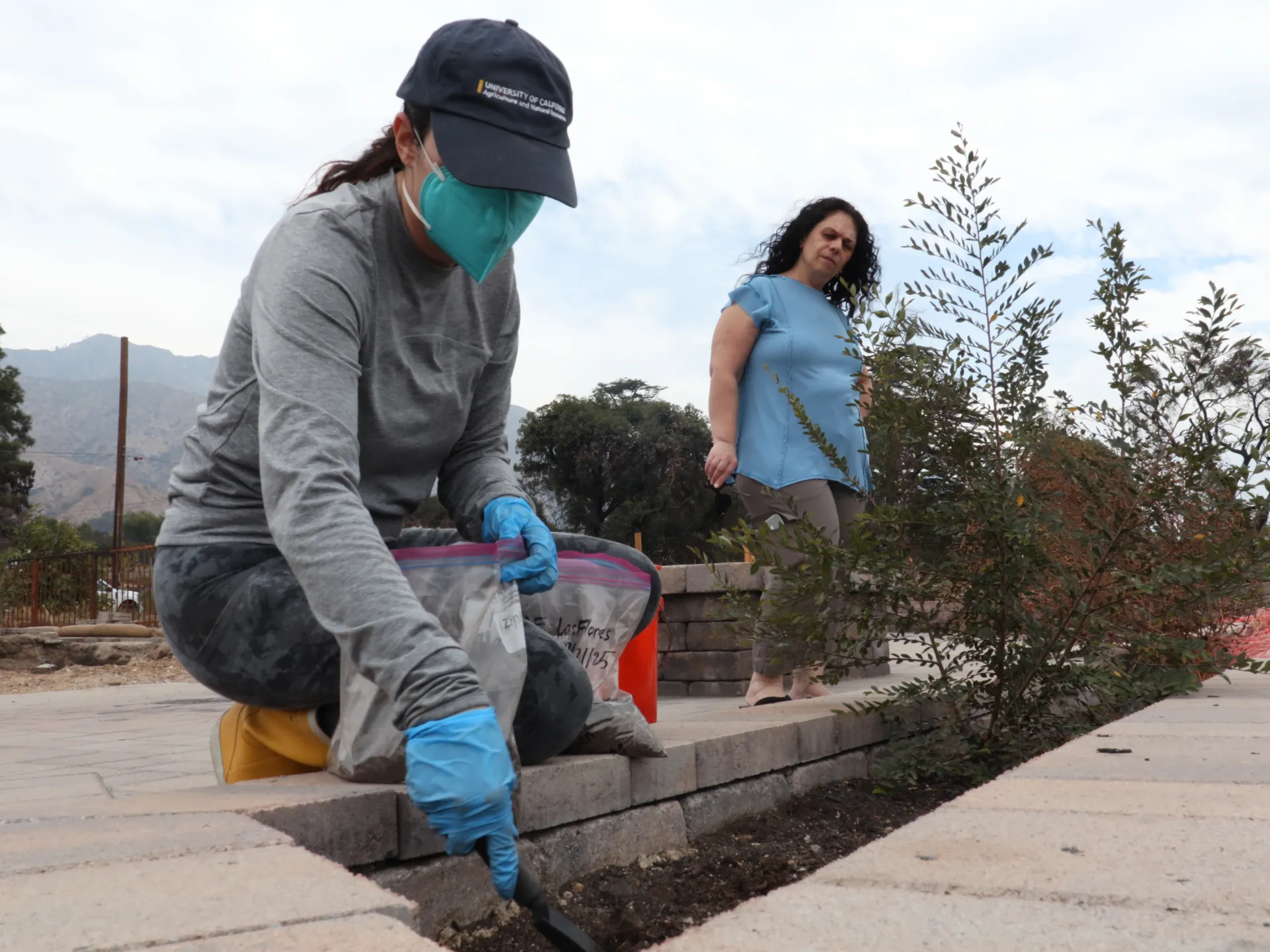
In the fire’s aftermath, the Altadena community reconvened digitally in group chats and on Facebook pages. Whitlock was active in these spaces and noticed a recurring theme – people wanted to understand if their soil could be made safe again. By partnering with Levy and Professor Rebecca Ryals at UC Merced, Whitlock secured free soil testing for her neighbors on Las Flores.
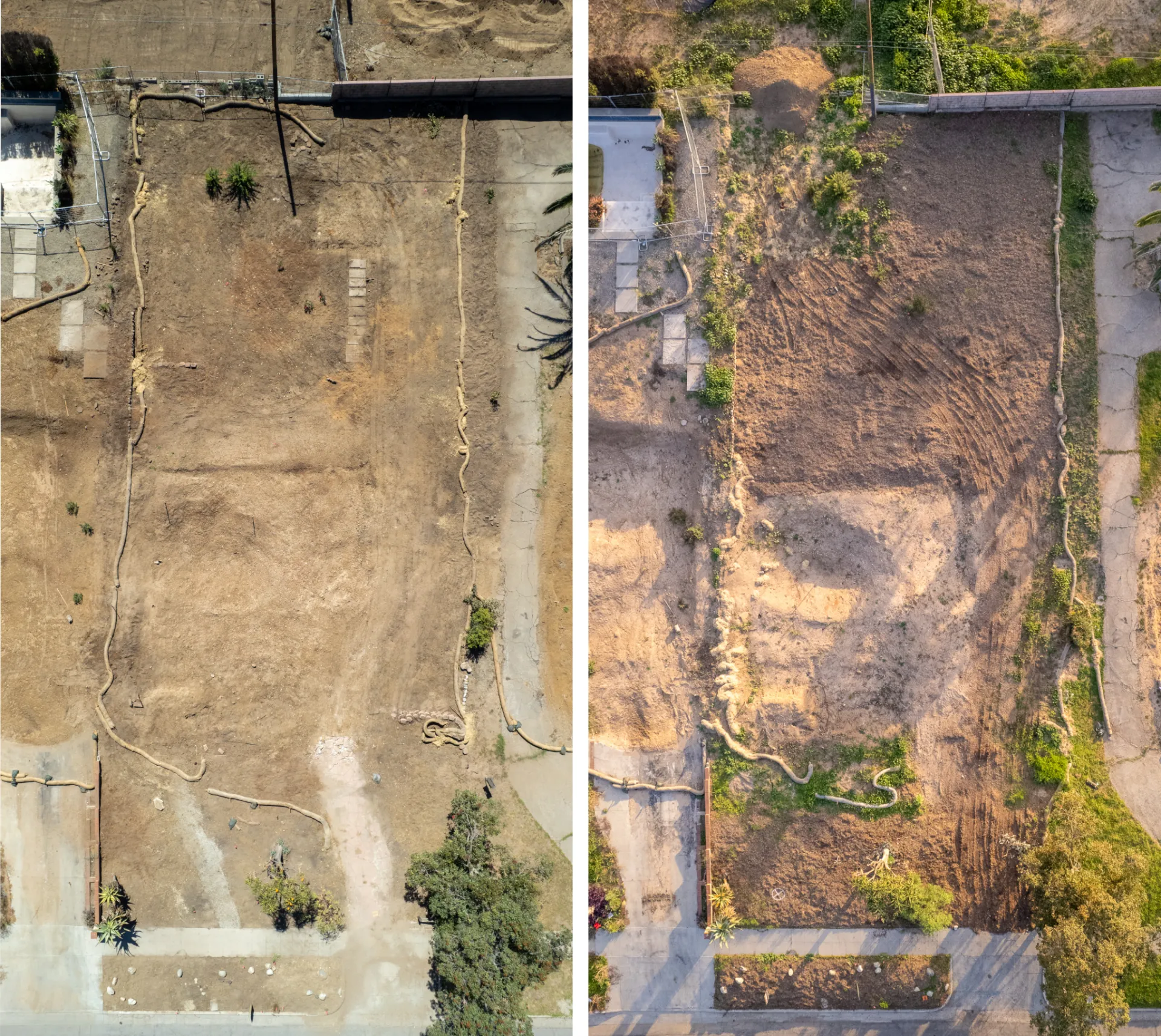
Levy discussed the potential benefits of using composted mulch to protect their soil. Based on those consultations, 14 homeowners opted to join the pilot project and cap their landscapes.
Securing the 645 cubic yards of compost needed to cover 128,404 square feet on the participating properties required Levy to think strategically. She drew on California Senate Bill 1383, which mandates local municipalities procure large amounts of recycled organic material every year.
With that background, Levy pitched an idea to L.A. County Public Works officials: by purchasing compost for Altadena, they could meet state procurement requirements while directly supporting fire survivors. Her proposal worked – those 14 properties are now covered by protective blankets of rich, dark composted mulch paid for by L.A. County.
“Hopefully this is a pathway for other people to follow,” Whitlock said. “Find your local UC Master Gardener and start from there. Start a WhatsApp with your neighbors and see where it takes you.”
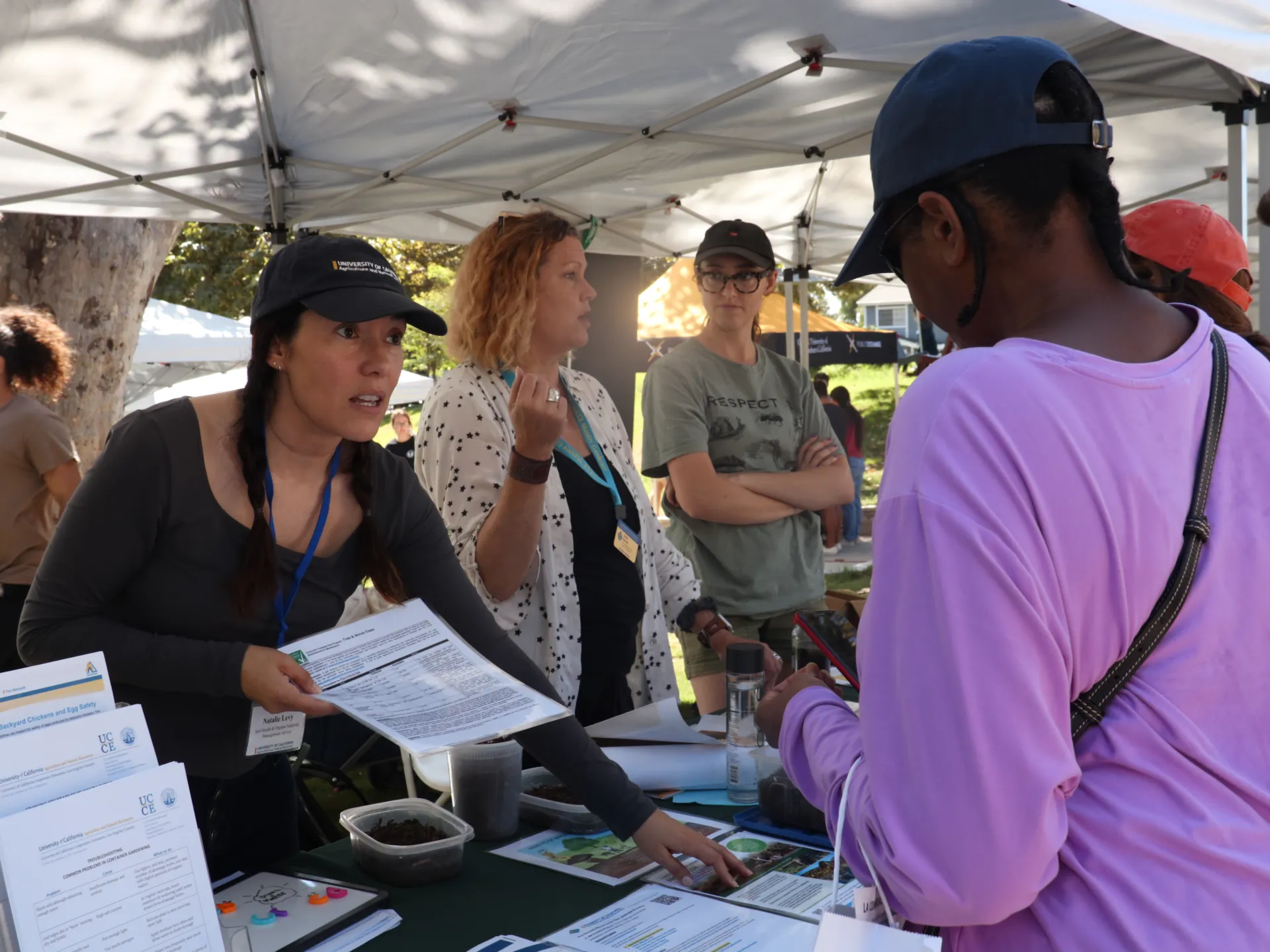
Fire-impacted communities encouraged to protect their soil with free resources
Pasadena resident and UC Master Gardener Kristy Brauch has been thinking about Altadena’s soil ever since watching ash from the Eaton Fire settle on her garden beds. In addition to organizing a local soil testing effort with UCLA, she’s been busy educating the public on compost at information sessions, conferences and UC Master Gardener trainings.
Brauch is well-versed in the physical and chemical benefits of compost mulch, and after talking with countless fire survivors, she can attest to a therapeutic element of this campaign. Levy’s guidance on soil capping has provided much-needed relief.
“ People were literally, like, falling into my shoulder, crying: ‘I cannot believe that this is all I need to do. Is this for real?’” Brauch remembers people asking her. “Yes – you can remediate the soil, and then you can have your plants back, and you can help the wildlife return.”
After the success of the Las Flores pilot, Brauch hopes to see the process catch on and get adopted throughout Altadena’s burn zones.
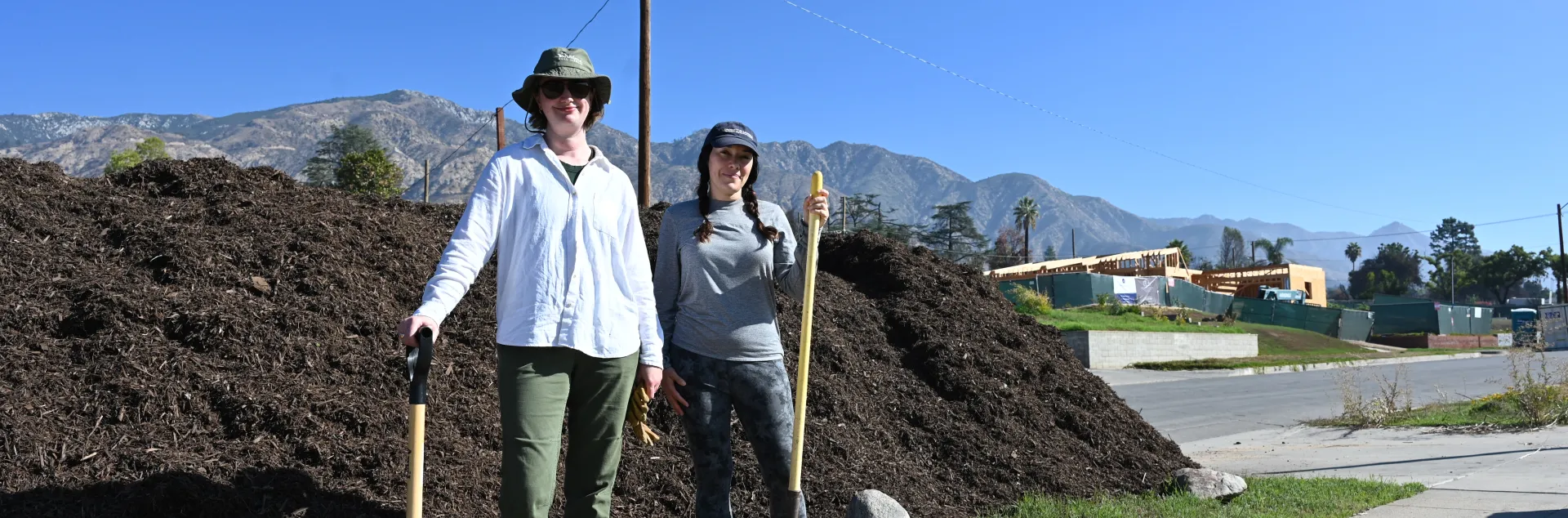
Levy encourages individuals to take action on a scale that feels manageable for them. They may consider using publicly available compost and composted mulch from Griffith Park or other pick-up locations across the city of L.A.
“I wouldn't advocate for this method if I couldn't do it myself,” Levy said. “I tested it. I wanted to determine how feasible this was and how much could be accomplished even in just a single day.”
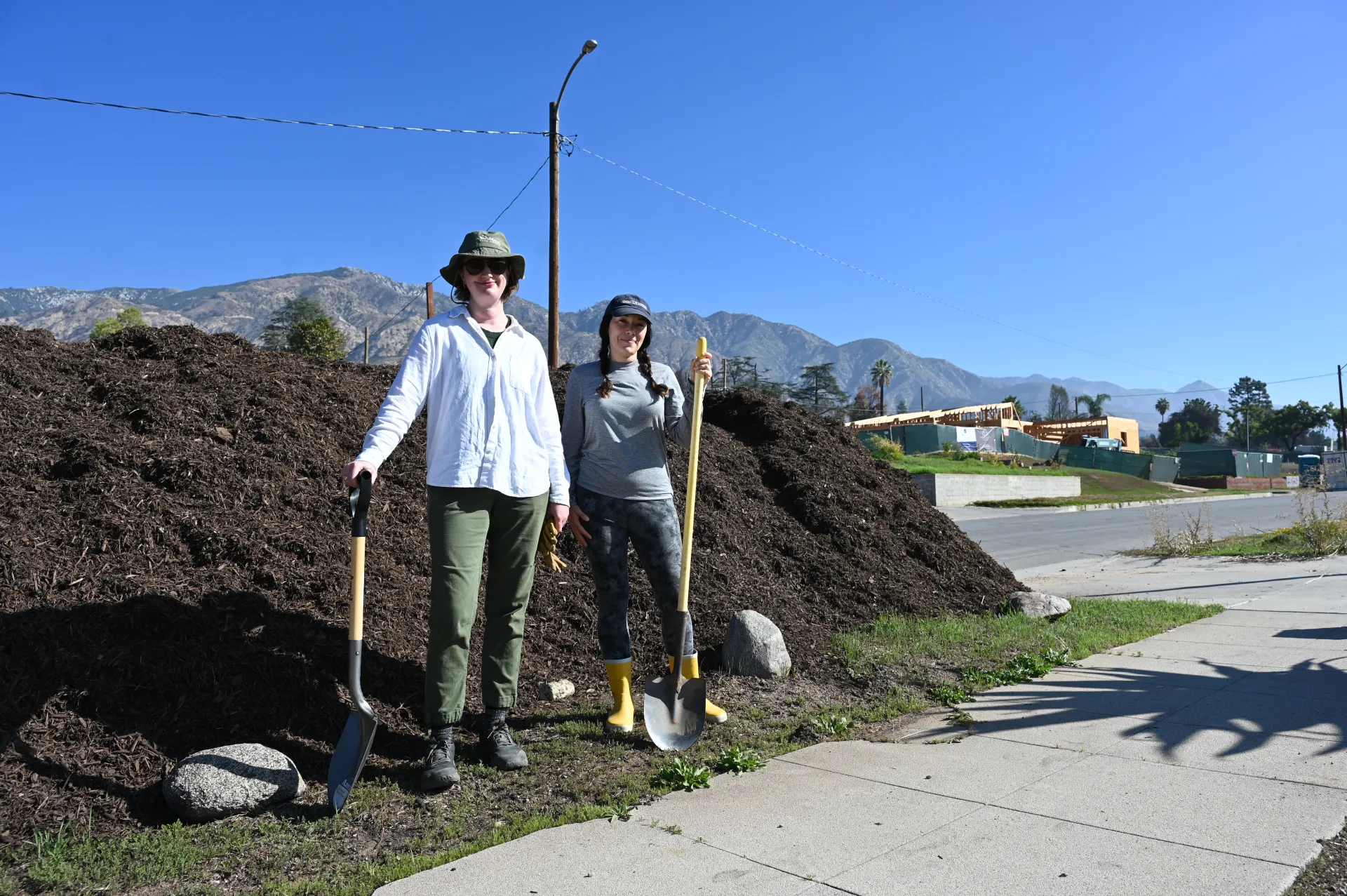
For residents interested in capping their soil, Levy recommends first identifying high-activity areas of their property where contact with soil is most likely. Then, they should measure the square footage to estimate how much material is needed.
Residents will need to pick up both fine-screened compost and larger, coarser, more fibrous composted mulch. While wearing a mask and gloves, cap the soil by spreading an even layer of compost 1-2 inches deep on the targeted area, then cover with another 2-3 inches of composted mulch.
Levy wants homeowners to feel empowered by this process, rather than fearful. She developed this guide to offer homeowners practical strategies while they navigate the long process of rebuilding.
“They've had a lot of battles to fight at every turn,” Levy said. “We're just trying to give them a little support and help where we can, so they don't have to deal with the resonating fear that things in their home can harm them.”
The approach recognizes that post-fire recovery is not a one-size-fits-all process. Some homeowners have already rebuilt, while others may not begin construction for years. Compost can provide a cover to reduce erosion while a home is vacant, or it can be incorporated into landscape soils later, as homeowners begin rebuilding and replanting.
“This is really about getting protective cover down quickly, particularly before the rain, and giving homeowners a way to protect their soil while they determine what comes next,” Levy said.
This story was updated on Sept. 10, 2026, to correct the amount of compost dumped in Altadena during the pilot project. It was 645 cubic yards (roughly 94 tons), rather than 645 tons.