A New Crop? Rumpa or Rumba or Copao or Copado or Eulychnia brevifolia
Growers are looking for alternative crops and drought tolerant ones are better than water intensive ones, right? So, here’s a recent question from someone who wants to grow the latest, new food crop. “What about growing a drought tolerant (in fact, it doesn’t need any water) cactus fruit that will make money?” Cool.
My first response is that it should do no harm. That should be a mantra when it comes to food, especially in this age of hyper-food safety vigilance. People are clever, though, and foods that might be dangerous are often produced so that most people can eat them. We do have acorns with tannic acid that need to be leached if you don’t want to get severely sick. Olives that need to be processed to edible. Puffer fish that with a wrong slice of the knife can kill you. There are any number of other foods that people have figured out a way to safely eat.
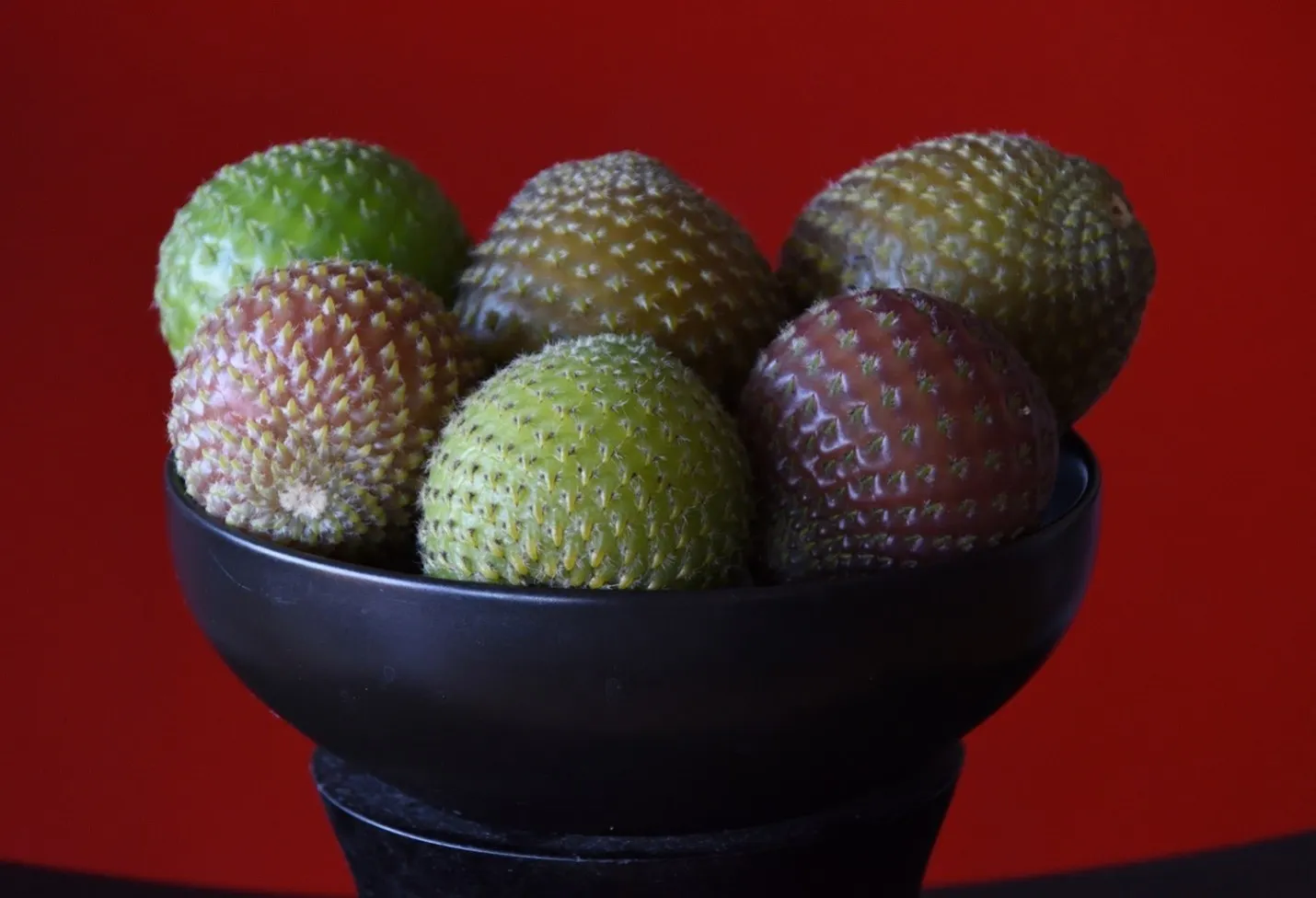
Rumpa is cactus fruit from Chile that has a lot going for it – high nutrient content, high polyphenolic antioxidants, high C, small seeds like kiwi and pitahaya, and tada, drought resistant for our drought prone state. So, it’s a cactus, yeah, but it doesn’t have the teeth crunching seeds of opuntia cactus fruit – the tunas or prickly pear – that can scare some people. Too vigorous chomping on the wondrously flavored prickly pear fruit leads to the small, hard seeds. Shocking, although they are safe to swallow, mostly, but can give delicate teeth a crack. It could be used in the processing of processed foods such as jams, juices and drinks. But that's not all, since according to experts it can also be used in the manufacture of cosmetics.
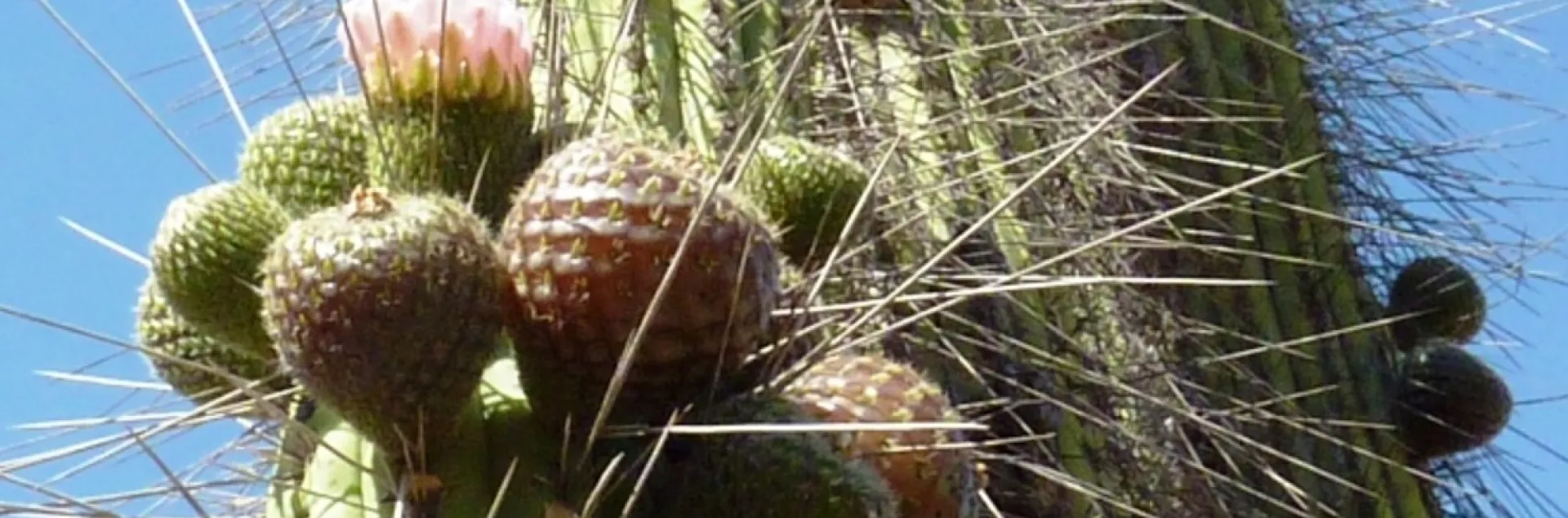
There are spines, but the fine spines on the rumpa fruit surface can be removed by rubbing on an abrasive surface. Not too vigorously, though since the fruit is quite delicate. This would be the same for the tuna fruit, too. You can get rid of those spines by rubbing, too. So, eating the rumpa should be relatively safe.
The safety issue pops up with the spines on the stems. They are wicked thorns that protect the fruit with all the defenses needed to protect fruit in a hostile environment. This is going to be a tough fruit to harvest. Which may add to it glamour, like puffer fish. Although in this case, it’s not the consumer who is taking the risk, but the harvester.
Or you could grow dragon fruit, which is a cactus relative, which has no spines on the fruit and a few on the modified stem/leaves. It’s got entirely edible, beautiful seeds. The right variety of dragon fruit can be quite tasteful, although many are quite bland.
So back to the question posed by the grower. If it’s safe to eat, do you want to grow it?
So, the advantage California coastal ag has is its climate. That’s the competitive advantage. If it can be grown cheaper, processed and shipped here, it’s not going to work. It’s hard enough competing with similar climates like Mexico’s and Chile’s, but the shipping becomes a problem for perishables.
I have used a rule of thumb that pretty much works for coastal agriculture which has this special Mediterranean climate and is also not too hot and not too cold. It can grow crops that the Central Valley, with its relatively cheap land and available water, gives an advantage. If it grows something like blueberries, the coast has an advantage for a marketing time. Tunnel production and growers in Mexico can often compete with California coastal production though. Long-distance shipping used to be a major constraint for perishables and it’s still true to a certain extent. But shipping is getting better and cheaper. Even air shipping in spite of high fuel costs still seems to be profitable for some crops. So, to take advantage of this coastal climate, it really must be something delicate and not easily processed to compete with what is grown here.
Do no harm. That should be a mantra when it comes to food. And for food crops grown along the coast, they should be those that take advantage of our proximity to a large consumer population that wants food that is not easily processed, stored or shipped from far away.
http://copaochile.blogspot.com/