
By Ellen Michels.
The mornings are cooler, but it’s still summer for us, and many of our gardens are looking brown and crisp rather than the lush green they were back in the spring. Here in summer-dry Butte County we live in a Mediterranean climate, which means many of our plants, especially native plants, go dormant in the summer and await the return of the life-giving rainy season. It’s a good time of year to think about the water needs of the plants we have, consider ways to maximize our limited water resources, and research water-efficient plants we may want add in the future.
Fortunately, there is a tool to help us learn about the water requirements of many landscape plants, so we can select plants based on their specific water needs. The Water Use Classification of Landscape Species (WUCOLS) is an online database created by the Division of Agriculture and Natural Resources at UC Davis. It is based on the field experience of landscape horticulturalists and provides information on the water needs of over 4,100 plant groups that are commonly used in California landscapes. You will find it at WUCOLS Plant Search Database.
WUCOLS divides the state into 6 regions. Butte County is in Region 2: the Central Valley. Within each region, plants are grouped into categories based on their water needs: very low, low, moderate, and high. Plants are also grouped by type, such as perennials, shrubs, and trees. To use the database, you simply type in the name of your city or region, and then select from the plant type category and the water use category to generate a list of plants that meet your criteria. For example, I typed in “Paradise” and then selected “very low” water use, and “shrub” for plant type. The result was a list of 65 shrubs for my area that use very little water, from agaves to yuccas and a great deal more.
WUCOLS can be very helpful in the planning stages of landscaping because it allows you to group plants with similar water needs together on the same irrigation line. Each line can then be adjusted to deliver the amount of water the plants need without overwatering any of them. This is called hydro-zoning, and it helps make your irrigation more efficient.
WUCOLS is also useful when adding a plant to an already-established grouping, because you can search to find plants that have the same water needs as those already in that planting area or bed. This helps ensure each plant on the irrigation line gets the correct amount of water. For example, in Chico low water use plants perform well with small amounts of irrigation water during the summer. Very low water use plants don’t need summer irrigation except during periods of drought.
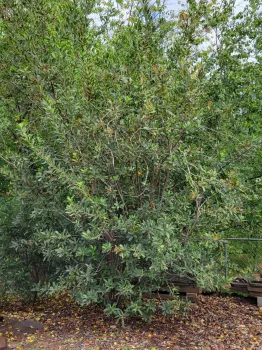
Examples of plants in the WUCOLS high category are birches, coast redwoods and foxglove; in the moderate category, examples include most dogwoods, azaleas, and coneflower; in the low category are chaste tree, rosemary, and strawberry tree; and in the very low category are California buckeye, ceanothus, and toyon, among many others. Most plants in the very low category are California natives.
It should be noted that not all plants in the database are native. For example, many very-low water use plants are from Australia (like grevillea) or from other Mediterranean climate areas. Also, some of the plants in the database are known to be invasive. When I searched for very low water use trees for my area, highly invasive ailanthus (Tree of Heaven) popped up on the list. Avoid this one like a plague! However, when you click on the plant name, you will get a description that includes a note that the plant has been listed as invasive by the California Invasive Plant Council (Cal-IPC) and its use in urban landscape areas is strongly discouraged. This note can be found on all of the descriptions of plants that are considered invasive by Cal-IPC.
WUCOLS does not specify how much water or how often to water specific plants, because there are too many variables involved (time of year, temperature, rainfall, soil, etc.) but the general categories of very low, low, moderate, and high are helpful in planning and adjusting garden beds to account for the water needs of your plants. It is also very useful in identifying plants with low water needs that can thrive in your garden in this era of climate change and longer, hotter summers.
The Master Gardeners Fall 2026 Workshop Series has begun! September Workshops include Vegetable Gardening (September 26). Coming up in October are workshops on propagation; pollinators; gophers, moles, and voles; fruit tree care; soil improvement; cut flower growing and arranging; and herbs. For more information, visit our workshop webpage.
UC Master Gardeners of Butte County are part of the University of California Cooperative Extension (UCCE) system. To learn more about us and our upcoming events, and for help with gardening in our area visit the UC Master Gardener website. If you have a gardening question or problem, email the Hotline at mgbutte@ucanr.edu or leave a phone message on our Hotline at 530-552-5812. To speak to a Master Gardener about a gardening issue, or to drop by the MG office during Hotline hours, see the most current information on our Ask Us section of our website.