
Fall is the time to prep your garden for healthy and vigorous spring growth. This checklist will help you with planting, fall and winter watering, winter protection of perennials, shrubs and trees, planting bulbs, and seeding a wildflower garden. We’ll share what plants take center stage in a late season garden and how to prepare your in-ground irrigation system for freezing temperatures.
- Seed a Wildflower Garden
- Plant Bulbs
- Clean Bird Houses and Baths
- Remove Dead Annuals, including Vegetables
- Prepare The Soil
- Cut Back Perennials
- Protect Potted Perennials
- Plant Trees and Shrubs
- Prune
- Winterize Landscape Plants
- Prevent Insects and Disease
- Lawn Care
- Fall Irrigation & Winterization
- Defensible Space
- Grow Your Knowledge
Seed a Wildflower Garden
Make a perfect home for pollinating insects and plant a wildflower garden this fall. If you were lucky, you collected some wildflower seeds this summer from your garden or while hiking through the wildflower studded hillsides and meadows of Lake Tahoe. Fall is the perfect time to take advantage of spring snowmelt and rains to germinate the seeds. You cannot only rely on mother nature. As soon as your soil begins to show signs of drying up, start irrigation in this area. Don’t allow the seed bed to dry out until you see a good crop of sprouts emerging from the soil. For best results, start your wildflower garden with a generous helping of organic material mixed into the soil to hold moisture and to provide organic nutrients for your seedlings. Source your seeds locally when you can and ensure that the mix a) doesn’t include invasive species and b) includes species suitable for your site and desired outcome. To learn more about saving seeds and best times to plant them, visit our website.

To stretch the bloom season of your wildflower garden, be sure to include some of the following wildflower perennials:
- Blanket Flower, Gailardia aristada, 18-14 inches, yellow/orange-red, sun, mid/late
- Blue Flax, Linum lewisii, 24”, purple, sun, early-late, early-late
- Purple Coneflower, Echinacea pupurea, 24-36”, purple-pink, sun/part shade, late
- Fireweed, Epilobium angustifolium, 14-84”, hot pink, sun. mid-late (Fireweed gets its common name because it's notoriously associated with fire landscapes. It quickly colonizes disturbed areas, including fire scars, and logged land.)
- Desert Globemallow, Spaeralcea, 20-38”, orange/red, sun, mid-late
- Sulphur Flower Buckwheat, Erigonum umbellatum, 6-12”, yellow, sun/part shade, mid-late
- Showy Goldeneye, Viguiera multiflora, 12-40”, yellow, part shade/sun, late
Plant Bulbs
When isn’t planting hardy bulbs on a gardener’s fall to-do list? Buy them in September/October and plant them in space that you saved for them in your garden. If you wait right before the ground freezes to plant them, there is less of a chance that the squirrels will dig them out and plant pinecones in their place.
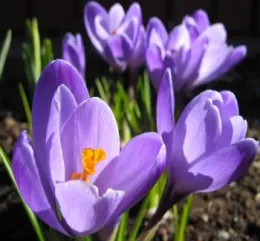
Some of the best performers for this region are Crocus, Grape Hyacinths, Snow Drops, Dutch Iris, Daffodils, Narcissus, and Tulips. Narcissus, Daffodil, and Crocus will naturalize here and are drought tolerant. Plant them in areas that receive minimal water. Tulips do well in our climate as well but need to be replanted every 2-3 years as the bulb get smaller every year. Buy the biggest bulbs that you can find.
At this elevation only plant bulbs and corms down 2 ½ times the width of the bulb. The ground can be slow to warm in the spring and the bulbs may not have time to come up if you plant them deeply. Make sure to plant the bulbs’ tips up at a rate of 5 per square foot for large bulbs, 10-15 per square foot for smaller bulbs and corms.
Bulbs do not need water until the soil dries up in the spring. Planting in well drained soils will keep them from getting waterlogged and rotten during fall rain events or winter rescue watering. Use wire baskets to discourage rodents, especially for tulips.
Supplements that help at planting time include bone meal, blood meal, super phosphate or all all-purpose fertilizer. Add these at the root zone.
When the bulbs finish blooming next year, cut the flower stem but leave the leaves. Leaves are needed to send energy back into the bulb for next year’s bloom. Some gardeners bind up the dying leaves or hide them under a ground cover.
Late summer/fall blooming corms and bulbs are typically planted in the spring from containers, or sometimes as bulbs if you lifted and stored them before winter. The following are not cold hardy but can add a big splash of color in your late season garden: Gladiolas, Dahlias, and Begonia.
Tuberous rooted perennials can always be planted in summer if containerized, but if planting just the tubers, fall is the time. Tuberous perennials include:
- Daylily (Plant with green top just above ground.)
- Bleeding heart
- Peony (Make sure tuber is just below soil surface with eyes showing at ground level.)
- Iris (Plant with green top just above ground.)
Asiatic Lily (Plant deeper than the roots of neighboring plants.)
Clean Birdhouses and Baths
Birds will house hunt in late winter for spring nesting sites. Ensure they have a safe and inviting nesting box to return to by following this advice from Cornell University. For bird baths, the Audubon Society recommends a light vinegar solution vs. soaps or detergents.
Remove Dead Annuals
After annuals have died back, remove them and compost the remains. Same goes for spent vegetable matter. When the planting beds get soaked by fall rains, rotting vegetation can harbor disease.
Select some of the nicest specimens and wait until they go to seed, then collect the seeds.
Clean and store containers for next year. Empty pots of dirt to prevent breakage. (Freezing temperatures will expand the material in the pots.)
Prepare the Soil
“Amend the soil” is one of the top requirements in every gardening how-to book and article. Healthy roots are essential for plant survival.
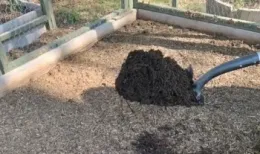
Master Gardeners recommend that in densely planted areas, at or before planting time, amend the entire bed instead of only amending individual planting holes. Soil amendments such as finished compost add nutrients, reduce soil compaction, and increase the moisture holding capacity of our native Tahoe soils. Fertilize in the fall after the plants have gone dormant. Adding slow release organic fertilizer aids plant establishment feeding the plant roots, crowns and stolons. Added nutrients “fatten up” the plants for winter so that they emerge well fed when they rise from the ground in spring.
Avoid using rock salt-based ice melt near planting areas. Salt interferes with the fine feeder roots, inhibiting their ability to absorb the things they need to grow: water, nutrients and oxygen.
Cut Back Perennials
“When should I cut back my perennials?” As usual, in the Tahoe Basin, “It depends.” When the stems and leaves of perennial plants dry up, cut them back to 4-6 inches for neatness and disease prevention. The remaining plant stubs and foliage will catch the snow and pine needles and insulate the plant’s crown, reducing winter damage.
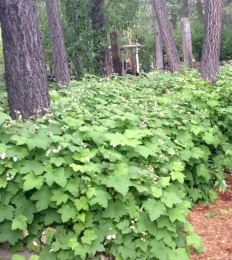
As plants enter dormancy all season, get a head start on those that fade early to make your job easier later in the season. At times winter catches gardeners by surprise, or life gets in the way of gardening. It is okay to trim back perennials in the spring if you have n
ot enough time in the autumn.
Some perennials and biennials are evergreen, which means that not all foliage dies back in the winter. For perennials such as candytuft, heuchera, hollyhock, lupine, Oriental poppy, catmint, lady’s mantle, Canterbury bells, remove only the dead parts of the plant.
Save seed heads for hungry birds and have some tolerance for dead bunch grasses and spent perennial plants. Future pollinators and beneficial insects overwinter on this debris. Tall ornamental grasses and Stonecrop(Sedum) flower stalks add seasonal interest to a dormant winter garden.
Protect Potted Perennials
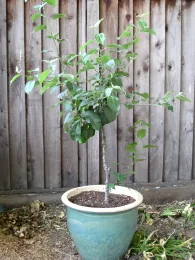
If you don’t want to plant potted perennials in the garden this fall, there are ways to save them for later planting. Container plants that are at least two zones hardier than your USDA planting zone (typically either zone 3 or 4) can overwinter in their pots. For insurance, bury the pot with the lip even with the soil level in the ground to insulate the roots. The best location to overwinter hardy potted plants outside is in the shade, watered and covered with snow for moisture retention and insulation. If you cannot move the pot to the shade, shade the south and southwest side of the pot and keep it covered with snow. Repeated freeze-thaw cycles will damage the roots and kill the plants. Some gardeners bring their dormant perennials inside a cold garage or green house to overwinter. Do not let the soil completely dry out in these environments. Containers for overwintering need to be able to resist breaking from the freeze/thaw action. Clay, glazed and porcelain pots, should be emptied for winter unless they are treated for freeze resistance.
Planting Trees and Shrubs
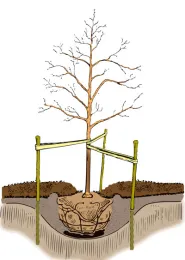
Plant or transplant any trees and shrubs while the soil is still workable this fall. The days are shorter but the soil is much warmer than in the spring. Plants look their best when they've had a winter in the ground allowing them to grow with our natural spring weather. Deciduous trees and shrubs put on as much as 80% of their annual root system expansion in the fall. The secondary root push occurs in early spring, before the leaves emerge and before most folks get out and plant. Plants will be far better off with fall planting than if you wait until spring.
Pruning
Fall pruning after dormancy is not recommended unless a branch is at
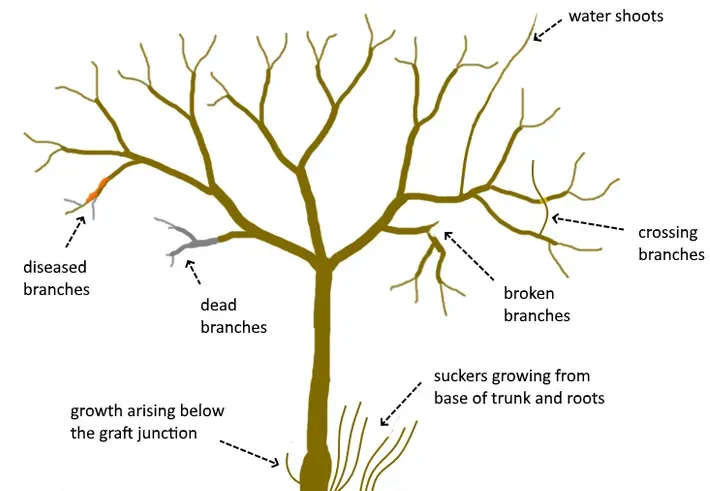
risk of breaking with snow load or if the tree or shrub is overly vigorous. If a woody plant is still green into early September, that plant should have time to heal the wound before winter weather can dry the wound site. Pruning is best done in early spring or during the growing season, depending on when the plant blooms. Spring flowering shrubs that bloom on last year’s growth are best pruned after bloom so the season’s blooms are not sacrificed. Summer blooming woody plants bloom on new wood can be pruned in the spring when there is time for new wood to grow and support the summer blossoms.
Winterize Landscape Plants
Winter in Tahoe can severely damage landscape plants, snow or no snow. Winter sun, wind and cold temperatures may dry and turn evergreen foliage brown, damage bark, injure or kill branches, flower buds, and roots. Winter drought can kill entire trees, shrubs and plants. Snow and ice could break branches and topple entire trees while repeated freeze and thaw cycles may heave new perennials right out of the ground.
Perennials
Protect marginally hardy perennials and newly planted perennials with pine needles and evergreen boughs after the soil freezes to minimize damage from freeze-thaw cycles. In early spring this layer needs to be removed to reduce the chance of crown rot. Repeated freeze-thaw cycles damage roots and can heave the plant up from the ground (frost heave) exposing tender roots. Damage from frost heave can be minimized by planting in well drained garden beds. Even a bit of exposed root can cripple or kill a newly planted perennial. Routinely check new plants for holes next to the root balls left by squirrels burying their fall food finds. When you discover them, refill the hole and water thoroughly to eliminate air pockets.
Trees and Shrubs
Winter Wrap, Tie, and Stake Vulnerable Plants
If you stake and wrap the lower branches of new trees and shrubs for the first few winters, it protects and preserves their important "photosynthetic potential" (energy producing leaf surfaces) that feed the trunk to improve caliper and help develop good taper. Avoid damage to brittle trees and shrubs by tying them up after they have dropped their leaves. Start by tying the heavy duty brown or clear tree tape to the tree stake below the lowest branch, then tightly wrap up to the top then back down to the starting place pulling in the branches with each wrap. Some broadleaf evergreen shrubs such as Holly or Rhododendron can be shaded from winter sun with shade cloth (row cover) to decrease transpiration and winter desiccation. Caution: covering the plant may increase chances of snow damage.
Winter staking differs from summer staking. In the winter, if needed, use one sturdy stake, such as a 10’x 2” treated lodgepole stake. With recently planted trees or shrubs, position the stake outside of the tree root ball. Either position the stake between the tree or shrub and the source of most of the snow (snow blower, roof sheds) or position it on the side where the sun can bake and damage new thin-barked trees such as fruit or maple, on the southwest side. Always use a soft flexible material to tie tree to stake to avoid damage to the tree. Summer staking utilizes 2 stakes in areas of high wind. Make sure to follow staking guidelines in this case to encourage thick study trunks.
Protect Trunks
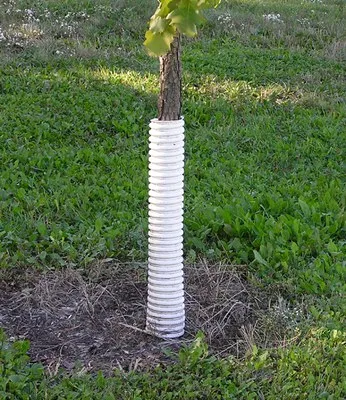
The thin, soft bark on the trunks of young or recently pruned deciduous trees, particularly maples, ash, golden chain, hawthorn and fruit trees, are susceptible to sunscald. Sunscald appears as elongated, sunken, dried or cracked areas of dead bark, usually on the south or southwest side of a tree. Sunscald occurs when the sun warms the tree trunk in winter, activating dormant cell. This activation would typically occur close to spring when the tree comes out of dormancy. However, active cells could be destroyed when evening winter temperatures drop, leading to dead branches at the top of the tree. Wrapping the trunk of the tree in the fall is an effective way to protect from sunscald. Materials such as corrugated plastic trunk wraps, trunk mesh, cloth wraps, bituminous paper or white latex paint will help to insulate the trunk of the tree and reflect sunlight. You can also reduce winter sun exposure to the trunk by orienting the lowest branches and the tree stake to the southwest to shade the trunk.
Protect Evergreen Winter Burn
Newly planted evergreens are susceptible to winter burn. Winter burn results from the inability of the young roots to absorb enough moisture to prevent excessive water loss from winter wind and sun. Reduce water loss by building a windbreak/sunshade around evergreen plants. Screening is a better option than wrapping because it allows better air circulation and won’t potentially wick moisture away from the plant. Three stakes and a roll of burlap usually will do the trick. Hammer stakes into the ground and staple burlap onto them or prop pine or fir boughs against or over evergreens. The structure will protect them from winter wind and sun and will catch more snow for natural protection. Tip: plant evergreens such as yew, hemlock, and arborvitae on north and northeast sides of buildings (no closer than five feet) or in areas protected from wind and winter sun. Do not prune evergreens after August as pruning can induce new growth susceptible to winter burn.
Protect Roots with Mulch
Roots do not become dormant in the winter as quickly as stems, branches and buds, and roots are less hardy than stems. Many factors influence winter soil temperature:
• Moist soil holds more heat than dry soil, so frost penetration will be deeper and soil temperatures colder for sandy or dry soils.
• Snow cover
and mulch act as insulators and keep soil temperatures higher.
• With newly planted trees and shrubs, cracks in the planting hole allow cold air to penetrate into the root zone, reducing fall root growth or killing newly formed roots.
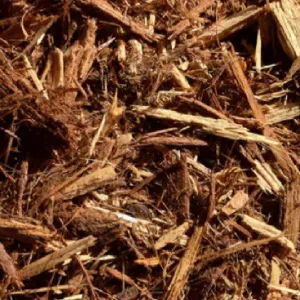
Autumnal thermal overturn is just around the corner. This is the time when soils begin to freeze and stay frozen. Autumnal thermal overturn occurs when the average air temperature stays colder than the average soil temperature. A good deep frost before the snows come is ideal as it makes digging harder for voles. When a blanket of snow does fall it will keep the surface of the ground frozen protecting plant roots from damaging freeze-thaw cycles. Deep in the soil, the earth is consistently warm. Once the blanket of insulating snow covers it, the soil begins to thaw allowing roots to continue to expand. If there is not a good snow cover after the ground freezes, as in past winter droughts, you should cover the soil with additional 3-4” of mulch. New trees and shrubs will benefit from 6-8” of mulch over the root zone. Mulch accomplishes two key things: 1) it insulates soil and roots against temperature extremes; and 2) it slows water loss from soil. Be cautious not to pile mulch against the shrub and tree trunks. If the fall has been dry, water heavily before the ground freezes to reduce frost penetration. If you end up applying overhead water in the winter, make sure that you are watering the soil and not just the mulch.
Insect and Disease Prevention
In cases of diseased foliage, remove those leaves from the garden. Fall and early spring applications of horticultural oil spray will help to smother insect eggs that might over winter. Lime-sulfur sprays are for dormant season use and aid in the prevention of insects and diseases such as spider mites. Learn more about identifying and managing garden pests by visiting UC Pest Notes at http://ipm.ucanr.edu/PMG/PESTNOTES/index.html.
Lawn Care
Fall is an ideal time to treat established lawn areas with a core aerator to reduce soil compaction and buildup of thatch materials. Buildup of thatch is caused by overgrowth of surface roots which interferes with the lawn’s ability to get water, air and nutrients to grass roots. Don’t worry about raking up the soil cores because they will degrade into the soil under the snow. After the last mow of the season, consider adding nutrients by applying a thin layer (less than ¼ inches) of high quality fine textured compost to the lawn, spread with a rake and water it in. If using fertilizer, select a fertilizer that includes slow acting water-insoluble nitrogen such as sulfur coated urea, urea formaldehyde, Isobutylidene diurea (IBDU) and organic fertilizer. This type of fertilizer releases nitrogen over weeks instead of days and is not easily leached through the soil past the root zone during rain events. And don’t forget to cut back on your watering as the days cool and shorten in length.
Fall Irrigation & System Winterization
Watering Schedule
Begin cutting back on watering in late August to let plants know that it is time to prepare for winter. Cooler air temperatures and less water hardens off plant tissues. As a plant hardens off, water moves from inside of the cells to the intercellular spaces. As this happens, the solutes in the cells increase and as with salt water, the freezing temperature drops. If plants are not hardened off and prepared for the cold, frozen moisture between the cells can sublimate, change from ice to water vapor, leaving plant tissue dry, killing the plant by freeze damage. It is okay to let plants occasionally wilt, but do not let them dry out completely.
When fall color has visited the garden, increase the watering so fall root growth can be maximize. Two to three good soakings is all they typically need. Check how deep the water penetrates the soil to make sure that you add enough water to moisten the root zone. Groundcovers and perennials typically require 6-10”, shrubs 12-24” and trees 18-36”.
During winter months when we do not have snow cover, plan on watering your landscape to protect the plants from winter desiccation, especially new plantings and evergreen and broad leaf trees and shrubs that don’t drop their foliage in the winter.
Irrigation System Winterization
Winterizing the sprinkler system is easy. In this climate sprinkler lines are typically buried in the ground and are equipped with automatic drain valves at the low points. To ensure that all the water has evacuated from the pipes, valves and backflow preventer, follow these easy steps.
- Turn the irrigation shutoff valve a full quarter turn to the left to cut water from the irrigation lines. Make sure to turn it all the way to the left or it will weep water into the ground three feet deep where you cannot see it.
- Next, if you have one, bleed the backflow preventer to allow air into the system. How to do this depends on the backflow preventer. Some homeowners remove their backflow device each winter and store it in a freeze free environment because they are expensive to replace.
- Next, to the same for your sprinkler valves.
- Then shut the valves back up.
- Some opt to hire a professional to blow the water out of their system with compressed air.
Check out this how to video.
Defensible Space
Our Defensible Space inspectors are implementing new Defensible Space requirements ahead of changes coming from the State of California. Now is the time to sign up for a free defensible space survey to learn what you can do to prepare for wildfire. Remember, nothing flammable in the ember resistant zone which is zero to five feet from structures.
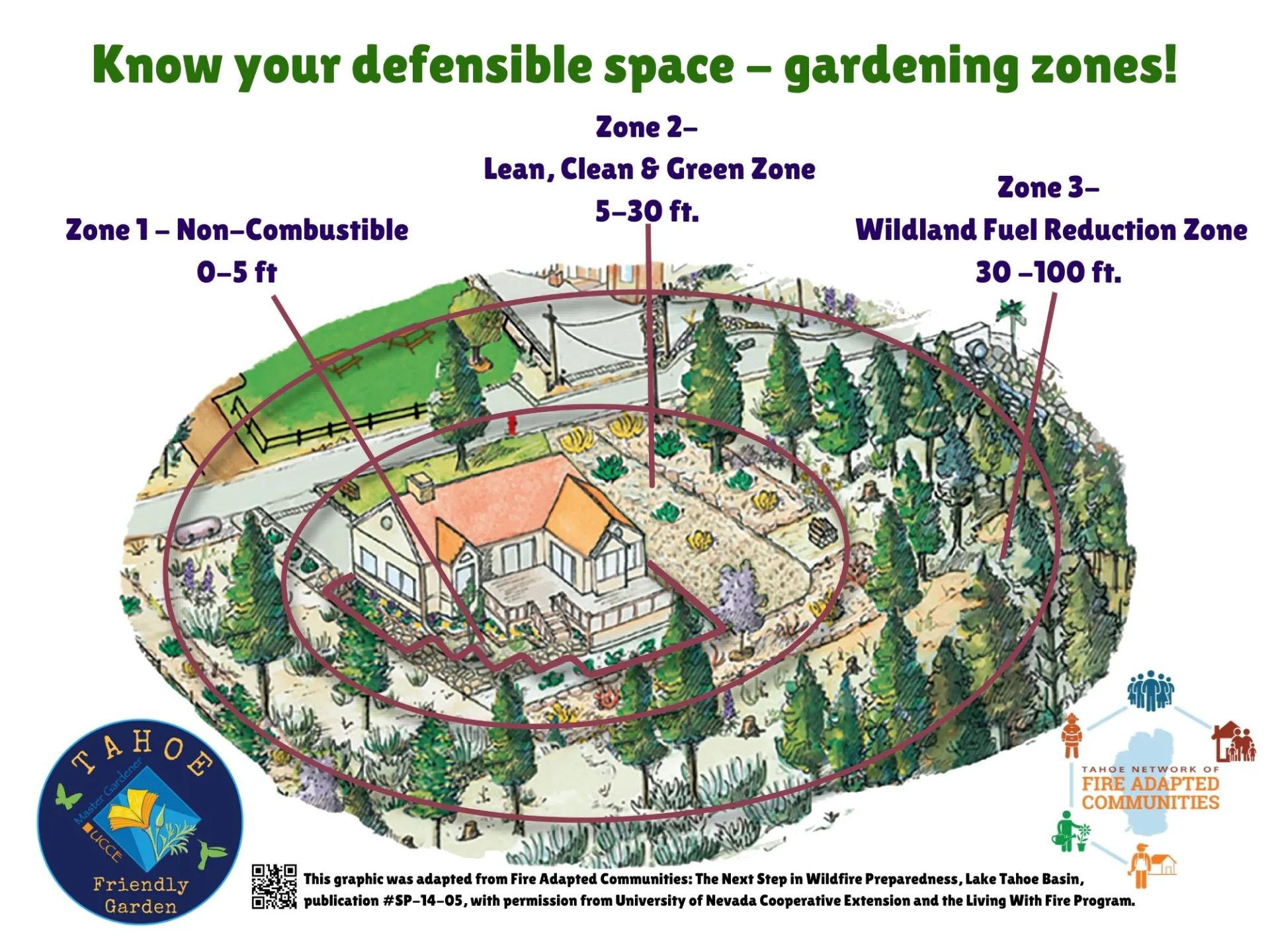
To learn more and if you are interested in becoming a Fire Adapted Community, visit tahoelivingwithfire.com. You can also contact fire@tahoercd.org directly to get involved.
Grow Your Knowledge
Water Wise Landscape Consultations
South Tahoe Public Utility District customers can call to schedule free site visits to identify ways to make your landscape and irrigation system more water efficient. They also implement a Turf Buy Back and Irrigation Controller Rebate Programs to help you maintain a beautiful Tahoe friendly lawn and landscape. Learn more at https://stpud.us/waterconsv/rebates-and-services/.
UCCE Master Gardeners of Lake Tahoe
Become a Master Gardener Volunteer
Email: laketahoemg@ucanr.edu
Website: http://ucanr.edu/sites/mglaketahoe
A special thanks to Eric C. Larusson, Co-Owner and Instructor of Truckee Villager Nursery for teaching the Lake Tahoe Master Gardeners so much about how to garden successfully in Lake Tahoe.