
Table of Contents
- Greetings from UC ANR
- Defining riparian habitat
- Tools for managing riparian forest vegetation
- Rules and regulations for managing riparian areas
- Q&A with Anna Halligan, North Coast Coho Project Coordinator, Trout Unlimited
Greetings from UC ANR
According to Rob York, Forestry Specialist at UC Berkeley, riparian areas are disturbance dependent. They are an important component of a forested ecosystem, hosting abundant biodiversity in plant, insect, and animal species. As the interface between aquatic and terrestrial habitat, 'disturbance' in the riparian ecosystem can be many things, including 'natural' and 'human caused'.
Within our Forest Stewardship Community, 87% have indicated that protecting water resources is important or very important, and 91% say the same for habitat improvement. I'm inferring from this that our workshop participants have an interest in stewarding riparian habitat and are looking for ways to manage vegetation within those ecosystems. I'm also listening to those of you who have let me know directly that this would be an interesting topic to explore!
This newsletter, written with help from Sophia Porter, our new Community Education Specialist, is all about habitat and vegetation management within forested riparian ecosystems. It serves as foundational knowledge for a special webinar we are planning on September 26th (see 'Upcoming workshops and field days'). If you are unable to join us, we will be recording the webinar and posting to our UC Forestry and Range YouTube channel. Hope to see you there!
Cheers,
Kim Ingram, Forest Stewardship Education Coordinator
Defining riparian habitat
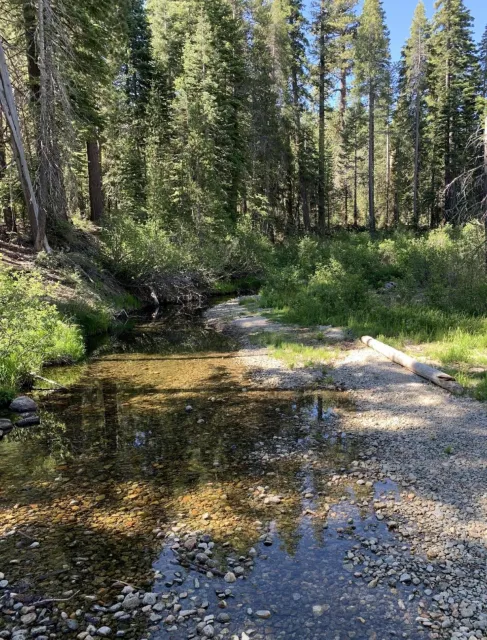
There are places in nature that we humans find a certain awe and tranquility, such as listening to the steadiness of a stream while resting in the dappled sunlight of a sycamore tree, or willow branches catching the breeze and dancing along the shoreline. Perhaps there is a parade of ducklings following their parent. If you’re lucky you may see a river otter poking its head out of the water, or even catch a glimpse an osprey swooping to catch a fish.
Riparian areas can be some of the most tranquil and serene places to visit. These dynamic ecosystems are special in the way they straddle both aquatic and terrestrial habitat. They are characterized by vegetation types and particular wildlife along watercourses such as rivers, creeks, and streams. Riparian ecosystems provide niche habitats to the species that thrive in this ecotone between water and land and serve as protective corridors of movement for larger animals across their range.
Riparian vegetation is specially adapted to soils with high moisture content. Species commonly found in riparian areas include sycamores and willows, but also maples, ash, and alders. This may differ from upland areas that consist of more grasses or conifer species. The vegetation provides habitat for arboreal and terrestrial species such as songbirds, migratory waterfowl, or large birds of prey. Small mammals and carnivores also find refuge and food in riparian areas.
Trees and shrubs along streams serve many ecologic functions. For instance, leaves that fall in the stream are a source of nutrients. Additionally, the canopy shades the stream channel regulating temperatures from extremes that may negatively impact aquatic spices such as invertebrates, fish, and amphibians. If these communities of aquatic species decline, so too do the populations of other wildlife dependent on them as a food source.
Large woody debris (LWD) in the form of branches, roots, stems, and fallen trees that enter the stream are an important component of riparian ecosystems. Numerous aquatic and terrestrial species find refuges in these areas. Large woody debris can slow the stream and form pools where fish can rest, and sediment can accrue to form gavel bars that are utilized by fish for spawning. Vegetation along the banks and LWD prevent erosion and the widening of the stream, and helps mitigate the impact of floods. Similarly, it can prevent incision of the channel and lowering of the water table, which impacts upslope vegetation and ecosystems.
Just as these beautiful riparian areas are available to us to enjoy, they are even more importantly ours to protect, tend to, and restore. But how does one navigate how to tend to these areas? The answers can be as complex as the ecosystem itself, and there are several laws and agencies that are involved to make sure that best practices are followed to lessen any further environmental damage and resurrect the functionality of the habitat.
For further information visit: The U.S Fish & Wildlife Service Strategic Plan for the Partners for Fish and Wildlife Program.
Tools for managing forest riparian vegetation
Managing riparian vegetation calls for creativity. With increasing tree mortality from drought, insects and diseases, climate change effects and increasing intensity of wildfire, forest landowners and forest researches are asking more questions around how to treat vegetation within riparian that can address fire hazards from fuels accumulation, as well as protect the complexity of riparian areas.
Research by Van de Water and North (2011) found that riparian and upland Sierran mixed conifer forests had similar (albeit slightly more variable) forest composition, structure, fuel loading and fire behavior under the historic fire regime prior to this past century. Before the era of fire suppression, fire burned through riparian areas regularly at varying intensity, thinning out trees and maintaining low amounts of overall tree density and surface fuels. Coupled with higher soil moisture, the lower vegetation density in riparian areas likely disrupted the spread of fire across the landscape and act as a refuge for wildlife. California Native Indian tribes often applied fire in riparian areas to encourage the re-sprouting of desireable tree and shrub species that respond well to low-intensity fire. However, under current management and climate conditions, modeled fire severity can be much greater in riparian forests than in upland forests. In some conditions, high stem densities and fuel loads in riparian areashave allowed them to act as wicks for fire traveling quickly through and into upland forests. These factors suggest that riparian areas be actively and carefully restored and not protected from all forest management activities.
For landowners looking for guidance on vegetation management, options include:
- Hand thinning and pile burning - ensuring that ash does not reach the watercourse;
- Prescribed fire - in the spring or after fall rains begin;
- End lining - used to remove larger trees using cables and heavy equipment that is stationed outside of a buffer area; and
- Mechanized harvesting - which can be allowed to occur in some cases.
Landowners should recall that whatever vegetation management activities used, has advantages and disadvantages particular to the specific site location and conditions.
A note on large, woody debris (LWD)
LWD has a roll to play in riparian habitat, including providing cover and habitat for fish; and interacting with flow to create complexity in stream depths and pools. In some instances, riparian areas have a deficit of LWD. Landowners should work with an RPF or other natural resource professional who can provide guidance on LWD in the riparian habitat.
Rules and regulations for managing riparian areas
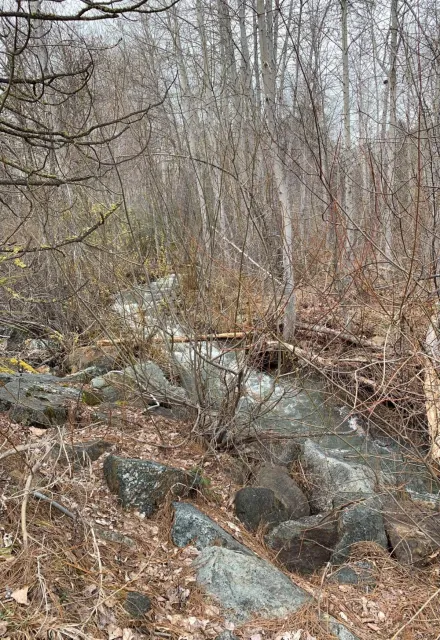
Treatments done in riparian areas can be ecologically justified and even necessary for long-term sustainability. But before conducting treatments that involve a commercial timber harvest or that are supported from public-fund sources, a landowner should familiarize themselves with the associated rules and regulations laid out in the California Forest Practice Rules. Under the rules, the Watercourse and Lake Protection Zone (WLPZ), also called Streamside Management Areas, defines areas of land along both sides of a creek or stream, or around the circumference of a lake or spring, that buffers riparian areas against soil disturbances that potentially come from heavy equipment. The width of a WLPZ varies between 50 and 150 feet depending on slope, the classification of the watercourse, and the geography of the location. Classifications depend on the type of habitat that the watercourse provides, for example fish versus non-fish habitat. Within the WLPZ, percentages of surface cover, canopy cover, and undisturbed areas must be maintained to protect water resources and wildlife habitat.
In addition to regulations that are applied during timber operations and public-funded projects, there are general Best Management Practices (BMP’s) that landowners can use anytime they are working in riparian areas. BMP’s are voluntary measures that are generally considered to be desired for mitigating impacts. BMP's identified by the California State Water Resources Control Board include:
- Evaluate sensitive riparian conditions in areas with the potential to be directly impacted by management activities, including existing roads, skid trails and landings; unstable and erodible watercourse banks, unstable upslope areas, flood prone areas, and riparian zones.
- Map spawning/rearing habitat for anadromous salmonids, and evaluate the condition of the habitat using habitat typing that, at a minimum, identifies the pool, flatwater, and riffle percentages.
- Protect vegetation in the WLPZ, marking trees within WLPZs before thinning or preharvest activities begin to ensure shade retention and preservation of a multi-storied stand. Provide for future large woody debris for aquatic habitat.
- Protect soils to prevent erosion, treating exposed mineral soil adjacent to perennial streams with mulch, riprap, grass seed, or chemical soil stabilizers to reduce soil loss. This does not apply to the traveled surface of roads.
- Establish an Equipment Limitation/Exclusion Zone thatprohibits or allows for limited use of heavy equipment in order to prevent soil disturbance, erosion and sedimentation into watercourses.
More information on rules and regulations surrounding riparian forest management can be found at the Board of Forestry and Fire Protection website.
Q&A with Anna Halligan, North Coast Coho Project Coordinator, Trout Unlimited
You might know Trout Unlimited (TU) as the national organization whose motto includes “bringing together diverse interests to care for and recover rivers and streams, so our children can experience the joy of wild and native trout and salmon.” With their large cadre of collaborators and volunteers, they have made restoration of priority watersheds a central part of their mission. What you may not know is how this mission overlaps with riparian forest management in California. Anna Halligan is the North Coast Coho Project Coordinator for Trout Unlimited and she provided some information private forest landowners should consider when managing riparian areas.
Q. Before a small forest landowner begins to take on vegetation management in a riparian area, what are some of the first things they should consider?
A: There are three focus areas to consider within, adjacent to, and downstream from the riparian area: the condition of the riparian forest; the condition of the stream/creek channel; and risk to infrastructure.
When assessing the riparian forest, a landowner needs to know things like if there are nesting or habitat trees in the area; are any of the trees suitable for in-stream restoration projects (if needed); and if thinning activities will occur, what will the landowner do with the slash materials? Current riparian habitat restoration work is often mitigating past harvest activities so a landowner could be dealing with a dense, homogeneous forest of similar type and age class.
The condition of the stream/creek channel will inform what type of in-stream activities might be needed. These activities can range from depositing large woody materials that promote the scouring of a creek bed, the development of pools; to depositing gravel for spawning beds, or in some situations, using material from lop and scatter activities to restore incised drainages. A landowner should look to see if the channel is connected to a flood plain; does it have steep banks or is it in a narrow valley; and what is the substrate of the channel bottom?
Landowners need to have a sense of how the activities they undertake will impact the environment and infrastructure of surrounding areas. Will you be able to bring in the appropriate equipment for the needed work; or how might your neighbor’s roads be impacted? A landowner might consider bringing in an engineer or geologist to assess risk and prepare designs before beginning any work, to avoid potential negative impacts.
Q: What riparian vegetation management activities is TU currently using?
A: Depending on the site assessment of condition and need, we have projects utilizing a variety of methods. I would always encourage landowners to start by thinking about riparian management for multiple conditions. Riparian forests are complex ecosystems with multiple species, so projects should complement one another. We bring in crews for hand thinning and replanting efforts; we use heavy equipment when appropriate; and we will drop larger trees into streams if that is called for. We are looking into the possibility of girdling trees for future snags, as well as using prescribed fire. One of our goals is to develop riparian areas that stay wetter longer and could better withstand wildfire.
Find the printable version of this newsletter below. Note that the pdf is for print purposes ONLY.
