
Table of Contents
- Greetings from UC ANR
- North Coast Oak Woodland Restoration
- Post-fire Management of California Black Oaks
- Grazing, Oak Regeneration, and Survivorship
- Deciduous Oak Woodland Restoration Permitting Options
- Q&A with Lenya Quinn-Davidson, UC ANR Fire Advisor and Director of the Fire Network, and Erin Kelly, Professor of Forest Policy and Administration at Cal Poly Humboldt
Greetings from UC ANR
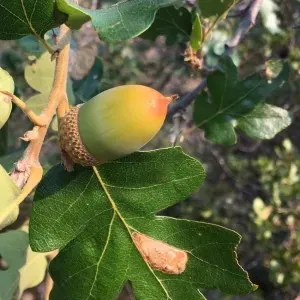
Just over 25% of Forest Stewardship participants identify their forest type as oak woodland. Several indicate that they 'think' they have oak woodland, or they 'used to have' oak woodland but it is now dominated by conifers. From interviews of participants who had their initial site visits, oak woodland management ranks high as a desired management goal. In fact many mentioned that releasing oaks from conifer encroachment is something they do frequently themselves.
For those who participated in the Post-fire Forest Resilience Program, how to manage re-sprouting oaks after wildfire, is a very common question.
This newsletter hopes to shed some light on the how and when landowners can more effectively manage white and black oaks, as well as permitting options that are available for you to work under. Thanks to Nic Dutch, Jeff Stackhouse and Yana Valachovic for their input!
Cheers,
Kim Ingram, Forest Stewardship Education Coordinator
North Coast Oak Woodland Restoration
Nic Dutch; Staff Research Associate 2, UC ANR
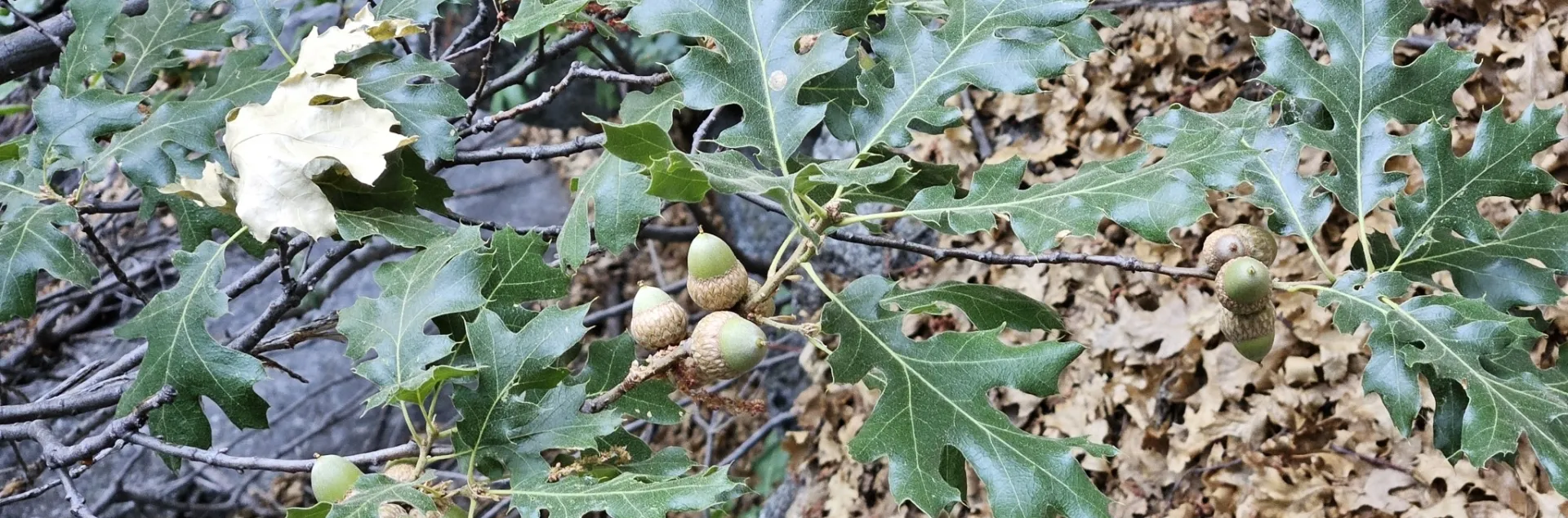
Historically, the oak woodland environments of northwestern California were maintained through frequent natural and cultural fires. Indigenous tribes in this region have long played a crucial role in safeguarding these habitats, using frequent prescribed burns to manage the landscape. These low-intensity fires were essential for killing off small fire-sensitive conifers. This allowed the slower-growing oaks to thrive, thereby maintaining the open, biodiverse oak woodlands that are important both ecologically and culturally (Valachovic et al. 2024). Without these regular burns, the balance has shifted. Fast-growing conifers like Douglas-fir have been able to proliferate in the absence of fire, overshadowing the white and black oaks (Quercus garryana and Qurecus kelloggii) and outcompeting them for resources.
The cessation of this traditional fire management as part of a broader fire suppression strategy over the past century has led to a loss of these open oak woodlands. This shift not only decreases biodiversity but also increases the risk of intense wildfires due to the accumulation of dense, crowded conifer stands (Long et al. 2016). Restoring these fire regimes by reintroducing prescribed burns and removing encroaching conifers could help in reducing fire risk while also supporting the recovery of oak woodlands and the biodiversity they sustain. This approach highlights the importance of integrating traditional ecological knowledge into modern conservation strategies.
Post-fire Management of California Black Oaks
Nic Dutch; Staff Research Associate 2, UC ANR
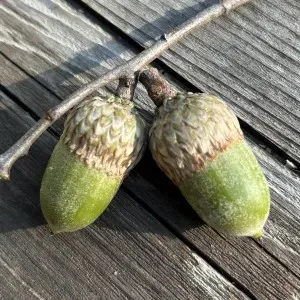
California black oak (Quercus kelloggii) is an important hardwood species that has cultural value to indigenous communities and many ecosystem services that benefit the environment, like wildlife habitat. This shade-tolerant species resides in the foothills and lower mountain regions of California and western Oregon. California black oaks are adapted to low-severity fires, which can allow larger oaks with thicker bark to continue thriving while clearing out understory competition for oak regeneration. However, under extreme highseverity fire conditions, there is extensive above-ground damage to tree or full mortality, known as top-kill, of the oaks. What remains is the dead oak, or snag, while the underground root system still lives. As a vigorously resprouting species, black oaks can assume a shrublike form around the dead or damaged base of the remaining oak following disturbances such as fire. Their early form is characterized by numerous stems and low bulbous crowns, instead of a single stem like conifer trees. Over decades, the sprouting oaks tend to eventually selfthin, usually developing one or two dominant stems by around age 50. However, promoting the shift from the shrub-like form to a single stem earlier would aid in restoring the hardwood forest cover quicker than allowing the shrub form to persist. Forest managers and landowners can encourage apical dominance on a single-stem by thinning the cluster of sprouts.
By selectively removing some of the new growth, it allows the oak to focus its resources on growth rather than resprouting. One recent study found that post-fire thinning can result in an increase in diameter, as well as improvement in crown diameter (Ritchie et al. 2024). There are two ways in which thinning can be done: (1) thinning resprouts and retaining only the central dominant-single stem, (2) retaining multiple, about three, of the most dominant stems. The advantages of retaining multiple sprouts are to provide insurance if one stem were to be damaged and not to stimulate a resprouting response in the tree. This study found that retaining a single-stem versus multiple stems did not affect the growth of the oak significantly. The suggested treatment window for thinning is between 3-6 years post fire while the resprouts are easily managed with a pair of loppers, allowing a landowner to cover more ground. Delaying treatments can increase time, effort, and cost to remove sprouts.
This effective management strategy designed for resprouting species, like black oaks, can be a valuable tool in post-fire forest management by aiding in ecological recovery, resorting wildlife habitat, and building the resilience of oaks to future disturbances. For more information on the methods, timing, and considerations for thinning oaks, please refer to our Managing Resprouting Species Factsheet.
Grazing, Oak Regeneration and Survivorship
Jeff Stackhouse; Livestock and Natural Resources Advisor, UC ANR and Kim Ingram; Forest Stewardship Academic Coordinator, UC ANR.
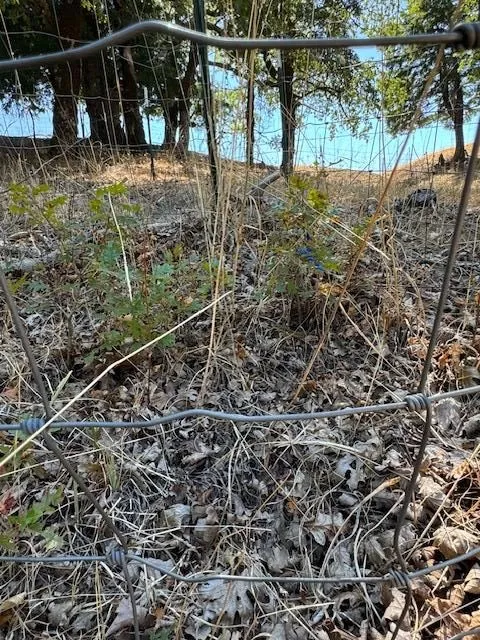
Cattle grazing is a common occurrence in much of California’s oak woodlands. Researchers have been working over the past several decades to understand the effects grazing has on oak regeneration. There is still work needed in developing best management practices to increase oak propagation for some species of oaks in California. Some strategies employed to increase propagation and survival include acorn planting and seedling protection. According to McCreary and George (2005)) oaks provide ecosystem benefits observed by human, wildlife, and livestock alike, yet livestock presence can hinder oak propagation in some systems until oaks reach a certain stage of maturity.
Livestock operations in areas interested in increasing oak propagation should be mindful of grazing seasonality and intensity in areas where oaks are desired, and if needed, provide protection for oak seedlings and saplings until they reach maturity. Livestock grazing has been attributed in many areas to the poor recruitment, regeneration, and survival of oak seedlings in some areas of California. Though not a preferred browse for most livestock, cattle, goats, and sheep will browse on oaks, often suppressing height growth of seedlings. It is important to note that researchers have observed differences in grazing behaviors around oaks depending on the grazing season, where oak herbivory is more likely to occur when other forages have dried, and oak leave still remain on the plant before fall leaf-drop.
Livestock grazing alone does not account for low regeneration and survivorship rates in all circumstances. According to Welker and Menke (1987), competition from introduced annual plants in the understory make it more difficult for oak seedlings to establish in the spring. Additionally, wildlife grazing by ungulates continues to be a threat to oak seedlings and saplings throughout almost the entirety of California, and even with the exclusion of livestock, oak seedling establishment is often prohibited by ungulate browsing alone (McCreary 1999). An additional study, Tecklin et al. 2002, suggested that grazing may increase oak seedling vigor and survival due to the decrease of thatch, therefore reducing available vole habitat, resulting in less vole abundance, and hence, less vole damage to the bases of the young oaks. Tecklin et al. also discovered, that areas where trees had been protected with tree shelters (where the voles could not reach the base of the seedlings), there was more damage to the seedlings in grazed vs ungrazed plots due to cattle browse and physical damage to the tree shelters.
Best Management Practices
There are several methods landowners can use to protect oak seedlings and promote survival.
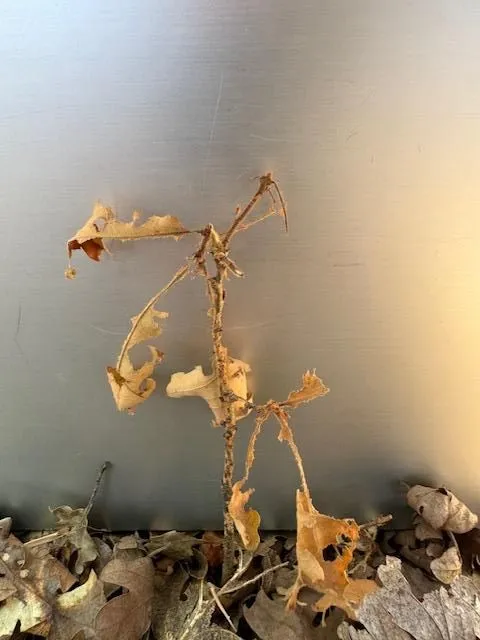
Appropriate planting sites and time of year – If you are planning to plant oak seedlings, it is important to select appropriate planting sites. A good method is to observe your existing oak woodlands and plant in microsites that are similar to those conditions. For areas that are grazed, plant in locations that provide a natural barrier, such as rock outcrops, or build exclusionary fence adequate to protect seedlings against both deer and cattle (and use tree shelters if possible). Most seedlings will establish better when planted in the fall after the first rainfall. Many regions of California have adequate natural seed germination and establishment of seedlings, and those seedlings simply need protection to grow to the sapling stage.
Grazing seasons – As mentioned, winter grazing appears to have less effect on deciduous oak seedlings due to the lack of leaves and the increased availability of other plants. Resting areas in the summer and fall when oaks are green and surrounding vegetation is brown, can improve survival rates. However, some anecdotal evidence suggests that even a best-laid grazing plan can fail with a bad grasshopper year defoliating the oak seedlings you worked so hard to protect, so be mentally prepared for setbacks. Tree shelters – These rigid plastic tubes placed over seedlings have been shown to increase survivorship to over 50%, if used correctly (McCreary 1999). Additionally, they can create a mini microclimate within the tube that can stimulate shoot growth (McCreary and Tecklin 2001). Note that once seedlings ‘overtop’ the tree shelter, they are easily grazed. McCreery and George (2005) point out that initial results from a study at Sierra Foothill Research and Extension Center (SFREC), indicate that once oaks reach a height of ~6.5 feet, they are better able to withstand damage from light to moderate cattle grazing. Remember that tree shelters can be used on both planted and naturally regenerated seedlings. Sometimes sheltering existing trees is more time-efficient than starting from seed, depending on seedling location on the landscape.
Stock densities – Fewer grazing animals means less pressure to browse on oaks. However, light or no grazing increases surface fuels that can negatively impact seedling establishment and increase vole depredations to young seedlings.
Deciduous Oak Woodland Restoration Permitting Options
Yana Valachovic, RPF #2740; Forestry and Natural Resources Advisor, UC ANR.
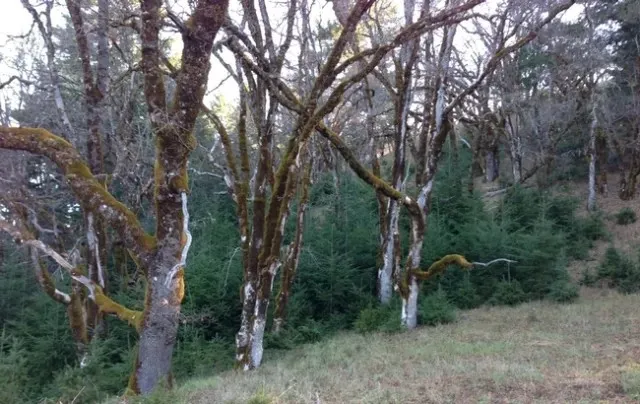
California’s forests and woodlands are always changing, and it takes time for California’s regulatory framework to catch up to what’s happening. After years of fire suppression, it is now common to see encroaching conifers (e.g., Douglas-fir) trees moving into the deciduous woodlands of the Northern California and Coast Range. In these situations, Oregon white oak and California black oak woodlands struggle for light, and within a few decades, they die from the competition of the conifers. Along with this is the loss of the herbaceous plant communities and shifts in wildlife species that can utilize these woodlands.
Oak woodlands support high levels of biodiversity, provide unique habitats for wildlife, and are deeply rooted in the region's human history, as oaks have been sustained by Native Americans, ranchers, and other local groups throughout recent history. Both black and white oak woodlands are fireadapted, depending on frequent, low- to moderate-intensity fires to prevent the establishment of invading fire-sensitive vegetation and provide conditions suitable for regeneration.
The decision to manage conifers or oaks is up to the landowner, but for decades, barriers in the California Forest Practice Rules have made managing these woodlands experiencing encroachment difficult. Fortunately, there is good news. New permit options are available for private forest landowners who want to remove these encroaching trees and sell some of the byproducts of restoration activities.
In California, any landowner who sells, barters, or trades timber must have an approved Timber Harvest Plan (THP) or Non-Industrial Timber Management Plan (NTMP) or an Exemption to file one. A THP or NTMP is an environmental review document that is the functional equivalent of an Environmental Impact Report and is required under the California Environmental Quality Act (CEQA).
There are two regulatory pathways for landowners looking to actively manage their white or black oak woodlands.
1. The White and Black Oak Woodland Management Special Prescription provides a silvicultural method allowed under a THP or NTMP. Under this new prescription, conifers of all sizes may be removed, and post-project stocking requirements can be met by retaining at least 35 feet 2 of living Oregon white oak or California black oak basal area. There is no requirement to restock with conifer seedlings post-harvest when using this Special Prescription. As with any THP/NTMP, the forester must meet all the normal requirements, including plant and animal special status species surveys, archaeological surveys, geologic reviews, etc. The special prescription will most likely be utilized when other THP/NTMP activities occur on the property and when there are conifers of larger size, as the full THP/NTMP development elements and costs apply.
2. An option for small projects is the oak woodland exemption, which works as an alternative to filing a THP/NTMP to conduct oak woodland restoration. An exemption from filing a THP is not an exemption from following the Forest Practice Rules or other environmental regulations. However, the process is much less costly and can be conducted on a shorter timeline. The idea is that activities exempted from THP/NTMP preparation are of a size and scale that will not significantly impact the environment. With the oak woodland exemption, the stand needs to have 35 feet 2 of living oak basal area, the harvest area cannot cumulatively exceed 300 acres (in a 5-year period) per ownership per planning watershed, a forester must prepare a notice of exemption, and at present no tree larger than 26 inches at stump height may be removed for commercial purposes. However, in 2024, the legislature approved changes to the Exemption that will allow for removing conifer trees up to 30 inches in diameter at breast height and possibly larger with CAL FIRE consultation. These changes still need final rule-making approval before the California Board of Forestry, but will provide much greater capacity to manage conifer encroachment. The good news is that both species of oak can thrive when encroaching conifers are removed, reversing the loss of these woodlands. Our research has shown significant growth in canopy and diameter, as well as improved survival rates in the event of wildfires. These new permitting options provide landowners with essential tools to help restore resilience to these important ecosystems.
Q&A with Lenya Quinn-Davidson, UC ANR Fire Advisor and Director of the Fire Network, and Erin Kelly, Professor of Forest Policy and Administration at Cal Poly Humboldt
On their recent research article, "Restoring oak woodlands through trust: Social capital and its role in successful private land conservation".
Q: The article highlights the importance of building social capital, but what specific, viable strategies can landowners use to build trust and relationships with other landowners, agencies, and non-profits involved in oak woodland conservation?
A: Social capital takes time to build, as it is, in its essence, about relationships and trust. Strategies for connection and trust building will therefore depend on the individual community and context, and landowners who are newer to this work will need to take time to learn the history and dynamics around oak woodland restoration work. Helpful questions might include: Who are the local leaders in these efforts? What are the values that other community members are advancing through their restoration work, and how can landowners learn and share with one another? How can landowners work together to leverage more funding, knowledge, or opportunity around oak woodland restoration?
Q: What practical advice can you offer landowners on navigating the complexities of regulations and permitting processes related to oak woodland restoration projects?
A: Many of the policies and regulations around oak woodland conservation and restoration have shifted in recent years, opening up new opportunities for active management and project maintenance. Landowners can consult with registered professional foresters to help them navigate these opportunities and changes, and they can also consult with their local UCCE forest or fire advisor, NRCS and RCD staff, as well as NGO partners who may be leading similar kinds of work.
Q: Beyond initial restoration, the long-term maintenance of projects is vital. What are effective strategies for landowners to ensure the long-term success and sustainability of their restoration efforts?
A: In Humboldt County, the local prescribed burn association (PBA) grew in large part from the momentum and community that had been built around oak woodland restoration, and from a desire by landowners to maintain their oak woodland restoration treatments. PBAs have since spread across California, offering a viable path for private landowners and NGOs to utilize prescribed fire and cultural burning in oak woodland habitats, including for maintenance of previous treatments.
Find the printable version of this newsletter below. Note that the pdf is for print purposes ONLY.
