
Central Valley gardeners have been enjoying the good life for many years—great climate, good soil, and we can grow almost everything. Now, maintaining a garden or yard in the Central Valley presents serious challenges during periods of water shortages and mandated water restrictions. What's a homeowner to do when crying doesn't help, and rain dances don't work?
There is a lot of lawn bashing going on, but lawns can be grown and maintained in a healthy, environmentally friendly way. Years of study have proven lawns are safer for certain activities, like throwing a football or laying out a picnic, than other surfaces or groundcovers. On the other hand, lawns use the most water in our landscapes. Do we need a large, picture-perfect lawn in every front yard? According to the EPA, gas-powered yard equipment, like lawn mowers and trimmers, puts out 30 million tons of air pollutants a year. To keep our lawns tidy and green, we also use weedkillers or fertilizers. When it rains, those chemicals escape our yards and make their way through storm drains to our lakes and rivers.
Shrinking lawns can reduce these impacts and create space for gardens that support wildlife. University of Delaware entomologist Doug Tallamy has calculated that if Americans reduced their lawns by half and added native plant gardens to feed birds, butterflies and other wildlife, more habitat would be created than in Yellowstone and a dozen other major national parks combined!
Interested in ditching your lawn? These tips can get you started.
Choose a spot to remove some lawn.
Consider starting small, especially if you're new to gardening. It can be overwhelming and expensive to take on an expansive lawn removal. Replacing the whole lawn at once can lead to weed, mud, and erosion problems, requiring more work. Once started, there's always room to expand. A good place to start removing grass is along a fence, sidewalk, or around a tree. If you have a tree in your yard, consider putting a native flower bed around it. The flowers give caterpillars a place to go after they finish feeding on your tree's leaves! They can make their chrysalises and cocoons among flowers and leaf litter, safe from lawnmowers and edgers, and emerge as adult butterflies and moths. Bees and other insects will find homes there too.
Plan what you are going to plant.
Using native flowers, trees, and shrubs that have existed in North America for millennia is an easy way to turn your space into a wildlife magnet. Many insects feed on specific native plants. A well-known example is the monarch caterpillar's need for milkweed — it can't eat anything else. Native plants also boost insect populations, which in turn feed birds, frogs, lizards and other animals.
To pick your specific plants, first note whether your new flower bed will be in shade or sun and what the ground is like. For example, is the soil very sandy? Is the area usually wet? What style are you looking for? Do you dream of a cottage garden with showy flowers? Do you want a hedge between you and your neighbors? Finally, know local rules: some homeowner associations or city codes restrict tall trees, shrubs, or grasses in front yards or near streets. Choose native plants specific to our region, because native plants for the Central Valley can be completely different from those native to the Central Coast or southern California. WUCOLS (Water Use Coefficient of Landscape Species) is a useful resource that provides basic water-use information on a wide range of plants. To find the guide, visit the WUCOLS website.
Kill your grass
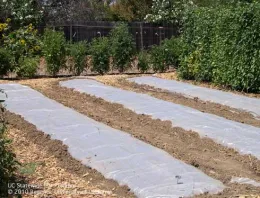
There are plenty of ways to kill your grass. One is solarization: cover it with cardboard or clear plastic to deprive it of sunlight. Sheets of clear plastic block
light while baking the grass in the sun's heat. Solarizing in the heat of our summer is a low-labor approach to removing lawn. You can rent a sod cutter or use a shovel to dig the turf out by hand. As a last resort, you can also use herbicides. Remember, herbicides kill more than just grass! There's no right way to kill your grass. The best option will likely depend on your outdoor space, how much hands-on time you want to spend removing the grass, and how long you're willing to wait for it to die. Smothering the grass with cardboard or clear plastic can take weeks. Usually, the hotter the weather, the shorter the kill time. If you're using plastic or cardboard, there's no need to remove the grass once it's completely dead, unless you see seedheads or grass pieces that could resprout. The dead grass will decompose on its own and add organic matter to your garden.
Buy plants for your new garden
The tricky thing about native plants is that typical garden centers often don't stock many of them. Native plant or wildlife advocacy groups often post online native plant nurseries or pop-up events where native plants will be sold. Try searching Facebook for local groups dedicated to native plants. This might mean a native plant society. In our area, check the California Native Plant Society, Alta Peak Chapter website for a list of where to buy native plants.
Plant the plants and wait
Plant the new plants and mulch around them. Fall is the best time in our area to do new plantings. They'll get some moderate heat at first, then take the winter months to develop a strong root structure before next summer's heat comes along. There's no need to modify your garden soil during planting if you've picked native plants suited to your soil conditions. Advice on how far to space the plants out varies depending on the plant. Check the container label for planting instructions. Basically, you'll want to space them so that once the plants mature, your planting area is full. "Plants want to touch each other," I heard a fellow Master Gardener say. "They don't want acres of mulch in between them." This is better for you, too, because eventually you won't have to replenish mulch or pull weeds as often. It'll take a few years to get there, though. Gardeners like to say that many perennials "sleep, creep, leap," meaning they won't seem to do much in their first year, will only grow a little in their second, and then will thrive in their third.
Watch out for weeds and dry conditions.
As young plants grow, you'll especially need to watch for weeds and make sure the spaces between plants are mulched. You may also need to water them while they develop strong root systems. If you've chosen plants appropriate to your area, you shouldn't have to water them once they mature (usually after the first year), except perhaps during serious dry spells. In the winter, don't cut the plants all the way to the ground. Leave at least part of the stems--native bees might nest in them. Also leave fallen leaves, so butterflies and other critters can overwinter in there.
There will always be a hummingbird visiting, bees buzzing, or butterflies fluttering. What fun to go outside, walk around, and see what life happens because you planted what you planted.
Enjoy!
Note: Some of the information in this article was provided by an NPR podcast by Celia Llopis-Jepsen.