
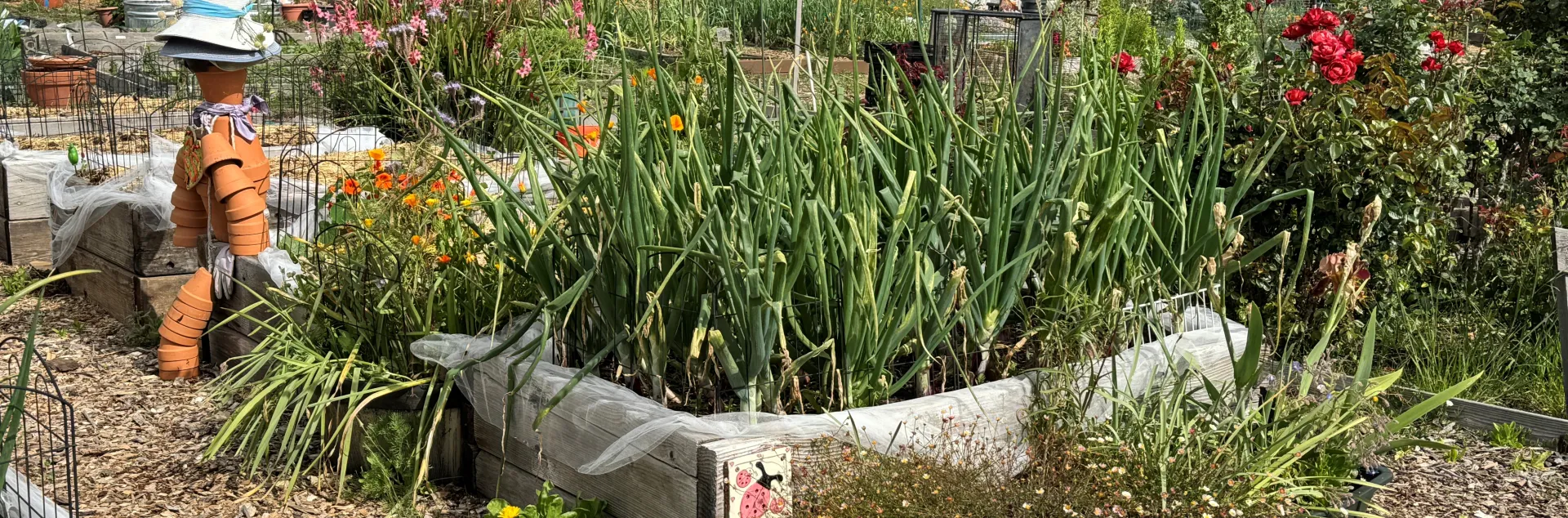
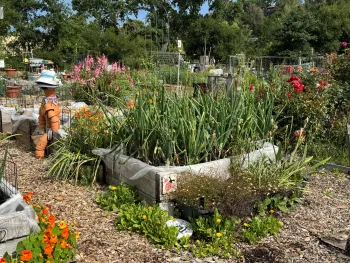
The seeds of a gardening life are often planted early. Even a modest family vegetable or flower garden may seem enormous to a small child learning to water and weed, or harvest vegetables and flowers. But gardens grow gardeners too. As young gardeners eventually transplant themselves into a first apartment or college dormitory, the available space to garden may shrink dramatically even as the desire continues to grow. The garden may move indoors and perhaps up a few floors. A potted fern, a small orchid, or a well-tended pot of basil near a sunny kitchen window may be enough to sustain that connection until larger gardening opportunities emerge.
Liberty Hyde Bailey, the influential horticulturist and educator often called the Father of American Horticulture, wrote that gardeners should cultivate “that happy peace of mind which is satisfied with little.” That gentle spirit thrives in small gardening spaces throughout Marin County. Meaningful gardens are not defined by acreage, but by the relationship that gradually develops between garden and gardener. What is sometimes described as small-space gardening is a profoundly rewarding undertaking because every flower matters, every leaf matters, and every watering matters. In many ways, small-space gardening is a more intensive, intimate, and rewarding experience.
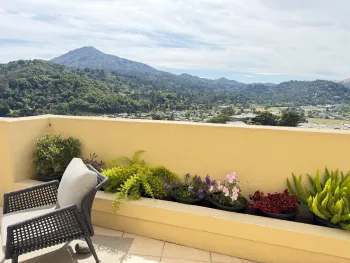
Fortunately, the same science-based, earth-friendly principles promoted by UC Marin Master Gardeners apply whether the garden is an artful collection of ceramic pots on a sunny balcony in San Rafael, a raised bed on a shaded patio in Mill Valley, or a traditional vegetable garden in Novato. Small-space gardening success begins with a simple mantra: plant the right plant in the right place.
Understanding the unique microclimate of the intended growing space is critical to successful plant selection. Small-space gardeners quickly learn that success depends on careful observation and close attention to the needs of their plants. A south-facing balcony may experience intense afternoon heat, reflected light, and drying winds, while a north-facing balcony in the same building may remain considerably cooler. Large containers do become heavy, but wheeled trays allow plants to be repositioned as temperature and light conditions change. Larger containers generally retain moisture more consistently than smaller pots and help moderate temperature fluctuations around plant roots.
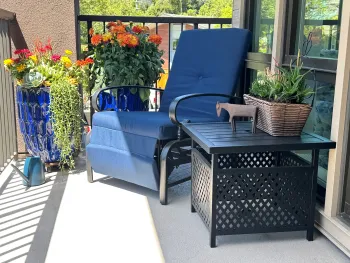
Limited space often inspires creativity. Almost anything that can be grown in the soil can be grown in a container using a high-quality potting mix, and providing proper water and light. Trellised peas, beans, cucumbers, and flowering vines allow gardeners to grow vertically rather than horizontally. A small patio may become a productive kitchen garden of tomatoes, peppers, herbs, and a huge assortment of flowering plants. In Marin’s Mediterranean climate, even the smallest growing spaces can help attract and support a remarkable biodiversity. Containers planted with California natives, including milkweed, can transform a narrow balcony into valuable habitat for migrating monarch butterflies, native bees, and hummingbirds.
Seasonal timing remains important regardless of garden size. Cool-season crops such as lettuce, spinach, and peas often perform well in containers during spring and fall, while tomatoes, peppers, basil, and many flowering annuals thrive during warmer months.
Whether upsizing when young or downscaling later in life, community gardens often help bridge spatial transitions in the life of a gardener. Beyond providing growing space, they encourage the sharing of gardening knowledge, seeds, harvests, and traditions between neighbors and generations. They become informal classrooms where gardeners exchange practical skills while growing community as surely as they grow a wide assortment of flowers, fruits, and vegetables.
For many of us, the garden that once spread across beds, balconies, patios, and containers may eventually become very small indeed. Perhaps distilled to its essence, the garden may become a succulent planter near a sunny window, or a single bedside African violet. That small space, that tiny garden, may then become even more important, rekindling long-held memories while still requiring the gardener’s attention and care. The scale changes, but the relationship endures.
By Terry Armerson, August 8, 2026