
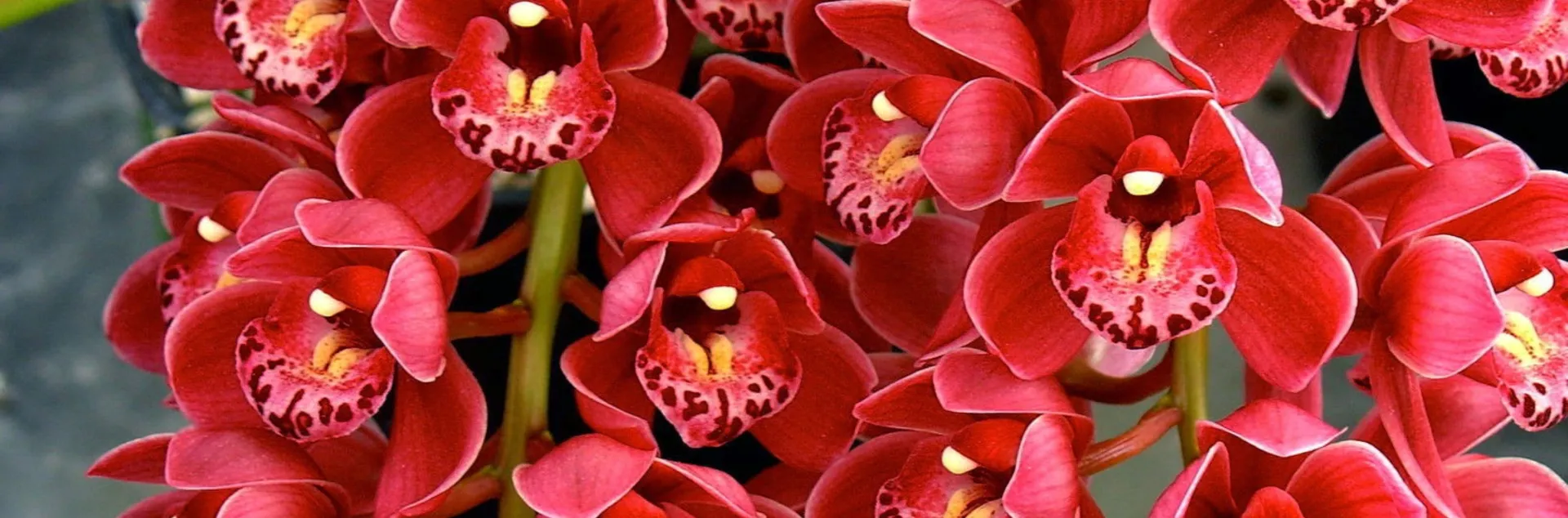
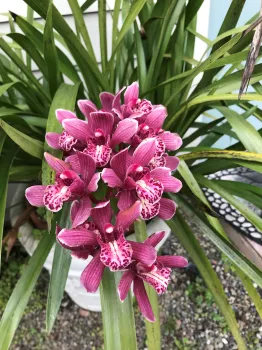
Are your cymbidiums sitting around the garden with lots of green foliage, just waiting for you to provide them with the appropriate nourishment for late fall and winter showtime?
Hopefully you have kept them well hydrated through the summer and fertilized with a growth formula (30-10-10). Now is the time to switch to a high phosphorus bloom formula (10-30-20) to stimulate flowering.
No cymbidiums in your garden – yet? Keep reading … cymbidiums are a fabulous addition to your winter garden! Don’t be intimidated by the word “orchids.”
The most important factors for growing healthy, thriving plants are light, temperature, watering, humidity, fertilization, and repotting.
Cymbidiums aren’t very picky as long as their basic needs are met. Locate them in an area with sunlight, but with shade during afternoon heat – save your summertime full sun areas for your tomatoes.
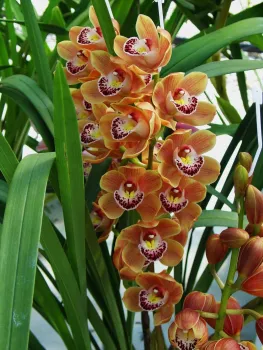
This time of year, cool temperatures are important to encourage blooming. Ideal night temps are 50-57 degrees and 60-75 degree day temps during fall and winter. They are relatively frost-tolerant and can handle temperatures as low as 28 degrees for a short time. If a hard freeze is predicted, relocate them to a garage, under a wide eave, or cover with tarps.
Keep your orchids well irrigated until nature takes over with higher humidity and occasional rains. Weekly, check your plants for snails and slugs. If you find these pests, apply an iron phosphate bait that is safe around pets, wildlife, and children. Avoid products containing metaldehyde, as they are poisonous to cats and dogs. Aphids, spider mites, and scale may be a problem but can easily be controlled with horticultural oil. Remove fallen leaves and debris from the pots as they may decompose, cover your emerging flower sprouts, and cause them to rot.
Apply the bloom formula fertilizer every 10 days to 2 weeks and watch for flower sprouts to emerge. As the sprouts extend, you may want to support them with plant stakes, attaching them with floral tape or plastic clips. Or, let them drape naturally from their container.
Once the plants start to bloom, you can bring them into your home to enjoy the beautiful flowers. Check the plants carefully for snails or slugs before inviting them indoors. Keep them out of direct heat. Established plants may stay in bloom for months. Stems of cymbidiums are also excellent long-lasting cut flowers.
Now is not the time to repot. Save that activity until the flowering season has ended. Then you’ll want to clean up the plant, remove dead or dying leaves and any debris that has settled in the pot. Cymbidiums like to be crowded, so don’t rush to repot. If you have numerous dead pseudobulbs, it’s good to remove them and fill the container with a water-retentive potting mix—medium-grade fir bark with peat moss and perlite is a common mix. Late spring and early summer are good times for repotting.
After the bloom season ends and you have cleaned up the pots, start applying growth formula fertilizer and keep them well hydrated.
New to cymbidiums?
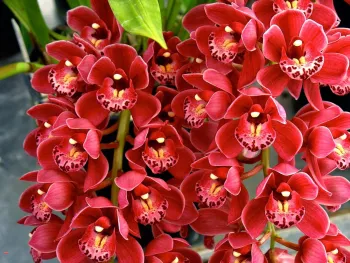
Now is the time to start looking for these stunning, prolific bloomers that will brighten your winter garden year after year. They are among the longest-living plant species, with some surviving up to 20 years. Cymbidium orchids are the unfussy orchids that thrive outdoors in our Mediterranean climate. The Bay Area is ideal for these gorgeous, easy-to-grow plants. Search for plants at your local plant nursery and farmers’ markets. The San Francisco Orchid Society presents the SF Orchid Exposition and Plant Sale in late winter. The array of cymbidiums of all colors and sizes will amaze you! You’ll also find knowledgeable orchid growers who can offer you sound advice for getting your cymbidium settled in just the right place.
We are so fortunate to live in a welcoming climate for these stunning and easy-to-grow beauties!
By Jane Scurich, September 26, 2026