
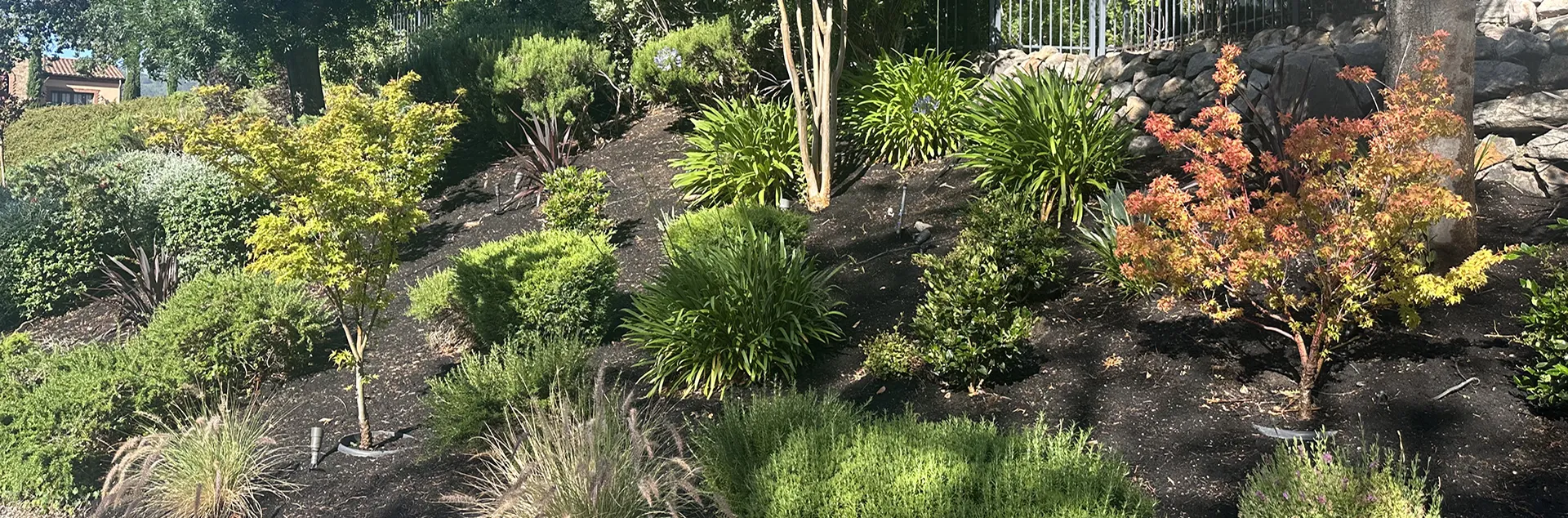
Understanding the Challenges of Watering Hillside Gardens
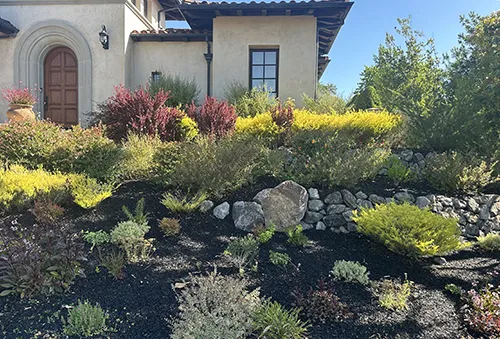
Watering a hillside garden requires special attention, particularly in areas with full sun and during dry spells. The biggest challenge with irrigating a hill is preventing the water from running downhill before it has a chance to soak into the soil. Eliminating runoff is important for efficient irrigation and healthy plant growth. Another concern is that different areas of the slope may receive varying amounts of sunlight. In some landscapes, the higher elevation may need more water due to greater sun and wind exposure, while lower areas may receive more direct sunlight and require additional irrigation.
Choosing the Right Irrigation System
In order for water to deeply saturate into the soil and reach plant roots, proper irrigation is essential. When irrigating a hillside garden, drip irrigation or soaker hoses are often your best choices. These types of irrigation deliver water slowly and directly to the soil, reducing runoff and erosion—common problems when using overhead watering and sprinkler systems on slopes. Drip and soaker irrigation methods allow deeper soil penetration and more effectively reach plant roots.
Drip irrigation is generally the most effective way to water plants on slopes because it delivers water slowly and directly to the root zone, minimizing runoff and water waste while allowing precise control over water use. Soaker hoses can also be a practical temporary solution, especially for newly planted areas or gardeners seeking a simple, low-cost option. While they do not offer the same level of efficiency and control as a well-designed drip system, soaker hoses can provide slow, even watering that helps reduce erosion and runoff on sloped sites.
Managing Water on Different Elevations
Effectively tackling different elevations requires tailored approaches. You can manage height variations using gravity-fed drip kits, self-watering systems, or adjustable flow valves. When watering slopes, avoid standard sprayers. Instead, use inline drip tubing that weaves across the slope, allowing water to percolate into the root zone slowly. If you have tiered beds and use drip irrigation, install separate valves on each tier so water flow can be controlled independently.
Plants take up nutrients through their roots and move them throughout the plant in a water solution. A lack of water also means a lack of available nutrients. If you notice water pooling or washing away, use the soak-and-cycle method: water for a few minutes, pause to let it soak in, and then repeat the cycle.
Water the Roots, Not the Leaves
When watering trees and plants, water the roots. There is no benefit to watering the leaves of a plant. Instead, water the soil, where the roots can absorb the moisture the plant needs to thrive.
Conserving Water with Mulch
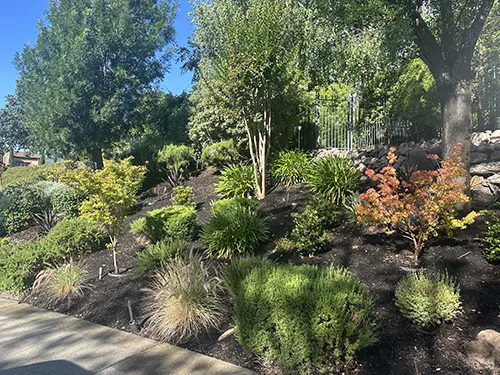
Mulching is one of the most effective ways to conserve water in a hillside garden. By covering the soil surface around plants with a protective layer of organic material, mulch helps retain moisture, regulate soil temperature, and suppress weeds. It also acts like a sponge, slowing down water movement, increasing absorption, and reducing surface runoff. Apply a 2- to 3-inch layer of organic mulch around your plants to help keep water where it is needed most: at the roots.
Best Watering Methods for Hillside Gardens
Drip Irrigation: Drip lines apply water slowly and directly to the root zone, maximizing absorption and preventing runoff.
Soaker Hoses: These lay directly on the ground and seep water slowly. Make sure to lay your drip lines and soaker hoses horizontally (across the slope), not vertically up and down.
Landscape Modification Solutions
If your property has some challenging water issues, the following landscape modification ideas might work for you.
Terracing: Creating flat, stepped sections (tiers) is one of the most effective ways to retain water on a slope, allowing it to pool and sink in rather than run off.
Basins: Dig slight concave depressions (swales) or small wells (basins) around the base of trees or larger plants on the hill. This catches the water running down the hill and directs it straight to the roots.
Adjusting Sprinklers for Sloped Landscapes: If you are using sprinklers, make sure you use rotary nozzles or low-angle trajectory nozzles. Ensure that the sprinkler heads are angled correctly relative to the steepness of the slope so the water hits the ground, not the wind. Watering plants at different heights requires adjusting your setup so that water reaches the root zones evenly without stressing upper-level plants or under-watering the lower ones. You can manage height variations using gravity-fed drip kits, self-watering systems, or adjustable flow valves.
Irrigation Solutions for Raised Beds & Mid-Level Terraces:
- Zoned Irrigation: If your garden has various mid-level raised beds, use inline valves on a single manifold. This lets you adjust the water pressure and duration for plants with shallow root systems versus those with deep roots.
- Soaker Hoses: These work beautifully for uniform raised beds since water goes directly into the soil.
Irrigation Solutions for Ground-Level and Sloped Gardens:
- In-Line Emitters: For large in-ground plants or sloped gardens, use adjustable emitters or micro-bubblers.
- Gravity Pressurization: If your sloped yard requires pumping water uphill, ensure your automated timer is suited for gravity-fed systems or install a small booster pump to maintain adequate water pressure at higher elevations.
Practical Watering Tips
- Target the Soil: Water the root zone, not the foliage, to prevent diseases.
- Early Morning: Water within the first couple of hours after sunrise. This gives moisture a chance to soak in before the wind kicks up or the hot afternoon sun evaporates it.
With the right plants, appropriate sunlight, healthy soil, and a good watering system, you can have a beautiful, healthy garden on a hillside, one you can be proud to share.
So, happy gardening. Enjoy!
Resources:
California Master Gardener Handbook
Plants and Landscapes for Summer-Dry Climates of the San Francisco Bay Area (EBMUD)