
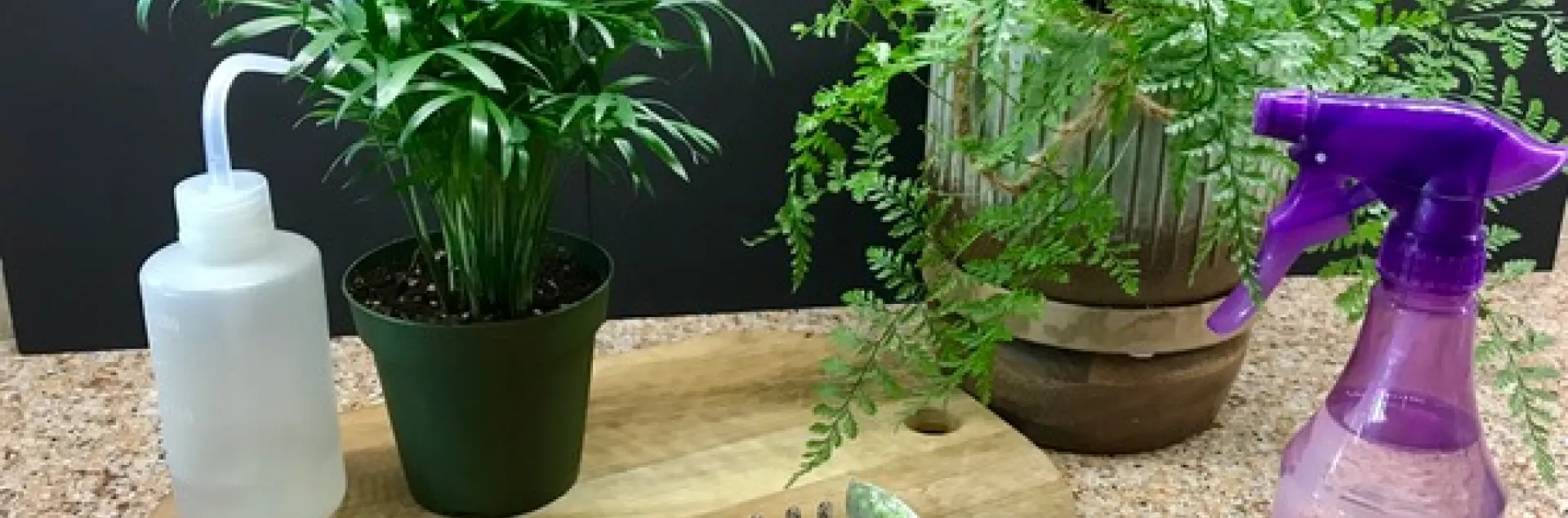
Understand the five basic needs of every houseplant
Gardeners like the color green. Green gardens filled with flowers and vegetables, or splashes of green houseplants can bring tranquility to a hectic day.
Most houseplants have a tropical heritage and thrive when provided the right location and care. Selecting the right plant for your home depends upon plant needs. Houseplants might be small when purchased, but like babies they will continue to grow. Locate a plant in an area spacious enough for it to grow and mature. Each houseplant has five basic needs, and providing correct lighting, temperature, humidity, water, and fertilization will keep it healthy.
Correct lighting for houseplants is very important.
Plant species have different light requirements. Light ranges are low, medium, high, and direct. A houseplant with low light requirement should be 15 to 20 feet away from a window yet another plant might tolerate direct window exposure. In the home, daylight changes seasonally and at times a plant location might need to be adjusted.
Houseplants prefer a consistent temperature.
Adjusting the heater or AC provides us comfort. Plant variety determines temperature range tolerance. Cool ranges from 40 to 50 F, intermediate from 60 to 70 F, and warm 75 F or higher. Houseplants should not be located near an air vent because of their sensitivity to temperature fluctuations.
Low humidity levels can harm tropical houseplants.
Heating and cooling can decrease the home humidity level. A few adjustments can be made to provide houseplants with additional humidity. Placing plants on a tray with pebbles and water can increase humidity. Grouping plants together keeps moisture level a bit higher. Finally, periodically spraying plants with a fine water mist adds moisture. Cacti and succulents are good houseplant choices for very dry areas.
Houseplant water needs vary.
Too much or too little water can kill plants or cause erratic growth. Adhering to a set watering schedule is difficult due to variations of plant needs. A good rule to follow is water a plant when one inch of soil at the top of the pot dries. Don’t allow water to pool in the saucer. Keep plant “feet” dry, otherwise the plant might succumb to root rot.
Houseplants need periodic fertilization to remain healthy.
Soil nutrients are lost from potted plants quicker than in ground plants. Use fertilizers made for indoor plants and always follow label directions. Fertilize plants with new growth, don’t fertilize when plant is resting in winter. Periodic deep watering of plants will help wash away salt deposits built up from fertilizers. Place the pot in the sink and allow water to gently flow through the soil.
Houseplants are not immune to dust in the home. Leaves should be carefully washed a few times each year by spraying them with water. African violets can’t tolerate wet leaves and need to be gently dusted with a soft brush. Check your plants for pests and disease regularly. Remove dead leaves and dried flowers. Some houseplants are toxic to pets, and the internet is a great tool to use for checking the toxicity of a specific houseplant.
This article by UC Master Gardener of El Dorado County Anne Bettencourt originally appeared in the Mountain Democrat in June 2026.