
A small player takes center stage in the Tahoe fall landscape. The vine maple (Acer circinatum) is native to the Pacific Northwest, but this modest size tree is adapted to the Tahoe Basin in locations with partial shade and modest water availability. Growing to heights of 10-20 feet, it can be planted as an understory tree in combination with Tahoe conifers and larger maple trees.
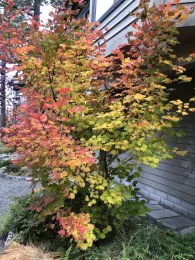
While many people love the Japanese maple (Acer palmatum) for its graceful forms, the vine maple is less prone to pest and disease than its Japanese cousins. Vine maple branches are sturdier and less inclined to break under snow loads. In the spring, the small flowers attract pollinators, such as bees, hummingbirds and butterflies. In summer, it shades a patio or perennial bed, and in the fall, enjoy it’s bright yellow, orange and red leaves. During the winter the green gray bark and multi trunk form provide season long interest.
Select a tree with the branch structure you would like to encourage. The tree is naturally multi-stemmed, but it can be pruned (annually) to form a single trunk. The height and width are also easily controlled with regular pruning. Use clean pruning tools, and perform major pruning in late winter or early spring before the tree breaks dormancy. Do not prune in the late summer or fall, as this stimulate growth at a time when the tree should be preparing for dormancy.
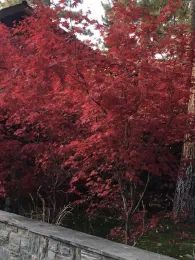
Ensure your site has regular water for the best results. Vine maples are grown stream side in nature and appreciate regular irrigation. Choose a well drained site for the best results. You can fertilize the tree at planting time, but vine maples are well adapted to the Tahoe soils and once established, require little additional nutrients.
Pest problem are not common, but occasionally the tree may be affected by aphids, scale, mites and possibly caterpillars. Wash off pest with a strong steady stream of water, and if necessary, use insecticidal soaps or horticultural oils for larger infestations. Keeping the tree properly moist and mulched will enable it to resist minor insect damage.
References for a deeper dive:
https://landscapeplants.oregonstate.edu/plants/acer-circinatum
https://research.fs.usda.gov/feis/species-reviews/acecir
https://www.wnps.org/native-plant-directory/2:acer-circinatum