Pests & Diseases

Primary Image
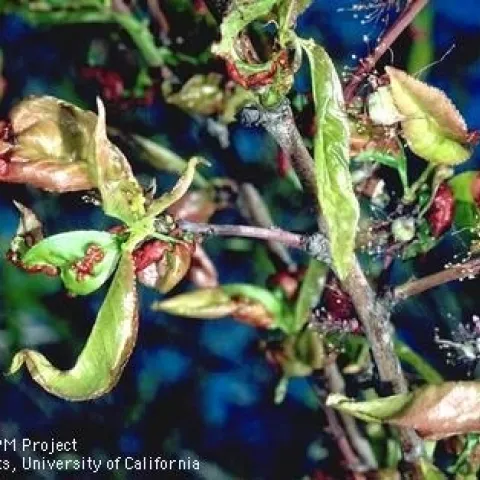
Several leaves on a branch are distorted and turning red while the others are green and healthy.
Pests in the Urban Landscape: Article

Peach Leaf Curl Control Period

March 13, 2024
By Lauren Fordyce
Spring is just around the corner and many types of fruit trees are starting to develop their leaves. If you are growing peaches or nectarines and are now seeing symptoms of peach leaf curl on new leaves, unfortunately it's too late to manage the disease.
View Article
Primary Image
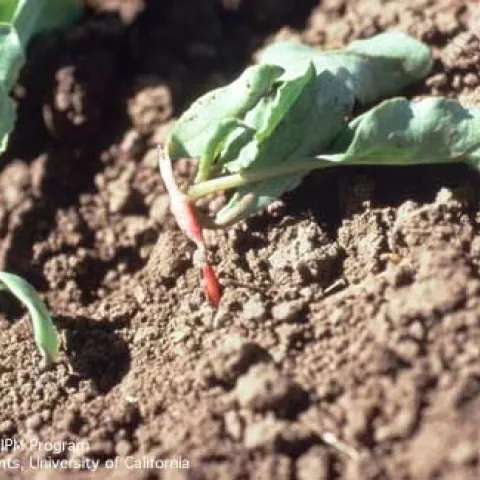
Two leafy green seedlings drooped over onto the soil.
Pests in the Urban Landscape: Article

Damping-off of Seedlings

January 24, 2024
By Lauren Fordyce
Springtime planting is almost here but don't rush to plant seeds until the soil has warmed up! Planting seeds too soon, when the soil is cold and wet, risks losing them to damping-off, a disease caused by fungi and oomycetes in the soil.
View Article
Primary Image
A hand holding brown soil.
Pests in the Urban Landscape: Article

Healthy Soil Tips

December 5, 2023
By Lauren Fordyce
Healthy Soils Week (Dec. 4-8) is a week-long initiative by the California Department of Food and Agriculture (CDFA) to highlight the importance of soil health throughout California. Healthy soils can improve crop yields, sequester carbon, reduce erosion, and increase biodiversity.
View Article
Primary Image
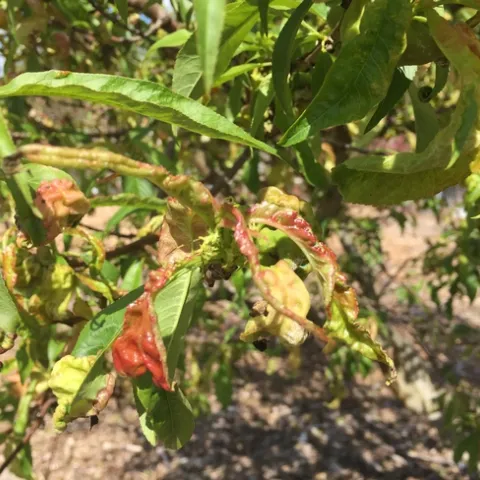
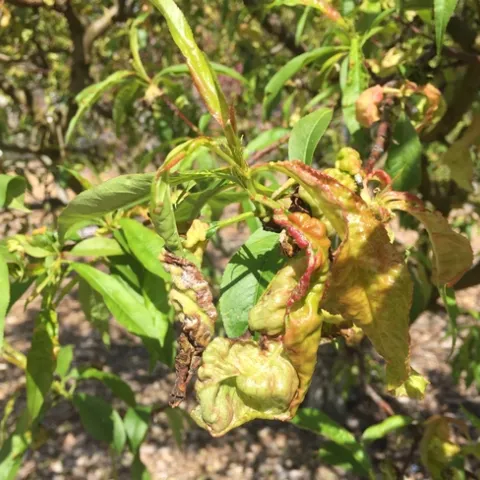
A close up of narrow, long green leaves of a peach tree. Some leaves have curled and are red and distored from peach leaf curl.
Pests in the Urban Landscape: Article

Peach leaf curl spray timing

November 14, 2023
By Lauren Fordyce
Peach leaf curl is a fungal disease that only affects peach and nectarine trees. The fungus causes distorted, reddened leaves to appear on the tree in the spring.
View Article
Primary Image
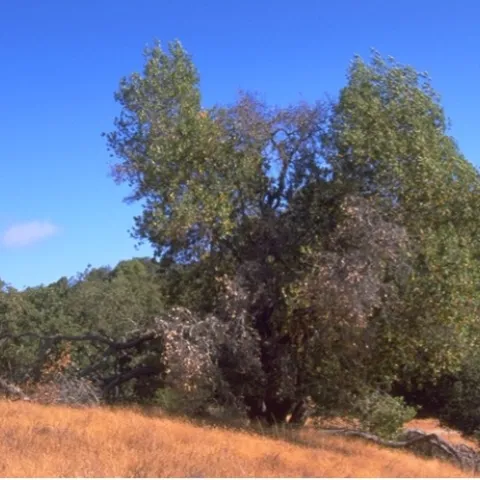
A landscape photo of an oak tree with dying, leafless branches in a meadow of dry brown grass.
Pests in the Urban Landscape: Article

Sudden oak death: what is it?

September 11, 2023
Sudden oak death (SOD) is a disease syndrome that has killed millions of native oak trees (Figure 1) along the west coast of the United States, from Big Sur in California up to Southern Oregon.
View Article
Primary Image
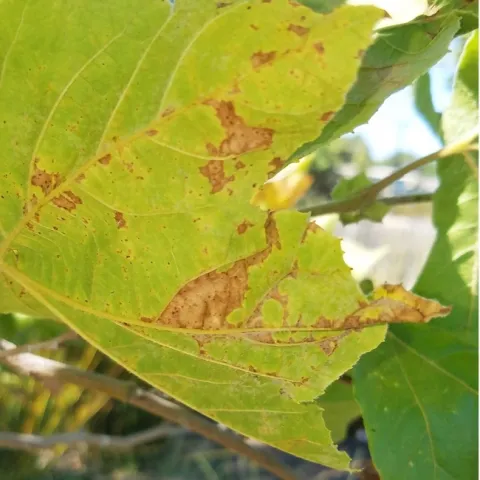
Close up of a green sycamore tree leaf with irregular brown spots.
Pests in the Urban Landscape: Article

Defoliated Sycamore Trees?

September 7, 2023
By Belinda Messenger-Sikes
Have you been seeing a lot of defoliated sycamore trees recently? Sparse foliage and early leaf drop on sycamore trees might be due to anthracnose. The cool, wet spring in many parts of California provided the perfect conditions for this disease.
View Article
Primary Image
Credit: Steve Garner, Flikr.
Pests in the Urban Landscape: Article

Wet Weather Dos and Don'ts

January 11, 2023
By Lauren Fordyce
An immense amount of rain has fallen across California in recent weeks. While rain is incredibly beneficial, in excess it can cause serious problems. The continued wet conditions opens the door for many pests, so see the list of dos and don'ts below for common wet weather pest prevention tips.
View Article
Primary Image
Sunburned bell pepper with a necrotic spot
Pests in the Urban Landscape: Article

What are Abiotic Plant Disorders?

October 3, 2022
By Karey Windbiel-Rojas
Abiotic plant disorders are generally caused by environmental conditions, rather than microorganisms. They are sometimes called noninfectious diseases. Abiotic disorders can develop if a plant's needs are not being met.
View Article
Primary Image
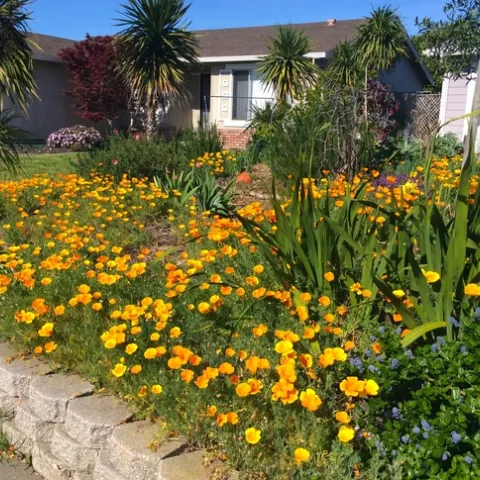
A drought-tolerant garden bed of California poppies, Ceanothus, and Watsonia. Photo by Tina Saravia, UC ANR.
Pests in the Urban Landscape: Article

Drought or Disease?

September 26, 2022
By Belinda Messenger-Sikes
With ongoing drought and local water restrictions in place in many areas of California, you may start to see landscape plants suffering from stress caused by a lack of water, calledwater stress. Water-stressed plants can have symptoms that resemble diseases caused by plant pathogens.
View Article