UC ANR is committed to providing an accessible and inclusive web experience for all users. If you encounter an accessibility barrier or need content in an alternative or remediated accessible format, please contact anraccessibility@ucanr.edu.
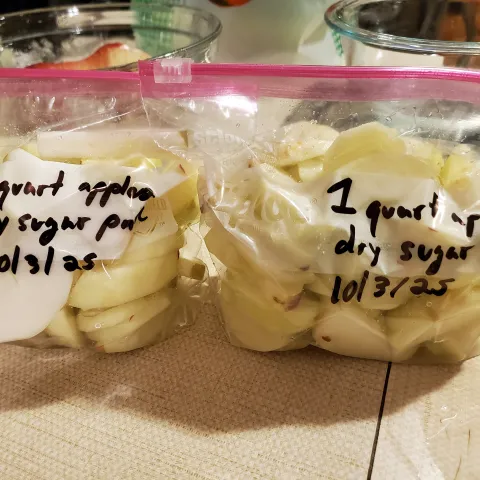
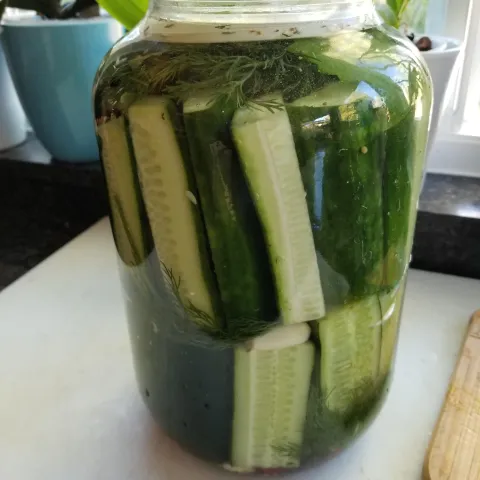
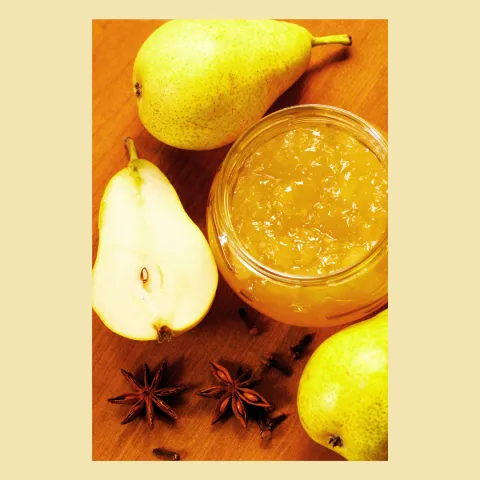
A panel of volunteers specializing in freezing, dehydrating, canning and food safety will be available to answer your questions and share their tips so you can safely and successfully preserve food at home.
Nutrition Policy Institute’s latest research brief shows that California’s School Meals for All program provides meaningful financial relief for families across all income groups. In 2022-23, California launched School Meals for All to provide free school meals to all students enrolled in public schools…
Nutrition Policy Institute director Hannah Thompson was selected as a UCDC Presidential Faculty Fellow through the University of California Washington Program. The fellowship brings together UC faculty to Washington, DC after equipping them with the skills to engage with policymakers on Capitol Hill on…
U.S. public schools generate 14,500 tons of waste daily, and 42% is from food packaging alone, posing a threat to human health. To respond, California enacted the Sustainable Packaging for the State of California Act of 2018, requiring school food serviceware to be reusable, recyclable, or compostable…
Universal School Meals provide free meals to all students, helping reduce stigma, administrative burden, and unequal access, while also supporting nutrition, health, food security, and academic outcomes. However, after the COVID-19 pandemic, the federal waivers allowing all students, regardless of…
By Dania Orta-Aleman, Caitlin D French, Monica D Zuercher, Christina E Hecht, Hannah R Thompson, Wendi Gosliner
Research Brief • April 2026 • Download PDF (180KB)Background California’s School Meals for All (SMFA) program launched in the 2022–23 school year, following federal pandemic relief efforts that provided universal school meals across the US from 2020–22.1 Traditionally, school meal eligibility has been…
The Food Security Supplement to the United States Census Current Population Survey, or Household Food Security Survey Module, is one of the most valuable federal datasets for understanding food insecurity and evaluating nutrition policy in the US. Despite its value, the US Department of Agriculture …
Childcare centers and homes aim to create a healthy environment, but holistically assessing practices and identifying what to improve is often challenging. A recent study published in the Journal of Nutrition Education and Behavior highlights the reliability and validity of the Site-Level…
A new open-access publication outlines how to better translate science at the climate–food–health nexus into effective policy and practice. Published in Advances in Nutrition, authors propose a practical framework grounded in ecological systems thinking to help decision-makers navigate the complex…
The California Nutrition Incentive Program (CNIP) supports Supplemental Nutrition Assistance Program (SNAP) shoppers in purchasing fruits and vegetables by providing a dollar-for-dollar match to SNAP dollars spent on produce. Nutrition Policy Institute researchers conducted a mixed-methods study utilizing…