A Natural Solution for California's Herds: African Catfish Peptides

California's cattle producers and agricultural communities are all too familiar with the rising challenge of antibiotic resistance, making common bacterial infections harder to treat in livestock. But imagine a future where we could tackle these infections with a natural, powerful alternative. Our research points to just that: antimicrobial peptides (AMPs) found in African catfish.

We're really excited about these peptides because African catfish thrive in pathogen-rich freshwater, naturally producing these robust immune compounds in their skin mucus as a defense. This natural origin makes them highly appealing alternatives to synthetic drugs.

Predicted Safety and Potent Action

One of the most compelling aspects of these AMPs is their predicted safety for mammals. Our initial computer analyses suggest that various catfish AMPs are generally recognized as safe (GRAS). We predict they'll be absorbed in the human intestine without causing liver, brain, or heart toxicity. Furthermore, lab tests on a promising peptide, NACAP-II, confirmed it was non-hemolytic, meaning it didn't damage rabbit red blood cells—a strong indicator of its potential safety for mammalian cells.

Beyond safety, these peptides demonstrate effectiveness against problematic bacteria. One study revealed NACAP-II's strong activity against Extended-Spectrum Beta-Lactamase (ESBL)-producing Escherichia coli—a critical concern for both animal and human health due to its resistance to many common antibiotics. Another peptide, ACAP-IV, also showed antibacterial activity against E. coli and Staphylococcus aureus. We believe these AMPs work by directly disrupting bacterial cell membranes, a mechanism that makes it harder for bacteria to develop resistance compared to how they resist traditional antibiotics.

Primary Image
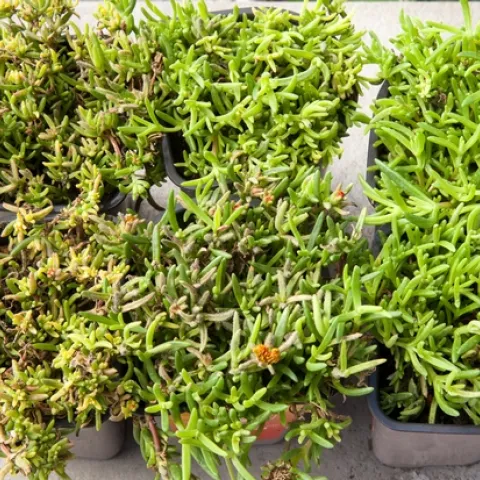
Downy mildew on Delosperma caused by Peronospora mesembryanthemi. Plants on right are unaffected.
Nursery and Flower Grower: Article

Look Out for Downy Mildew Diseases

January 23, 2019
By Steven A Tjosvold
Downy mildew diseases have become increasingly important and common on ornamental plants over the last decade in California. The wet and cool weather we recently have had should promote the development of this disease. Now through the spring is the time to take a close look at susceptible crops.
View Article
Primary Image
photos by Erin Mahaney
Under the Solano Sun: Article

Night Bloom at the Conservatory of Flowers

January 23, 2019
Over the holidays, we enjoyed a visit to Night Bloom at the Conservatory of Flowers in Golden Gate Park. This special five-week evening exhibit describes itself as a light and sound experience.
View Article
Monterey County: Article

January 2019

January 23, 2019
UPCOMING MEETING EVENTS Grapevine Production Short Course Vineyard IPM Conference UC Davis Viticulture and Enology On the Road in Monterey County...
View Article
Primary Image
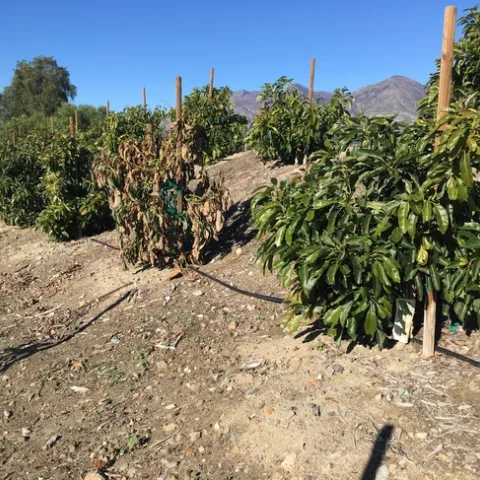
one tree down
Topics in Subtropics: Article

Why O Why, One Tree???

January 23, 2019
By Ben A Faber
It's winter time and avocados and other subtropicals are prone to frost damage. Little trees especially that haven't developed a canopy that can trap heat are the most prone.
View Article
Primary Image
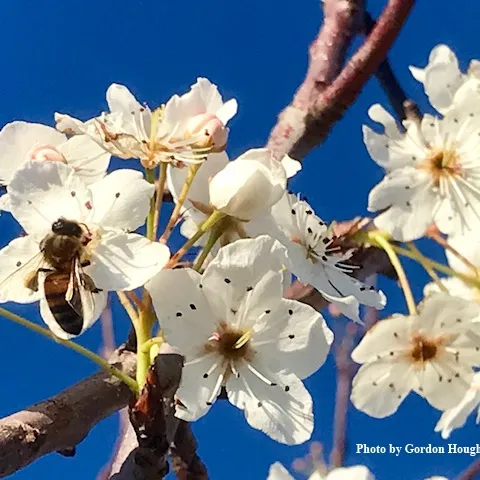
Benicia resident Gordon Hough captured this image of a bee nectaring on a Pyrus calleryana (Bradford pear or another cultivar) at the Benicia State Recreation Area on Monday, Jan. 21, as identified by Daniel Potter, UC Davis professor of plant sciences.
Bug Squad: Article

'A' is for Almonds and 'B' is for Bees and Bradford Pear Blossoms

January 22, 2019
By Kathy Keatley Garvey
No, it's not Valentine's Day, yet. Yes, the almonds are blooming. No, it's not spring. But it looks like spring in Benicia. The almonds are blooming in the Benicia (Calif.) State Recreation Area. Some are on the road at the entrance to the park. Other trees are also blooming.
View Article
SJC and Delta Field Crops: Article

Field Crops Meeting Materials Posted to Web

January 22, 2019
By Michelle M Leinfelder-Miles
On Thursday, January 17th, I hosted the annual SJC and Delta Field Crops Meeting in Stockton, CA. I want to thank everyone who attended and provided feedback on the meeting.
View Article