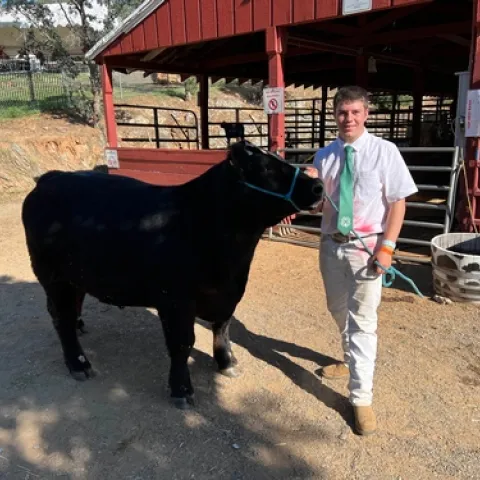
A Natural Solution for California's Herds: African Catfish Peptides

California's cattle producers and agricultural communities are all too familiar with the rising challenge of antibiotic resistance, making common bacterial infections harder to treat in livestock. But imagine a future where we could tackle these infections with a natural, powerful alternative. Our research points to just that: antimicrobial peptides (AMPs) found in African catfish.

We're really excited about these peptides because African catfish thrive in pathogen-rich freshwater, naturally producing these robust immune compounds in their skin mucus as a defense. This natural origin makes them highly appealing alternatives to synthetic drugs.

Predicted Safety and Potent Action

One of the most compelling aspects of these AMPs is their predicted safety for mammals. Our initial computer analyses suggest that various catfish AMPs are generally recognized as safe (GRAS). We predict they'll be absorbed in the human intestine without causing liver, brain, or heart toxicity. Furthermore, lab tests on a promising peptide, NACAP-II, confirmed it was non-hemolytic, meaning it didn't damage rabbit red blood cells—a strong indicator of its potential safety for mammalian cells.

Beyond safety, these peptides demonstrate effectiveness against problematic bacteria. One study revealed NACAP-II's strong activity against Extended-Spectrum Beta-Lactamase (ESBL)-producing Escherichia coli—a critical concern for both animal and human health due to its resistance to many common antibiotics. Another peptide, ACAP-IV, also showed antibacterial activity against E. coli and Staphylococcus aureus. We believe these AMPs work by directly disrupting bacterial cell membranes, a mechanism that makes it harder for bacteria to develop resistance compared to how they resist traditional antibiotics.

Article

HR: Flexible Work Agreement forms now online

June 21, 2023
By Pamela S Kan-Rice
As many of you are already aware, UC ANR strives to be an employer of choice with a positive and engaged workforce. As part of our strategic goals to support our work environment and workforce, we have simplified the process to review proposed Flexible Work Agreements.
View Article
Primary Image
Remnants of the 40 bee colonies destroyed when a truck driver, under cover of darkness, deliberately drove over them last week in Winters. They belonged to Caroline Yelle, owner of Pope Valley Queens.
Bug Squad: Article

Who Deliberately Runs Over Bee Hives?

June 21, 2023
By Kathy Keatley Garvey
Sometimes you hear about bored teenagers trashing bee hives by deliberately throwing rocks at them or gleefully tipping them over. But a truck driver who deliberately plows through a bee yard on private property and crushes 40 colonies? That's unreal.
View Article
Primary Image
false chibch bug
Topics in Subtropics: Article

False Chinch Bugs Coming?

June 21, 2023
By Ben A Faber
A note from Kern County Entomology Advisor David Haviland, We are forewarned. The hills are drying up and after this rain, there could be a tide of False Chinch Bugs coming out of the hills.
View Article
Primary Image
photos by Erin Mahaney
Under the Solano Sun: Article

Lotusland

June 21, 2023
I've long had Lotusland on my botanical garden must visit list and I finally made it there this spring. Lotusland is located in Montecito, near Santa Barbara.
View Article
Primary Image
Tobacco budworm larva.
Fresno Gardening Green: Article

Tobacco budworms on roses? Really?

June 20, 2023
Introduction Have you ever walked through your roses and seen a hole in the emerging buds filled with a black gooey substance? Well, the tobacco budworm is at work, and yes, on your ROSES. The tobacco budworm is the larval form of the adult moth, Helioithis virescens (scientific name).
View Article