A Natural Solution for California's Herds: African Catfish Peptides

California's cattle producers and agricultural communities are all too familiar with the rising challenge of antibiotic resistance, making common bacterial infections harder to treat in livestock. But imagine a future where we could tackle these infections with a natural, powerful alternative. Our research points to just that: antimicrobial peptides (AMPs) found in African catfish.

We're really excited about these peptides because African catfish thrive in pathogen-rich freshwater, naturally producing these robust immune compounds in their skin mucus as a defense. This natural origin makes them highly appealing alternatives to synthetic drugs.

Predicted Safety and Potent Action

One of the most compelling aspects of these AMPs is their predicted safety for mammals. Our initial computer analyses suggest that various catfish AMPs are generally recognized as safe (GRAS). We predict they'll be absorbed in the human intestine without causing liver, brain, or heart toxicity. Furthermore, lab tests on a promising peptide, NACAP-II, confirmed it was non-hemolytic, meaning it didn't damage rabbit red blood cells—a strong indicator of its potential safety for mammalian cells.

Beyond safety, these peptides demonstrate effectiveness against problematic bacteria. One study revealed NACAP-II's strong activity against Extended-Spectrum Beta-Lactamase (ESBL)-producing Escherichia coli—a critical concern for both animal and human health due to its resistance to many common antibiotics. Another peptide, ACAP-IV, also showed antibacterial activity against E. coli and Staphylococcus aureus. We believe these AMPs work by directly disrupting bacterial cell membranes, a mechanism that makes it harder for bacteria to develop resistance compared to how they resist traditional antibiotics.
Primary Image
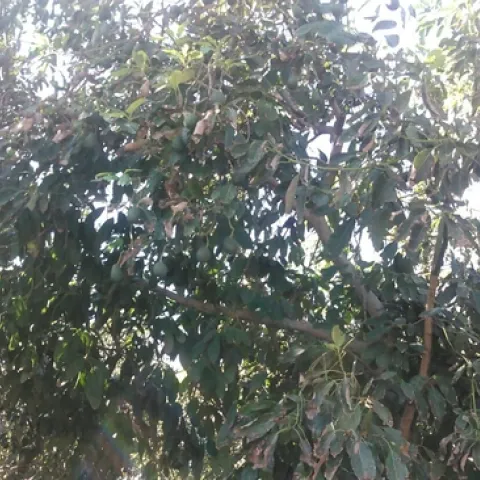
avocado fruit hidden
Topics in Subtropics: Article

Which Way World Avocados?

August 30, 2023
By Ben A Faber
From the Avocado Hass Board: Click Here ERIC IMBERT CIRAD: French Agricultural Research Center for International Development Where is the fruit going?
View Article
Primary Image
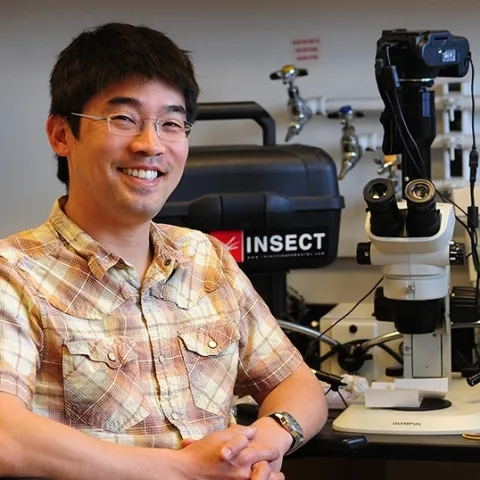
Community ecologist Louie Yang, professor, UC Davis Department of Entomology and Nematology, has received a campuswide UC Davis Graduate Program Advising and Mentoring Award. (Photo by Kathy Keatley Garvey)
Bug Squad: Article

Congrats to Outstanding Advisor and Mentor Louie Yang!

August 30, 2023
By Kathy Keatley Garvey
Congratulations to community ecologist Louie Yang, a UC Davis professor in the Department of Entomology and Nematology and chair of the Entomology Graduate Program, He is one of 33 recipients of the 2023 UC Davis Graduate Program Advising and Mentoring Awards.
View Article
Primary Image
photos by Nanelle Jones-Sullivan
Under the Solano Sun: Article

Oh! Grow Up!

August 30, 2023
Here's a riddle; How do you grow a four-foot plant in an eighteen inch spot? Give up? Grow vertically! This heirloom lemon cucumber', (Cucumis sativus 'Lemon'), needs plenty of room; at least 4 feet with its vines of up to eight feet long! Trained on this trellis, its footprint is only 1212 inches.
View Article
Primary Image
UC Davis alumnus Kevin Murakoshi of Davis gifted the Bohart Museum of Entomology with origami praying mantises. With him is UC Davis distinguished professor Lynn Kimsey, director of the Bohart Museum. (Photo by Kathy Keatley Garvey)
Entomology & Nematology News: Article

Let Us Prey: Bohart Museum Hosts Open House on Praying Mantises

August 29, 2023
By Kathy Keatley Garvey
The crowd at the Bohart Museum of Entomology open house on "Praying Mantises" learned all about the predators, their biology, their behavior, and their prey. The open house, held from 1 to 4 p.m., Sunday, Aug. 27, drew guests of all ages.
View Article
Primary Image
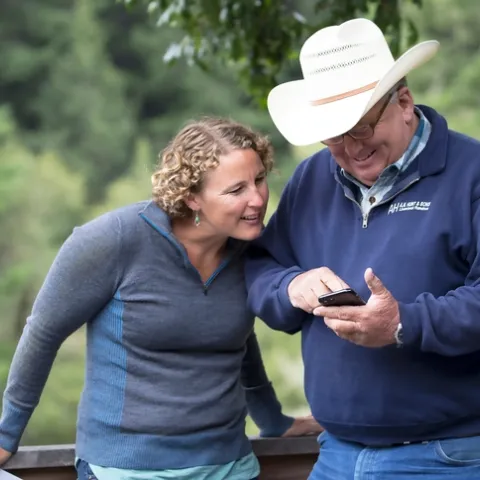
Lenya smiles and looks at whatever a man in a cowboy hat is pointing at on his phone.
ANR Employee News: Article

Donor retention results in repeat donations

August 29, 2023
By Pamela S Kan-Rice
It seems we are always in pursuit of the shiny new thing. In the world of fundraising, that often translates to the quest for new donors and new dollars.
View Article