A Natural Solution for California's Herds: African Catfish Peptides

California's cattle producers and agricultural communities are all too familiar with the rising challenge of antibiotic resistance, making common bacterial infections harder to treat in livestock. But imagine a future where we could tackle these infections with a natural, powerful alternative. Our research points to just that: antimicrobial peptides (AMPs) found in African catfish.

We're really excited about these peptides because African catfish thrive in pathogen-rich freshwater, naturally producing these robust immune compounds in their skin mucus as a defense. This natural origin makes them highly appealing alternatives to synthetic drugs.

Predicted Safety and Potent Action

One of the most compelling aspects of these AMPs is their predicted safety for mammals. Our initial computer analyses suggest that various catfish AMPs are generally recognized as safe (GRAS). We predict they'll be absorbed in the human intestine without causing liver, brain, or heart toxicity. Furthermore, lab tests on a promising peptide, NACAP-II, confirmed it was non-hemolytic, meaning it didn't damage rabbit red blood cells—a strong indicator of its potential safety for mammalian cells.

Beyond safety, these peptides demonstrate effectiveness against problematic bacteria. One study revealed NACAP-II's strong activity against Extended-Spectrum Beta-Lactamase (ESBL)-producing Escherichia coli—a critical concern for both animal and human health due to its resistance to many common antibiotics. Another peptide, ACAP-IV, also showed antibacterial activity against E. coli and Staphylococcus aureus. We believe these AMPs work by directly disrupting bacterial cell membranes, a mechanism that makes it harder for bacteria to develop resistance compared to how they resist traditional antibiotics.
Primary Image
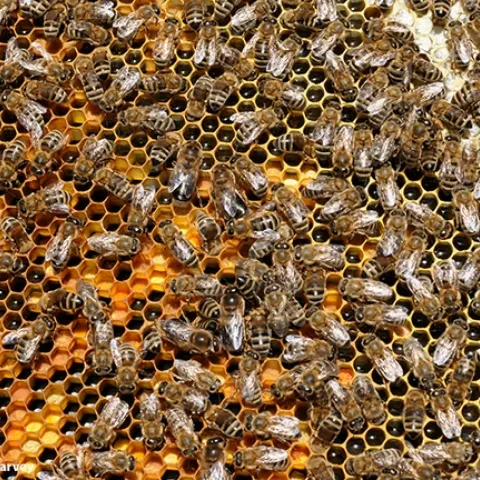
A departmental seminar on Sept. 28 will explore "The Effects of Ethyl Oleate Pheromone on Honey Bee (Apis mellifera) Overwintering Physiology." UC Davis master's student Nissa Coit will be giving her exit seminar. (Photo by Kathy Keatley Garvey)
Entomology & Nematology News: Article

Department's Seminars Announced for Fall Quarter

August 20, 2022
By Kathy Keatley Garvey
Emily Meineke, assistant professor of urban landscape entomology, UC Davis Department of Entomology and Nematology, and coordinator of the department's seminars for the 2022-23 academic year, has announced the list of speakers for the fall seminars, which begin Sept. 21.
View Article
Primary Image
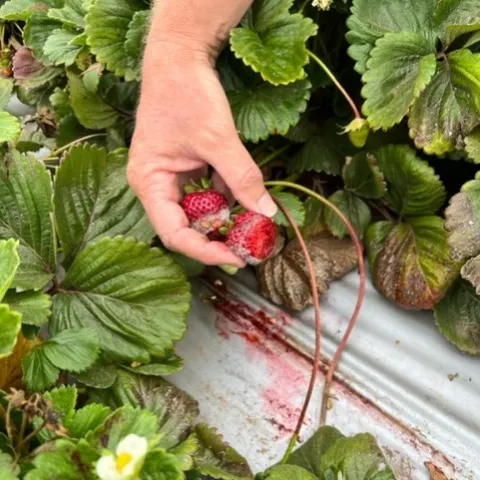
Case in point: there were like twenty flies around this fruit and we had to go another 15 feet or so to find another like it.
Strawberries and Caneberries: Article

Fruit Sanitation in Strawberry and SWD

August 19, 2022
By Mark P Bolda
I am currently underway with a field trial investigating the relationship between spotted wing drosophila and leak rot in strawberry. The hypothesis is that the flies, which wound the fruit with their egg laying are also accelerating the spread of this wound and bruise loving fungus.
View Article
Primary Image
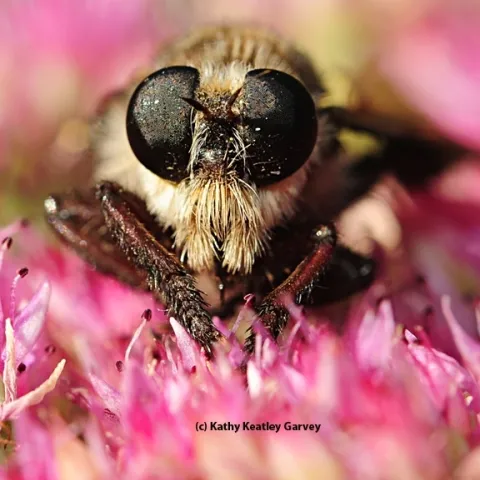
A robber fly peers at the camera. This is Mallophora sp., as identified by robber (assassin) fly expert Charlotte H. E. Alberts, a UC Davis doctoral candidate who studies these insects. (Photo by Kathy Keatley Garvey)
Bug Squad: Article

If It's Friday, It Must Be...

August 19, 2022
By Kathy Keatley Garvey
If it's Friday, it must be Friday Fly Day. The calendar crawls slowly sometime, but its numbers do not lie. It's Friday Fly Day, all right, which means it's a good day to post an image of a fly, this time a robber fly.
View Article
Garden News & Views: Article

Working with Mulch

August 19, 2022
"Sea of red... mulch, that is" by WSDOT is licensed under CC BY-NC-ND 2.0. Benefits of Mulch Mulch is one of the gardener's most useful tools: applied correctly, it suppresses weeds, improves water retention in soil, and keeps the soil temperature down.
View Article
Primary Image
Attendees at field day weed tours
UC Rice Blog: Article

Annual California Rice Field Day

August 19, 2022
By Whitney B Brim-Deforest
The annual Rice Field Day will be Wednesday, August 31, 2022, at the Rice Experiment Station (RES), Biggs, California. We cordially invite you and your associates to join us for this event.
View Article
Primary Image
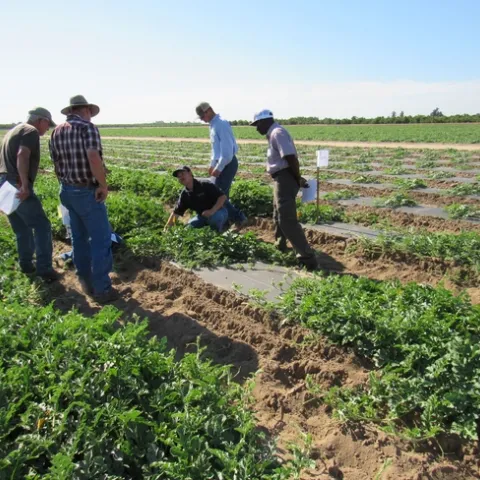
Zheng Wang crouches in a field of watermelon, talking with growers
Food Blog: Article

Less water, more watermelon: Grafting can help growers yield more

August 19, 2022
By Michael Hsu
As growers across California navigate severe drought, supply-chain challenges and rising inflation, reducing inputs has become an existential necessity. And for watermelon growers, a new twist on a thousands-year-old practice is showing real promise.
View Article