
Here's a collection of our monthly tips about managing various pests, weeds, diseases, or other conditions. "IPM" stands for Integrated Pest Management. It's a process you can use to solve pest problems while minimizing risks to people and the environment. Learn more at UC's IPM website.
To-Dos: IPM, Pests and Diseases
Almond and Walnut Harvest
Clean Up Fallen Fruit
Controlling Bermudagrass
Garden Sanitation
Paint Fruit Trees to Prevent Sunburn
Peach Leaf Curl Preventive Care
Poison Oak
Protecting Birds and Crops
Protecting Fruit
Tomato Bottom Scarring
Weed Management
Pests and Diseases: IPM, Pests and Diseases
Ailing Ornamental Trees
Ant Control
Aphids
Armillaria Root Rot
Armored Scale Control
Avocado Leaves
Avocados, Brown Spot
Bagrada Bug
Birds
Bitter Pit (Brown Spots) on Apples
Boxwood Blight
Brown Marmorated Stink Bug
Brown Rot on Apricot and Peaches
Bug Patrol
Cabbage Aphids
Camellia Petal Blight
Carpenter Bees
Citrus Bud Mite - Leave It Alone
Citrus Leaf Drop
Citrus Leafminer
Citrus Pruning and Care
Citrus Sooty Leaves
Codling Moth
Control Insect Pests with Horticultural Oil
Cottony Cushion Scale
Decay in Trees
Deer
Don’t Move Firewood
Dormant Oil Spraying
Earwigs
Eugenia Psyllid
Fire Blight
Fruit Damage
Fungus Gnats
Fusarium Wilt
Giant Whiteflies
Gophers
Gray Mold (Botrytis)
Gummosis in Stone Fruit
Healthy Tomatoes
Identifying Beneficial Insects
Leafcutter Bees - a Beneficial Insect
Leafminers
Limes
Manage Pests with “Integrated Pest Management”
Mistletoe
Moles
Mosaic Virus
Neem Oil
Oak Root Fungus
Oakworm
Peach Leaf Curl Preventive Care
Pepper Weevil
Peppertree Psyllids
Pest Alert - Spotted Lanternfly
Plum Bud Gall Mite
Powdery Mildew
Protecting California
Rat Management
Root Knot Nematodes
Rose Care
Slime Molds
Snails and Slugs
Sooty Mold
Spiders in Your Garden
Spider Mites
Spotted Wing Drosophila
Squash Bugs
Squirrel Control
Stink Bugs
Sudden Oak Death
Sunscald on Fruits and Vegetables
Termites
Tick Information
Today’s Grubs Are Tomorrow’s Beetles
Tomato Hornworm
Tomato Russet Mite
Tomato blossom end rot
Travel rules for plants, seeds, and flowers
Verticillium Wilt
White Butterflies and Green Caterpillars
White Mold on Lettuce and Brussels Sprouts
Whiteflies
Yellowjackets and Wasps
What to Plant: IPM, Pests and Diseases
Nematode Control with Marigolds
Ailing Ornamental Trees
moIf you have an ailing tree, here are some questions you can ask yourselalof to begin diagnosing the problem: is the entire canopy of the tree affected? If the answer is yes, you can reasonably guess that something is wrong below the soil. A lack of nutrients (refer to the UC Pest Note on Mineral Deficiencies) will likely cause leaves to either die (necrosis) or lose color (chlorosis). Too much or too little water will also cause foliage problems (See UC Pest Note on Poor Water Management, Poor Drainage).
If only parts of the tree are affected, it is likely your problem is above ground. Is there a pattern to the distress? You can rule out or suspect sunscald by determining which side of the tree faces the harshest sun (UC Pest Note on Sunburn).
What kind of tree is it? Is there new growth? If there is, that’s a great sign that a single event, rather than an ongoing problem, distressed your tree. The UC IPM website will direct you to species-specific pests and disorders to help diagnose your tree’s ailments.
Months: August Any Month
Tags: Abiotic Disorders Disease IPM Trees & Shrubs Waterwise Tips Pests and Diseases
Almond and Walnut Harvest
Almonds are harvested when the shell is cracked and brown. Freeze nuts for 1 to 2 weeks to kill resident worms, store nuts in plastic bags to prevent re-infestation, and spray the tree with fixed copper during or after leaf fall but before rains start to reduce damage from shot hole fungus.
Walnuts are fully mature when the green hull begins to break away from the shell. Harvest by polling or shaking the tree. Remove the green hulls, then freeze the nuts in their shell to kill any resident worms. Store in plastic.
Months: October
Tags: Disease Fruits & Nuts IPM Techniques To-Dos
Ant Control
On outdoor and sometimes indoor plants, ants protect and care for honeydew-producing insects such as aphids, soft scales, whiteflies, and mealybugs, increasing damage from these pests.
Ant management requires diligent efforts and the combined use of mechanical, cultural, sanitation, and often chemical control methods. It is unrealistic and impractical to attempt to totally eliminate ants from an outdoor area. Focus your management efforts on excluding ants from buildings or valuable plants and eliminating their food and water sources. Reducing outdoor sources of ants near buildings will reduce the likelihood of ants coming indoors.
Ants on Trees and Shrubs
When numerous ants are found on plants, they are probably attracted to the sweet honeydew deposited on the plants by honeydew-producing insects such as aphids or soft scales. Ants may also be attracted up into trees or shrubs by floral nectar or ripening or rotten sweet fruit. These ants can be kept out by banding tree trunks with sticky substances such as Tanglefoot. Trim branches to keep them from touching structures or plants so that ants are forced to try to climb up the trunk to reach the foliage.
When using Tanglefoot on young or sensitive trees, protect them from possible injury by wrapping the trunk with a collar of heavy paper, duct tape, or fabric tree wrap and coating this with the sticky material. Check the coating every one or two weeks and stir it with a stick to prevent the material from getting clogged with debris and dead ants, which will allow ants to cross. Ant stakes with bait can also be used around trees.
For more information about what ant baits and insecticides to use, please consult the UC Pest Note on Ants.
Months: June July August Any Month
Tags: IPM Invertebrates Pests and Diseases
Aphids
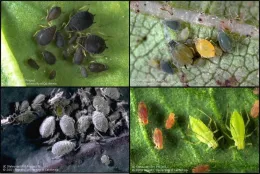
Have you noticed that different plants attract aphids of different colors and shapes? Once you’re done admiring nature, you may want to take action to protect your plants. Aphids are classified as sucking insects, which means that they suck the juices right out of plants. They take the nutrients needed for plant growth, and the plant will start to weaken and possibly die. If you monitor your garden regularly and find aphids when their population is still small, you may be able to simply knock or hose them off the plant or prune out the infected part of the plant. When aphid populations are large, nature can help you control them — beneficial insects will be attracted to eat the aphids.
You can encourage beneficial insects in your garden by including a variety of plants that flower at different times throughout the season. Avoid chemicals that kill good and bad indiscriminately. If ants are protecting the aphids in a plant, control the ants. Decide what population you will tolerate in your garden, and have patience because it can take time to establish a healthy ecosystem.
More information: Aphid management guidelines in English
Months: April May
Tags: IPM Invertebrates Pests and Diseases
Armillaria Root Rot
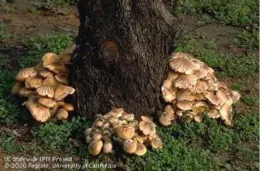
Mushrooms at the base of a tree could signal a problem with the tree. Armillaria is a fungus that can live in the soil for many years. It can rot the roots and cause leaves and branches to die and can eventually kill a plant. Another common term is Oak Root Fungus, although it affects many different species of trees and even some herbaceous plants. Often by the time the fruiting bodies (mushrooms) are visible, much damage has already been done. It feeds on both live and decaying wood. Cutting back a small section of bark can reveal white fan-shaped or black stringy fungus which aids in diagnosis. Keeping the plant healthy provides some defense. Fungi thrive in moist conditions, so do not overwater the area. Also, keep mulch and other plants away from the trunks of trees so as not to hold moisture against the crown (base). The best defense against this disease is to plant resistant varieties.
For information: Armillaria Root Rot
Months: January February December
Tags: Abiotic Disorders Disease IPM Pests and Diseases
Armored Scale Control
These parasites suck the living sap from shrubs and trees. Armored scale insects are in the crawler stage in early summer (June). Armored scale has a hard stage that is very resistant to sprays. Control them during the crawler stage when they are soft and vulnerable. Spray with a horticultural (not dormant) oil, once a month for three months. See the UC Pest Note on Scales for important information about spraying.
Months: June Any Month
Tags: IPM Invertebrates Pests and Diseases
Avocado Leaves
Avocado leaves can give you clues about the health of your tree. For example, if you find mature avocado leaves turning yellow, the “problem” might be no problem at all. That’s what avocado leaves look like when they get old. Read more on how to “read” avocado leaves in this excellent “Reading Avocado Leaves” blog by San Diego Master Gardener Greg Alder. His article has many photos you can use for comparison for issues including mites, cold damage, sunburn, under- and over-watering, and more.
Months: Any Month
Tags: Disease Pests and Diseases
Avocados, Brown Spot
The brown patch that looks like a turtle’s back is called Carapace Spot. It is corky and usually cracked into angular divisions. It is caused by rubbing or brushing of tender young fruit on leaves or stems in the wind, but the fruit is usually undamaged under the spot. Just cut out the spot. More pictures of avocado problems can be found on UC Pest Note On Causes of Avocado Fruit Damage.
Months: April
Tags: Fruits & Nuts IPM Trees & Shrubs Pests and Diseases
Bagrada Bug
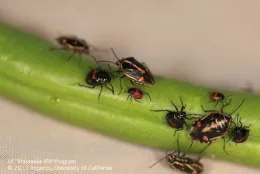
The Bagrada bug is a small (¼ inch) stink bug that is most commonly found on vegetables in the Brassica family including cabbage, cauliflower, broccoli, kale, turnip, and mustard greens. Home gardeners should carefully inspect their plants and shipping containers prior to planting. A good time to inspect is right after watering when pests hiding in the space between the potting mix and the sides of the container may be flushed out and more easily detected. Plant seedlings late this month when they are big and robust. If you find nymphs on the plants, use insecticidal soap. See UC Pest Note on Bagrada Bug for further information.
Months: October
Tags: IPM Invertebrates Pests and Diseases
Birds
Birds can cause extensive damage to tree fruit crops. Unlike squirrels, birds are more likely to peck at one piece of fruit until it’s gone. If they are doing too much damage, netting over a tree can keep them away from the fruit. If you use visual repellents (such as Mylar streamers or noisemakers) to frighten them, be sure to vary the method so that the birds don’t become immune to the effects. Read the UC Pest Note on Birds on Tree Fruits and Vines for more information.
Months: July August September
Tags: IPM Techniques Pests and Diseases
Bitter Pit (Brown Spots) on Apples
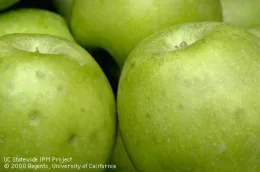
Bitter pit is a physiological disorder that affects many varieties of apples. The condition develops after fruit has been picked. It is caused by low levels of calcium in fruit tissues which leads to small brown, sunken lesions that become dark and corky. Highly susceptible cultivars include Red Delicious, Granny Smith, Golden Delicious, Jonathan and Gravenstein. The UC Bitter Pit Pest Note recommends cultural practices for control.
For even more information, the UC Postharvest Technology Center website has grower information, including using calcium sprays starting in June.
Months: August September
Tags: Abiotic Disorders Fruits & Nuts IPM Pests and Diseases
Boxwood Blight
Boxwood is an evergreen shrub typically grown as a short border hedge. It is often pruned in a straight, formal style. It has been falling out of favor as native, drought-resistant plantings are increasing in popularity. Another reason for reconsidering its use is the fairly recent arrival of a fungal disease called Boxwood Blight. It was first detected in the U.S. in Connecticut in 2011 and reported in Santa Clara County in 2017. It is spread by contact through pruning tools, gardeners’ clothing, and irrigation. This blight can show symptoms in as little as a week. Look for brown leaf spots with dark edges, white spores on the undersides of leaves, black lesions on stems, and severe dieback. Humidity and overhead watering contribute to the disease being able to take hold. Pruning infected branches, with sterilization of tools between each cut, may help. Fungicides cannot control the disease once it starts. More likely the plant will have to be removed, bagged, and thrown in the garbage.
Boxwood Blight, UC IPM
Months: August September
Tags: Disease IPM Trees & Shrubs Pests and Diseases
Brown Marmorated Stink Bug
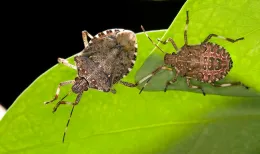
Native to Eastern Asia, this pest was introduced to the United States in the 1990s and has been established in Santa Clara County. Some features to distinguish these bugs from other stink bugs are white stripes on the antennae, a blunt head shape, and smooth shoulder margins.
They feed and reproduce on a variety of plants and are particularly damaging to fruit. You can cut cosmetic damage off fruit and still eat the rest of the fruit. To keep out stink bugs, cover vegetable plants with row covers. You can pick the bugs off plants and squish them or knock them off into soapy water. They are attracted to light and can get into homes where if vacuumed up, they can stink up your vacuum bag.
More Information: Brown Marmorated Stick Bug Pest Note
Months: March April May June July August September
Tags: Fruits & Nuts IPM Invertebrates Vertebrates Pests and Diseases
Brown Rot on Apricot and Peaches
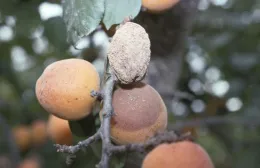
If your apricots or peaches had brown flesh last year, especially in the part surrounding the pit, they were probably infected with brown rot. It’s a common fungal disease of stone fruit. You can spray with a copper spray at pink bud stage. A more important means of control is to remove affected fruit as soon as you notice it. The UC Pest Note on Brown Rot has more information.
Months: March
Tags: Disease Fruits & Nuts IPM Pests and Diseases
Bug Patrol
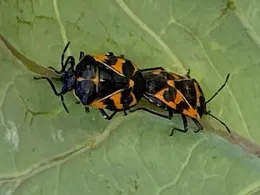
It’s never helpful to have critters competing with you for your food. Damage can be done by squirrels, raccoons, rats, birds, and caterpillars, yet it is the tiniest creatures that can be the hardest to detect. That’s why it’s helpful to do a regular inspection, as often as once or twice a day if possible. Knowing what it is will help you figure out what to do to maximize the productivity of your garden. Some pests are out during the day and others do their damage at night, so you may want to take a flashlight out at non-peak gardening hours. Holding a piece of white paper under a plant and shaking the plant can make insects fall off for identification. The most common place to find pests is on the undersides of leaves so make sure to closely inspect those parts. A magnifying glass of some sort is a useful tool. You can also take a picture with your cell phone and then zoom in for a closer view. It’s important to be able to recognize the eggs, the larval and nymph stages, and the adult form, and to be able to differentiate between beneficial insects and harmful pests.
Don’t indiscriminately squish everything that moves! Once you have done your detective work, you can go to the University of California IPM website for identification and management tips, or contact the Master Gardener Help Desk for guidance.
More Information: Beneficial Predators — These are the ones you want!
Months: July August September
Tags: Beneficial Insects IPM Invertebrates Vertebrates Pests and Diseases
Cabbage Aphids
The grey-green cabbage aphid is often found on cool season vegetables. They prefer to feed on the youngest leaves and flowering parts and are often seen on cabbages, broccoli, and Brussels sprouts.
Hose them off plants or prune out infestations. Grow flowers in your vegetable garden to attract beneficial insects, which are their natural enemies.
See UC Pest Note on Aphids to identify and manage this insect.
Months: October
Tags: IPM Invertebrates Vegetables Pests and Diseases
Camellia Petal Blight
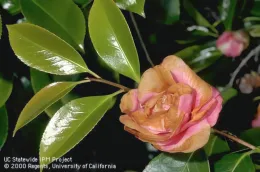
Camellias are beautiful except when the flowers turn a blotchy brown. This petal blight is caused by a fungus that continues to live in the soil once a plant is infected. To reduce outbreaks, pick off all infected flowers and dispose of them in green waste. Home composting is not hot enough to destroy the pathogen. After blooming, pick up any petal debris. Then spread fresh mulch around and beyond the bush (but keep the mulch a few inches away from the trunk).
More information: Camellias Petal Blight
Months: March
Tags: Best Practices Disease IPM Ornamental Plants Pests and Diseases
Carpenter Bees
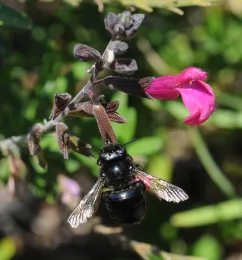
Female carpenter bees are large, black and shiny. Male carpenter bees are similar in appearance to bumble bees. Both are about an inch long. Males do not sting and females sting only rarely. Carpenter bees are considered beneficial insects because they pollinate many plants and trees. For their nests, they tunnel into unpainted softwoods such as pine, fir and redwood in house or garden structures. Adults over winter in the nests, emerge in the spring, mate, deposit food in the tunnels and lay eggs. The tunnels are sealed with wood pulp and the new adults chew their way out. After the bees emerge, fill the holes with steel wool and wood filler. Apply paint to the surface to prevent re-entry. Further information is available in the UC Pest Note on Carpenter Bees.
Months: May June
Tags: Beneficial Insects Pests and Diseases
Citrus Bud Mite - Leave It Alone
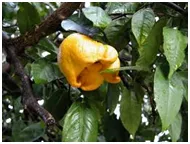
Have you ever seen weirdly shaped lemons or oranges that appear to have “fingers”? This condition is caused by the Citrus Bud Mite.
It attacks newly forming flowers and fruits. The mite is only visible with a magnifying glass and has a elongated yellow body with four legs that appear to come out of its head. The mites feed inside the buds, killing them or causing a rosette-like growth of the subsequent foliage and distortion of flowers and fruit. The problem is usually limited to just a few fruit on the tree.
Previously recommended oil sprays have not been proved effective. This is one of those pests that is best left alone. The oddly-shaped fruit is edible.
For more information see UC Pest Note on Citrus Bud Mite.
Months: November
Tags: Fruits & Nuts IPM Invertebrates Vertebrates Pests and Diseases
Citrus Leaf Drop
Leaf yellowing or drop from citrus trees is normal in cooler months. Problems that can cause excessive leaf drop are lack of water and a heavy infestation of citrus red mites. The tree’s leaves will have brown spots if affected by the mites. Bud and small fruit drop is also normal. For further information see Diseases and Disorders of Citrus Leaves and Twigs
Months: March April
Tags: Abiotic Disorders Fruits & Nuts IPM Invertebrates Vertebrates Pests and Diseases
Citrus Leafminer
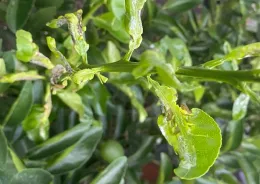
What causes young, healthy citrus leaves to become gnarled and disfigured and what can be done about it? This damage is due to the citrus leafminer moth that lays eggs on new citrus leaves. Its larvae burrow into the leaf and leave tunnels as they feed, visible as meandering serpentine mines. Our advice: don’t worry about it. Leafminers can slow the growth of young trees but even heavily damaged trees are unlikely to die. Leafminers only attack young leaves — the tough leaves of mature plants resist infestation and fruit is not affected. Damaged leaves still produce food for the tree, so don’t cut them off. If you do, it will stimulate the tree to produce more new leaves — which will attract more leafminers!
More information: Citrus Leafminer
Months: January February March April May September October November December
Tags: Fruits & Nuts Invertebrates Pests and Diseases
Citrus Pruning and Care
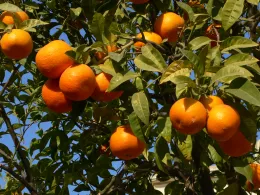
You can do light pruning anytime, although it’s best to do it when there’s no chance of frost, to protect tender new growth. Once the threat of frost is past (typically March 15), it’s a good time to cut back branches that touch the ground, fences, or other structures. Thin the tree to let more air into the middle. Trim out crossing branches and anything that looks dead.
Pruning is not needed for fruit productivity, yet it may be desired for size management. Pruning will also help control scale and aphid infestations. If you see ants in the tree, use a sticky goo (such as Tanglefoot) on the trunk to keep them out of the tree. Be sure to apply the goo on top of the tape rather than directly on the trunk. The ants “protect” the scale and aphids. If you see scale (bumps on bark), thoroughly spray with horticultural oil to suffocate them.
Yellowing of leaves is normal in late winter and early spring as the iron that keeps the leaves green is chemically unavailable because the soil is too cold. When the soil warms up (over 60° F), check for yellowing. You may not need to apply a nitrogen fertilizer if the new leaves are green.
Refer to the UC Integrated Pest Management website for more Citrus Care information.
Months: March
Tags: Best Practices Disease Fruits & Nuts Invertebrates Vertebrates Pests and Diseases
Citrus Sooty Leaves
Sooty mold on citrus may be a byproduct of sucking insects such as aphid, mealy bug, soft scale or whitefly. Ants will protect these pests against predators in exchange for the honeydew that the pests produce. The sooty mold grows on the honeydew. Try washing off the sucking insects with a strong water stream. The next step is controlling the ants. Ants may be managed by applying a sticky compound around the trunk and trimming limbs touching buildings or other access points. Baits at the base of the tree also help. For more information about specific controls, see the UC Pest Note on Sooty Mold.
Months: April
Tags: Disease Fruits & Nuts IPM Invertebrates Techniques Pests and Diseases
Clean Up Fallen Fruit
Pick up fallen fruit daily to prevent attracting critters or diseases. If your fruit is being eaten at night, then rats are the likely culprit; if it’s eaten during the day, it may be squirrels. Holes, rather than bites, are made by birds. In addition to harvesting regularly, ripening fruit can be protected with a netting fine enough to exclude birds and small animals
Months: July August
Tags: Fruits & Nuts IPM Vertebrates To-Dos
Codling Moth
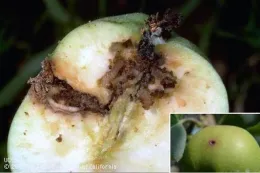
If you grow apple or pear trees, you may have noticed small holes in the maturing fruit and then discovered a worm inside. “Worms” in your apples are actually the larval form of the codling moth. Codling moth larvae can cause a great deal of damage to apples, pears, plums, and walnuts by penetrating the fruit and boring into the core.
Trees should be monitored every week for signs of infestation. Infested fruit should be removed and discarded to break the codling moth life cycle. Sanitation is an important non-chemical step in controlling this pest. Make sure to pick up fallen fruit promptly, and pick apples with holes that are still on the tree. This will keep future populations down.
Pheromone traps can be hung in isolated trees. But if you have just one apple tree, don’t bother. You will just attract codling moths to your tree.
Fruit can be bagged for protection, but this method is very labor-intensive. Heavy infestations may require the use of pesticides, but proper timing of sprays is critical. Read the UC Codling Moth Pest Note for more information.
Months: May June July August
Tags: Best Practices Fruits & Nuts IPM Invertebrates Pests and Diseases
Control Insect Pests with Horticultural Oil
Spray apple, pear, peach, nectarine, and apricot trees with horticultural oil during the dormant period to control scale, aphids, and mites. For more information on using horticultural oil to control pests consult:
- UC Pest Note on Scales
- UC Pest Note on Aphids
- UC Pest Note on Spider Mites
More information: Winter Pest Management in Deciduous Fruit Trees
Months: January
Tags: Fruits & Nuts IPM Invertebrates Pests and Diseases
Controlling Bermudagrass
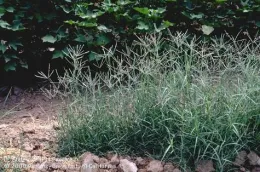
Bermudagrass is a warm season grass, going dormant in winter, so that’s not the best time of year to fight it. Spraying it in winter won’t work because it can’t take up the poison since it is not actively growing. But you can install sheet mulching to smother spring/summer growth, or dig out roots if the soil is not too wet. For more information, read the UC Pest Note on Bermudagrass.
Months: January
Tags: IPM Lawns Techniques Weeds To-Dos
Cottony Cushion Scale
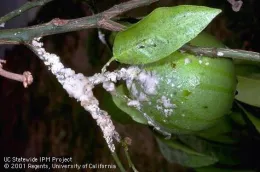
Scale insects populate the stems or branches of plants and suck out the nutrients. Some are soft and some are armored during part of the life cycle. Cottony cushion scale is a soft variety that is often seen on apple trees. The crawlers are reddish and the females develop elongated white egg sacs on their backs, but it is most likely the molting skins that look like cotton that will alert you to their presence. Small infestations can sometimes be wiped off with gloved fingers. Natural predators may also move in to take care of the problem. There are beetles and parasitic flies that can provide good control. Keeping ants out of the tree will also help because ants will protect the pests in order to be able to eat their sugary exudate.
More information: Cottony Cushion Scale Pest Note
Months: June July August
Tags: Fruits & Nuts IPM Invertebrates Trees & Shrubs Pests and Diseases
Decay in Trees
Shelf-like fungus or mushrooms growing on trees indicates advanced internal decay. Once these external fruiting structures appear, the infection is likely widespread inside the tree. To reduce the chance of infection, protect trees from injury, provide adequate water and fertilization, and prune trees correctly when young to avoid significant pruning cuts when they’re older. Regularly inspect trees and consult an arborist if you spot fungal growths or other signs of decay. The arborist can assess the extent of rot and the structural integrity and make recommendations. More information: Wood Decay Fungi in Landscape Trees
Months: Any Month
Tags: Fruits & Nuts Ornamental Plants Trees & Shrubs Pests and Diseases
Deer
Although there’s no such thing as a deer-proof plant, some can be called deer-resistant. Plants with strong smells, woolly or hairy leaves, or prickly or thorny parts are less appetizing to deer. Other strategies include deer repellents, enclosing plants in wire cages, netting, or tall fences. Read more in the UC Pest Note on Deer or use this search for Deer Resistant Plants.
Months: August
Tags: IPM Vertebrates Pests and Diseases
Don’t Move Firewood

Tree-killing insects and diseases can lurk in or on firewood. These insects and diseases can’t move far on their own, but when people move firewood, these pests can jump hundreds of miles. Beetles that have done significant damage in Southern California are the Goldspotted Oak Borer and Invasive Shot Hole Borers. Let’s keep them out of Santa Clara County.
More Information: Don’t Move Firewood campaign
Months: January December
Tags: Best Practices Disease IPM Invertebrates Pests and Diseases
Dormant Oil Spraying
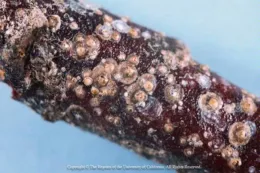
Deciduous fruit trees lose their leaves seasonally, usually in the autumn. They enter a period of dormancy when they are not actively growing and there is little activity within the plant. This is the time to apply dormant oil sprays to smother soft-bodied insects such as scale, aphids, and mites. First, do any needed pruning so that you will not be spraying branches that will soon be removed. Then inspect for pests that are overwintering on the trees, or remember pest and disease problems you noticed during the growing season. Although dormant oils may count as organic, it is still best to use them only if pest problems have been observed.
Mix the horticultural oil in a sprayer and apply it according to directions on the packaging. Never use more than what is prescribed. Make sure to complete the spraying before the trees start to bud and blossom so as not to damage developing flowers and fruit.
More Information: Calendar of Backyard Gardening Operations for Selected Fruit and Nut Trees and Winter Pest Management
Months: January February March
Tags: Best Practices Fruits & Nuts IPM Invertebrates Pests and Diseases
Earwigs
Earwigs are third only to snails and slugs in causing plant damage. While they are beneficial because they eat insects such as aphids, they also feed on soft plants. Earwigs can do quite a lot of damage if there is a high population. They feed at night and hide in moist, tight-fitting places during the day. Trap them by putting out moistened, tightly rolled newspaper or corrugated cardboard in the evening. In the morning dispose of the paper and the trapped insects. Other control methods are described in the UC Pest Note on Earwigs.
Months: May June
Tags: Beneficial Insects IPM Invertebrates Pests and Diseases
Eugenia Psyllid
This psyllid has been a real problem in California. New leaves on the infected Eugenia look very much like peach leaf curl. The leaves also may become discolored. Thanks to the diligent work of the entomology researchers in biological insect control at UC Berkeley, a parasitic wasp called Tamarixia was released in Santa Clara County in 1993. The wasp is known to go as far as 45 miles and is found throughout the county. It is essential that no insecticide be used on Eugenia species. The Tamarixia wasp cannot do its job if it’s poisoned. For more information see the UC Pest Note on Psyllids.
Months: May June
Tags: Disease Fruits & Nuts IPM Pests and Diseases
Fire Blight
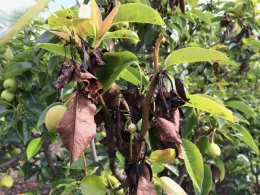
This disease is so named because brown or black leaves, fruit, and branches look as if they have been burned. It is most common on apple and pear trees. Late spring and early summer are the time fire blight shows itself.
It is spread by insects, rain, or pruning. The bacteria enter through the blossoms and travel down the tree. If left unchecked, fire blight can enter the trunk and kill the entire tree. Prune infected branches back to healthy wood, at least eight inches below visible damage. If the inside of the branch is discolored, you need to cut back still further. Clean pruning tools between cuts so as not to spread the infection. A less effective way to control fire blight is to spray the open blossoms with a copper spray. Planting varieties that are less prone to fire blight is helpful. Always promptly clean up fallen fruit and leaves.
For more information, see the UC Pest Note on Fire Blight.
Months: April May June
Tags: Disease IPM Techniques Trees & Shrubs Pests and Diseases
Fruit Damage
If your fruits are ready to pick and you don’t get to them first, there are critters that will let you know when they are ripe. For example, for citrus, snails leave little holes in the outside peel, rats hollow out the fruit and squirrels carry them off, often leaving partly eaten fruit on a nearby fence.
To determine what’s eating your fruit - start by narrowing down the list of possible pests in your area. Check the damage to determine whether it is likely caused by insects, birds, or rodents. Determine what time of day the damage happens. Squirrels are active during the daytime, and rats are mainly active at night. Look for other signs, such as placement of the damaged fruits, tracks, and possibly droppings, and compare that to the habits of the pest you suspect. When you are sure what the pest is, you can take appropriate action to protect your fruits.
Resources:
Months: February July Any Month
Tags: Best Practices Fruits & Nuts IPM Pests and Diseases
Fungus Gnats
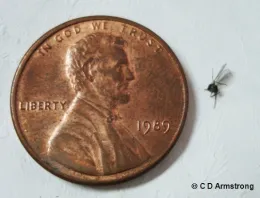
Have you ever found yourself waving away a poorly-flying, small insect near seedlings or houseplants? Or noticed a swarm of tiny flies around a composting bin? Adult fungus gnats are nuisance pests, but in high numbers, the larvae can damage roots and stunt plant growth. They thrive in moist, organically-rich potting soil and can be found indoors at any time of year. The most effective control targets the larvae by eliminating excess moisture, especially by letting the surface of container soil dry between watering. Other control methods are discussed in the linked UC Pest Note.
For more information: Fungus gnats Management Guide
Months: May June July Any Month
Tags: Invertebrates Vertebrates Pests and Diseases
Fusarium Wilt
This is the most prevalent and damaging tomato disease. It also starts with the yellowing of lower leaves, but the yellowing may be only on one side (stopping at midrib) of the leaf or just one branch or one side of the plant. The older leaves will droop and curve downward. The yellow leaves wilt and die, gradually killing the whole plant. Sometimes a single shoot is killed before the rest of the plant shows any damage. More information at UC Pest Note on Fusarium Wilt.
Months: June July
Tags: Disease IPM Vegetables Pests and Diseases
Garden Sanitation
Keeping the garden clean can help keep it healthy. Remove spent blossoms, fruit, and other plant parts as your plants finish producing. Dead and decaying plant parts can attract pests and give them safe places to breed. Insect pests damage plants directly by eating material or sucking out juices and nutrients, and they also spread diseases between plants as they move around. Weeds compete with desirable plants for water and nutrients and even sunlight, so remove them promptly. Older leaves of some plants, like squash vines, may naturally turn yellow and die. Removing them early allows the plants’ energy to go into the actively growing parts. Pick up fallen fruit that can attract rodents and can also return disease pathogens to the soil and plant. It’s particularly important to remove dried-up fruit “mummies” so that the fungal spores don’t spread. Prune dying tree branches before they can fall and do damage. Some flowering plants will produce more flowers if you remove spent blooms, a process called deadheading. You can leave healthy fallen leaves in place to form a mulch and decompose naturally, or you can rake them up and add them to the compost pile with other disease-free plant material. Do not compost diseased material.
More information: What Does Plant Disease Sanitation Really Mean?
Months: July August September Any Month
Tags: Best Practices Disease Fruits & Nuts IPM Invertebrates Trees & Shrubs To-Dos
Giant Whiteflies
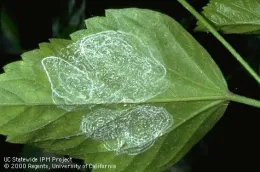
Giant whiteflies were only discovered in California in 1992, but the infestation is now widespread in the San Francisco Bay Area. Plants most affected are ornamentals, such as begonia, hibiscus, bird of paradise, mulberry, and others. Adults produce spirals of wax primarily on the underside of leaves and lay their eggs in waxy bands which grow heavier as the population increases. Wax filaments grow to lengths of up to 2 inches, but in shielded areas, they can reach ten inches long! Even though affected plants weaken, they rarely die. Manage giant whiteflies by removing infected leaves, washing the undersides of leaves with strong streams of water, and encouraging beneficial insects to control populations.
More Information: Giant Whiteflies in Your Garden
Months: June July August September
Tags: IPM Invertebrates Pests and Diseases
Gophers
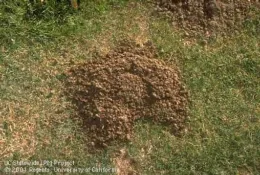
Have you ever watched a plant wiggle and then disappear underground right before your very eyes? That’s the work of a gopher. You don’t often see them because they spend most of their time in underground tunnels, but you see the damage they do by chewing on plant roots or irrigation lines. One way to distinguish them from other soil-dwelling vertebrate pests is by the crescent-shaped mounds of dirt they make when they dive back down. Fresh mounds of moist soil are an indication of recent activity.
They do not hibernate, so they are busy year-round. They can be eliminated through trapping and dispatching. Gophinator, Macabee, and Cinch traps specifically designed for gophers are the most commonly used. You can plant trees and shrubs in gopher baskets in the ground to protect their roots. You can also line the bottom of raised beds with hardware cloth to keep the gophers from burrowing up into the beds.
More information: Gopher Pest Note
Months: June July August Any Month
Tags: IPM Techniques Vertebrates Pests and Diseases
Gray Mold (Botrytis)
Botrytis is gray or brownish fuzzy mold that can attack a wide variety of plants. It likes flower petals, ripening fruits and vegetables, as well as leaves and stems. The spores are spread through the air. It is most severe when there’s high humidity and may start forming on decaying matter. According to the UC Pest Note on Botrytis Blight, it is important to remove debris and prunings from the ground. You may even have to pick up flowers daily. Avoid overhead watering.
UC also has information about Gray Mold on Strawberries.
Months: February
Tags: Disease Fruits & Nuts IPM Ornamental Plants Vegetables Pests and Diseases
Gummosis in Stone Fruit
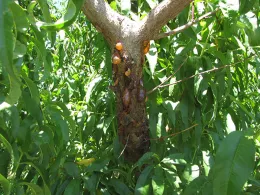
Gummosis is a general term that refers to the oozing of sap. The most common cause in stone fruit is a fungal disease called Cytospora canker. The fungus infects the tree through wounds and the sap is usually amber-colored and free of sawdust. Tree borers can also cause gummosis. In this case, the sap may contain sawdust or other debris. Mechanical injuries and sun scald can also cause sap to leak and open the tree to infection. Advice to prevent and deal with it includes following good pruning practices, protecting tree trunks and limbs from sun scald, and pruning out diseased wood past the point of infection. More information from Utah State University in their summary of cytospora canker.
Months: May
Tags: Fruits & Nuts IPM Pests and Diseases
Healthy Tomatoes
Tomatoes are one of the most popular vegetables in home gardens, largely because of the taste difference between a homegrown tomato and a store-bought tomato. Here are a few things to watch out for to keep the plants healthy. Regular watering helps nutrients flow throughout the plant and can prevent blossom end rot. Clean soil and sanitation reduce the common Verticillium wilt in which lower and older leaves turn yellow and brown. And russet mite, where lower leaves and stems appear a greasy bronze, can be controlled with sulfur dust.
Managing Pests and Diseases of Tomatoes
Months: July August
Tags: Best Practices Disease IPM Techniques Vegetables Pests and Diseases
Identifying Beneficial Insects
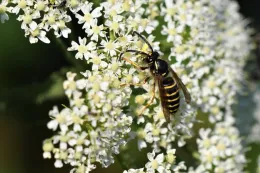
A whole army of insects is in your garden ready to help your plants thrive. Pollinators, like bees and butterflies, help plants produce fruit. Lady beetles and lacewings are predators that hunt, kill, and eat insects. And parasites, like certain wasps, develop within a pest’s body and then kill them. Such violence! The trick is knowing which insects are friends or foes. To identify the insects on your own, take pictures of them and any eggs or larvae (check the undersides of leaves). Then zoom in for a closer view and use this site to help you identify beneficial insects.
More information: Beneficial Insects
Months: March April May June July August September
Tags: Beneficial Insects Pests and Diseases
Leafcutter Bees - a Beneficial Insect
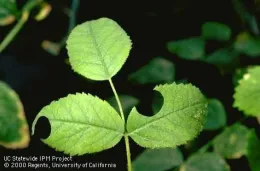
Do your rose bush leaves have smooth round holes in them? The likely culprit is the female leafcutter bee. The bee cuts smooth round or oval leaf fragments and uses them to line each underground brood cell that she fills with nectar and pollen. When the cell is ready, a single egg is sealed inside. The larva pupates (matures) in the chamber and emerges in the spring.
Rose leaves seem to be their favorite. The hole in the leaf is much larger than an ordinary caterpillar would make and is very smooth as if a miniature cookie cutter was used. The bee can chew off a leaf fragment in less then a minute with its sharp jaws.
Like all bees, leafcutter bees are important pollinators and should not be killed.
Months: September
Tags: Beneficial Insects Pests and Diseases
Leafminers

Watch for damage from leafminers on many types of plants, including leaves of vegetables and commonly on citrus. Eggs can either be inserted into leaves or laid on the surface of leaves. In either case, the larvae feed between leaf surfaces, creating a “mine”. If eggs are on the surface of the leaf, they can be rubbed off before hatching.
Plant resistant species or varieties. Small seedlings can be protected by protective cloth. On plants such as cole crops, lettuce, and spinach, clip off and remove older infested leaves. Place leaves in plastic bag, and put bag in trash. Leafminers are often kept under good control by natural parasites. Insecticides are not very effective for leafminer control. See UC Pest Note on Leafminers for additional information.
Months: October
Tags: Disease IPM Invertebrates Vegetables Pests and Diseases
Limes
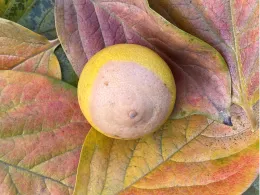
Limes are easy to grow in our area and make a pretty addition to the landscape. They don’t take up as much space as some other citrus and can grow well in our native soil with plenty of sun. They need some fertilizing and occasional protection from the cold. Bearss Lime is a popular variety that has fruit ripening now. Other favorites include Mexican Lime, Australian Finger Lime, and a Limequat hybrid. Most limes are yellow when fully ripe and have a higher juice content at this stage; most limes in stores are green because they have a longer post-harvest life or shelf life. A tan, leathery sunken area at the end of the fruit is called blossom end rot in citrus. It can come from insufficient water, preventing calcium from getting all the way to the ends of the fruit (similar to blossom end rot in tomatoes.) You can freeze the fruits whole for year-round margaritas or whatever it is you do with your limes. Freezing weakens the cell walls, which makes it even easier to juice the limes after thawing.
More Information: Growing Citrus Fruits
Months: January November December
Tags: Abiotic Disorders Fruits & Nuts Techniques Pests and Diseases
Manage Pests with “Integrated Pest Management”

You see insects in your garden and your first reaction may be to reach for neem oil or other insecticides to kill off the little invaders. But wait! Chemical intervention may not work, might not be necessary, and may even kill off beneficial creatures that your garden needs. Instead, determine first whether the pest really is a pest. This UC plant diagnostic tool can help figure that out and provide mitigation options. Identification is a key element of Integrated Pest Management (or IPM), a process Master Gardeners suggest you use to solve pest problems while minimizing risk to people and the environment.
More information: What is IPM?
Months: Any Month
Tags: Disease Pests and Diseases
Mistletoe
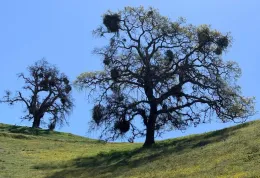
The dense mass of leafy balls high up in trees is broadleaf mistletoe. There are multiple species in California, both native and introduced. Mistletoe is a hemiparasite, meaning it can photosynthesize on its own, but draws nutrients and water from its host. Birds feast on the translucent white berries, spreading the sticky seeds to new locations. When a seed sprouts, it sends out a modified root that penetrates the tree’s bark. A healthy tree can support a moderate infestation, but if the infestation is heavy or if a tree is stressed by other factors such as disease or drought, it can kill the tree.
More information: Mistletoe Quick Tips
Months: December
Tags: IPM Techniques Weeds Pests and Diseases
Moles
You and the moles will probably never see each other: they won’t see you due to very poor vision and you won’t see them because they live underground. But you will see the damage they do. Unlike gophers which eat plant roots, moles eat insects and worms. Yet they can do collateral damage to plant roots as they tunnel through in search of their preferred food. Plants can also suffer if the tunnels redirect water away from the roots when you try to irrigate. Moles create what look like mountain ridges as they tunnel through near the surface, and they leave behind round mounds of soil when they dive deep. The most effective way to manage them is to use traps specifically designed for moles.
Months: August Any Month
Tags: IPM Vertebrates Pests and Diseases
Mosaic Virus
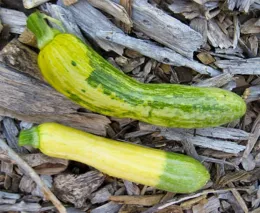
Mosaic virus on squash and cucumber plants is a disease spread by aphids and cucumber beetles. The leaves become rough and mottled, the plant becomes stunted and the fruit can be whitish. Pull the plant and put it in the trash. Do not compost. For more information see the UC Pest Note on Squash Mosaic Virus.
Months: September
Tags: Disease IPM Vegetables Pests and Diseases
Neem Oil
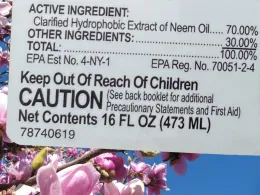
Neem products are derived from the neem tree, Azadirachta indica. But most neem products on the market lack the active insecticidal ingredient azadirachtin. Neem oil, called “clarified hydrophobic extract of neem”, is still effective as horticultural oil for smothering juvenile insects and may be effective in suppressing powdery mildew. But it won’t be effective in cases where azadirachtin is required. Like any horticultural oil, neem oil can potentially damage plants by burning their foliage and should be sprayed at dawn or dusk to protect bees and other pollinators. When using any pesticide, it’s important to reach an accurate diagnosis first and understand that no product helps solve every plant problem. Neem is not a cure-all.
More information: More about Neem
Months: Any Month
Tags: Best Practices Disease IPM Invertebrates Ornamental Plants Vegetables Pests and Diseases
Nematode Control with Marigolds
Some varieties of marigold can suppress certain damaging nematodes while adding color to the garden. The Tagetes species suppress root knot and lesion nematodes. French marigolds, including Nemagold, Petite Blanc, Queen Sophia, and Tangerine, are most effective. Avoid signet marigolds, T. signata or tenuifolia, because nematodes will feed and reproduce on these. Marigolds don’t work well against the northern root knot nematode, Meloidogyne hapla, a species common in areas with cool winters. The effect of marigolds is greatest when grown as a solid planting for an entire season. When grown along with annual vegetables or beneath trees or vines (intercropping), nematode control usually isn’t very effective. To prevent marigold seed from getting in the soil, cut or mow the plants before the flowers open. As with other cultural control methods, nematode populations rapidly will increase as soon as susceptible crops are grown again. Learn more at the UC Pest Note on Nematodes.
Months: June
Tags: IPM Invertebrates Vertebrates What to Plant
Oak Root Fungus
This fungal infection, Armillaria Mellea, also known as mushroom root rot, honey fungus and shoestring fungus can cause foliage to become sparse and eventually kill the tree. The white or cream-colored fungus will grow between bark and wood of roots and up into the lower part of the tree trunk. It smells like your typical grocery store mushroom.
In spring or fall there may be mushrooms growing around the base of the infected tree. If the disease has not progressed too far, you can cut out infected tissue and expose the base of the tree and roots to air. Reduce watering especially close to trunk. No chemical treatment is known to be effective.
Plants Resistant or Susceptible to Armillaria mellea, The Oak Root Fungus by Robert D. Raabe contains more detailed information. The UC Master Gardener video Revealing Root Rot can help with detection of two common root pathogens and provide guidance on how to reduce the spread.
Months: December
Tags: Disease IPM Trees & Shrubs Pests and Diseases
Oakworm
This is a pest of California Live Oaks. The adult oakworm moth is tan-to-gray colored with a wing span of about an inch. It lays white eggs twice a year that turn reddish or brown before hatching. The first hatch is in November and overwinters on the leaves, growing and eating more as the weather warms. At full size, the larva is about an inch long with a yellowish green body, dark stripes down the side and large brown head. Outbreaks occur every eight to ten years in the Bay Area. In late March or April, look for little green pellets (droppings) falling from oak trees. A second generation of eggs hatches in mid to late summer. Trees may suffer no permanent damage beyond being unsightly. If you cannot tolerate the worms and their mess, further treatment methods are outlined in the UC Pest Note on California Oakworm.
Months: April
Tags: IPM Invertebrates Trees & Shrubs Pests and Diseases
Paint Fruit Trees to Prevent Sunburn
After deciduous fruit trees have dropped their leaves, paint tree trunks with white latex paint diluted 1:1 with water to prevent sunburn. Preventing sunburn helps trees resist invasion by shot hole borers, which are tiny beetles that boreholes and lay eggs in the cambium layer of the tree. When the eggs hatch, young larvae feed and excavate tunnel galleries in the wood. For more information about identification and control see UC Pest Note on Shothole Borer.
Months: November December
Tags: Best Practices Fruits & Nuts IPM Invertebrates Trees & Shrubs To-Dos
Peach Leaf Curl Preventive Care
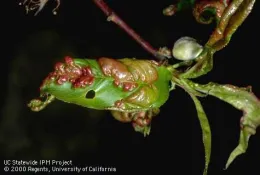
Have your peach or nectarine leaves ever looked like this? These puckered leaves are a classic springtime symptom of peach leaf curl. Severe cases can substantially reduce fruit production. Prevent this disease by applying a copper-based fungicide shortly after the leaves drop. Use a second application in late winter if there’s a lot of winter rain. Once the blossoms open and leaves appear, it’s too late to do anything. Spraying during the growing season won’t help. If you haven’t seen this on your tree, you may have a resistant variety. If so, there’s no need to spray.
More information: Pear Leaf Curl
Months: January February November December
Tags: Disease Fruits & Nuts IPM Pests and Diseases To-Dos
Pepper Weevil
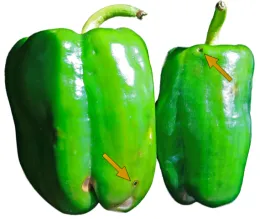
The pepper weevil is a small insect (about ¼ inch long) but is a worldwide problem for pepper growers. It has been an increasing problem in Santa Clara County. Female weevils chew holes on buds or at the base of young fruit and then lay their eggs inside. The larvae develop inside the fruit causing damage and leaving excrement.Then they chew their way out making the exit holes seen in the photo. Pepper weevils sometimes also cause premature fruit drop. They affect all kinds of peppers and chiles, but a recent local study showed the most problems with bell peppers. To reduce the population, clean up and discard any dropped fruit and peppers with holes near the stem.
More information: Pepper Weevil
Months: July August September
Tags: Invertebrates Vegetables Pests and Diseases
Peppertree Psyllids
This pest can cause damage to California pepper trees. The damage is done when the insect is in its immature stage. They make doughnut-like pits on leaves that wrinkle or twist the leaves as well. Parasitic wasps can provide satisfactory control. See the UC Pest Note on Psyllids for more information.
Months: December
Tags: Disease IPM Invertebrates Pests and Diseases
Pest Alert - Spotted Lanternfly
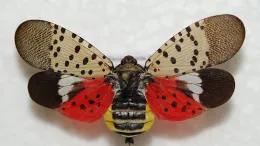
The California Department of Food and Agriculture (CDFA) is on the lookout for a new invasive species called the Spotted Lanternfly. It is native to China and was first detected in the U.S. in Pennsylvania. It can travel on packages and vehicles as well as plants and is a threat to our agricultural industry. Its preferred host is the Ailanthus altissima tree, or Tree-of-heaven, which is itself an invasive pest. It can also attack other landscape trees, fruit trees, grapevines, and roses. The insects suck the sap out of the plants and excrete a sticky honeydew which can, in turn, attract other pests and also promote the growth of sooty mold. The plants can weaken and die. While the spotted lanternfly hasn’t been found in California yet, early detection by the public can help keep it from spreading. If you spot this pest, please report it to the CDFA at 1-800-491-1899 or cdfa.ca.gov/plant/reportapest.
More information: Spotted Lanternfly
Months: Any Month
Tags: Invertebrates Pests and Diseases
Plum Bud Gall Mite
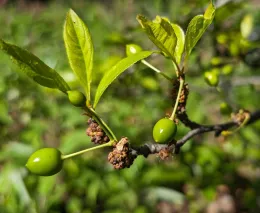
Plum bud gall mites are tiny and you won’t be able to see them without magnification. Their feeding causes the galls to form on the tree. These galls are made up of different chambers and these chambers can be filled with a large population of mites. The mites are primarily dispersed by wind but can be spread by insects, birds, and infected budwood. Heavy infestation can weaken trees and in some cases cause the death of the tree. If you suspect that your tree is affected by these mites, you should avoid moving budwood off your property to keep from spreading the pest. Because they are a new pest, options for managing them are still being developed. See Plum Bud Gall Mite for further information.
Months: February
Tags: Fruits & Nuts IPM Invertebrates Pests and Diseases
Poison Oak
Poison oak is a California native plant that provides shelter and food for many native birds and other creatures. The downside is that at least 75% of us develop allergic contact dermatitis to the plant. Unwanted poison oak can be pulled or dug up by allergy-resistant friends, remove plants in early spring or late fall when the soil is moist and it is easier to dislodge rootstocks.
A complete list of management options, including herbicide control, is contained in the UC Pest Note on Poison Oak. Under no circumstances should poison oak be burned.
Months: February March April November
Tags: Disease IPM Trees & Shrubs To-Dos
Powdery Mildew
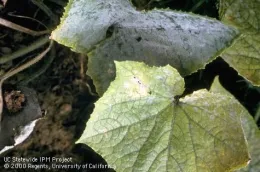
Have you ever seen a squash or melon without white powder on the leaves in the fall? This fungal disease is called powdery mildew. It affects several vegetable, fruit, and ornamental plants; yet it seems almost inevitable on members of the Cucurbitaceae family which includes cucumbers, gourds, melons, squashes, and pumpkins.
Powdery mildew likes warm days and cool nights. Unlike most other fungi, it does not need moisture to thrive. Early symptoms include yellow chlorotic spots on the leaves. The presence of the fungus becomes obvious as it starts to produce spores that look like white powder on leaves. Eventually, the leaves will turn brown and dry.
The best defense is to plant varieties that are resistant to powdery mildew. Also helpful is planting in full sun with good air circulation through the plants. Washing off the leaves, preferably in the morning, can buy some time. Powdery mildew generally affects the older leaves first, and you can remove these when they are too covered to be able to photosynthesize. Fungicides can help but you want to be careful about using them around something you are going to eat. At some point, the plant may decline so much that it needs to be removed.
More Information: Powdery Mildew on Vegetables
Months: August September October
Tags: Disease IPM Pests and Diseases
Protecting Birds and Crops
This is nesting season for many birds, so be sure to check for active nests before pruning trees. Birds are good for natural pest control, as they eat many insects, and they improve your garden’s biodiversity. You can also encourage birds in your yard by providing food and water for them. Just be sure the water stays fresh and clean.
To protect fruit and nut trees from marauding birds, PVC structures covered with netting can save your crop. If netting is placed directly on the tree, birds will still be able to reach much of the fruit. There’s more information in the UC Pest Note on Birds on Tree Fruits and Vines.
Months: April
Tags: Fruits & Nuts IPM Vertebrates To-Dos
Protecting California
Our Agricultural Commissioner, County Biologists, UC Master Gardeners, Cal Fire, and other interested parties are always on the lookout for new pests and diseases that can threaten our agricultural economy, our gardens, and our safety. As observant gardeners and residents we can also do several things to help. Do not transport plant material from other areas unless it has been inspected, approved, or otherwise deemed safe. This includes firewood, unpackaged seeds, fruits and vegetables, and green waste. Nursery stock is inspected and is considered generally safe. Obey any quarantines in effect. Report any suspicious pests to the Master Gardener Help Desk. Do not transport a sample to the office unless instructed to do so. Master Gardeners will help identify the pest and connect you with any appropriate agencies.
Months: Any Month
Tags: Best Practices IPM Pests and Diseases
Protecting Fruit
If you don’t eat your fruit the minute before it’s ripe, birds or squirrels will. Once you see signs of damage, either pick the fruit, or find a way to protect it. For example using netting or paper bags. Pick up any fallen fruit as so not to attract rats or other less visible pathogens.
Months: July
Tags: Best Practices Fruits & Nuts IPM Vertebrates To-Dos
Rat Management
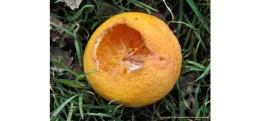
Have you found a hollowed-out orange or other sour fruit like Meyer lemons with no skins, tomatoes with bite marks, fruit with holes gnawed in them, or grape skins or cherry tomato skins scattered around? It is the work of a roof rat.
Rats show up when your citrus, tomato, or fruit first starts to ripen. Rats are agile climbers and usually live and nest in shrubs, trees, and dense ground cover like ivy. One management strategy is to prevent access to the tree by cutting branches away from fences or other trees, leaving a gap of at least 2 to 3 feet, good sanitation is required. Garbage and garden debris should be eliminated. Use tight-fitting lids on garbage cans. Thin out dense vegetation to make the habitat less desirable. Mow ivy once a year to the ground. Climbing ivies on fences or buildings should be removed.
Per the UC pest note (linked below), trapping is the safest and easiest method for controlling rats. Read the pest note for other management strategies as well.
More information: Rat Management
Months: January February March April July August September Any Month
Tags: Best Practices Disease Fruits & Nuts IPM Vegetables Pests and Diseases
Root Knot Nematodes
Root knot nematodes usually cause distinctive swellings, called galls, on the roots of affected plants. They can infest a wide variety of plants and easily spread via soil left on tools or shoes. Infested plants may not die but may be sickly or less productive. When you pull out your annual plants, inspect the roots, especially if they didn’t do well. Avoid spreading root knot nematodes by cleaning tools thoroughly. Consider letting an infested bed lie fallow for a season, or plant a cover crop next summer of French marigolds, which help suppress some nematodes.
More information: Nematodes Pest Note
Months: September October Any Month
Tags: Fruits & Nuts IPM Ornamental Plants Trees & Shrubs Vegetables Pests and Diseases
Rose Care
Roses are notoriously susceptible to many diseases, including rust, black spot, and powdery mildew. For this reason, they are often planted at the edges of vineyards to give an early warning about diseases that can affect the vines. Yet not everything that negatively impacts roses is a disease or pest, so don’t automatically reach for the chemicals. Abiotic disorders are caused by nonliving factors and can be addressed with cultural changes. Blackened areas on canes can be from sunburn.
Brown-edged leaves may signal a high concentration of salt in the soil. Yellow leaves may be due to nutrient deficiencies. Deformed growth may be due to exposure to herbicides. Good air circulation allows the morning dew to dry, and helps prevent rust and powdery mildew. Some practices to keep your roses healthy are to choose hardy varieties, enrich the soil with compost, fertilize regularly but not too much, irrigate directly to the root zone, and remove suckers (the rapid-growing, long canes) from roses. Prune them below the bud union.
Roses: Diseases and Abiotic Disorders
Months: May June July August
Tags: Abiotic Disorders Best Practices Disease IPM Ornamental Plants Techniques Trees & Shrubs Pests and Diseases
Slime Molds
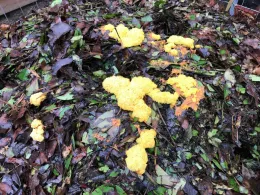
Slime molds come in a variety of colors and shapes. They often appear suddenly and look worrisome. According to the Mississippi State Extension, “when slime molds find something to eat, they surround their food and then swallow it. Slime molds may feed indirectly on dissolved substances escaping from organic matter, but they usually feed on microorganisms such as bacteria.” In general, no action is needed. They need moisture to grow and will disappear when the area dries out. Just enjoy this marvel of nature while it’s there.
Months: January February March April October November December Any Month
Tags: Best Practices Pests and Diseases
Snails and Slugs
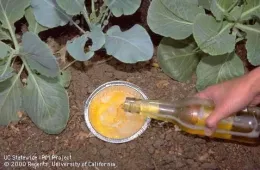
Escargot may sound good on a plate, which is where the French who brought this delicacy to California in the 1850s intended for the ingredients to stay, but they escaped into gardens where they became pests. Brown garden snails are the most common ones we see (or don’t see) eating our plants. Signs of their presence include holes in fruit rinds and leaves, not necessarily at the edges, and slime trails. They tend to hide in dark damp places during the day and come out mostly at night. The best times to find them are at night with a flashlight, early in the morning, or during and right after heavy rain. They can be hand-picked and crushed or put in a bucket of soapy water. Gloves are recommended, especially with the shell-less slugs. Creating hiding places, such as laying a wooden board over a section of the garden, will draw them to that location so you can find and dispatch them in the morning. Copper barriers and beer traps are other options. If you do use snail bait, those made with iron phosphate are not toxic to pets and wildlife.
More information: Snails and Slugs
Months: January February March April December
Tags: Best Practices IPM Invertebrates Pests and Diseases
Sooty Mold
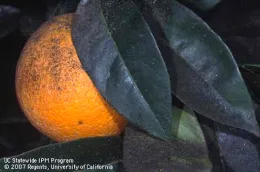
If your citrus leaves have a black coating, you may have a sooty mold problem. This black mold can also be seen on citrus fruit, avocado leaves, magnolia leaves, hibiscus, other host plants, and even on sidewalks beneath trees.
The sooty mold fungi grow on “honeydew”, a sticky substance excreted by plant-sucking insects such as aphids, scale, mealybug, and whitefly. They suck the sap out of plants and excrete excess sugars. It exists purely on the surface of a plant and is not a systemic issue. By itself, the fungi cannot kill the plant but it can coat the leaves to the extent that sunlight is prevented from reaching the leaf surface, thus reduce photosynthesis.
Ants protect the sucking insects from their predators so they can eat the honeydew. Keep ants out of trees and away from honeydew-producing insects by applying a sticky compound such as Tanglefoot on a tape wrapped around the trunk.
Pruning branches to allow better air circulation also helps. You can hose off the mold itself with a strong jet of water. And you can eat the fruit once you wash off the sooty mold.
For more information, see Sooty Mold Management Guide.
Months: August September October November December
Tags: Best Practices IPM Invertebrates Techniques Trees & Shrubs Pests and Diseases
Spiders in Your Garden
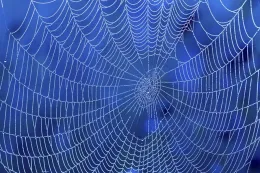
While we use spiders as spooky Halloween décor, common garden spiders are beneficial insects and only spooky to the insects and other pests that they prey on. Spiders such as orb weavers catch our attention with their large, dramatic webs, while dwarf spiders are so small, we may not even notice them. Others, such as jumping spiders and flower spiders, hunt their prey without spinning webs. Widow spiders are indeed venomous, but they are also very shy and hide in dark places. So even though they are common, bites from them are rare. Follow the link for a video about spiders and the myths surrounding them.
More information: Arachnophobia Video
Months: August September October November
Tags: Beneficial Insects Pests and Diseases
Spider Mites
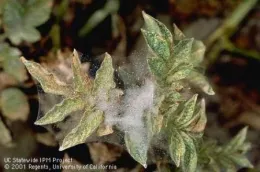
This tiny pest attacks a wide variety of ornamental and edible plants. Stippling of the leaves is the first symptom. Spider mites are closely related to spiders. They look like small white or light brown dots, uniformly spread. If you look closely, webbing may be visible. The color of the plant will start to fade and eventually leaves may drop. They suck out plant juices from leaves, flowers, and the blossom end of the fruit. Dry, hot temperatures and dusty conditions encourage them, so water is an important management tool. Be sure to water the plants sufficiently, and also wash off the leaves daily with water to knock off a lot of the dust and spider mites. f treatment is necessary, spider mites can be controlled with insecticidal soap, horticultural oil, or neem oil.
More information is available in the UC Quick Tips on Spider Mites
Months: June July August
Tags: IPM Invertebrates Pests and Diseases
Spotted Wing Drosophila
Unfortunately, the Spotted Wing Drosophila is infesting local cherry, berry, and some other fruits. Look for holes in the fruit. Once the eggs hatch, maggots develop and feed inside the fruit, causing the flesh of the fruit to turn brown and soft. Dispose of infested fruit. Information on identification and control can be found in the UC Pest Note on Spotted Wing Drosophila.
Months: May June
Tags: Disease IPM Pests and Diseases
Squash Bugs
Squash bugs are about ½ long, brownish yellow and flattened like a stink bug. Zucchini is one of their favorite plants. Leaves will blacken and drop as they dry. They can be difficult to control. Placing row cover over young plants helps prevent infestation. Remove nearby vegetation where the bugs can over winter. More information can be read at UC Pest Note on Squash Bug.
Months: July
Tags: Best Practices IPM Invertebrates Vegetables Pests and Diseases
Squirrel Control
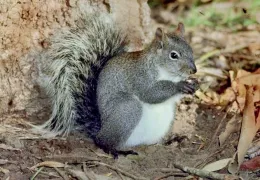
Squirrels are a common nuisance across Santa Clara County. They dig in pots, gnaw bark from plants, eat fruit and flower blossoms, and dig holes in yards. They are active during the day. Tree squirrels are distinguished from ground squirrels by their long bushy tails, lack of markings, and quick escapes up the nearest tree. They can be difficult to manage due to their persistence. Refer to the linked pest notes for options.
For more information: Pest Note on Tree Squirrels and Pest Note on Ground Squirrels.
Months: May June July August Any Month
Tags: Fruits & Nuts IPM Vegetables Vertebrates Pests and Diseases
Stink Bugs
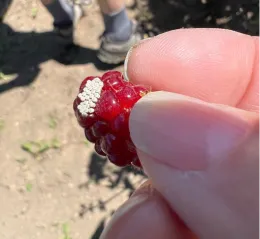
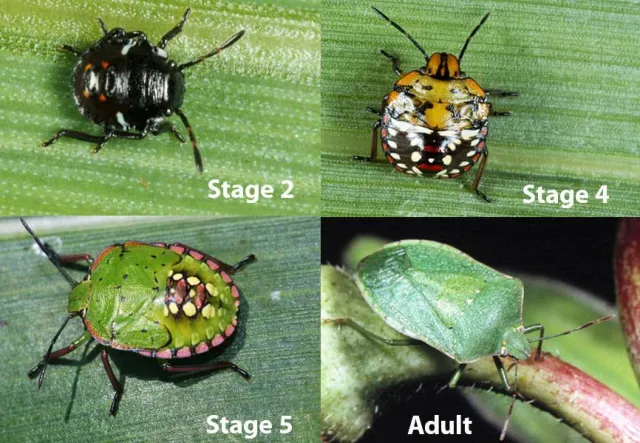
Stink bug’s eggs are white in barrel-shaped cylinders with concentric circles ending in a bull’s eye. You might find them on the underside of leaves or in plain sight on fruits and vegetables in your garden. Soon they will hatch, shapeshifting in appearance five times before becoming shield-shaped adults either in brown or green color. Called stink bugs because they excrete a smelly fluid when disturbed. These insects feed on a variety of fruits, nuts, and vegetables such as tomatoes, squash, and beans, leaving blemishes and dark pinpricks in their wake.
The best way to control them is to handpick eggs and bugs off plants and get rid of weeds where they may live. It’s not helpful to use insecticides because by the time you notice damage, the stink bugs will likely be gone already.
More information: UC Pest Note on Stink Bugs
Months: July August
Tags: IPM Invertebrates Pests and Diseases
Sudden Oak Death
Sudden oak death is a disease of oak trees caused by an invasive plant pathogen, Phytophthora ramorum. It occurs in Santa Clara County as shown on this map. If your oak tree went from healthy (green) to dead (brown) with a full complement of dead lives on the tree, it might have died from sudden oak death. More details about what to do are available at UC Pest Note on Sudden Oak Death.
Months: June
Tags: Disease IPM Trees & Shrubs Pests and Diseases
Sunscald on Fruits and Vegetables
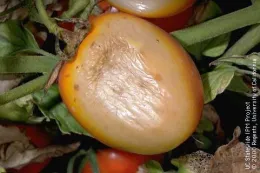
Fruits and vegetables can get sunburned in the summer heat. This is more commonly called sunscald and it frequently affects peppers, tomatoes, and persimmons. To protect them, provide shade cloths during the hottest part of the day. Avoid heavy pruning that leaves fruits exposed as the leaves shield the produce from the sun. Water well during extreme heat and use mulch to retain moisture and reduce heat stress. You can cut out the damaged parts and eat the rest of the fruit.
Months: July August
Tags: Abiotic Disorders Fruits & Nuts IPM Vegetables Pests and Diseases
Termites
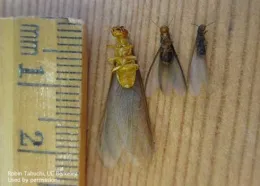
Termites are very common in Santa Clara Valley. The first sign of infestation may be the presence of winged forms or fecal pellets pushed out of the infested wood.
See the UC Pest Notes on Drywood Termites and Subterranean and Other Termitesto identify which type is present and the methods of control. Learn all you can before calling in the professionals.
Months: April November
Tags: IPM Trees & Shrubs Pests and Diseases
Tick Information
Ticks are abundant after mild winters and they can carry dangerous diseases. To learn more about ticks, see the UC Pest Note on Lyme Disease. Be sure to visit the County of Santa Clara website for information about ticks.
Months: June
Tags: IPM Invertebrates Pests and Diseases
Today’s Grubs Are Tomorrow’s Beetles
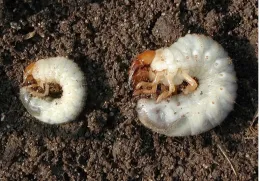
The white grubs commonly found in lawns and gardens hatch into masked chafers and green fruit beetles. Masked chafer grubs are about 1 inch long and are mostly found in lawns. They feed on roots, so a large population can cause dead patches. You may also see lawn damage from animals digging for these tasty treats. The green fruit beetle grub is much larger, about 2 inches long, and is found in compost or garden beds high in organic matter. The grubs don’t damage plants, but the iridescent beetles feed on fruits. Finding an occasional grub is no cause for worry. Just leave them out for birds to feast on.
More Information: What are White Grubs?
Months: April May June July August September October
Tags: Invertebrates Pests and Diseases
Tomato Bottom Scarring
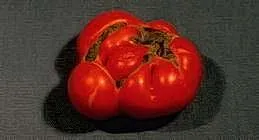
Sometimes scarring can be seen on the bottom (blossom end) of tomatoes. This can be caused by weather conditions such as cool and cloudy weather at bloom time, making the blossom stick longer to the small fruit. The fruit is perfectly good to eat with the damaged part cut out. Some large heirloom tomatoes are more susceptible to this condition.
Also known as catfacing.
Months: June July August
Tags: Abiotic Disorders IPM Vegetables To-Dos
Tomato Hornworm
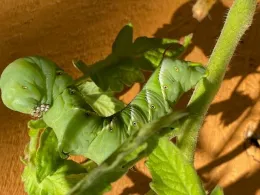
Both tomato hornworms and tobacco hornworms can do significant damage to tomato plants. They can eat entire leaves and take bites out of the fruit. Although they are large with a striking appearance, they camouflage themselves well on plants and can be surprisingly hard to find. Once you see one, you’ll wonder how you missed it. The first clue to their presence is often a pile of frass (insect larva excrement) on the leaves or ground under the pest. They are up to four inches long so they are easy to handpick for disposal. If you see a row of white eggs on their backs, those are from a parasitic wasp that will take care of the problem naturally. They are striking, with white striping and little round circles. The caterpillars get their name from the horn on their back end, and they are the larval stages of rather large brown moths.
More information: Tomato Hornworms
Months: June July August
Tags: Disease IPM Invertebrates Vegetables Vertebrates Pests and Diseases
Tomato Russet Mite
Tomato russet mites deplete juice from the cells of leaves, stems and fruit. They usually start at the base of the plant and move upward. If not controlled, these pests can kill plants. At first sign of damage, treat with sulfur dust or a spray solution of wettable sulfur and spreader-sticker. More information is found in the UC Pest Note on Tomato Russet Mite.
Months: June July August
Tags: IPM Vegetables Pests and Diseases
Tomato blossom end rot
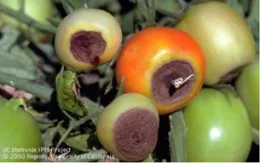
A brown depression on the bottom of tomatoes is usually blossom end rot (BER). This disorder is related to a calcium deficiency aggravated by irregular watering. Since most soils have adequate calcium, watering is usually the problem. Without regular watering, the calcium in the soil cannot reach the plant. Mulching can help. Water tomatoes regularly. Avoid flooding them so the roots sit in water. For more detailed information about BER please view Managing Blossom-End Rot in Tomatoes and Peppers
Months: July August September
Tags: Abiotic Disorders IPM Vegetables Waterwise Tips Pests and Diseases
Travel rules for plants, seeds, and flowers

If you’re planning international travel, and there’s a chance you might want to bring plant or food products home, a little research in advance might be useful. The USDA has collaborated with the states of California, Florida, and Texas to create a website that tells you what you are and are not allowed to bring back home. Some plant products require a permit or other documentation which can take up to 30 business days to process. The website has contact information if it doesn’t answer all your questions. Don’t risk bringing plant pests or diseases back home.
More information: Travel rules for plants and flowers
Months: Any Month
Tags: Disease Pests and Diseases
Verticillium Wilt
Verticillium wilt is a soil-borne fungal disease that damages plant veins. The damage is characterized by affecting one side of the plant. The leaves may wilt and turn brown, dying upward from the base of the branch to the tip. Dead leaves often fall, but may not. Mildly affected plants may survive if fertilized and encouraged into vigorous growth. The fungus can live for years in the soil.
Planting tomatoes, peppers, eggplants, and potatoes (all members of the Solanaceae or nightshade family) in the same place no more than once every three years helps reduce the fungal population to non-harmful levels. Soil solarization may eliminate Verticillium wilt from infected soils. Crop rotation with cereals or broccolis can reduce the pathogen. Avoid high nitrogen fertilizers. Plant Verticillium wilt-resistant varieties of tomatoes, potatoes or strawberries. Refer to the UC Pest Note information on Tomato, Potato, and Strawberry for species-specific suggestions.
Months: May June July August
Tags: Disease IPM Vegetables Pests and Diseases
Weed Management
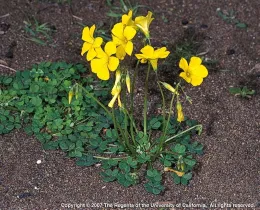
While some weeds are edible (purslane, nettles, dandelions, miner’s lettuce), many are a nuisance and compete with your chosen plants for water and nutrients.
Whichever variation of “One year’s seeds makes seven years’ weeds” you prefer, the truth remains: a key part of weed control is not letting them go to seed. For best results, work on removing weeds before they are able to propagate. Hand pulling and hoeing are effective methods for killing many common weeds.
Knowing what kind of weeds you have and how it propagates can be helpful in choosing the best management method. If they propagate by seed, pull or hoe them before they flower and go to seed. If they re-grow from roots, pull up as much of the root as possible. Many weeds, like Bermuda grass, have multiple ways of multiplying. Only non-propagating parts are advisable to throw in the compost bin.
More Information: UC Quick Tips on Weeds in Landscapes
Months: January February March Any Month
Tags: Best Practices IPM Weeds To-Dos
White Butterflies and Green Caterpillars
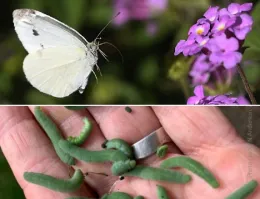
Have you seen these small yellowish-white butterflies fluttering around? Cabbage white butterflies feed on many flowers, but for laying their eggs. They favor the cabbage family, such as broccoli, cauliflower, and mustard. The velvety green caterpillars, also called imported cabbageworms, feed on the leaves after hatching. While mature plants tolerate a few holes munched in their leaves, young seedlings don’t have foliage to spare. Cultural controls include handpicking the caterpillars, brushing the eggs off the undersides of leaves, and using row covers to protect the seedlings. UC lists additional options in the link below.
More information: Managing Imported Cabbageworms
Months: March April May June July August September October November
Tags: Invertebrates Vegetables Pests and Diseases
White Mold on Lettuce and Brussels Sprouts
White mold is a distinctive disease that most often affects stems and foliage at the base of cole crops* and lettuce plants. Affected tissue develops a soft, watery rot and white, cottony mycelium forms on the surface. Plants may wilt if stems are girdled by the decay. As affected tissue dries up, it turns yellow to white, and hard black sclerotia form on the surface or inside the dead stems. Get more information in the UC Pest Note on White Mold.
* Cole crops include broccoli, Brussels sprouts, cabbage, cauliflower, collards, kale, and kohlrabi
Months: November December
Tags: Disease IPM Vegetables Pests and Diseases
Whiteflies
Whiteflies are tiny, sap-sucking insects that may become abundant in vegetable and ornamental plantings, especially during warm weather. They excrete sticky honeydew and cause yellowing or death of leaves. Outbreaks often occur when the natural biological control is disrupted. Management is difficult once populations are high.
Whiteflies use their piercing, needlelike mouthparts to suck sap from phloem, the food-conducting tissues in plant stems and leaves. Large populations can cause leaves to turn yellow, appear dry, or fall off plants. Like aphids, whiteflies excrete a sugary liquid called honeydew, so leaves may be sticky or covered with black sooty mold that grows on honeydew (See UC Pest Note on Sooty Mold). The honeydew attracts ants, which interfere with the activities of natural enemies that may control whiteflies and other pests.
Management of heavy whitefly infestations is difficult. The best strategy is to prevent problems from developing in your garden or landscape. In many situations, natural enemies will provide adequate control of whiteflies; outbreaks often occur when natural enemies are disrupted by insecticide applications, dusty conditions, or interference by ants. Avoid or remove plants that repeatedly host high populations of whiteflies.
In gardens, whitefly populations in the early stages of population development can be held down by a vigilant program of removing infested leaves or hosing down with water sprays. Reflective mulches can repel whiteflies from vegetable gardens, and yellow sticky traps can be used to monitor or, at high levels, reduce whitefly numbers. If you choose to use insecticides, insecticidal soaps or oils such as neem oil may reduce but not eliminate populations. Systemic insecticides may be more effective but can have negative impacts on beneficial insects and pollinators.
For more information see UC Pest Note on Whiteflies.
Months: June July August September
Tags: IPM Invertebrates Vertebrates Pests and Diseases
Yellowjackets and Wasps
These insects can be solitary or live in group nests above and below ground. Yellowjackets can be aggressive when defending their nests. Since they nest in ground holes or inside walls and ceilings, you might encounter them on a hike or in your home. Avoid the area when possible. Paper wasps on the other hand, are relatively unaggressive, but they can be a problem when they nest in a trafficked location.
When eating outdoors, keep foods well covered. One strategy is to put out bait such as a piece of meat or an opened soda can some distance from the table before setting out the human food. Or, use a lure trap around the area you want to protect. Trapping the queens in the spring and workers during the summer can reduce local populations. See the UC Pest Note on Yellowjackets and Other Social Wasps for more information.
Months: August
Tags: IPM Invertebrates Pests and Diseases