
Monthly tips are categorized by To-Dos, What to Plant, or Pests and Diseases. Scroll through the list to see items in each category. Also, refer to our list of tips useful for any month.
To-Dos: October
Almond and Walnut Harvest
Apple and Pear Harvest
Broccoli - Multiple Harvests
Burning & Stinging Nettles
Change to Cool Season Planting
Cool Season Vegetables
Fall Garden Cleanup
Fall Irrigation
Growing Vegetables in Containers
Harvesting Oranges
Inspect Roots When Planting
Irrigation Maintenance
Lawn Care
Mulch Bare Soil Before Rains
Olive Harvest
Organic Soil Amendments
Persimmon Harvesting
Picking Pomegranates Properly
Planting Trees or Shrubs
Remove Thatch in Lawns
Should You Prep Soil for Planting?
Shrubs
Stinkhorn Mushroom
Time for Seed Saving
Transplanting Vegetables
Wildfire Effects
Winter Soil Health
Winter Vegetables
Pests and Diseases: October
Bagrada Bug
Cabbage Aphids
Citrus Leafminer
Leafminers
Powdery Mildew
Root Knot Nematodes
Slime Molds
Sooty Mold
Spiders in Your Garden
Today’s Grubs Are Tomorrow’s Beetles
White Butterflies and Green Caterpillars
What to Plant: October
Arboretum All-Stars
Asian Vegetables
Attracting Bees
Camellias
Cover Crops
Going Native
Herbs
Native Wildflowers
Plant Garlic & Shallots
Planting Berries
Planting Bulbs
Planting Ornamentals
Seed Viability
Selecting Seeds
Shrubs
Vegetable Planting Chart
Almond and Walnut Harvest
Almonds are harvested when the shell is cracked and brown. Freeze nuts for 1 to 2 weeks to kill resident worms, store nuts in plastic bags to prevent re-infestation, and spray the tree with fixed copper during or after leaf fall but before rains start to reduce damage from shot hole fungus.
Walnuts are fully mature when the green hull begins to break away from the shell. Harvest by polling or shaking the tree. Remove the green hulls, then freeze the nuts in their shell to kill any resident worms. Store in plastic.
Months: October
Tags: Disease Fruits & Nuts IPM Techniques To-Dos
Apple and Pear Harvest
The harvest for apples, and some varieties of pears (Bosc, Comice, Winter Nellis, and some Asian Pears), is likely coming to a close. When harvest is finished, irrigate and fertilize the trees as you have been. Clean up fallen leaves and fruit and discard to prevent apple scab and codling moth.
Months: October
Tags: Best Practices Fruits & Nuts To-Dos
Arboretum All-Stars
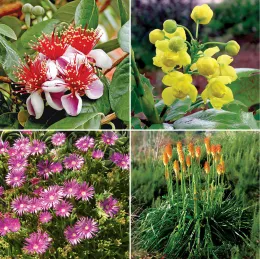
UC Davis, known for its horticulture expertise, has its own roster of 130 climate-ready plants to consider for your garden. Each Arboretum All-Star is selected to thrive in hotter and drier conditions and withstand extreme weather events all while supporting pollinators and local wildlife. In addition, it must be attractive for most of the year, thrive in California’s Mediterranean climate, and be thoroughly tested at the UC Davis Arboretum. To see them in person, take a day trip to the Arboretum — it’s open and free to the public. Or access their searchable database and find the perfect All-Stars for your specific garden conditions, along with planting plans and where to buy them.
More Information: UC Davis Arboretum All-Stars
Months: April October Any Month
Tags: Best Practices Ornamental Plants Waterwise Tips What to Plant
Asian Vegetables
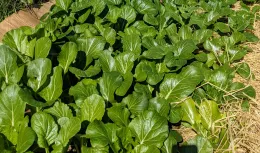
You can easily grow some vegetables used in different types of Asian cuisine and found in Asian markets. They are not necessarily native to Asia but have found their way into various cuisines. One way to decide which food to grow yourself is to choose varieties that aren’t readily available or are more expensive in your local markets. It’s also fun to impress your family, friends, and neighbors with something they may not have seen growing before. Possibilities include sesame seeds, bitter melon, opo, sigua (loofah) in summer and bok choy, napa cabbage, daikon radishes, gai choy in spring or winter.
More Information: Vegetable planting chart in English | Chinese
Months: February March April May June September October
Tags: Vegetables What to Plant
Attracting Bees
Bees are pollination workhorses, increasing garden production. Many plants will not produce fruit unless flowers are pollinated. Colorful annuals, such as Cosmos, edible African Blue Basil, and Salvias attract bees. You can also allow herbs and other plants to flower to create bee-friendly landscapes.
The University of California at Davis has a garden dedicated to bees. The Honey Bee Haven website has more resources, including a list of plants they grow.
Months: March April May June September October
Tags: Beneficial Insects Herbs Ornamental Plants What to Plant
Bagrada Bug
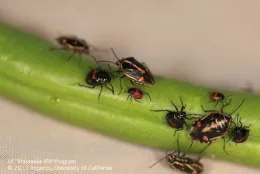
The Bagrada bug is a small (¼ inch) stink bug that is most commonly found on vegetables in the Brassica family including cabbage, cauliflower, broccoli, kale, turnip, and mustard greens. Home gardeners should carefully inspect their plants and shipping containers prior to planting. A good time to inspect is right after watering when pests hiding in the space between the potting mix and the sides of the container may be flushed out and more easily detected. Plant seedlings late this month when they are big and robust. If you find nymphs on the plants, use insecticidal soap. See UC Pest Note on Bagrada Bug for further information.
Months: October
Tags: IPM Invertebrates Pests and Diseases
Broccoli - Multiple Harvests
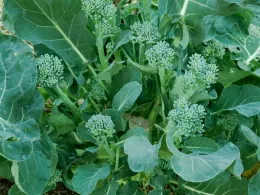
Did you know that most broccoli plants can give you multiple harvests? The first central head that they produce will be the largest and fullest. But after you harvest that one, the plant will start to produce lots of smaller heads, called side shoots. They sprout from buds in the leaf axils, where the leaves join the stem of the plant. You can keep harvesting these tender shoots, sometimes called broccolini or baby broccoli, for another 2 to 3 months.
More Information: Growing Broccoli
Months: March April May June September October November December
Tags: Best Practices Vegetables To-Dos
Burning & Stinging Nettles
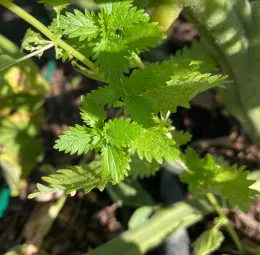
Our gardens are pleasant places but not if you find burning nettle (Urtica urens) or stinging nettle (Urtica dioica) among your flowers or vegetables. You’ll know they are there if you brush against them and immediately feel a burning or stinging sensation. Leaves and stems are covered with hair-like tubes that inject an irritating substance when touched. Look for them in late fall and early spring. Remove them as soon as they appear, using gloves for protection. They can produce viable seeds in just five weeks and produce 1,500 seeds per plant. A thick layer of mulch or cover crops with dense canopies can help suppress germination.
More information: Burning & Stinging Nettles
Months: March April October November
Tags: Weeds To-Dos
Cabbage Aphids
The grey-green cabbage aphid is often found on cool season vegetables. They prefer to feed on the youngest leaves and flowering parts and are often seen on cabbages, broccoli, and Brussels sprouts.
Hose them off plants or prune out infestations. Grow flowers in your vegetable garden to attract beneficial insects, which are their natural enemies.
See UC Pest Note on Aphids to identify and manage this insect.
Months: October
Tags: IPM Invertebrates Vegetables Pests and Diseases
Camellias
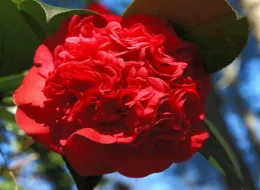
Camellias can be planted in fall through spring. Since they bloom in winter, choosing a plant now will ensure that you know the color, shape, and size of the flowers with which you will live for many years. Camellias are not native to our area so may need some extra attention in order to grow successfully. Our native clay soil does not drain well so it must be amended for camellias. Our alkaline soil needs to be acidified, and sulfur pellets are one way to achieve this. The plants need some shade and need to be kept moist. Mulch helps hold in moisture, and pine needles, redwood bark, and coffee grounds are all good organic materials that will break down over time and help improve the soil. Pick up flowers as soon as they fall to the ground to avoid the spreading of a disease called Camellia petal blight.
More information: Camellia Pests
Months: January February March April May September October November December
Tags: Ornamental Plants Trees & Shrubs What to Plant
Change to Cool Season Planting
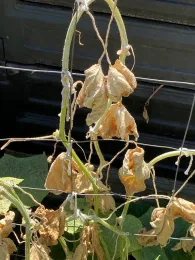
Many things go into deciding when to take out your warm season vegetables and when to put in your cool season crops. For example, are the current plants starting to be less productive? Is the amount of food you’re getting no longer worth the amount of water you are using? Are there a lot more yellow or brown leaves? Are there more signs of pests and diseases that are weakening plants, reducing photosynthesis, and spreading pathogens? Are botanical fruits like peppers producing fewer flowers, or are herbs producing more flowers and going to seed? Have you had your fill of certain vegetables or are your canning jars and freezer full? And do you need the space for your winter crops? In order to maximize both seasons, you can start cool season vegetables in containers, interplant them with soon-to-be-removed vegetables, or buy them later as transplants.
More information: Vegetable calendar
Months: September October
Tags: Techniques Vegetables To-Dos
Citrus Leafminer
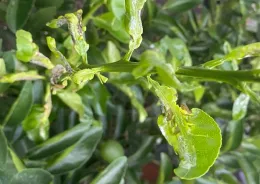
What causes young, healthy citrus leaves to become gnarled and disfigured and what can be done about it? This damage is due to the citrus leafminer moth that lays eggs on new citrus leaves. Its larvae burrow into the leaf and leave tunnels as they feed, visible as meandering serpentine mines. Our advice: don’t worry about it. Leafminers can slow the growth of young trees but even heavily damaged trees are unlikely to die. Leafminers only attack young leaves — the tough leaves of mature plants resist infestation and fruit is not affected. Damaged leaves still produce food for the tree, so don’t cut them off. If you do, it will stimulate the tree to produce more new leaves — which will attract more leafminers!
More information: Citrus Leafminer
Months: January February March April May September October November December
Tags: Fruits & Nuts Invertebrates Pests and Diseases
Cool Season Vegetables
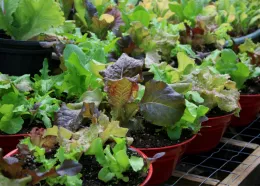
Cool season vegetables include many greens (spinach, arugula, cabbage, collards), root vegetables (carrots, beets, radishes, turnips), and cole crops (broccoli, cabbage, cauliflower, kohlrabi). Cilantro and peas also do well in the fall when it is a little cooler.
If starting from seed, August is the time to start seedlings for fall vegetables. Broccoli, cauliflower, beets, and fennel will take about 6 weeks to grow to transplant size. Greens such as lettuce, spinach, arugula, chard, and kale will be ready in 4 weeks. So for planting in mid-to-late September, aim to start them in early to mid-August. You can direct seed them on the ground if you have the space. The soil should still be warm enough for seeds to germinate but shade them from the hottest afternoon sun, and keep the seeds moist.
If buying transplants from a nursery, you can wait until September. In Santa Clara County, many of the cool season crops that are planted in September or October can be planted again in February and March. You can get in another crop before it’s time to put summer vegetables in the ground.
A big advantage of cool season vegetables is that they need less supplemental water due to lower temperatures, fewer daylight hours, and rain. There are also fewer pest problems in the winter. Cool season vegetables grow well in temperatures ranging from 55°F to 75°F, at locations with 6 to 8 hours daily of sun.
Check out our videos page for videos on cool season vegetables, including a 3-session course for more inspiration.
Months: August September October
Tags: Best Practices Techniques Vegetables To-Dos
Cover Crops
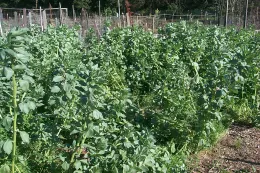
You may want to rest in the winter, but the soil life needs to remain active and protected and preferably weed-free. If you’re not planting vegetables or ornamentals in an area for a few months, try plants designed to feed the soil and the organisms that live in it. Cover crops are ideal for putting nutrients back into your soil and keeping weed growth to a minimum. Fava beans are the most popular cover crop in this area and can be seen in abundance in community gardens. Other common crops are clover, vetch, and bell beans. Different cover crops provide a variety of benefits. Cereals such as oats and barley to help build organic matter. Beans and other members of the legume family fix nitrogen from the air and make it available in the soil and to plants. The roots also break up heavy clay soil and improve its structure. While fava beans are edible, they provide the most nitrogen to the soil if they are cut up and dug in while they are still in the flowering stage.
More Information
Months: September October
Tags: Soil What to Plant
Fall Garden Cleanup
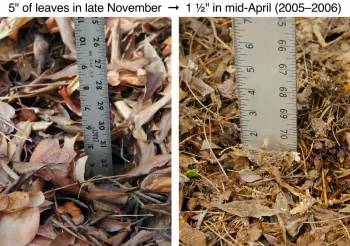
It’s an excellent idea to keep the garden clean at all times and to remove dead or dying plants or diseased material. Yet there may be bigger seasonal cleanups when taking out plants that have finished producing or that need to be removed to make room for new plants. Trim woody or overgrown perennials. Remove plant debris that allows insects and diseases to overwinter and then reproduce. Always pick up fruit promptly from the ground to not invite critters or allow diseases to proliferate. It’s best to leave fallen leaves in place unless they are diseased. They provide a mulch layer while slowly breaking down and returning nutrients to the soil and then back to the plants. Particularly during a drought, having the soil covered is important for moisture retention. Leaf litter also offers extra protection and cover for hibernating bumble bees and beneficial insects overwintering in various stages of life. If the leaves are diseased, they need to be removed and put out with the yard waste. Monitor the health of your plants while you’re out cleaning up.
More Information: Fall Garden and Landscape Checklist, Leave the Leaves
Months: October November
Tags: Best Practices Disease Fruits & Nuts Ornamental Plants Techniques Trees & Shrubs Vegetables To-Dos
Fall Irrigation
You can still expect some warm weather during October, so keep watering the garden until the fall and winter rains begin. As temperatures drop, less water is needed for plants.
Check your soil periodically by digging gently into the soil next to the root, about 6 inches down (deeper for bigger plants). If the soil does not hold a shape when squeezed it is too dry; if it continues to hold shape after the pressure is released it is too wet; if the soil has a shape then crumbles quickly, it has the right amount of water.
Hydrozone any new plantings by putting plants with similar water needs together. This helps ensure that less water is wasted and that all plants get the right amount of water.
If you have an automatic watering system, this is a good time to inspect the system for leaks and blockages, check the timer for batteries, and reprogram the system as necessary for cooler weather and rain.
If you don’t have an automatic watering system, think about installing one. Many systems are very affordable and easy to install by the home gardener. Take a look at some “smart meters”. They are more expensive, but incorporate weather conditions, your location, and your soil into the programming, making them very efficient.
Months: October
Tags: Best Practices Irrigation Techniques Waterwise Tips To-Dos
Going Native
Native shrubs, trees, and flowers are well-adapted to our climate and soil, and support native butterflies and bees and other wildlife. They are drought-tolerant once they are established, but need adequate water for the first year or two to establish a strong root system that will help nourish the plant for years to come. Planting them in the fall gives them time to settle in before being hit by the heat of the summer sun. Consult the California Native Plant Society for more information.
Months: October November
Tags: Ornamental Plants Waterwise Plants Waterwise Tips What to Plant
Growing Vegetables in Containers
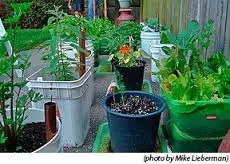
Container grown vegetables can be decorative as well as good to eat. Almost any vegetable can be grown in a container if given the proper care. Eggplant, peppers, tomatoes, lettuce, onions, carrots, cucumbers and herbs do well. Use our Vegetable Planting Chart to decide when to plant.
One of the biggest problems is that containers dry out very fast and nutrients wash away. Both are solvable. Do not use clay pots, which dry out quickly. Plastic, composite or wooden half-barrels are good, but avoid dark colors that can absorb heat. Vegetables like a roomy container.
There must be drainage holes in the bottom but it is not recommended that you put pebbles or broken crockery in the bottom. Use a good commercial potting mix, not planter or planting mix. Group the containers together so they will shade one another.
The hot summer sun can heat the soil to unhealthy levels. Water whenever the soil is dry. You can test by digging your fingers into the dirt. You may have to water more than once a day. A simple drip system is easy to install and will make your container garden almost foolproof. Fertilize every week with a water-soluble fertilizer.
More Information: Edibles in Containers
Months: February March April October November
Tags: Techniques To-Dos
Harvesting Oranges
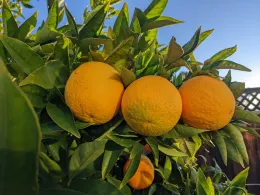
There’s a simple way to know whether your citrus fruit is ripe: taste it! Citrus varieties differ in when they first ripen and how long the fruit holds on the tree. Harvest dates depend on the variety and the climate. For example, the normal fruit season is winter for Navel orange, and summer for Valencia orange. Until you are familiar with your particular tree, sample a fruit periodically to see if it suits your taste. Allow fruit to ripen fully on the tree, as citrus does not continue to ripen once it’s picked.
More information: Harvesting and storing citrus
Months: January February July August September October November
Tags: Fruits & Nuts Techniques To-Dos
Herbs
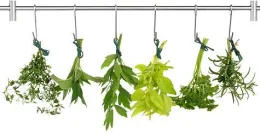
Many herbs can be grown both indoors and out, in pots or in the ground. Rosemary grows large and needs to be in the ground or a big pot. If you use basil to make pesto, you may want a row of it in the garden. Yet most herbs tend to be used in small quantities for seasoning and so they can be grown in small containers. They can be on the kitchen counter or a windowsill for ease of use in cooking. They can be on a patio if you are in an apartment or condo. And they are well suited to container gardening outdoors. Woody herbs can be grown from cuttings, lemongrass can be started from stalks from the store, and most others can be started from seed. After harvesting, many can be dried as well as used fresh.
More Information: Growing Herbs
Months: March April May September October
Tags: Best Practices Herbs What to Plant
Inspect Roots When Planting
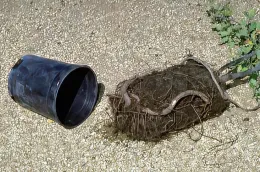
If you’re adding plants to your garden this spring, check the roots before putting them into the ground. Two things are particularly important. First, look for circling roots, which can eventually strangle the plant. Straighten them out as much as possible and consider pruning them if they’re too big to spread. Second, note where the roots start growing and plant at that depth, or slightly higher to allow for some settling. If planted too deeply, plant roots cannot get enough oxygen to grow and may suffocate and die. Planting too shallow can result in root damage from exposure and excessive drying.
More Information: Fix Those Roots Before You Plant
Months: February March April May September October November
Tags: Best Practices Garden Basics Techniques To-Dos
Irrigation Maintenance
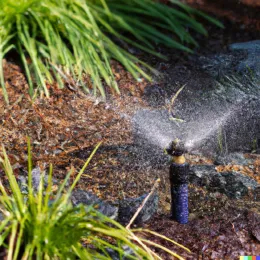
Check your watering system regularly to make sure it’s working properly. Sprinklers and emitters that are plugged up or misdirected can cause problems for the plants they’re supposed to water, and broken emitters and hoses waste water. Get ready for the growing season by starting a watering cycle for each zone of your controller and visually checking its operation. If you’d like help, Valley Water offers a free evaluation service for properties less than ½-acre in size. Use the link below to schedule a survey.
Months: March April September October
Tags: Best Practices Irrigation Techniques Waterwise Tips To-Dos
Lawn Care

As the weather changes, many of our management techniques have to change. Lawns need more water as the temperature increases and the humidity lowers. But please don’t overwater; too much water is wasted by going below the root zone or running off. Adjust timers monthly throughout the year. In the warmer months, lawns may need water twice a week. It is not good to water daily. If watering is daily and brief, the roots will stay shallow and susceptible to drying and burning. Be sure to water as early in the morning as possible to avoid evaporation. This also helps reduce fungal diseases by giving the grass time to dry out during the day. Poor watering practices are the main reason for dead and dying areas in lawns and a common source of urban runoff.
Make sure you are mowing to a height appropriate for your type of grass. Mow frequently enough so that only one-third of the leaf is removed at any one time.
Fertilizing is important, even if you are grasscycling, which only provides about 20% of a lawn’s fertilizer needs. Grass is all leaf, so the primary nutrient needed is nitrogen. Keep on top of weed removal.
Thatch is the layer of living and dead grass material (blades, rhizomes, stolons) that can build up on the surface of the lawn. A thin layer protects the soil surface and shallow roots from drying out from the sun, but a thick layer prevents water from getting through. You can remove dead grass material on the soil surface with a special thatch rake to allow water to reach the roots more easily.
More Information: The UC Guide to Healthy Lawns
Months: May June July August September October
Tags: Best Practices Irrigation Lawns Techniques Waterwise Tips To-Dos
Leafminers

Watch for damage from leafminers on many types of plants, including leaves of vegetables and commonly on citrus. Eggs can either be inserted into leaves or laid on the surface of leaves. In either case, the larvae feed between leaf surfaces, creating a “mine”. If eggs are on the surface of the leaf, they can be rubbed off before hatching.
Plant resistant species or varieties. Small seedlings can be protected by protective cloth. On plants such as cole crops, lettuce, and spinach, clip off and remove older infested leaves. Place leaves in plastic bag, and put bag in trash. Leafminers are often kept under good control by natural parasites. Insecticides are not very effective for leafminer control. See UC Pest Note on Leafminers for additional information.
Months: October
Tags: Disease IPM Invertebrates Vegetables Pests and Diseases
Mulch Bare Soil Before Rains

Mulch isn’t just for the summer. Yes, it’s good for conserving soil moisture and keeping the ground cool, but it’s important in the rainy season too. Bare soil that’s open to rain, wind, and sun becomes compacted and hard. Rain tends to run off instead of getting absorbed. Compare a patch of bare soil with one that’s been deeply mulched, and you’ll see the difference. An organic mulch that slowly decomposes keeps the soil beneath it moist and loose, plus it will suppress the weeds that will be sprouting with the rains.
More information: Impact of Mulches
Months: October November
Tags: Best Practices Soil To-Dos
Native Wildflowers
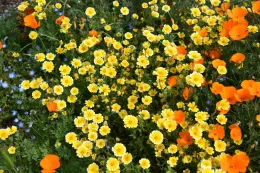
Native California wildflowers herald the beginning of spring — and the time to plant them is ahead of the winter rain. Besides their showy display, they’re a habitat for local pollinators and a great way to cover up bare spots. If that’s not enough, they also require little care. Just select a well-drained and sunny site, remove weeds, and lightly rake the surface of the soil. Hand disperse seeds and lightly cover with soil, no more than about ¼ inch. Gently tamp them down with the back of a rake and water. After that, let Mother Nature take its course — we hope with some rain!
More information: Native Flowers
Months: September October November
Tags: Ornamental Plants Waterwise Plants What to Plant
Olive Harvest
Harvest olives grown for the table when fruit is still green. Olives grown for oil can be harvested when the fruit is yellow to reddish-purple and the flesh is still green-yellow. Continue irrigating until first rains. Apply fixed copper to prevent peacock spot before the first major rain, and be sure to wash the fruit before use or wait until after harvest to spray.
Months: October
Tags: Fruits & Nuts Techniques Trees & Shrubs To-Dos
Organic Soil Amendments
After harvesting remaining summer crops, add amendments such as blood meal, alfalfa pellets or fish emulsion to replenish nitrogen in the soil. Add a layer of compost to all existing garden beds to provide needed nutrients for winter crops. Be sure to leave some areas of native soil for ground-nesting bees.
Months: October
Tags: Best Practices Soil To-Dos
Persimmon Harvesting
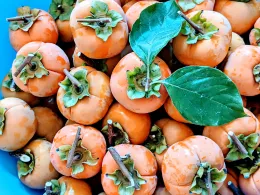
Persimmon season is here. The skin of the fruit turns orange when fully ripe. The flat bottomed Fuyu persimmons will still be fairly firm when ready and can be eaten raw like a crispy apple or sliced up and cooked into an apple-style pie. Fruit that falls from the tree early may continue to ripen on the counter despite the green skin. Heart-shaped Hachiya persimmons turn almost jelly-like inside when ripe. It is best to eat raw by cutting it in half and digging it out with a spoon. They can also be used in baking. If you eat an unripe Hachiya persimmon, you will gain a new understanding of the word “astringent”! To protect the persimmons from birds and squirrels, it is necessary to wrap the tree with bird netting or cover it in a structure made with chicken wire before the fruits are ripe.
More information: Persimmons, UC Integrated Pest Management
Months: October November
Tags: Fruits & Nuts To-Dos
Picking Pomegranates Properly
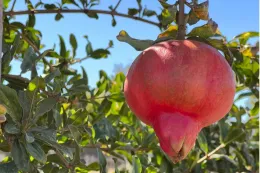
Picking pomegranates at the right time is important because they don’t continue to ripen after harvest. Clues to watch for: a deepening color of the fruit, a metallic sound when tapped, and softening skin that can be scratched with gentle pressure. When harvesting, clip the stem close to the fruit instead of pulling it off the tree. This prevents open wounds that may rot. Pomegranates are susceptible to splitting when watered unevenly, so if you’ve reduced irrigation because of the drought, you may want to harvest them quickly once winter rains start.
More information: Pomegranates, California Rare Fruit Growers
Months: October November
Tags: Fruits & Nuts Techniques To-Dos
Plant Garlic & Shallots
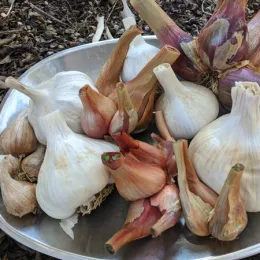
The time to plant most garlic and shallots is mid-October through the end of November. Fast-growing Dutch Red shallots can mature in just 90 days, so can be planted again in late winter or early spring. Specialty growers guarantee disease-free stock and offer many more garlic varieties than you see at the grocery store, from beefy Chopaka Mountain to beautiful Rose de Lautrec.
Choose the largest cloves and leave the natural papery wrappers on them. Plant them in moist, well-drained soil in a sunny location with the pointy tips up, about one inch deep. Space cloves about four inches apart to leave room for large heads to develop.
More information: How to Grow Garlic | How to Grow Shallots
Months: February March October November
Tags: Vegetables What to Plant
Planting Berries
Berries including blackberries, raspberries, blueberries, and some strawberries can be planted in the fall through early spring. When purchasing blackberries and raspberries, it is best to get plants that are certified disease-free from a nursery. Most berries prefer deep, well-drained, loamy soil with a slightly acidic pH (5.5-6.5). Bare-root plants can be planted in the fall, winter and early spring. Potted green plants can be planted any time they are available in the nursery. A northern sun exposure is best.
More information: Growing Berries
Months: October
Tags: Fruits & Nuts What to Plant
Planting Bulbs
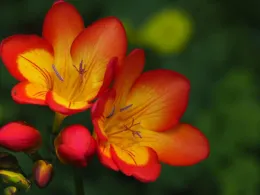
Bulbs that bloom in the spring are planted into the ground in the fall. These include those that are technically corms, rhizomes, tubers, or tuberous roots in addition to true bulbs. Examples are babiana, crocus, daffodils, freesia, hyacinths, iris, ixia, sparaxis, and tulips. They can go into the ground in groups, into pots, or be tucked in amongst other plants. They need to be in a place that doesn’t stay wet because they will rot with too much water. It is important that the soil has good drainage. They flower best in full or filtered shade.
Be sure to plant them with the pointy side up because new growth will come from that point. A rule of thumb is to plant them twice as deep as the diameter of the bulb, but follow instructions for the specific flowers. Water them in at planting time.
More Information: Bulb Planting Schedule , Tips for Growing Bulbs
Months: September October November
Tags: Container Gardening Ornamental Plants What to Plant
Planting Ornamentals
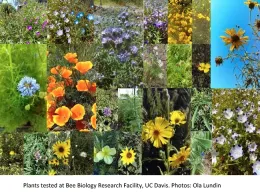
Spring is when thoughts turn to planting, yet fall is an excellent time to plant perennials. You can plant many trees, shrubs, and other long-lasting plants in the fall. This applies particularly well to California native plants. Putting them in now will give them a chance to start developing strong root systems with the winter rains before they are stressed by summer heat. Make sure to water new plantings regularly until they have established good root systems and can survive with less supplemental water.
When choosing plants, consider our general Mediterranean climate as well as the microclimate of your yard. Local California natives in particular need little to no amending of the soil because they have evolved in our clay soils. Sun times, water needs, wind exposure, and soil type can all impact the success of a plant. Make sure you know how large the plant will become, even if it looks fine now in a one-gallon or five-gallon container.
More Information:
Months: September October November
Tags: Ornamental Plants Trees & Shrubs What to Plant
Planting Trees or Shrubs
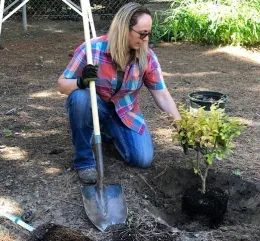
You may be tempted to amend the soil when planting trees or shrubs, but it’s no longer recommended. If the soil in the hole is amended, it creates soil moisture differences that discourage the roots from growing into the native soil beyond the hole. For best results, dig a hole about twice as wide as the container. Rough up the sides to help the roots penetrate. Don’t loosen the soil in the bottom of the hole or the plant may settle too low. The goal is to keep the crown of the plant slightly above the surrounding soil. Then simply backfill with the native soil from the hole.
More information: Planting for Success
Months: March April May September October November
Tags: Best Practices Techniques Trees & Shrubs To-Dos
Powdery Mildew
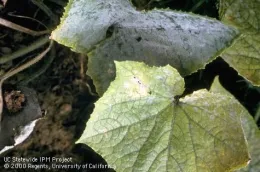
Have you ever seen a squash or melon without white powder on the leaves in the fall? This fungal disease is called powdery mildew. It affects several vegetable, fruit, and ornamental plants; yet it seems almost inevitable on members of the Cucurbitaceae family which includes cucumbers, gourds, melons, squashes, and pumpkins.
Powdery mildew likes warm days and cool nights. Unlike most other fungi, it does not need moisture to thrive. Early symptoms include yellow chlorotic spots on the leaves. The presence of the fungus becomes obvious as it starts to produce spores that look like white powder on leaves. Eventually, the leaves will turn brown and dry.
The best defense is to plant varieties that are resistant to powdery mildew. Also helpful is planting in full sun with good air circulation through the plants. Washing off the leaves, preferably in the morning, can buy some time. Powdery mildew generally affects the older leaves first, and you can remove these when they are too covered to be able to photosynthesize. Fungicides can help but you want to be careful about using them around something you are going to eat. At some point, the plant may decline so much that it needs to be removed.
More Information: Powdery Mildew on Vegetables
Months: August September October
Tags: Disease IPM Pests and Diseases
Remove Thatch in Lawns
If you have a lawn, April is the time to remove thatch. Thatch is a layer of dead and living stems, roots, stolons, and rhizomes, between the green blades of grass and the soil surface. If thatch becomes too thick, it can keep water, air, and nutrients from reaching the soil and roots. Thatch can be removed with a thatch rake to improve the health of the grass. The UC Guide to Healthy Lawns has more information.
If you are tired of mowing and raking and watering that lawn, you may want to check on the Santa Clara Valley Water District’s Landscape Rebate Program. Even if the funding is used up for the year, you can still replace your lawn to conserve water, time, and energy. But don’t start by digging it up. Instead, sheet mulch the area. Then you can add drought-resistant native plants or ground cover, such as yarrow, thyme, sage, creeping manzanita or ceanothus.
Months: April October
Tags: Lawns Techniques To-Dos
Root Knot Nematodes
Root knot nematodes usually cause distinctive swellings, called galls, on the roots of affected plants. They can infest a wide variety of plants and easily spread via soil left on tools or shoes. Infested plants may not die but may be sickly or less productive. When you pull out your annual plants, inspect the roots, especially if they didn’t do well. Avoid spreading root knot nematodes by cleaning tools thoroughly. Consider letting an infested bed lie fallow for a season, or plant a cover crop next summer of French marigolds, which help suppress some nematodes.
More information: Nematodes Pest Note
Months: September October Any Month
Tags: Fruits & Nuts IPM Ornamental Plants Trees & Shrubs Vegetables Pests and Diseases
Seed Viability
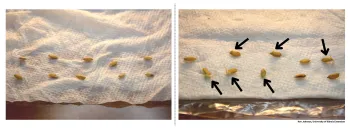
Seed packets have a “packed for” date on the back. Yet seeds can still be viable for years beyond that date if stored correctly. Ideal storage conditions are cool and dry. The older the seeds are, the lower the germination rate will be. So plant more of the older seeds than the number of plants you ultimately want. You can do a germination test by putting seeds on a damp paper towel and enclosing them in plastic to keep them uniformly moist. Do this right before planting time so you can transplant the ones that successfully germinate. Or you can take your chances and just plant them directly and see what comes up. If you are saving your own seeds, make sure to choose seeds from the healthiest plants.
Whenever it’s hard to find flower seedlings, if you have some old flower seed packets, you can scatter the seeds randomly in a section of your yard and enjoy whatever flowers.
More Information: Vegetable Seed Viability
Months: January February March April May August September October
Tags: Ornamental Plants Techniques Vegetables What to Plant
Selecting Seeds
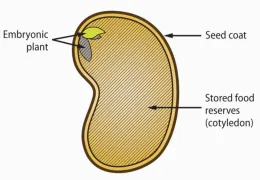
While curled up inside the warm, dry house poring through seed catalogs, how do you decide among all the delightful descriptions? First, be clear on the purpose of your garden. Are you trying to grow exotic food? Do you want to attract native butterflies? Are you interested in flowers you can cut and bring inside? Next, think about the conditions of your site. Is it warm and sunny or is there a lot of shade? Do you have heavy clay soil? Choosing seeds that do well in your area makes for healthier plants with less work. At this point, you have the parameters within which to choose what tickles your fancy. If you would like to save seeds in the future, then choose open-pollinated seeds, including heirlooms. Heirlooms are open-pollinated seeds that have been around for multiple generations. Otherwise, you can plant hybrids that have the best traits of their parent plants but will not reproduce true to type from saved seeds. Follow planting directions on the packet for the best results.
More Information: Seed Saving
Months: January February March May June July August October
Tags: Best Practices Garden Basics Ornamental Plants Techniques Vegetables What to Plant
Should You Prep Soil for Planting?
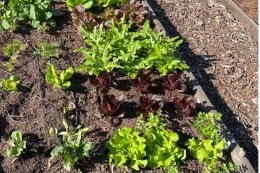
It’s tempting to grab a shovel and turn over all the soil in your garden as you prepare for summer planting. But should you? Increasingly, science is saying “no.” Every time you dig into the soil, you’re disturbing a very intricate, living web of organisms, bacteria, and fungi that your plants need to thrive. In contrast, a “No-Till” approach minimizes soil disturbances and keeps organic material like leaves, compost and coarsely chopped plants on the ground’s surface to slowly decompose. By keeping it moist and protected from beating sun and pounding rain, this organic material allows the soil to stay crumbly and ideal for planting.
More information: No-Till for Home Gardeners
Months: March April May October November
Tags: Best Practices Garden Basics To-Dos
Shrubs

The fall is a good time to add shrubs to your yard. They are perennial and most require little maintenance. California natives are particularly low-maintenance plants. If they go in the ground now, the new plants will have time to establish strong root systems and soak up the winter rains before being stressed with the strong summer sun. All plants need special care until they are well established. After a year or two they can better handle the dry heat and probably less regular water. When choosing a plant, the most important considerations are the conditions of the site (soil, sun, wind, moisture) and the purpose of the plant (beauty, shade, privacy, food.) Then make sure you know the eventual size of the plant (width first, then height) to make sure there is adequate space for it. That helps narrow down your selection, and then you can choose whatever looks or smells pretty to you or to whatever you might be trying to attract to your garden.
More Information: UC Davis Arboretum All-Star Plant Database
Months: October
Tags: Best Practices To-Dos What to Plant
Slime Molds
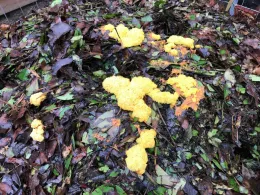
Slime molds come in a variety of colors and shapes. They often appear suddenly and look worrisome. According to the Mississippi State Extension, “when slime molds find something to eat, they surround their food and then swallow it. Slime molds may feed indirectly on dissolved substances escaping from organic matter, but they usually feed on microorganisms such as bacteria.” In general, no action is needed. They need moisture to grow and will disappear when the area dries out. Just enjoy this marvel of nature while it’s there.
Months: January February March April October November December Any Month
Tags: Best Practices Pests and Diseases
Sooty Mold
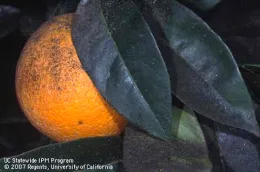
If your citrus leaves have a black coating, you may have a sooty mold problem. This black mold can also be seen on citrus fruit, avocado leaves, magnolia leaves, hibiscus, other host plants, and even on sidewalks beneath trees.
The sooty mold fungi grow on “honeydew”, a sticky substance excreted by plant-sucking insects such as aphids, scale, mealybug, and whitefly. They suck the sap out of plants and excrete excess sugars. It exists purely on the surface of a plant and is not a systemic issue. By itself, the fungi cannot kill the plant but it can coat the leaves to the extent that sunlight is prevented from reaching the leaf surface, thus reduce photosynthesis.
Ants protect the sucking insects from their predators so they can eat the honeydew. Keep ants out of trees and away from honeydew-producing insects by applying a sticky compound such as Tanglefoot on a tape wrapped around the trunk.
Pruning branches to allow better air circulation also helps. You can hose off the mold itself with a strong jet of water. And you can eat the fruit once you wash off the sooty mold.
For more information, see Sooty Mold Management Guide.
Months: August September October November December
Tags: Best Practices IPM Invertebrates Techniques Trees & Shrubs Pests and Diseases
Spiders in Your Garden

While we use spiders as spooky Halloween décor, common garden spiders are beneficial insects and only spooky to the insects and other pests that they prey on. Spiders such as orb weavers catch our attention with their large, dramatic webs, while dwarf spiders are so small, we may not even notice them. Others, such as jumping spiders and flower spiders, hunt their prey without spinning webs. Widow spiders are indeed venomous, but they are also very shy and hide in dark places. So even though they are common, bites from them are rare. Follow the link for a video about spiders and the myths surrounding them.
More information: Arachnophobia Video
Months: August September October November
Tags: Beneficial Insects Pests and Diseases
Stinkhorn Mushroom
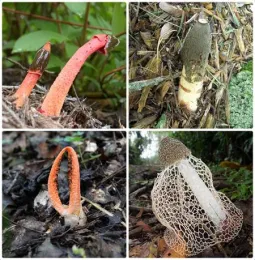
You might find stinkhorn mushrooms growing out of a lawn or a pile of mulch. They come in many colors, shapes, and sizes. They can grow as fast as four to six inches per hour. Stinkhorns get their name from their foul odor, described by some people as a rotting meat smell. The smell attracts insects, which then spread the mushroom spores. While the smell is unappealing, stinkhorns are short-lived, and they help break down organic matter into the soil. They are most likely to appear in cool, wet weather. UC has management advice for mushrooms and other nuisance fungi in lawns.
More information: Stinkhorn Mushroom
Months: January February March October November December
Tags: Best Practices To-Dos
Time for Seed Saving
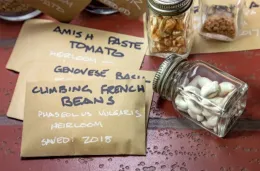
As we reach the end of the summer garden season, were there some vegetables you particularly loved this year? If yes, consider saving their seeds for next year’s garden. The easiest seeds to save are from self-pollinating plants like beans, peppers, lettuce, and tomatoes. Be aware that seeds from hybrid varieties may not breed true. Dry fruit plants like beans and peas can just be separated from their pods, dried, and stored. But tomatoes require a “wet” method where seeds are scooped into a container, fermented, washed, dried, and stored.
More information: How to Save Seeds
Months: August September October
Tags: Techniques Vegetables To-Dos
Today’s Grubs Are Tomorrow’s Beetles
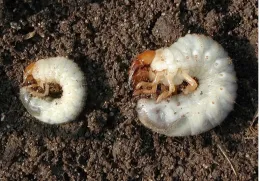
The white grubs commonly found in lawns and gardens hatch into masked chafers and green fruit beetles. Masked chafer grubs are about 1 inch long and are mostly found in lawns. They feed on roots, so a large population can cause dead patches. You may also see lawn damage from animals digging for these tasty treats. The green fruit beetle grub is much larger, about 2 inches long, and is found in compost or garden beds high in organic matter. The grubs don’t damage plants, but the iridescent beetles feed on fruits. Finding an occasional grub is no cause for worry. Just leave them out for birds to feast on.
More Information: What are White Grubs?
Months: April May June July August September October
Tags: Invertebrates Pests and Diseases
Transplanting Vegetables
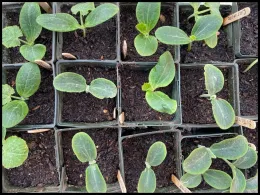
As vegetable seedlings start to outgrow their pots, you can transplant them into larger pots, raised beds, or the ground. Make sure the seedling is well-watered before moving it. To remove the plant, either turn the pot upside down — with your other hand positioned to catch it! — or pull the entire root ball out with a fork or other utensil. Be sure never to handle the seedling by the stem, with its vascular tissue that conducts water and food. If the roots are packed together or circling, gently pull them apart. Then gently move the plant to its new home, lightly packing the soil around it. Make sure the soil is at the same level on the stem as in its original pot, except for tomatoes and peppers which can be planted deep. Immediately water thoroughly. A little fertilizer can also be added when transplanting. Transplant shock can be minimized by not changing too many conditions at once, e.g., temperature, wind, or sun exposure.
More information: Vegetable Planting Handbook (Los Angeles Master Gardeners)
Months: February March April May June July August September October
Tags: Techniques To-Dos
Vegetable Planting Chart
Wondering what vegetables can be planted now? To get the best success—whether planting from seed or transplants—refer to our Santa Clara County Vegetable Planting Chart. It’s based on our own garden experiences.
Months: February March May June July August October Any Month
Tags: Best Practices Garden Basics Herbs Techniques Vegetables What to Plant
White Butterflies and Green Caterpillars
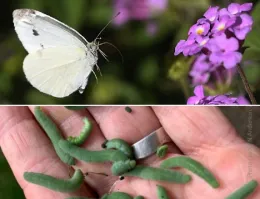
Have you seen these small yellowish-white butterflies fluttering around? Cabbage white butterflies feed on many flowers, but for laying their eggs. They favor the cabbage family, such as broccoli, cauliflower, and mustard. The velvety green caterpillars, also called imported cabbageworms, feed on the leaves after hatching. While mature plants tolerate a few holes munched in their leaves, young seedlings don’t have foliage to spare. Cultural controls include handpicking the caterpillars, brushing the eggs off the undersides of leaves, and using row covers to protect the seedlings. UC lists additional options in the link below.
More information: Managing Imported Cabbageworms
Months: March April May June July August September October November
Tags: Invertebrates Vegetables Pests and Diseases
Wildfire Effects
We and our gardens have all been affected to varying degrees by the wildfires. If you have fruits and vegetables in your garden, you may be wondering if they are safe to eat. The simple answer is that there will likely be some chemicals in the plants, soil, and possibly the water, yet the benefits of eating the produce are thought to outweigh any potential risks. University of California Cooperative Extension Sonoma was involved in a study after the 2017 fires and a report on Produce Safety after Urban Wildfire is available for those interested in learning more. Chemicals present in smoke vary depending on what burns: toxins from building fires differ from those of trees and grasses. When working in a garden that has been exposed to smoke and fire, consider wearing a mask and gloves. Wash produce well before eating it. To help the garden recover, amend the soil with compost or fresh soil. Keep in mind the nutritional benefits of consuming fresh produce!
For the oenophiles out there, UC has published an article Where there is fire, is there smoke flavor in winegrapes? “Smoke taint” can produce undesirable flavors in the wine, ranging from “wet ashtray” to “sweaty socks.”
More Information: Produce Safety After a Fire
Months: September October
Tags: Best Practices To-Dos
Winter Soil Health
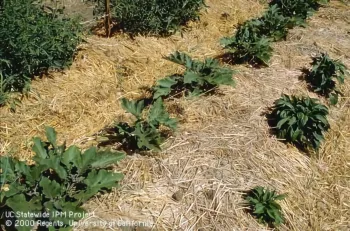
Areas of the garden that are not actively planted still need protection to support soil life and prevent soil erosion. Cover crops are one option. Their roots break up the soil, and if they are legumes, like fava beans, they add essential nitrogen. Mulches hold in moisture, moderate soil temperature, and help prevent weeds from germinating. Unlike rocks and synthetic mulches, organic mulches like leaves, wood chips, or straw slowly break down, supporting beneficial soil organisms and adding nutrients to the soil. A top layer of an inch or two of compost will slowly work down into the soil, amending it with organic matter. Manure from herbivores can also be spread over the top of the soil. Even fresh manure, which could burn plants if applied directly, can be used over a bare area to decompose in place and be ready for the next planting season.
More Information: Keep Your Soil Healthy
Months: October November
Tags: Best Practices Soil Techniques To-Dos
Winter Vegetables
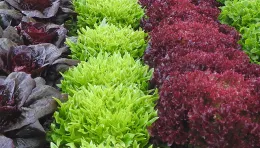
It’s good to plant winter vegetables so they have time to get established before cool winter weather arrives and the day length wanes. We recommend planting most cool season vegetables in early fall. But you might still have luck transplanting leafy greens such as lettuce, arugula, spinach, and kale, and fast growers like radishes and cilantro even later. Use the vegetable planting chart to check the months when planting might work. Avoid transplanting them during a heatwave or during the hottest part of the day. Provide some fertilizer, especially if you are putting them near where you grew your summer vegetables. You can also use this chart to calculate when to start seeds so they will be ready in time for planting. Remember that vegetables need at least 6 hours of sun for strong, healthy growth.
Months: August September October
Tags: Best Practices Vegetables To-Dos