
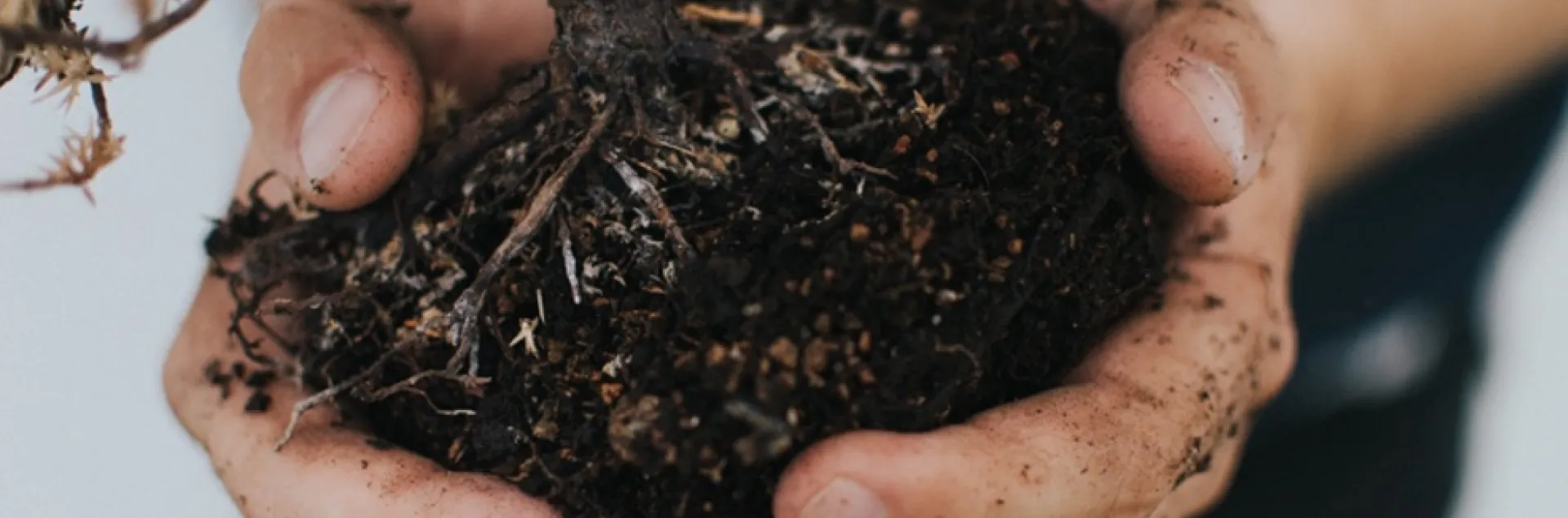
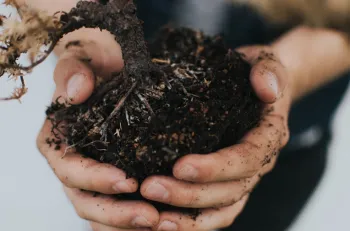
If you live in Marin, chances are you have clay soil. Don’t fret! Clay soil is more promising than it’s cracked up to be. Clay soil retains more water and holds more mineral nutrients than sandy soils. Amended with organic matter, it has the potential to become productive.
You have two choices
When it comes to gardening in clay soil, you have two choices:
- Amend your soil (see below), or
- Choose plants that thrive in clay soil (these plants also benefit from amended soil)
Understanding the basics of soil science
It helps to have a basic understanding of the science of your soil. Soil is a highly complex world of microorganisms, minerals, organic matter, oxygen and water. The mineral component of soil consists of sand, silt and clay particles, with sand being the largest in size and clay being the smallest of the three. Soil texture refers to the relative proportions of clay, silt, and sand in the soil. Clay soils are made up of at least 40 percent clay particles.
Clay particles bind to each other end to end and side by side. They form large sheets, which are stacked like a deck of cards and held together by electrochemical forces. This plate-like stacking of clay particles results in a large surface area. The individual clay particles carry a negative charge and therefore attract and hold onto (absorb) positively charged elements. Clay soils are relatively fertile because of this ability to absorb the important nutrients plants need to thrive and grow. Sand particles, on the other hand, have no electrical charge and are not able to absorb nutrients.
In clay soils, when these horizontal clusters are stacked high and consolidated over time, they become tight and sticky, which causes the soil to retain moisture and drain slowly. Once clay soil dries out, however, it can be hard for moisture to penetrate the surface.
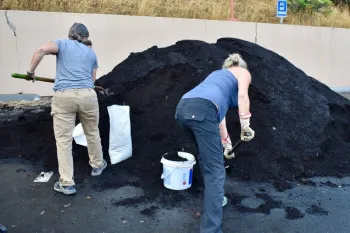
The magic ingredient: organic material
Adding organic amendments to clay soil lightens texture, discourages compaction, adds nutrients, improves drainage and aeration, and provides pore space, which is essential to plant growth. This improved soil condition is known as tilth.
By adding organic material to your soil, you are building good tilth in a couple of ways. First, organic material coats the soil particles, physically separating clay particles and aggregates from each other. More importantly, the microorganisms that feed on the organic matter secrete a substance called glomalin, which helps increase water infiltration, while reducing erosion and runoff. Simply put, feeding your soil organic matter can work wonders for the health of your garden.
Organic materials: take your pick
There are many sources of organic matter:
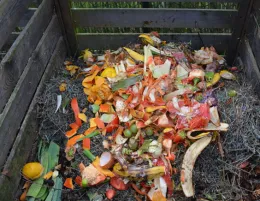
Compost can be made at home from yard waste, leaves, and vegetable scraps, or purchased in bags or in bulk from your local nursery or garden supply store. A good rule of thumb when incorporating compost as a soil amendment is to apply it at 25 percent of the planned depth. For example, work 2 inches of organic matter into a depth of 8 inches of soil. Photo: Pickpic
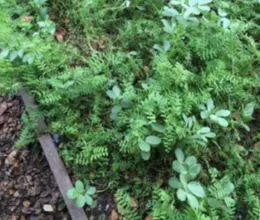
Cover crops are temporary plantings, usually seeds sown in autumn, which add organic matter and protect the soil from wind and water erosion. When the soil has warmed up in the spring, work the resulting crop into the soil as deeply as possible so that the decomposing plants add nutrients to the soil. Legumes such as fava beans, soybeans, crimson clover, red clover, and hairy vetch are particularly valuable to Marin growers because they add nitrogen to the soil. Cover crops are often used in vegetable gardens. Photo: Marie Narlock
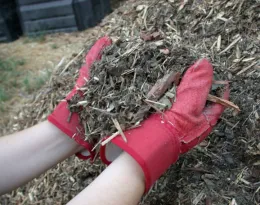
Mulch, or top dressing, is an excellent way to add organic matter continuously to your soil. Mulch reduces moisture evaporation, suppresses weeds, moderates soil temperature, and helps prevent soil compaction. It decomposes slowly, thereby adding organic matter over a longer period. Photo: Creative Commons

Other soil amendments include earthworm castings, humus, sawdust, and many more. Be sure you understand what it is you’re trying to achieve before adding anything to your soil. Photo: Marie Narlock