
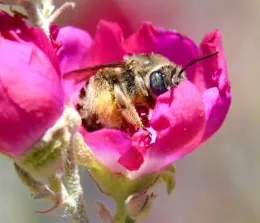
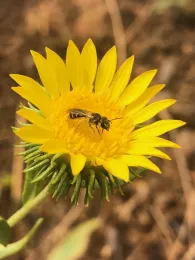
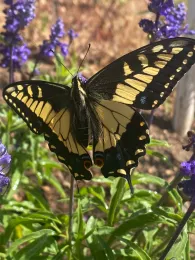
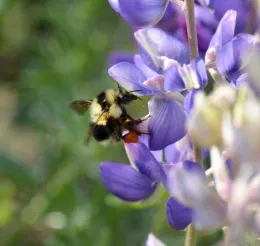
The four pollinator beds feature plants that are attractive to bees, butterflies, moths, flies, beetles and hummingbirds. All of these flying creatures are considered to be pollinators, meaning they transfer pollen from one flower to another as they sip nectar or purposefully and/or inadvertently pick up pollen as they go.
Adult bees feed on nectar for energy. The pollen they collect is a protein and is a vitamin rich source which they supply to their young. Nectar and pollen are combined to form a “bee loaf” for larvae to eat.
Native bees have different emergence patterns which means that different species emerge from their nests at different times of the year. Bees have timed their emergence (whether very early spring, late spring/summer or early fall) with the blooms of native flowers they prefer to forage on, but will also visit, non-native ornamental flowers.
We follow the advice of Dr Gordon Frankie and his 30 years of research with the UC Berkeley Urban Bee Lab by providing flowers (both native and non-native) year-round to supply bees with pollen and nectar all year. Go to www.helpabee.org for a plant list.