
Three tips for making the best pickles
by Ariel Patton, UC Master Food Preserver Online Delivery Program Volunteer
There's nothing quite like a sweet, tangy, crunchy pickle to perfect your next sandwich. This bread & butter pickle recipe is an annual staple in my kitchen. With the amount of slicing required, this is a fantastic recipe to invite a friend to join in the fun! Find a few pickling tips below and the recipe at the bottom of the article.
Tip 1: Select good produce for pickling
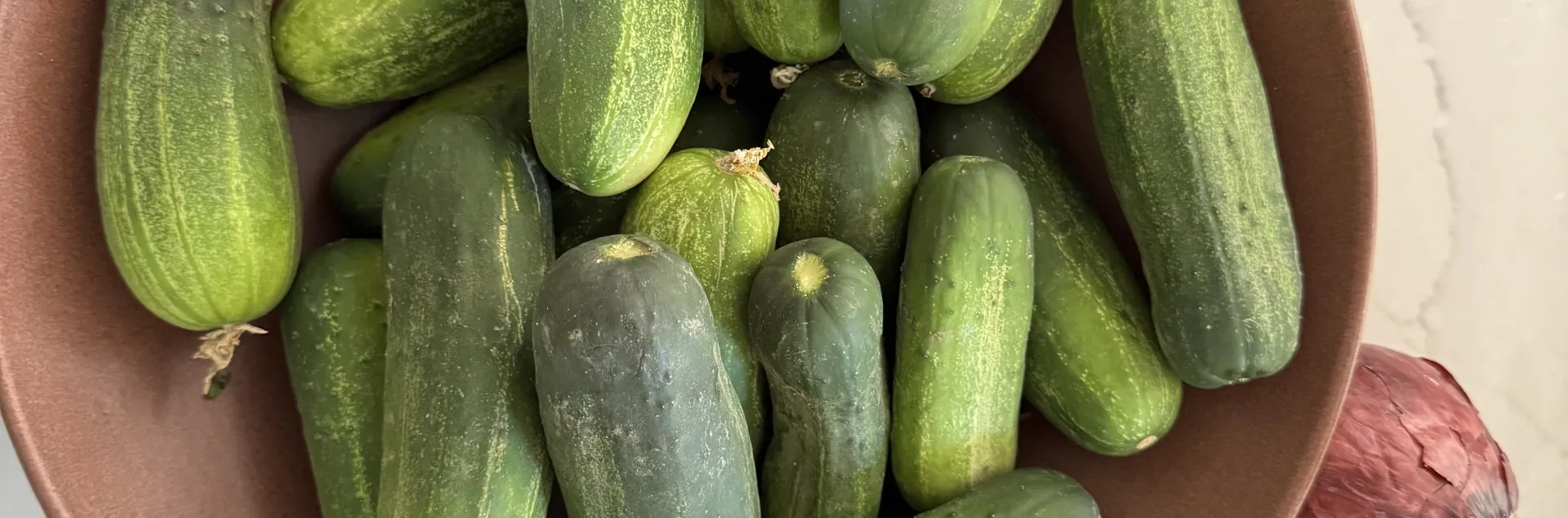
When selecting produce, not all cucumbers are created equal. Look for varieties that will hold up through the pickling process, typically those with thicker skin. Select cucumbers that are fresh and not overripe, as the cucumbers get seedier as they ripen. I chose a variety of pickling cucumber that were roughly 3 to 5 inches long with a bit of a spiny, warty texture:
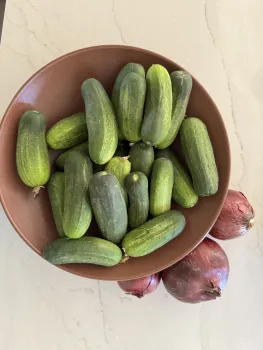
This recipe is flexible with respect to the type of onion. I have used red onions and sweet yellow onions for this recipe, and both have turned out crisp, sweet, and delicious.
Tip 2: Remove the blossom end of the cucumber
Have you ever closely inspected a cucumber that was parked in your refrigerator a few days too long? It's always the end with the blossom that softens first. The blossom end is the source of an enzyme that causes softening of the cucumber. For this reason, trim and dispose of at least 1/16 inch off the blossom end before slicing your cucumbers.
Tip 3: Keep those spices fresh
As I was cooking the cucumbers late one evening, I noticed that my jar of turmeric was down to the last teaspoon. Uh-oh! There was good news and bad news. The good news was that I still had another old jar of turmeric at the very back of the cabinet with just enough to fulfill the 1 tablespoon requirement. The bad news was that this older jar of turmeric was from 2022, so the potency of the spice had declined.
Before starting cooking, check your spices to ensure they are still fresh and potent. Some jars will have a suggested best-by date. Otherwise, smell and taste the spice to ensure it still packs the flavor you are looking for.
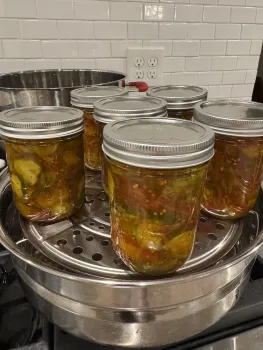
The hardest part of this recipe is waiting the suggested 4 to 5 weeks for flavor to develop before popping open a jar and inhaling forkfuls of these delectable pickles!
Recipe
Bread-and-Butter Pickle Slices
(yields about 8 pint jars)
Ingredients
6 pounds of 4 to 5-inch pickling cucumbers
8 cups thinly sliced onions (about 3 pounds)
½ cup canning salt
Crushed or cubed ice
4 cups vinegar (5% acidity)
4½ cups sugar
2 Tablespoons mustard seed
1½ Tablespoons celery seed
1 Tablespoon ground turmeric
Directions
Preparation – Wash cucumbers. Cut 1/16 inch off the blossom end and discard. Cut into 3/16-inch-thick slices. Combine cucumbers and onions in a large bowl. Add salt. Cover with 2 inches crushed or cubed ice. Refrigerate 3 to 4 hours, adding more ice as needed.
To Make Pickles – Add sugar and remaining ingredients to vinegar in a large pot. Boil for 10 minutes. Add well-drained cucumbers and onions and slowly reheat to boiling. Fill pint or quart jars with slices, leaving ½-inch headspace. Fill to ½ inch from top with hot cooking liquid. Remove air bubbles. Wipe jar rims. Adjust lids. Process pints or quarts for 10 minutes in a boiling water bath if your kitchen is below 1000 feet elevation. Process for 15 minutes if you are between 1001 – 6000 feet, or 20 minutes if you are above 6000 feet.
After processing and cooling, jars should be stored 4 to 5 weeks before use to develop ideal flavor. Store any jars that fail to seal after processing in the refrigerator.
Recipe source: So Easy to Preserve, 6th Edition. Cooperative Extension, The University of Georgia.