

WISER › Extension Materials & Guides › Watershed Resilience Series
Science-Based Resources for Resilient Watersheds
Clear, practical, and science-based resources that help people understand how watersheds work, why they matter, and how we can strengthen their resilience.
Developed through WISER, the series connects watershed science with everyday decisions, community stewardship, forests and headwaters, water quality, climate resilience, and the landscapes that support people and ecosystems across California.
← Back to Extension Materials & Guides
Project support: The Watershed Resilience Series is supported by the UC ANR RREA Project & Student Employee Program .
About the Series
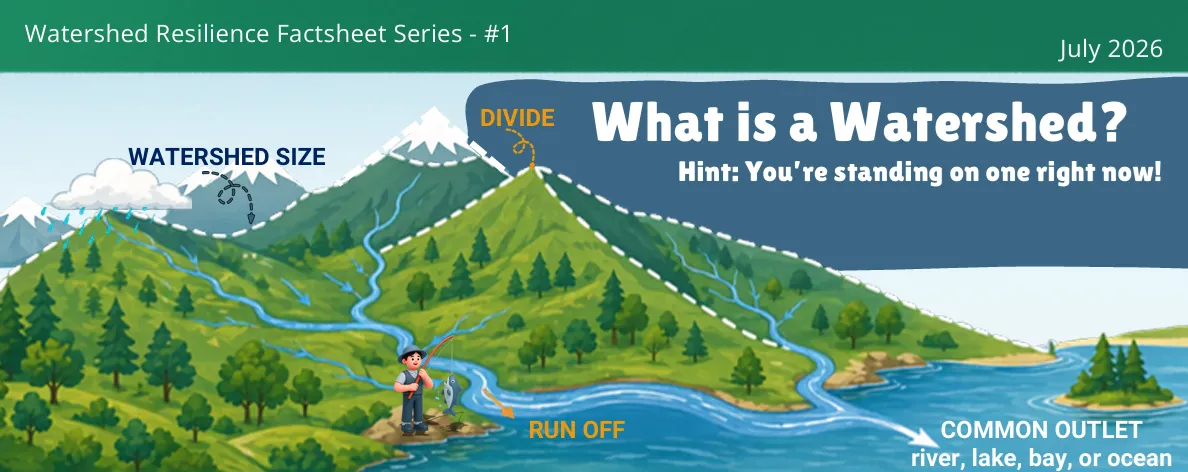
Watersheds connect forests, farms, cities, wetlands, streams, groundwater, wildlife, and people. Water moving through a watershed links conditions upstream with communities and ecosystems downstream.
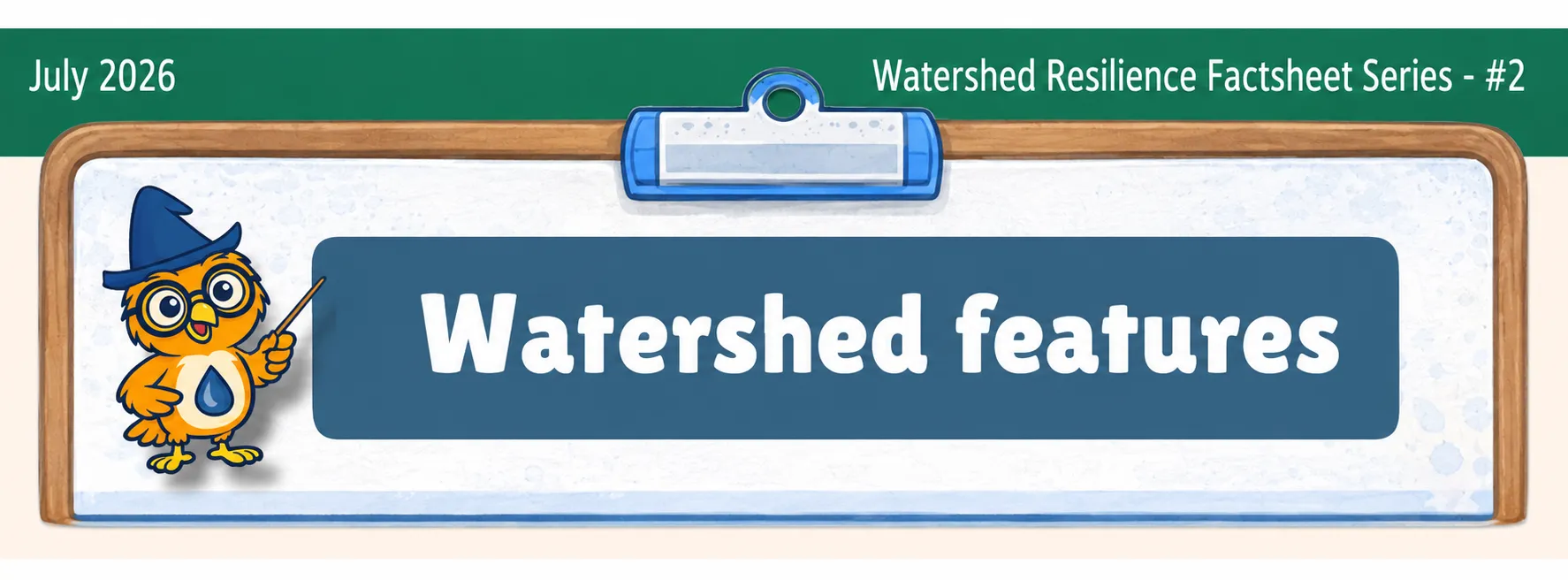
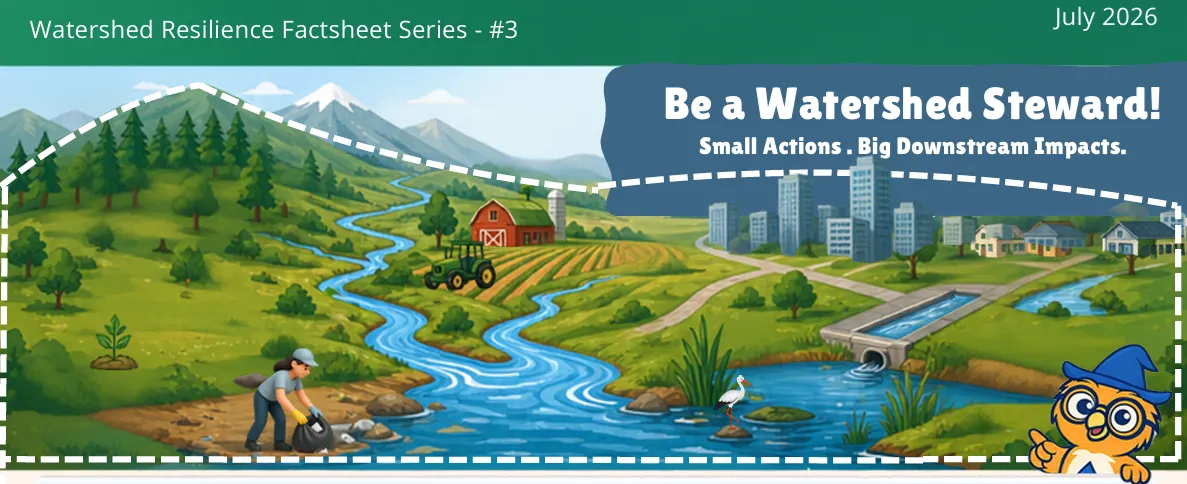
The Watershed Resilience Series translates watershed science into accessible factsheets and educational resources. The first materials introduce watershed fundamentals, physical and ecological features, and practical actions people can take to support healthier watersheds.
The series will continue to grow with new resources on watershed processes, forests and headwaters, wildfire, soils, groundwater recharge, water quality, climate resilience, community partnerships, and stewardship.
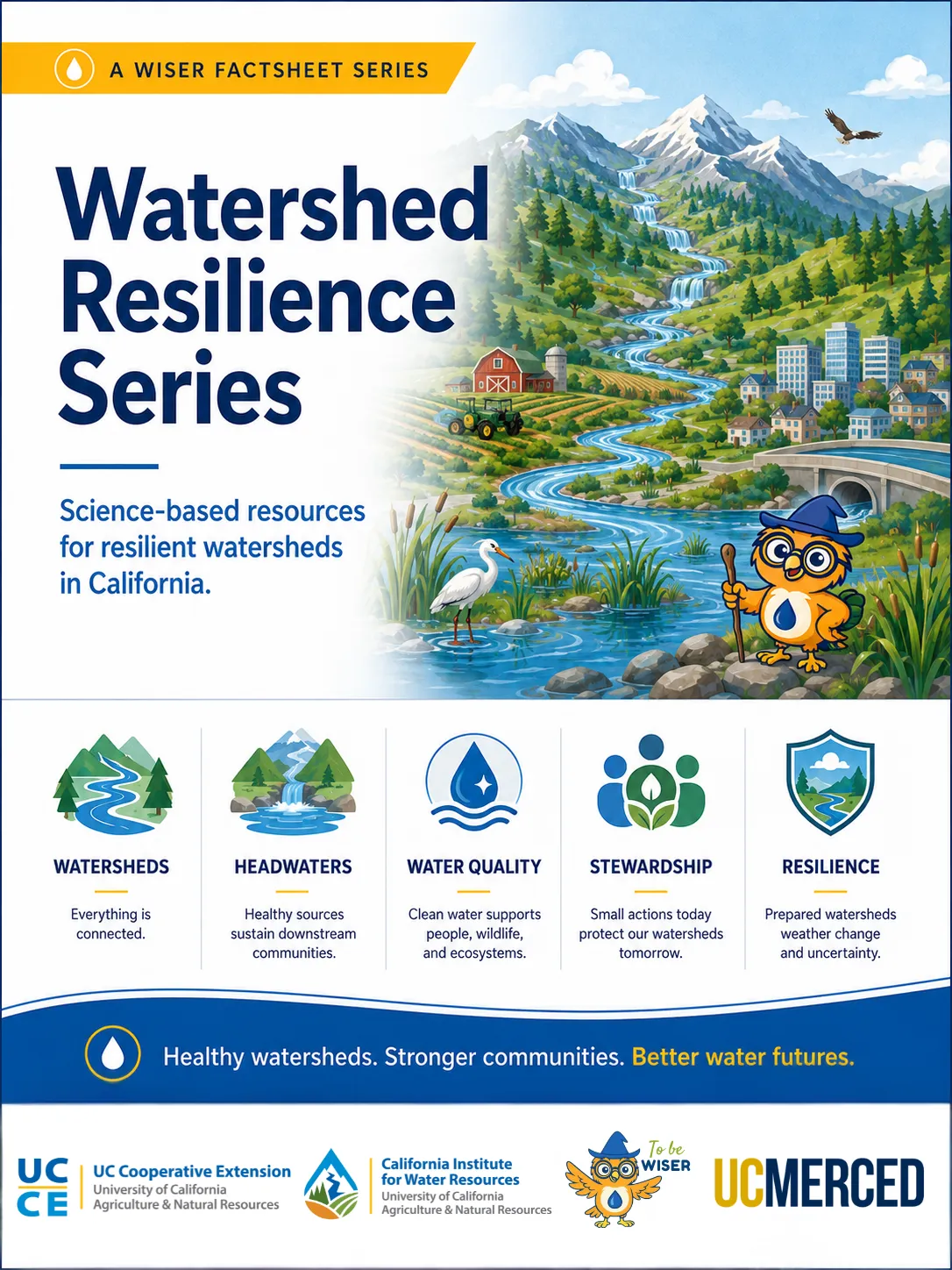
A growing WISER factsheet series for understanding and strengthening watershed resilience.
Explore the Factsheet Series
Browse the current Watershed Resilience factsheets. All resources are available in English and Spanish, and new factsheets can be added directly to this library as the series expands.
A Growing Resource Library
New watershed factsheets, videos, stories, and educational materials will be added as the series continues to grow. The library above is designed so new products can be added without changing the overall page structure.
Project Team & Contributors
The Watershed Resilience Series brings together student research, science communication, UC Cooperative Extension expertise, UC Merced collaboration, peer review, and project coordination through WISER and the California Institute for Water Resources.
Student Research & Science Communication
Claudia Núñez
Claudia supports research, content development, design, and science communication for the series’ factsheets, videos, and educational resources throughout the project year.
UC Cooperative Extension Contributors
Laura Garza, Esther Lofton, and Lal Singh
Laura, Esther, and Lal contribute Extension experience and technical guidance so the materials respond to relevant watershed education and outreach needs.
UC Merced Collaborator
Colleen Naughton
Colleen contributes UC Merced expertise to the development of the watershed factsheets. She is an Assistant Professor of Civil and Environmental Engineering at UC Merced.
Peer-Review Support
UC ANR Water Program Team
Members of the UC ANR Water Team review the materials to strengthen scientific accuracy, clarity, accessibility, and practical relevance.
Project Coordination
Erik Porse and Erika Cassio Madrazo
Erik and Erika coordinate project direction, student mentorship, Extension planning, editorial development, and science-communication guidance through the California Institute for Water Resources and WISER.
Help Build the Series
Have a watershed question or an educational topic that should be included in a future resource? WISER welcomes ideas from communities, educators, Extension professionals, agencies, watershed groups, and natural-resource practitioners.
Connect with WISER
Questions about the Watershed Resilience Series, educational resources, or opportunities to collaborate? Connect with the CIWR team.