
Preserve it! Make jams and jellies
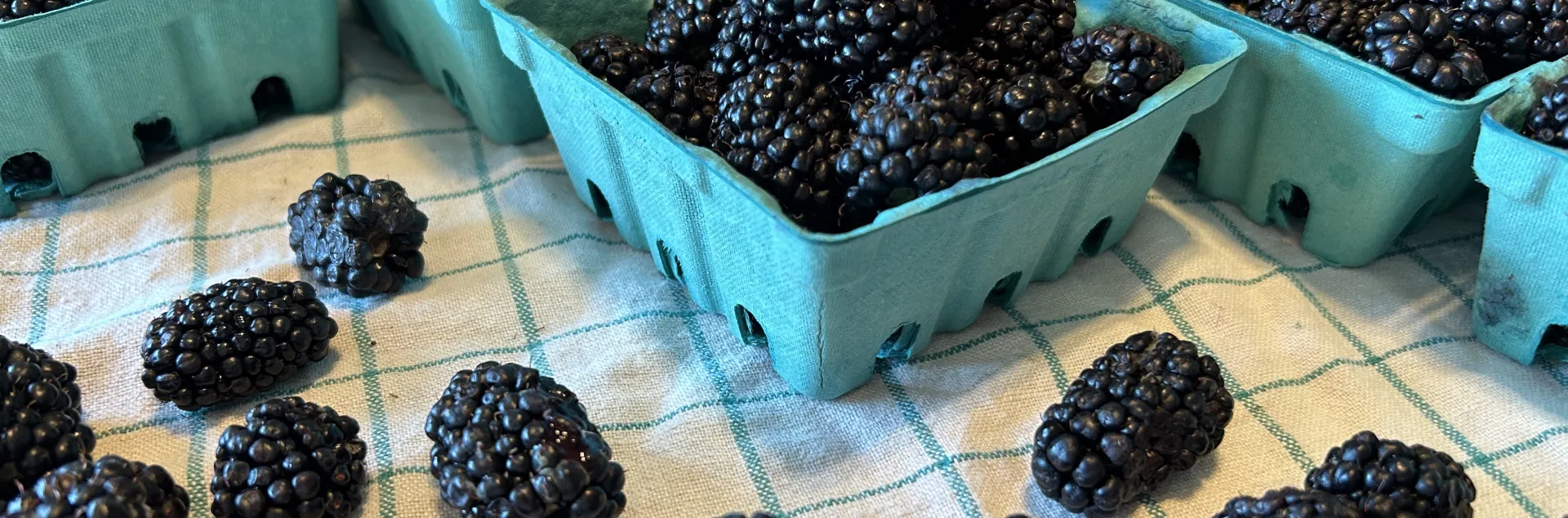
All varieties of berries are in season. While they are delightful added to salads, stirred into your daily yogurt, made into a pie, or blended into a smoothie, we have all been over-enthusiastic when stopping at a fresh berry stand. You made the smoothies, the pie, the additions to the salads and yogurt, and you still have half a box of fresh ripe berries that need to be dealt with right away. What to do? Make a batch of jam (or measure out the fruit for a batch, package it, label it, and stick it in the freezer to make jam when you have more time or the weather is not searing hot).
How to make jams and jellies
Jam is made by cooking crushed or finely chopped fruit with sugar to a spreadable consistency. Pectin and acid are sometimes added, depending on the recipe and consistency desired. There are several methods for making jams (and jellies).
Pectin, dry or liquid (depending on your recipe), is used to achieve a predictable gelled consistency for the quick jam or jelly method. Not all pectin is created equal. Do not interchange powdered and liquid pectin. Follow a tested recipe. This jam or jelly needs to be processed in a boiling water or atmospheric steam canner to be shelf stable.
If you have a chunk of time, you can use the cook down (or long cook) method to make your jam or jelly. Instead of using pectin, a product is cooked down slowly to the gel point. Cook the soft spread until it reaches a temperature of 220 degrees F which is 8 degrees F above the boiling point of water at sea level. Adjust this temperature for altitude by decreasing it by two degrees for each 1,000 feet above sea level. This jam or jelly also needs to be processed in a boiling water or atmospheric steam canner to be shelf stable. Processing time needs to be increased at higher altitudes, per recipe specifications, to ensure a safe product.
Freezer jam or jelly method does not require a boiling water (or atmospheric steam) canning process. Special freezer jam pectin is used. This is a great method for kids to make without using the stove. As the name implies, this jam or jelly is stored in the freezer.
Each of these three methods result in a wonderful jam or jelly, each with a different consistency from a more firm to a softer spread.
This article by UC Master Food Preserver Laurine Lewis first appeared in the July issue of Village Life.
The UC Master Food Preservers of El Dorado County are a great resource for answers to your food safety and preserving questions. Have a question? Ask us!