
By Peggy Beltramo, UC Master Gardener of Placer County
From The Curious Gardener, Spring 2021
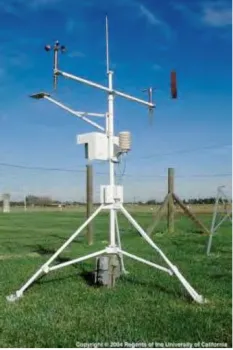
We have always had gardeners who marked the seasons and the weather where they gardened. From a historical perspective, Thomas Jefferson was an early climate record keeper. He tracked precipitation and temperatures at Monticello for more than 50 years.
Do you keep a garden journal? I mean to, but I am not consistent. That means that I am not sure whether that really wet year was two years ago or three. I can usually remember whether last year was especially wet or dry, hot or cold, but without records, my memories are imperfect. Still, I recognize that our weather is changing.
This article will not debate the ifs, hows or whys of climate change; nonetheless, gardening is always an adventure, and it will be more so as we move forward. If we look at trends, we can better care for our gardens and make wiser choices. Just remember that plants don’t respond to averages, they respond to extremes.
Examining the science, are we talking about weather or climate? What is the difference? Weather is about what the temperature will be tomorrow or whether it will rain on Thursday. Climate looks at long term, about 30 year, averages of daily weather. Climate change is measured in small increments, but these small changes can have a huge impact on our gardens and as they continue, however incrementally, they add up over time.
Looking to the future, we must expect that rising temperatures will contribute to heat waves and extreme droughts. Decreased rainfall is predicted, with fewer but more intense rain events, leading to possible flooding. Tree mortality has already increased wildfire risk and intensity.
As the climate warms, changing seasonal patterns can affect the plants and the wildlife that depends on them. Climate scientists have found that changes in the historical timing of plant and animal phenology (word of the day: the study of cyclic and seasonal natural phenomena, especially in relation to climate and plant and animal life) is one of the most sensitive indicators of the local effects of global climate change. In another nod to historical record keeping, Henry David Thoreau recorded plant species and their flowering times near Walden Pond in the 1850’s, providing scientists data to compare with the bloom times currently seen. Plants today are flowering up to three weeks earlier than in Thoreau’s time. This can disrupt insect species dependent on nectar and pollen to provision their nests and the birds dependent on caterpillars to feed their young. Also, blossoming out of sync can jeopardize crops, if a subsequent freeze occurs.
What can we as gardeners do to help our plants and the animals they support survive? There is so much to cover on the subject of gardening to adapt to climate change that it cannot be covered well in a single article. Following is a list of adaptations that you need to consider, with links that provide solutions to manage your changing gardens.
Monitor your gardens.
Observe and monitor the health of your plants. Mark changes in phenology and watch for new pathogens, pests, and invasive plants as climate change alters our garden environments. https://marinmg.ucanr.edu/BASICS/SITE_ANALYSIS/
Improve and protect the soil.
Soil is a bank for carbon sequestration. Add compost to your beds and cover with mulch to slow evaporation. https://ucanr.edu/sites/soils/
Choose plants for our climate.
California natives and other low water plants are good choices.
Support our native pollinators.
Strive for year-round blooms. Insects and hummingbirds rely on flower resources, which may bloom outside of seasonal norms, so keep the buffet open.
Eliminate invasive plants.
Climate change is increasing the geographic range of invasive plants. https://ipm.ucanr.edu/PMG/PESTNOTES/pn74139.html#INVASIVE
Adapt your food garden.
Pay attention to specific planting dates, choose varieties for your growing season, carefully monitor irrigation. Check out our Vegetable Planting Guide.
Be fire smart.Prepare defensible space and pursue fire resistant landscaping. https://www.readyforwildfire.org/prepare-for-wildfire/get-ready/fire-smart-landscaping/
Get Advice!
Remember, Placer and Nevada County Master Gardeners have the best locally appropriate information for your garden. You may learn more about climate change from other sources, but keep in mind they may not be speaking locally, about your backyard. If you are a subscriber from outside Placer and Nevada Counties, you can get local help from your local county’s Master Gardener Program.
Bert Cleg from the University of Michigan said, “Adapting gardening practices to climate change becomes an exercise in managing risk. Like managing other types of risk, diversity is the best tool gardeners have for dealing with climate change.” So, take your gardener’s journal, go out in your garden and start by observing what is there. Then write it down! Keep your journal up to date, so you can monitor what is happening. “The best fertilizer is the gardener’s shadow.” —Chinese proverb.
References
- Adapting Your Garden for a Changing Climate. UCANR. n.d. https://marinmg.ucanr.edu/BASICS/CLIMATE_CHANGE_-_YOUR_GARDEN/Adapting_to_a_Changing_Climate/
- Science and Climate. UC Davis. n.d.