
by Elaine Kelly Applebaum, UC Master Gardener of Placer County
From The Curious Gardener, Spring 2023
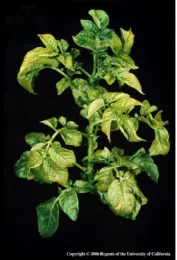
The world is a tough place for plants. Bugs, birds and mammals eat them. Bacteria and viruses infect them. Fungi weaken and destroy them with various forms of rot. These are biotic, or living, causes of problems. But plants are also plagued by abiotic problems—non-living things or conditions that adversely affect plant growth.
Many abiotic problems are related to weather—extreme heat or cold, strong winds, intense sun, too much or too little rain. Others are related to plant nutrients—too much or too little of a particular element, or soil conditions that make these nutrients unavailable to the plant. And then there are the atrocities we humans inflict on plants in the form of mechanical injury, misapplication of pesticides, or compaction of soil. Air pollution, smoke, and fire are additional abiotic perils.
It is not always easy to tell whether the cause of your plant problem is biotic or abiotic. Often one can lead to the other, or there can be multiple things going on at once. For instance, trees suffering from drought stress (abiotic) may be more likely to be attacked by insects (biotic), or root rot pathogens (biotic) will thrive in soggy soils (abiotic). Diagnosing a problem requires careful observation, not only of the plant, but also of the surrounding environment.
Is just one plant affected? Often, though not always, biotic pests attack one species or closely related plants, whereas abiotic factors affect many different plants at the same time. Did the problem appear all at once (common with abiotic causes), or develop and spread slowly (more likely with diseases and pests)? Symptoms of abiotic disorders appear in the plants themselves—drooping or discolored leaves, slow growth, wilted or dead stems and branches. Living culprits can cause similar symptoms, but also will be physically present or leave signs they were there—chewed areas, frass (insect droppings), slime, oozing, etc.
Even if you determine the cause is abiotic, you may have a hard time pinning down the specific disorder. Take, for instance, a symptom prominent in our area this time of year—yellowing leaves. There are several nutrient deficiencies that lead to leaf chlorosis. Inadequate nitrogen will cause older leaves to turn yellow. Not enough manganese leads to yellowing in new leaves. Iron deficiency will cause areas between leaf veins to turn yellow. Fronds on palm trees that aren’t getting enough magnesium will turn yellow as well. You might be tempted (or advised by nursery personnel) to buy and apply the appropriate chemical element. But wait!
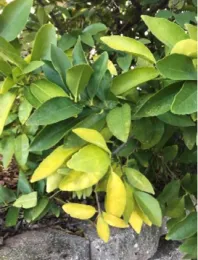
Very often there is plenty of a nutrient in the soil but, because of certain soil conditions, the plant can’t access or absorb the nutrient. If the soil is too cold, or too wet (anyone have that problem this year?), the plant won't be able to uptake enough nitrogen, iron or manganese, no matter how much you add to the soil. The pH of the soil also affects nutrient availability, so yellow leaves could be an indication your soil is too acidic or alkaline.
Confused? In the case of yellow leaves, simply waiting for the soil to dry out and warm up could be the solution. If not, master gardeners are here to help you diagnose your plant problems, whether they’re biotic or abiotic. Give us a call!
References:
- Costello, Larry, and Edward J. Perry, Nelda P. Matheny, et.al. Abiotic Disorders of Landscape Plants. UCANR Publication 3420. 2003.
- Tjosvold, Steve and Steve Koike. Strategies for Diagnosing Abiotic and Biotic Problems. UC Nursery and Floriculture Alliance. 2015. Download_UCNFA_News_as_PDF57650.pdf