
By Trish Grenfell, UC Master Gardener of Placer County
From The Curious Gardener, Summer 2022
Originally published in Auburn Journal, July 17, 2021
What is wrong with my tomato? Here are some things to look at:
1. Blossom drop: When daily temperatures are greater than 90 degrees and nights greater than 72 degrees, the dried-out blossoms simply fall off the plant. No blossoms equal no tomato fruit. Improvise a shade structure over your tomato plants during hot days. Hand pollination on a windless day will help produce fruit when flowers are present. Slightly vibrate the vine as if you were an electric toothbrush.
2. Blossom end rot: When water is not sufficient to move calcium all the way up the plant to the tomato fruit, the tissue dies on the blossom end of the fruit. Prevent this by evening out your watering to make sure enough water is always present for the plant to uptake water and calcium. Use mulch to prevent water loss.
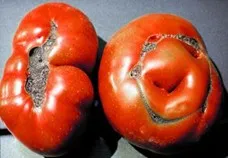
3. Cat facing: Little research has been done on this topic. Many different factors may cause tomato fruit to be misshapen. Cold temps during flowering, too much nitrogen fertilizer, excessive pruning may contribute. If fruit is cat-faced, chances increase for an infection of black mold rot. To prevent this distortion, grow cultivars less prone to it. (Heirlooms often are cat faced.)
4. Cracking and splitting: See “Blossom end rot.” The tomato plant needs an even watering schedule. Rapid changes in water levels may cause the tomato to expand faster than its skin can grow. Pests and diseases can then enter through those openings.
5. Green shoulders: Sometimes, the tomato fruit does not completely ripen, leaving its top (shoulders) green or yellow. High temperatures and exposure to direct sunlight are probably responsible for this phenomenon. Discard the green portion when you eat it.
6. Herbicide damage: When a broadleaf weed killer drifts into the vicinity of a tomato plant, the leaves may become thick, twisted, tightly curled and stay small. If the herbicide is sprayed during hot weather, it may evaporate into a vapor, which can spread long distances. Tomatoes are very sensitive to any herbicide damage.
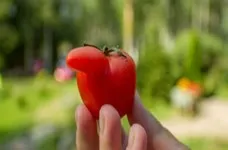
7. Horn/nose development: A physiological, genetic mutation sometimes forms an internal segment (locule) of the tomato on its exterior. And it looks like a nose or horn (see this and other photos with this story). This may occur during fruiting in very cold or very hot weather and does not damage its nutritional value.
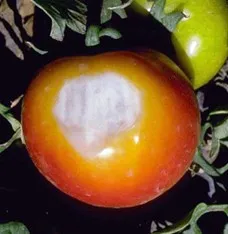
8. Sunscald: Tomatoes which have been consistently sun-exposed may develop a yellow/brown discoloration on its sunny side, which will turn leathery and white in time. That tomato now is vulnerable to rot pathogens. Watch out for defoliation (diseased leaf drop or hornworm leaf feast) on the tomato plant, which can easily result in sunscald on nearby fruit.
9. Zippering: If the tomato flower’s anther (part that produces pollen) sticks to the tomato fruit as it grows, a thin, brown, necrotic scar forms that may extend to the blossom end. Little cross scars happen along the big scar, causing the scar to look like a zipper. Cultivars vary in their tendency to get this disorder. Fruit is edible if it is still intact with no openings for pathogen infections or insect damage.
References
• Volesky, Nick and Elaine Lander. Abiotic Problems of Tomato. UCIPM Urban Integrated Pest Management. July 11, 2021. https://ucanr.edu/sites/urbanIPM/?blogpost=49005&blogasset=79247
• Vegetable Problems in Summer - Abiotic Disorders. UCCE Master Gardeners of Sacramento County. n.d.