
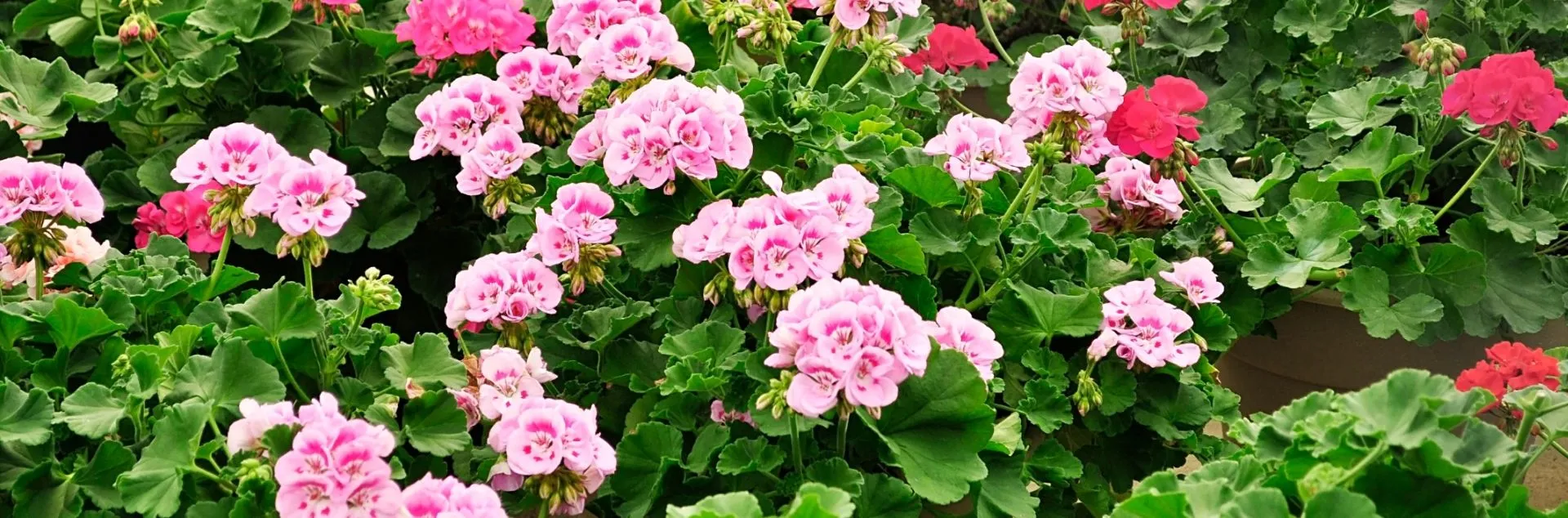
Geraniums and Condiments: American Classics
By UCCE Master Gardener Julie Silva
Mayonnaise, mustard, and ketchup have prestigious places in your refrigerator. They are basic, well loved, long lasting, and delicious. When you think about those three condiments, your mind travels to the last sandwich or fries you enjoyed. They are American staples.
American staples exist in everything, not just condiments. There are things we love because they are consistent and long lasting. Like recliners, 70’s rock and roll, brown eggs, and bicycles, not necessarily in that order. Even in Mother Nature’s world, we have plants that are American staples. These plants are tough and beautiful, American Super Heroes.
One such super hero is the geranium. Just like fictional super heroes, geraniums are known by a different name. The mistaken identity stems from back in Carl Linnaeus’ time, around 1753. Linnaeus is known as the chief classifier of plant names and varieties. Carl had classified them in the Geranium (cranesbill) genus but, in 1793 they were reclassified as Pelargonium (storksbill). The cranesbill geranium has differently-shaped petals and a different number of stamens. While that mystery was resolved, the common name geranium stuck.
There are three types of geraniums (pelargoniums) that grow in American yards. All three are fragrant and have hero-like toughness. All three love the sun and do not like sopping wet feet. All three will live in pots or baskets and chase off insects. All three have red, purple, pink, white, orange, or bi-colored flowers.
Zonal geraniums (Pelargonium x hortorum) are common geraniums. This plant has single or double flower petals. When planted in a happy place and protected from frost, they will thrive for decades, falling into the category of generational plants. Flowers will keep producing from spring to early winter, depending on the honesty of the weatherman. Flower colors are intense.
Ivy-leaved geraniums (Pelargonium peltatum) are frequently planted in hanging pots. Ivy geraniums are high on the “thrillers and spillers” list. Bright, long-lasting blooms and basket-filling foliage make for a dazzling display. Again, these baskets will take sun and summer, if provided with enough water and some afternoon shade, so they don’t bake like Sunday’s chicken dinner.
Scented geraniums (Pelargonium graveolens) are super heroes in the scent category, having specific fragrances. A quick search shows at last thirteen different fragrances with citrus, mint, apple, ginger, pine, citronella, cinnamon, and even coconut. It almost sounds like scented geraniums should hang out in the kitchen. They do like living in a pot and are often staged on steps where a brush-by provides a whiff of enjoyable air. Different fragrances could tantalize a backyard luau, using ginger, coconut, lemon, lime, and the mosquito chaser, citronella. A mild- weather Thanksgiving could host nutmeg, spice, apple, and cinnamon. Scented geraniums are excellent for the senses, with their delightful scents and pretty-to-look-at differently shaped leaves.
Geraniums are like that chunky cat that spends time in your lap. He is happy to share the space and even more happy with a little attention. If you want thicker plants with more blooms, show the plant some love. Trim back dead flowers, removing flower stems at the stem base. Branches may be trimmed back above a leaf node.
If your plant gets too big, you now have the chance to propagate a new geranium. Cuttings will root in either water or soil (moist soil spurs root development for greater success). Using sterile pruners, cut a 4-to-6-inch-long section from a stem without flowers, just leaves. Cut right above a leaf node and trim off all leaves but the top two. If you have rooting hormone, dip the cut end into the hormone, then place into a hole you made with your pinky finger in a pot of moist soil. Gently fill in the hole. Place your pot in a warm spot with indirect light. In 2 to 3 weeks there should be root development and you have a new plant.
A true American hero describes the geranium. Pretty to look at, strong, and smelling good – all that is needed is a cape!
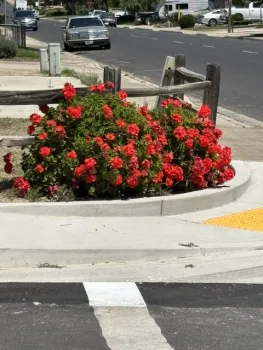
Julie Silva is a University of California Cooperative Extension Master Gardener of Tuolumne County. UCCE Central Sierra Master Gardeners can answer home gardening questions, from rainwater tanks to drought-resistant plants. Call 209-533-5912 in Tuolumne County, 209-754-2880 in Calaveras County or fill out our questionnaire at (Ask a Master Gardener). Check out our webpage at https://ucanr.edu/site/uc-master-gardeners-central-sierra You can also find us on Facebookand on the radio at kaad-lp.org or 103.5 FM on Motherlode Community Radio.