A Natural Solution for California's Herds: African Catfish Peptides

California's cattle producers and agricultural communities are all too familiar with the rising challenge of antibiotic resistance, making common bacterial infections harder to treat in livestock. But imagine a future where we could tackle these infections with a natural, powerful alternative. Our research points to just that: antimicrobial peptides (AMPs) found in African catfish.

We're really excited about these peptides because African catfish thrive in pathogen-rich freshwater, naturally producing these robust immune compounds in their skin mucus as a defense. This natural origin makes them highly appealing alternatives to synthetic drugs.

Predicted Safety and Potent Action

One of the most compelling aspects of these AMPs is their predicted safety for mammals. Our initial computer analyses suggest that various catfish AMPs are generally recognized as safe (GRAS). We predict they'll be absorbed in the human intestine without causing liver, brain, or heart toxicity. Furthermore, lab tests on a promising peptide, NACAP-II, confirmed it was non-hemolytic, meaning it didn't damage rabbit red blood cells—a strong indicator of its potential safety for mammalian cells.

Beyond safety, these peptides demonstrate effectiveness against problematic bacteria. One study revealed NACAP-II's strong activity against Extended-Spectrum Beta-Lactamase (ESBL)-producing Escherichia coli—a critical concern for both animal and human health due to its resistance to many common antibiotics. Another peptide, ACAP-IV, also showed antibacterial activity against E. coli and Staphylococcus aureus. We believe these AMPs work by directly disrupting bacterial cell membranes, a mechanism that makes it harder for bacteria to develop resistance compared to how they resist traditional antibiotics.

Primary Image
Plants of varying heights growing in a brick planter.
The Stanislaus Sprout: Article

What is subsoil and how does it help a garden?

December 5, 2022
By Anne E Schellman
This blog article is for readers who may have heard of subsoil, but don't really know what it is, or how it may or may not affect their gardening efforts. There are several layers (also known as horizons to soil scientists) that can be found when we dig deeper and deeper down into the soil.
View Article
Primary Image
HOB resonse guide
Topics in Subtropics: Article

HLB Response Guidelines

December 5, 2022
By Ben A Faber
New Educational Materials: Commercial HLB Detection Response Guide Statewide To ensure California citrus growers are well prepared in the event of a potential commercial grove detection of Huanglongbing (HLB), the deadly citrus plant disease that can be spread by the Asian citrus psyllid (ACP), the...
View Article
Primary Image
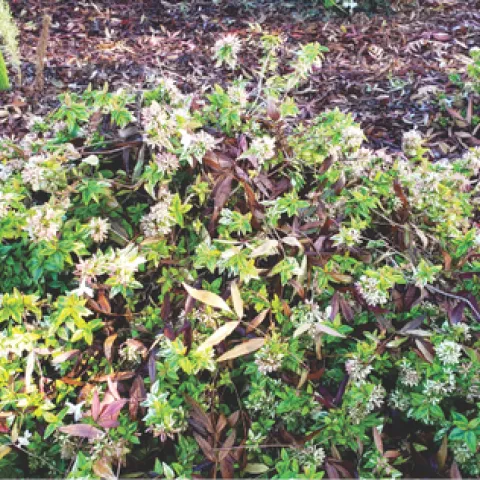
Pruned Abelia
Spill the Beans: Article

Low maintenance gardens = Easy Fall Cleanup

December 5, 2022
by Melody Kendall Installed in November 2020 the Low water, low maintenance garden at the Las Flores Learning Garden is the first garden established by the UC Master Gardeners and the City of Napa.
View Article
Primary Image
Brugmansia Shrub & Gazebo - photo by Paula Pashby
Under the Solano Sun: Article

Angel's Trumpet

December 5, 2022
We never pass a chance to explore any plant sales that we discover when out-and-about. Around 20 years ago, we stumbled upon a sweet sale in Sacramento to support people suffering from AIDS. The event included somewhat small and nondescript cuttings for sale.
View Article
Primary Image
20221129 131749
ANR Adventures: Article

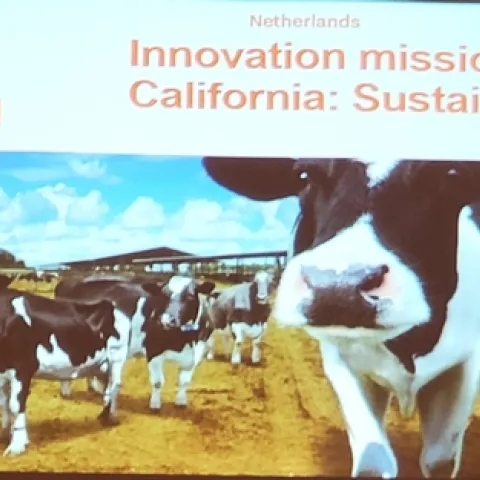
UC Agricultural mission officially expands

December 4, 2022
By Deanne Meyer
UC Davis Specialists and Department Chairs met on Monday for their fall meeting. It was an informational packed meeting. There were many questions about the designation of UC Santa Cruz and UC Merced as part of the UC Agricultural Experiment Station (AES).
View Article
Primary Image
*
UC Weed Science (weed control, management, ecology, and minutia): Article

Coyote Brush Control Study Proposal

December 4, 2022
By Devii R Rao
UC Cooperative Extension San Benito County is going to collaborate with San Jose State University to develop a CAL FIRE Forest Health Research grant proposal. We are interested in looking at different methods to control coyote brush (Baccharis pilularis). Coyote brush is a native shrub.
View Article
Primary Image
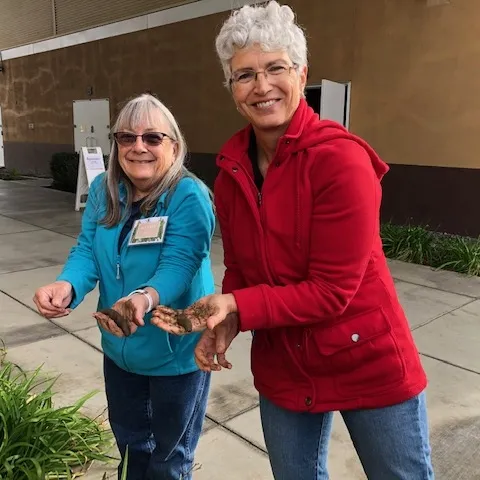
Two women holding soil samples and smiling.
The Stanislaus Sprout: Article

Healthy Soils Week is Dec 5-9, 2022

December 4, 2022
By Anne E Schellman
Healthy Soils Week is a campaign by the California Department of Food and Agriculture to highlight the importance of soil health. We thought our readers might be interested in some of the common questions our UCCE Stanislaus County Master Gardener Help Line receives about soils and fertilizers.
View Article
Primary Image
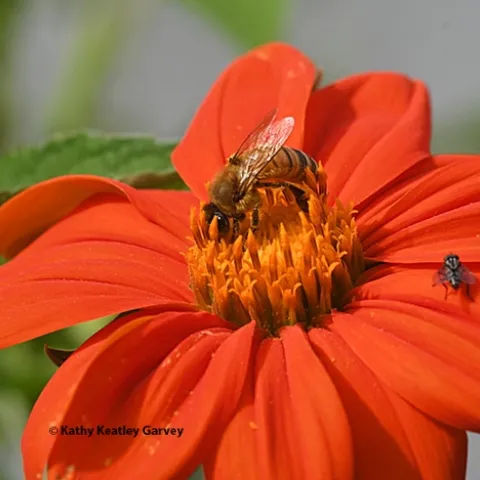
A honey bee and a fly share a Mexican sunflower, Tithonia rotundifola. (Photo by Kathy Keatley Garvey)
Bug Squad: Article

It's Friday Fly Day!

December 2, 2022
By Kathy Keatley Garvey
It's "Friday Fly Day," but no flies today. They're in a "no-fly zone." That's because of the freezing temperatures. Jack Frost is nipping at assorted noses, leaves are dropping like flies, and cups are overflowing with hot chocolate. Meanwhile, here's an image BEFORE the freeze.
View Article