A Natural Solution for California's Herds: African Catfish Peptides

California's cattle producers and agricultural communities are all too familiar with the rising challenge of antibiotic resistance, making common bacterial infections harder to treat in livestock. But imagine a future where we could tackle these infections with a natural, powerful alternative. Our research points to just that: antimicrobial peptides (AMPs) found in African catfish.

We're really excited about these peptides because African catfish thrive in pathogen-rich freshwater, naturally producing these robust immune compounds in their skin mucus as a defense. This natural origin makes them highly appealing alternatives to synthetic drugs.

Predicted Safety and Potent Action

One of the most compelling aspects of these AMPs is their predicted safety for mammals. Our initial computer analyses suggest that various catfish AMPs are generally recognized as safe (GRAS). We predict they'll be absorbed in the human intestine without causing liver, brain, or heart toxicity. Furthermore, lab tests on a promising peptide, NACAP-II, confirmed it was non-hemolytic, meaning it didn't damage rabbit red blood cells—a strong indicator of its potential safety for mammalian cells.

Beyond safety, these peptides demonstrate effectiveness against problematic bacteria. One study revealed NACAP-II's strong activity against Extended-Spectrum Beta-Lactamase (ESBL)-producing Escherichia coli—a critical concern for both animal and human health due to its resistance to many common antibiotics. Another peptide, ACAP-IV, also showed antibacterial activity against E. coli and Staphylococcus aureus. We believe these AMPs work by directly disrupting bacterial cell membranes, a mechanism that makes it harder for bacteria to develop resistance compared to how they resist traditional antibiotics.
Primary Image
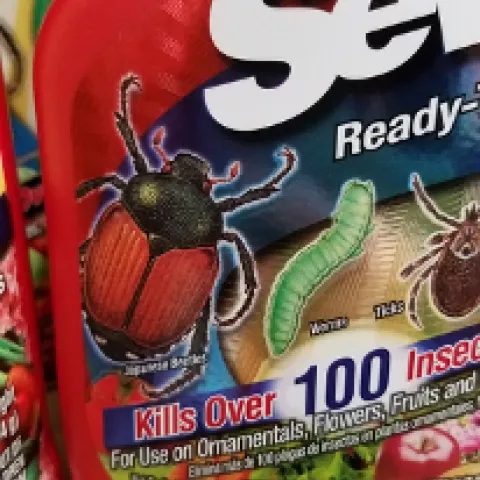
Products containing carbaryl, like some Sevin products, won't be sold in retail nursuries and garden centers.

Carbaryl Becomes Restricted Material

July 29, 2020
By Karey Windbiel-Rojas, Belinda Messenger-Sikes
Starting August 1, 2020, all pesticides containing the active ingredient carbaryl will be designated as restricted materials in California, except for baits labeled only for agricultural use.
View Article
Entomology & Nematology News: Article

Geoffrey Attardo: Focus on Tsetse Flies

July 29, 2020
By Kathy Keatley Garvey
(Editor's Note: Geoffrey Attardo, assistant professor, UC Davis Department of Entomology and Nematology, published this piece July 29, 2020 on The Conversation website. This article is republished from The Conversation under a Creative Commons license. Read the original article.
View Article
Primary Image
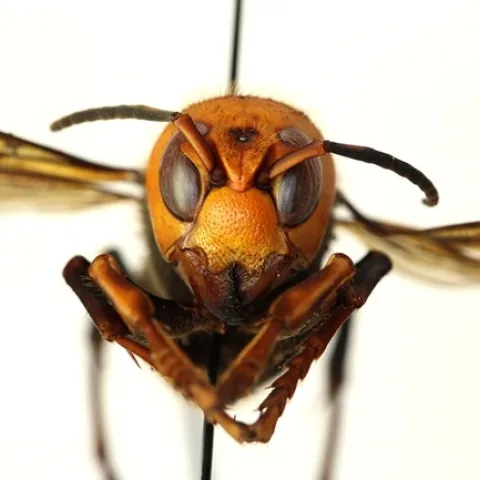
The Asian giant hornet (Photo courtesy of the Washington State Department of Agriculture)
Entomology & Nematology News: Article

Lynn Kimsey Fields Questions on Asian Giant Hornet

July 29, 2020
By Kathy Keatley Garvey
Noted hymenopterist Lynn Kimsey, director of the Bohart Museum of Entomology and professor of entomology, UC Davis Department of Entomology and Nematology, shed light on the Asian giant hornet in an interview with urban entomologist Michael Bentley on his BugBytes podcast. See https://bit.
View Article
Stanislaus County: Article

The Scoop Volume 25.3 July 2020

July 29, 2020
In This Issue: IPM Task at Harvest: Identifying Insect Pest Damage Through Harvest Sampling Managing Walnut Mold Walnut Rootstocks...
View Article
Stanislaus County: Article

The Scoop Volume 25.3 July 2020

July 29, 2020
In This Issue: IPM Task at Harvest: Identifying Insect Pest Damage Through Harvest Sampling Managing Walnut Mold Walnut Rootstocks...
View Article
Primary Image
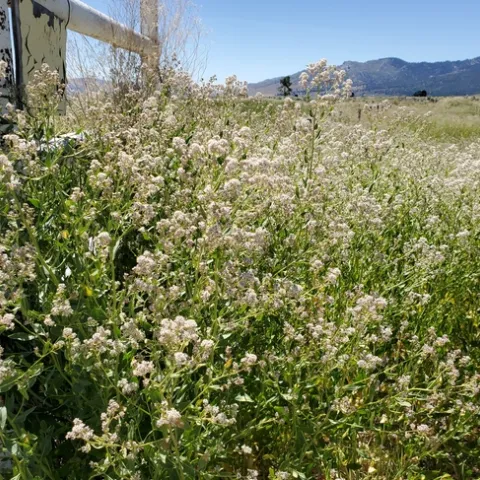
Perennial Pepperweed or Tall Whitetop
Intermountain REC News: Article

NOXIOUS WEED ALERT - PERENNIAL PEPPERWEED/TALL WHITETOP

July 29, 2020
By Thomas J Getts, Robert G Wilson
Perennial pepperweed (Lepidium latifolium) also known as tall whitetop is a root-creeping perennial weed. It is commonly found along roadsides, ditches, and drains. It is also a big problem in pastures, non-cropland, and even cropland that is not tilled on a yearly basis.
View Article
Primary Image
Mark's drive back from a working vacation
ANR Adventures: Article

Aiming for a slow week

July 29, 2020
By Wendy Powers
I started a new project over the weekend. It progresses faster than expected, likely attributable to not having followed the directions. I was able to make process improvement because I am uninhibited by the notion that I must follow the instructions.
View Article
Primary Image
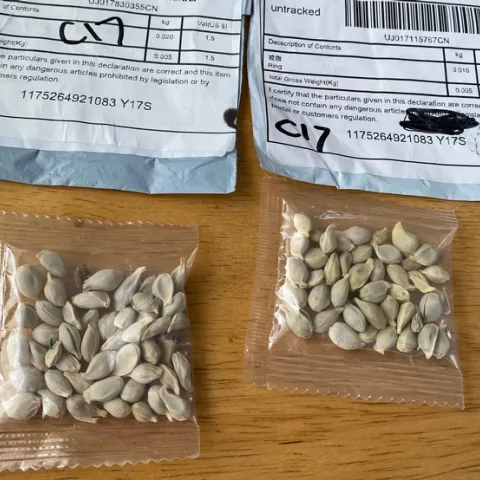
Unlabeled seeds from unsolicited packages. (Credit: Washington State Department of Agriculture.)
The Stanislaus Sprout: Article

Report Unsolicited Seeds to APHIS

July 29, 2020
By Anne E Schellman
[From Pests in the Urban Landscape blog] Have you had unexpected seeds show up in the mail? Unknown seeds could be invasive plants, contain invasive insects, or have plant disease causing agents.
View Article