A Natural Solution for California's Herds: African Catfish Peptides

California's cattle producers and agricultural communities are all too familiar with the rising challenge of antibiotic resistance, making common bacterial infections harder to treat in livestock. But imagine a future where we could tackle these infections with a natural, powerful alternative. Our research points to just that: antimicrobial peptides (AMPs) found in African catfish.

We're really excited about these peptides because African catfish thrive in pathogen-rich freshwater, naturally producing these robust immune compounds in their skin mucus as a defense. This natural origin makes them highly appealing alternatives to synthetic drugs.

Predicted Safety and Potent Action

One of the most compelling aspects of these AMPs is their predicted safety for mammals. Our initial computer analyses suggest that various catfish AMPs are generally recognized as safe (GRAS). We predict they'll be absorbed in the human intestine without causing liver, brain, or heart toxicity. Furthermore, lab tests on a promising peptide, NACAP-II, confirmed it was non-hemolytic, meaning it didn't damage rabbit red blood cells—a strong indicator of its potential safety for mammalian cells.

Beyond safety, these peptides demonstrate effectiveness against problematic bacteria. One study revealed NACAP-II's strong activity against Extended-Spectrum Beta-Lactamase (ESBL)-producing Escherichia coli—a critical concern for both animal and human health due to its resistance to many common antibiotics. Another peptide, ACAP-IV, also showed antibacterial activity against E. coli and Staphylococcus aureus. We believe these AMPs work by directly disrupting bacterial cell membranes, a mechanism that makes it harder for bacteria to develop resistance compared to how they resist traditional antibiotics.

Primary Image
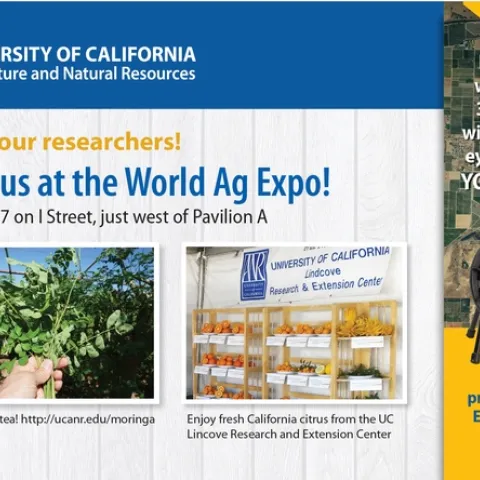
World-Expo-post-card-PRESS-1
ANR Employee News: Article

UC ANR at World Ag Expo in Tulare Feb. 12-14

January 30, 2019
By Jeannette Warnert
The public is invited to taste, see and learn about many UC ANR programs offered in California at the World Ag Expo, the world's largest agricultural exposition to be held in Tulare Feb. 12-14.
View Article
Primary Image
dat lat
Under the Solano Sun: Article

Dat Lat-The Greenhouse City

January 30, 2019
I know that a picture is worth a 1000 words, but I also know that a picture may not do justice to the view that one is trying to capture. That is the case of this particular picture and area. What this picture shows is the view of the mountain city of Da Lat in Vietnam.
View Article
Salinas Valley Agriculture: Article

SWEEP GRANT OPPORTUNITY WORKSHOP, Salinas CA February 13th

January 30, 2019
By Michael D Cahn
Cosponsored by UCCE-Monterey County, UCANR, RCDMC Why: Apply for CDFA funding- State Water efficiency and Enhancement Program (SWEEP). Receive up to $100,000 in grant funding to improve your on-farm water and energy efficiency through the SWEEP grant funding program.
View Article
Article

Propose a project for summer student fellowship program

January 30, 2019
By Pamela S Kan-Rice
Last year, UC ANR trialed a summer fellowship program in collaboration with the Department of Land, Air and Water Resources and the Planetary Health Center of Expertise at UC Davis. As a result, we had about six students doing a summer session with UC Cooperative Extension advisors.
View Article
Primary Image
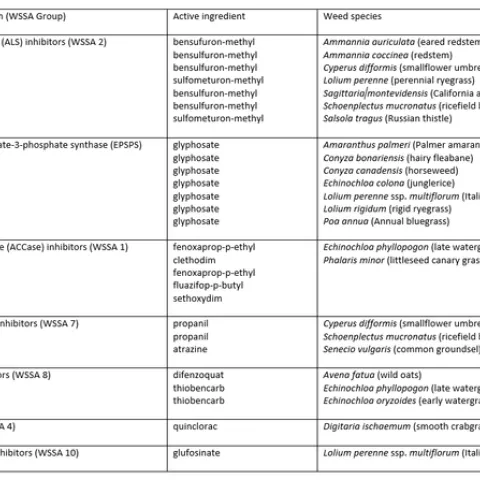
Weeds in CA with HR to one SOA
Topics in Subtropics: Article

Herbicide Weed Resistance in California?

January 29, 2019
By Ben A Faber
UCCE Agronomy and Weed Science Advisor, Merced and Madera Counties Weeds compete with crops for light, water, and nutrients, which can result in yield reductions.
View Article
ANR Adventures: Article

Positioning for partnerships

January 29, 2019
By Wendy Powers
Tomorrow I head to Imperial County to meet with essential partners from the nearby agriculture institute at the University in Mexicali. The group in Imperial County (both UCCE and DREC) already have strong relationships with the institute; we are considering how these might expand or be formalized.
View Article
Primary Image
Joanna Chiu, Chancellor's Fellow
Entomology & Nematology News: Article

Joanna Chiu: Chancellor's Fellow

January 29, 2019
By Kathy Keatley Garvey
Molecular geneticist and physiologist Joanna Chiu, associate professor and vice chair of the UC Davis Department of Entomology and Nematology, has been named one of 10 UC Davis Chancellor's Fellows, an honor awarded to associate professors who excel in research and teaching.
View Article