Fungal symbionts associated with MOB

All ambrosia beetles, like MOB, grow a fungal symbiont inside their galleries and use it as food for larvae and adults. Some of these fungi can be pathogenic and cause tree diseases that may lead to tree decline and, sometimes, tree death. Different genera of fungi have formed relationships with ambrosia beetles and sometimes multiple fungal species might be associated with a beetle species.
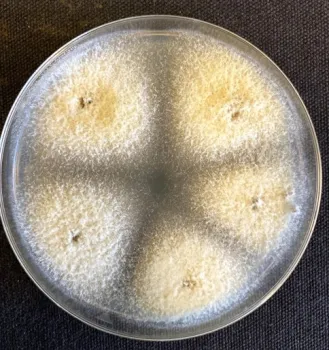
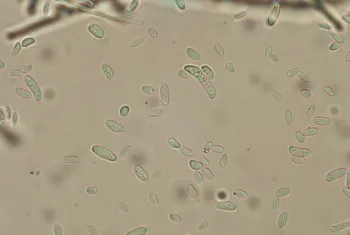
The fungi Raffaelea montetyi, Fusarium solani, Fusarium sp., Paecilomyces formosus, Xenoacremonium recifei and at least seven additional unidentified fungi have been found in the MOB specimens and galleries collected in Napa County.
Early evaluations of Raffaelea montetyi, Fusarium solani, and Fusarium sp. have shown that these fungi can spread slowly in the sapwood and cause wilt disease symptoms. In Europe, the same three fungi have been isolated from European specimens and Raffaelea montetyi has been shown to cause fatal wilt disease in cork oaks in Portugal. Work is ongoing regarding the effect of these fungal symbionts in the MOB-tree complex.
Raffaelea montetyi photos
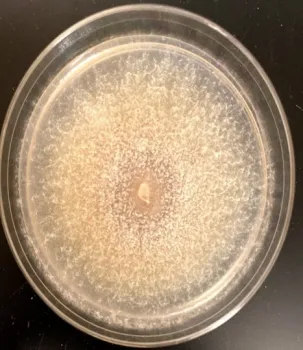
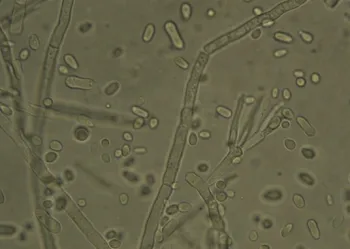
Fusarium solani photos