
How MOB can affect California woodlands
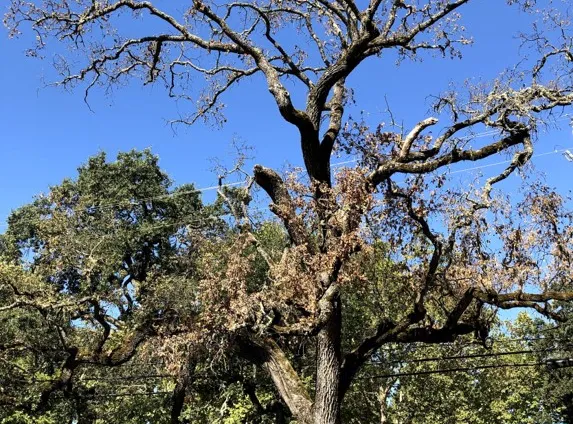
MOB creates tunnels (or galleries) in the trunks and branches of host trees. It initially attacks the canopy crown of the tree, where it kills individual limbs. Infestation can continue over seven or more growing seasons, eventually invading the main trunk and killing the entire tree. Infested trees can become a hazard when their limbs and upper trunk are weakened by the widespread galleries. Large limbs may fail and break off from the main tree. Weakened trees can lead to premature complete tree failure, especially if combined with heart rot.

In California, this beetle-fungus complex has been introduced to species of oaks which have not evolved effective defenses, and damage to some of these species has been more severe than that observed in the beetle’s native range. Oaks are important components of the urban landscape and native woodlands in California. Valley oak and blue oak, which have already been attacked and killed, are widely distributed in California and are important components of oak woodlands. Oaks provide habitat for threatened species, have historically been used by Native Americans for food and other purposes, and are important landscape trees that add to the value of property.
