
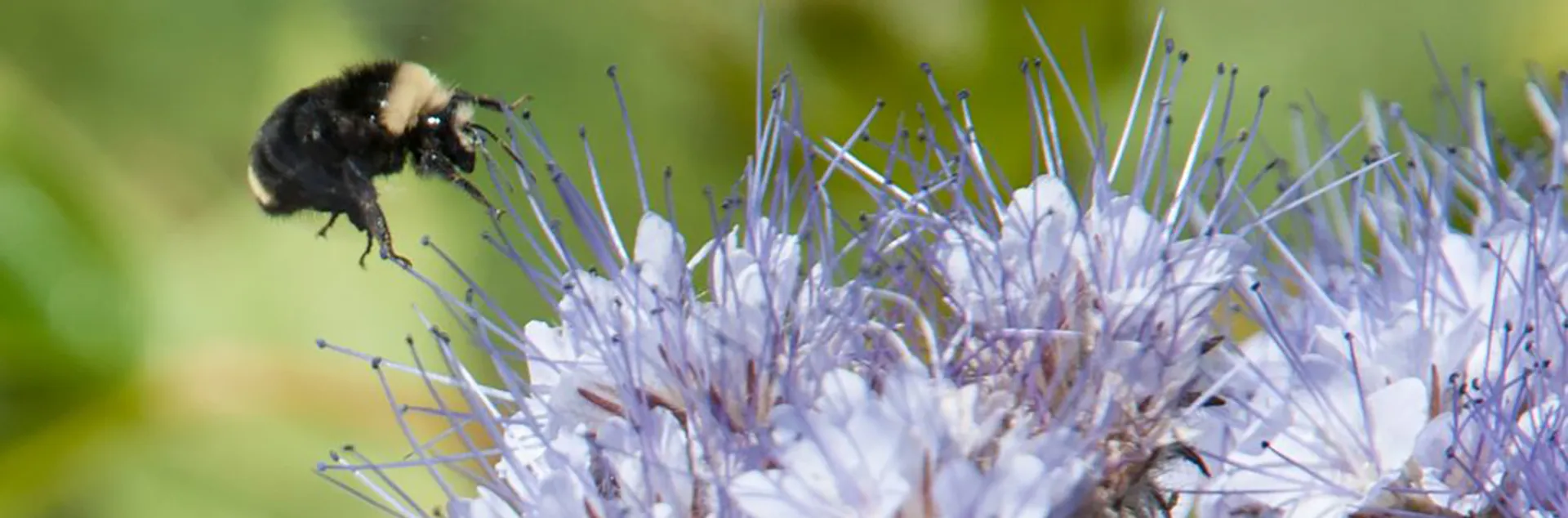
“When we try to pick out anything by itself, we find it hitched to everything else in the universe.”
— John Muir
Pollinators are Essential to our Ecosystem
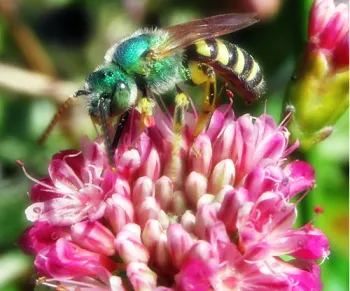
Pollinators, which include bees, wasps, beetles, moths, butterflies, other insects, and hummingbirds, are in decline. There are many factors for this, but one of the most significant is habitat loss, as well as the introduction of non-native plant species, pesticide usage, pollution, pests and diseases, and climate change.
Pollinators are needed for food production, but they also pollinate nearly 90% of our flowering plants, and without them, most flowering plants would go extinct, to the detriment of our entire ecosystem.
The good news is that as gardeners, we can create habitat for pollinators, thus helping to restore our local ecosystems and our planet’s health. California native plants evolved with native pollinators, so planting native plants in our gardens supports a diversity of pollinators, many of which are beautiful as well as useful! Gardeners can help make “pollinator pathways”, which are pesticide-free corridors of native plants that provide nutrition and habitat for pollinating insects and birds. This means treating gardens as ecosystems, where living things are interconnected.
California is a biodiversity hotspot, one of the few in the world. The state has 6,600+ vascular plant species, with 30% of them endemic, meaning they are found nowhere else. And there are over 2,400 rare native plant species. The rate of endemic plants is higher than any other state or province in North America, north of Mexico.
So California is a very special place, and as gardeners, we should make it a goal to support our local flora and the fauna that depend on them.
In order to provide a place for pollinators to thrive, you need to provide the following in your garden:
- Food, such as nectar and pollen from plants
- Habitat to raise their young, find shelter from bad weather and hide from predators, and sunny spots undisturbed by pets
- Water, such as a shallow bird bath with stones that insects can land on
Native plants are adapted to the local soil and climate conditions and are generally low maintenance. There are also several non-native, non-invasive plants that are beneficial for native pollinators, but this article focuses on California native plants.
Many of the same plants and garden ecosystems that support pollinators will also support beneficial insects, which can help control the pest insects in your garden, as well as provide pollination services for your food crops.
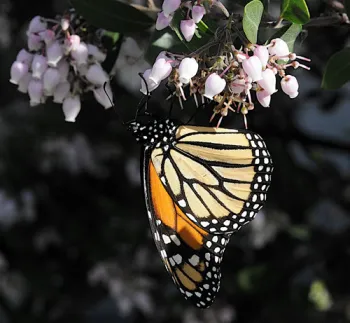
The following gardening practices will help provide year-round habitat for pollinators:
- Plant for year-round bloom; manzanitas are a keystone species for pollinators because they bloom in December and January when very few other plants are blooming.
- Vary the type of flowers, sizes, and colors
- Mass plants together as much as possible
- Plant in sunny, open areas
- Include the larval host plants of the insects
- Reduce or remove lawn, which is considered a “desert” in terms of ecosystem services for insects
- Avoid pesticides, even the “eco-friendly” ones, so that soil, air, and water are free from poisons.
Even though most people think of European honey bees (which are not native to the United States and were brought by the early settlers) as the primary pollinators for agriculture, native bees are equally important. There are 4,000 native bee species in the United States and 1,600 native bee species in California. 70% of those native bees nest underground; they are non-aggressive and have a short foraging range from fifty feet to half a mile from their nests.
The California Native Plant Society Calscape website is a treasure trove of information about native plants. You can look up native plants in your area by typing in your zip code, as well as filtering for plants that attract moths, butterflies, and other insects. Looking up plants in my zip code (Bay side of Contra Costa County), filtering for support of bees, birds, butterflies, and hummingbirds, as well as butterfly host plants (meaning they support caterpillars), Calscape returned 692 results.
Here are some easy-to-grow native plants and the pollinators that they support:
Perennials
Buckwheat: There are many species of buckwheat, and their abundance of small flowers provides food for many pollinators.
- California Buckwheat (Eriogonum fasciculatum): Attractive to many blue and hairstreak butterflies, and very attractive to native bees.
Ceanothus: There are many species and varieties of Ceanothus (California Lilac), and they are all attractive to bees and butterflies.
- Ceanothus ‘Concha’ (Ceanothus 'Concha') is a variety that is particularly attractive to butterflies and bees and is a good choice for a wildlife-friendly garden. Another aspect of this plant is that it is very drought-tolerant, and shouldn’t be watered once it is established.
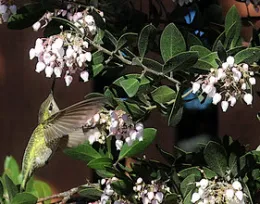
Manzanita: Manzanita are a keystone species providing nectar in the winter when not much else is blooming. These plants come in many varieties, one of which is listed below.
- Howard McMinn Manzanita (Arctostaphylos 'Howard McMinn'): Moths, butterflies, and hummingbirds are attracted to the flowers.
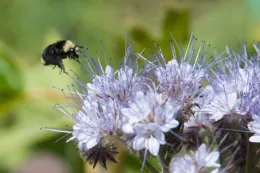
Phacelia: Several perennial phacelia are described here, but many annual phacelias are also good pollinator plants, due to the many tiny flowers.
- California Phacelia (Phacelia californica): This is a perennial phacelia and is an excellent food source for many bees and butterflies (including the endangered Mission blue butterfly endemic to San Francisco).
Sage: Sages are excellent pollinator plants, and there are several to choose from that grow natively in Contra Costa County. They include:
- Purple Sage (Salvia leucophylla): In spring and summer large spikes bear whorls of purple flowers. It grows in full sun and is drought-tolerant. In addition to supporting many pollinators, it is the host plant for the Alfalfa Looper Moth (Autographa californica)
- Black Sage (Salvia mellifera): The most common sage in California, it grows in full sun and has small, pale, blue-lavendar flowers. As with other sages, it is an important food source for bees, butterflies and hummingbirds.
- Hummingbird Sage (Salvia spathacea): This sage has bold pink and red flowering spikes that support bees, butterflies, and hummingbirds. It grows well in shade or part-shade, in contrast to most other sages which require full sun.
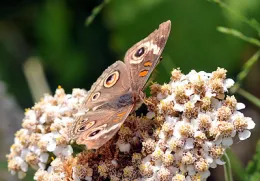
Common Yarrow (Achillea millefolium): Yarrow is an easy-to-grow perennial that is a staple for native gardens. It has abundant small white flowers that attract bees, butterflies, and other beneficial insects.
Annuals
Annual native plants are generally available at nurseries, but they can also be started from seed, which allows larger areas to be planted in the garden.
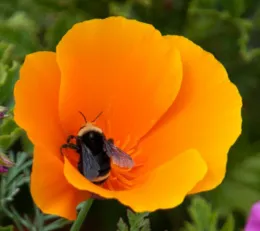
California poppy (Eschscholzia californica): The iconic California poppy is very attractive to pollinators, in particular native bumblebees, who can be seed rolling in the flowers, becoming covered with pollen! There is also a “Coastal Form” (Eschscholzia californica ssp. maritima 'Coastal Form') of California poppy that is more yellow with an orange center.
Clarkia: There are many species and varieties of native Clarkia, and all are attractive to pollinators. They generally bloom much later in the spring or early summer than most native annuals and make a good addition to the garden to ensure there is food for pollinators after other annuals are finished.
- Ruby Chalice Clarkia (Clarkia rubicunda): Sometimes called “Farewell to Spring”, it blooms in June and into July.
- Other Clarkias include Red Ribbons (Clarkia concinna), Purple Clarkia (Clarkia purpurea), Winecup Clarkia (Clarkia purpurea ssp. purpurea), and Elegant Clarkia (Clarkia unguiculata), which is the host plant for the Clark's Day Sphinx Moth (Proserpinus clarkiae)
Phacelia: There are many different annual Phacelia, which all support pollinators and other beneficial insects.
- Lacy Phacelia (Phacelia tanacetifolia): This is an annual phacelia with lavender to blue flowers that are very attractive to pollinators and other beneficial insects.
Other fun annual wildflowers that attract pollinators and beneficial insects
- Baby Blue Eyes (Nemophila menziesii)
- Tidy Tips (Layia platyglossa)
- Creamcups (Platystemon californicus)
- Blue Field Gilia (Gilia capitata)
- California Goldfields (Lasthenia californica)
- Purple Chinese Houses (Collinsia heterophylla)
- Lupine (there are many annual species), such as Sky Lupine (Lupinus nanus) and Succulent Lupine (Lupinus succulentus)
Butterfly / moth host plants
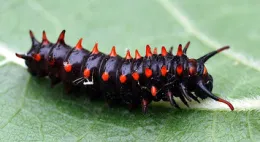
Many butterfly caterpillars only eat one species of plant, which is their host plant. Growing these host plants will encourage those butterflies to lay their eggs on these plants, and provide food for their caterpillars. Just be aware that the caterpillars may eat most of the host plant, but that is why you are growing it!
Pipevine Swallowtail Butterfly: The host plant is Dutchman’s pipe (Aristolochia californica)
Coastal Green Hairstreak Butterfly: The host plants is Coast Buckwheat (Eriogonum latifolium)
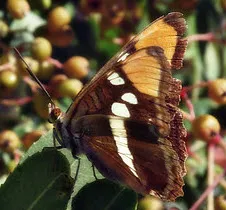
California Sister Butterfly: The host plants (trees in this case) are Coast Live Oak )Quercus agrifolia) and Canyon LIve Oak (Quercus chrysolepis)
Mission Blue Butterfly: The host plants are Silver Lupine (Lupinus albifrons) and Summer Lupine (Lupinus formosus)
Even if you don’t turn your garden into a pollinator magnet overnight, by gradually increasing the number of pollinator plants you will help create a healthier ecosystem. Have fun getting started!
Web Resources:
A Californian Yard to help pollinators, U.S. Fish and Wildlife Service.
Bringing Back the Natives Garden Tour, with information about previous year’s gardens as well as the latest year’s gardens.
California Native Plant Society
California Native Plants, UC Sonoma Master Gardeners.
Calscape, a web platform for native plants by the California Native Plant Society, including nurseries which carry the plants, and what moths and butterflies are supported by each plant.
Creating a Pollinator Habitat webinar, July 19, 2022, hosted by the Contra Costa Library system and presented by Annette Abbott of the UC Master Gardeners of Contra Costa County.
Creating Habitats for pollinators and other beneficial wildlife, UC Marin Master Gardeners
Gardening for Butterflies, California Native Plant Society
Help a Bee, UC Berkeley Urban Bee Lab; Seasonal Recommended Plant Lists, contains both native and exotic pollinator plants, and are labeled as such.
Meet Pollinators, UC Marin Master Gardeners
Native Plants for Summer Bloom, UC Contra Costa Master Gardeners
Native Plant Resources, UC Contra Costa Master Gardeners
Now Is the Time to Plant Natives in Your Garden!, UC Contra Costa Master Gardeners
Plant Native Shrubs Now for Winter and Spring Bloom, UC Contra Costa Master Gardeners
Plant Natives this Fall, UC Contra Costa Master Gardeners
Plants for Pollinators, UC Marin Master Gardeners
Protect & Encourage Wildlife, UC Sonoma Master Gardeners.
Some books to get you started:
California Bees & Blooms, A Guide for Gardeners and Naturalists, by Gordon Frankie, Robbin Thorp, Rollin Coville, and Barbara Ertter.
California Native Plants for the Garden, by Bornstein, Fross, O’Brien.
Designing California Native Gardens: The Plant Community Approach to Artful, Ecological Gardens, by Glen Keator, Arlie Middlebrook, Phyllis M. Faber.
Gardening with a Wild Heart, by Judith Larner Lowry.
Native Plant Gardening for Birds, Bees & Butterflies, Northern California, by George Oxford Miller.
The ABC’s of California’s Native Bees, by Krystle Hickman.
The California Wildlife Habitat Garden, How to Attract Bees, Butterflies, Birds, and Other Animals, by Nancy Bauer
Wildflowers of California, by the California Native Plant Society.